Weighted keys are essential for a realistic playing experience because they mimic the feel, resistance, and response of acoustic piano keys. They help you develop proper technique, improve finger strength, and make switching between digital and traditional pianos easier. Different types, like hammer or graded hammer actions, affect how authentic the feel is. To choose wisely, you should test for responsiveness and sensitivity—if you keep exploring, you’ll learn how to pick the perfect setup for your needs.

Get business pricing on monitors, keyboards and dev gear
- Business-only prices and quantity discounts
- Tax-exempt purchasing
- Multiple users, one account, clear invoices
Key Takeaways
- Weighted keys replicate the feel of real pianos, enhancing touch sensitivity and dynamic control for authentic playing.
- They aid skill development by encouraging proper finger technique and muscle memory.
- Different types like hammer and graded hammer action influence realism and responsiveness.
- Testing keys for feel, response, and sensitivity before purchase ensures a natural playing experience.
- Additional features like adjustable sensitivity and calibration improve overall authenticity and control.
As an affiliate, we earn on qualifying purchases.
What Are Weighted Keys and How Do They Mimic Acoustic Pianos?

Weighted keys are designed to replicate the feel of real piano keys, making your playing experience more authentic. They enhance keyboard sensitivity, allowing you to control the sound dynamics more naturally based on how hard or soft you press the keys. This touch response closely mimics an acoustic piano, giving you a realistic playing experience. When you press a weighted key, the resistance and rebound feel like an actual piano, helping you develop proper technique. Unlike unweighted keys, which are lighter and less responsive, weighted keys respond to your touch with varying degrees of pressure, offering a nuanced control over your performance. This realistic feel makes weighted keys ideal for those wanting to simulate the touch and response of a traditional acoustic piano.
As an affiliate, we earn on qualifying purchases.
Why Do Weighted Keys Matter for Beginners and Advanced Players?
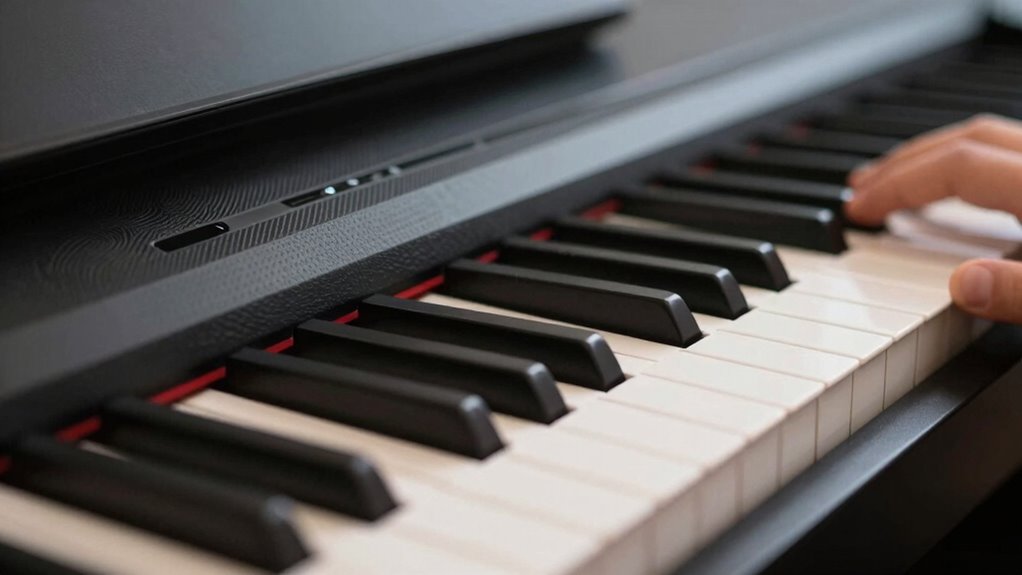
Weighted keys give you a more realistic playing experience, helping you feel connected to the instrument. They also support skill development by encouraging proper finger technique. Plus, they let you control dynamics and expression more naturally, whether you’re a beginner or an advanced player. Additionally, color accuracy in the keys can enhance your overall playing experience by providing consistent feedback and response. The presence of weighted keys can also influence your learning curve, making it easier to transition to acoustic pianos later on. Incorporating weighted keys in your digital piano can also contribute to muscle memory, which is essential for performance consistency. Moreover, the key mechanism used in weighted keys closely mimics that of traditional pianos, further enriching the playing experience.
Realistic Playing Experience
Since the feel of the keys considerably impacts your playing experience, having keys that respond like an acoustic piano makes a noticeable difference. Weighted keys create a more realistic touch, which is essential whether you’re practicing for music therapy sessions or performing. This authenticity helps you develop proper technique and control, making your practice sessions more effective. Many digital piano brands design their weighted keys to mimic the nuanced resistance of an acoustic piano, providing a natural response for both beginners and advanced players. A realistic playing experience enhances your overall musicality, ensuring that your touch and dynamics translate accurately. Additionally, key resistance plays a vital role in developing your touch sensitivity and dynamic control, further enriching your playing experience. This tactile feedback keeps you engaged and allows you to focus on expression without feeling disconnected from the instrument. Furthermore, graded hammer action simulates the gradual increase in resistance from the low to high keys, further improving realism.
Skill Development Benefits
Having responsive keys is essential for developing proper technique and musical control, whether you’re just starting out or sharpening advanced skills. Weighted keys help you understand music theory better by encouraging accurate finger placement and consistent touch. This consistency improves your sight-reading, phrasing, and overall musical expression. Additionally, they promote good keyboard ergonomics, reducing strain and helping you build strength and agility over time. As you progress, responsive keys allow for more precise control, enabling you to interpret dynamics and articulations confidently. Whether you’re practicing scales, chords, or complex pieces, weighted keys support skill development by mimicking the feel of an acoustic piano, ensuring you build a solid foundation for both technical mastery and expressive playing.
Dynamic Expression Control
Responsive keys play a vital role in mastering dynamic expression, whether you’re a beginner or an experienced player. With proper key sensitivity and touch response, your digital piano can reflect subtle nuances in your playing. To enhance your control, look for features like:
- Adjustable key sensitivity settings
- Realistic touch response for varying velocities
- Weighted keys that respond to your touch
- Velocity curves that match your playing style
These features allow you to control volume and tone dynamically, making your performances more expressive. Weighted keys with responsive touch respond to your finger pressure, giving you the ability to shape sound intensity naturally. This control is essential for developing musical expression and technical skill, regardless of your level.
As an affiliate, we earn on qualifying purchases.
What Are the Types of Weighted Key Actions?

Understanding the different types of weighted key actions helps you choose a keyboard that feels right. Hammer action mimics real piano keys by using mechanisms that replicate hammer movements, while semi-weighted and fully weighted keys offer varying levels of resistance. Knowing these differences guarantees you find a digital piano that matches your playing style and preferences. Additionally, exploring weighted key actions can help you make an informed decision and enhance your playing experience. Recognizing how touch sensitivity impacts your performance is also essential in selecting the right instrument. Being aware of investment options such as Gold IRAs can also assist you in planning for future financial security.
Hammer Action Mechanics
Hammer action mechanics are essential for replicating the feel of an acoustic piano, and different types of weighted key actions deliver varying levels of realism and touch response. They simulate the physical movement of hammers striking strings, affecting keyboard sensitivity. Here are four key types:
- Graded Hammer Action – mimics the heavier lower notes and lighter higher notes, improving touch response.
- Hammer-Weighted Action – offers a more uniform feel but still provides some resistance similar to an acoustic piano.
- Hammer-Weighted with Escapement – adds a slight “notch” feel, enhancing realism and tactile feedback.
- Grand Hammer Action – the most advanced, providing the closest simulation of an acoustic grand piano’s touch sensitivity and key resistance.
Choosing the right hammer action guarantees your digital piano responds naturally to your playing style.
Semi-Weighted vs. Fully Weighted
When choosing between semi-weighted and fully weighted keys, it’s important to understand how each type affects your playing experience. Fully weighted keys mimic the feel of an acoustic piano, providing greater keyboard sensitivity and dynamic control. This responsiveness enhances sound quality, allowing for nuanced expression. Semi-weighted keys, on the other hand, offer a lighter action, which can be beneficial for beginners or those *shifting* from lighter instruments. While they may lack the same level of realism, semi-weighted keys still deliver decent sound quality and responsiveness. Your choice depends on your playing style and goals. If you seek a more authentic piano feel with expressive potential, fully weighted keys are the way to go. For portability and ease, semi-weighted keys may suffice.
As an affiliate, we earn on qualifying purchases.
How Do Weighted Keys Affect Your Playing and Technique?

Weighted keys substantially influence how you play and develop your technique on a digital piano. They affect key responsiveness and touch sensitivity, which are essential for realistic playing. Here’s how they impact you:
- Improved Control: Weighted keys respond better to your touch, allowing nuanced dynamics and expression.
- Enhanced Technique: The resistance helps develop finger strength and agility, mimicking acoustic pianos.
- Realistic Feel: They replicate the weight and response of traditional piano keys, making practice more authentic. Technological integration in digital pianos ensures these keys are tested and calibrated for optimal performance.
- Consistent Touch Sensitivity: Weighted keys respond uniformly to varying pressure, helping you master dynamics and control. Proper calibration and testing of these keys using measurement tools ensure consistent performance.
- Incorporating sound healing science principles into your practice can further enhance relaxation and focus. Understanding how weighted keys are designed and tested using precise measurement tools ensures the most accurate and realistic feel, ultimately benefiting your playing experience. Recognizing the importance of key responsiveness in digital piano design is essential for achieving a natural playing experience.
What Factors Should You Consider When Choosing a Digital Piano With Weighted Keys?

You are trained on data up to October 2023. When choosing a digital piano with weighted keys, consider the keyboard sensitivity and touch response. Keyboard sensitivity determines how the instrument reacts to different playing dynamics, so look for models that offer adjustable sensitivity to match your playing style. Touch response is equally important; it affects how the keys respond to velocity and pressure, mimicking an acoustic piano. Test how the keys feel and respond during a demo—ideally, they should provide a natural, nuanced response that supports expressive playing. Also, consider whether the touch response can be customized, giving you control over the feel. These factors ensure your digital piano feels natural and supports your technique development. Additionally, pay attention to dynamic range, which influences how well the instrument captures subtle variations in your playing. Understanding weighted keys can help you choose a model that offers a more authentic playing experience. Furthermore, evaluating the key action can significantly impact your overall playing comfort and progress. Being aware of key weight consistency can also help maintain a uniform feel across the entire keyboard.
What Common Mistakes Should You Avoid When Buying a Digital Piano With Weighted Keys?
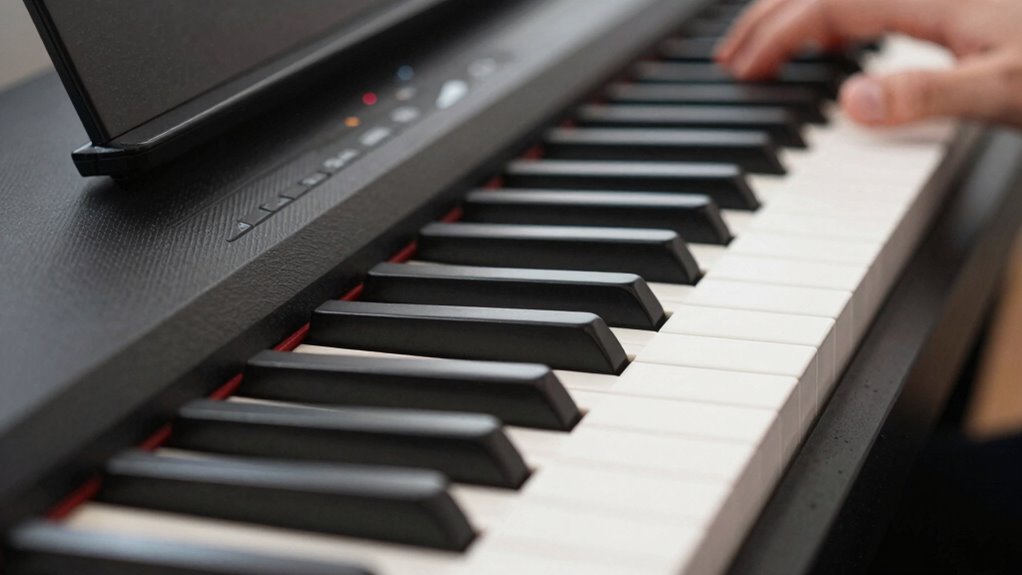
One common mistake is focusing solely on price without considering the quality of the keyboard’s action. This can lead you to buy a digital piano with poor sound quality and unreliable key response. To avoid this, keep these points in mind:
- Ignoring brand reputation, which affects overall build and sound consistency.
- Overlooking sound quality differences between models, which impacts your playing experience.
- Choosing based only on features rather than how authentic the weighted keys feel.
- Failing to research user reviews and expert opinions for real-world performance insights.
- Neglecting to test the weighted keys in person to assess their responsiveness and feel before purchasing. Additionally, understanding the action mechanism can help ensure the keys replicate an acoustic piano more accurately.
How Can You Test and Compare Weighted Keys Before Buying?
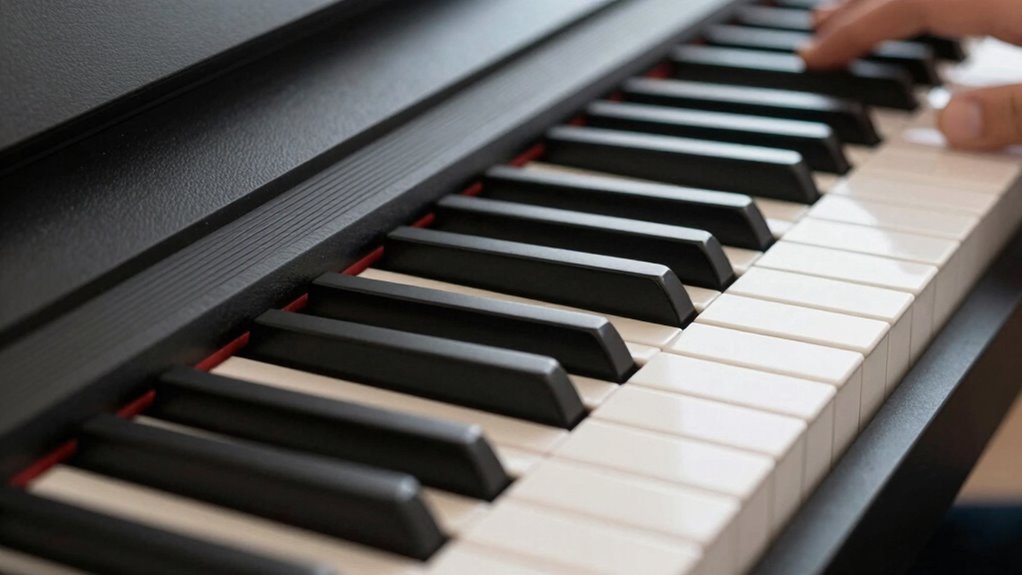
To guarantee the digital piano’s keys match your playing style, testing and comparing them in person is essential. Focus on key sensitivity by playing softly and loudly to see how responsive the keys are at different velocities. Pay attention to how the keys feel under your fingers—do they respond smoothly or feel stiff? Also, examine the key material; some keys are made of plastic, while others mimic the weight and texture of real ivory or ebony. Press multiple keys simultaneously to check for consistency in response. If possible, test different models side-by-side to notice subtle differences in key feel and sensitivity. This hands-on approach helps you identify the weighted keys best suited to your technique and preferences before making a purchase.
Frequently Asked Questions
How Do Weighted Keys Influence Digital Piano Durability?
Weighted keys can positively influence your digital piano’s durability by improving key responsiveness, which reduces unnecessary wear and tear. When keys feel more natural, you’re less likely to press hard, helping preserve the hardware longevity. This means your instrument stays in good shape longer, even with frequent use. Overall, investing in weighted keys ensures a more resilient piano that maintains performance and durability over time.
Are There Differences in Weighted Keys Between Brands?
Yes, there are differences in weighted keys between brands, affecting brand consistency and key feel. Some brands use premium materials and advanced mechanisms for a more authentic, piano-like response, while others may prioritize affordability, resulting in less realistic key action. You’ll notice variations in touch sensitivity, key resistance, and rebound, so it’s essential to try different brands to find the one that offers the most satisfying and consistent playing experience for your needs.
Can I Upgrade Non-Weighted Keys to Weighted Ones Later?
Is upgrading your keys like turning a caterpillar into a butterfly? While some digital pianos offer key upgrade options, most non-weighted keys can’t be replaced with weighted ones later. You’d need to think about a new instrument or a model designed for easy upgrades. So, if weighted keys matter to you, choose a digital piano with them built-in from the start, rather than relying on potential key upgrade options.
How Does Key Weighting Impact Digital Piano Maintenance?
Key weighting impacts your digital piano’s maintenance by influencing key sensitivity and noise reduction. Heavier, weighted keys require more precise adjustments to maintain best feel and responsiveness, meaning you might need to clean or lubricate mechanical parts more often. Properly weighted keys can also reduce noise during play, but neglecting maintenance could cause buildup or sticking, affecting both performance and longevity. Regular upkeep ensures your piano stays responsive and quiet over time.
What Are the Best Practices for Practicing With Weighted Keys?
You should focus on consistent practice routines to build finger strength and master weighted keys. Start slow, emphasizing proper technique, and gradually increase speed and complexity. Juxtapose gentle scales with energetic pieces to develop control and endurance. Remember, patience is key — regular practice helps your fingers adapt to the weighted keys’ resistance, making playing more natural and expressive over time. Stay dedicated, and you’ll see steady progress.
Conclusion
Choosing the right digital piano with weighted keys can transform your playing from a mere hobby to a legendary musical journey. By understanding the importance of weighted keys and how they mimic real pianos, you set yourself up for success. Don’t settle for less—your musical potential is a treasure chest waiting to be opened. So, test, compare, and select wisely—because your fingers deserve the best, and this decision could be the key to your greatness!
Halloween Picks
halloween
As an affiliate, we earn on qualifying purchases.