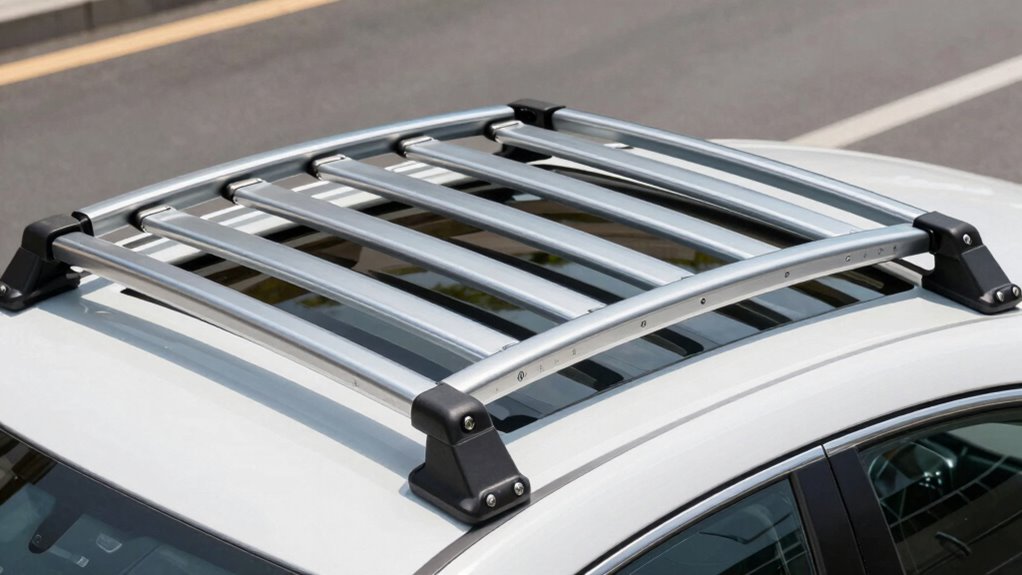

The key measurement to prevent a bad roof rack fit is the crossbar width — it’s essential your rack matches your vehicle’s roof width and mounting points. Accurate measurements ensure the rack fits securely, stays stable, and avoids damage or noise during travel. If the crossbars are too narrow or wide, it can compromise safety and gear stability. Keep in mind, understanding this measurement helps you choose the perfect rack; learn more to get it just right.

Get monitors, keyboards and dev gear delivered free — and shop member deals
- Fast, free delivery on millions of items
- Access to Prime Big Deal Days deals on October 6–7
- Prime Video, Amazon Music and more included
Key Takeaways
- Measure the width between the mounting points on your vehicle’s roof to ensure crossbars match precisely.
- Confirm the crossbar width aligns with your vehicle’s roof dimensions for a secure fit.
- Use a level tape measure to accurately determine roof and crossbar dimensions, avoiding errors.
- Check manufacturer specifications for standard crossbar widths compatible with your vehicle model.
- Proper measurement prevents instability, damage, and ensures a safe, secure roof rack fit.
roof rack crossbar width measurement tool
As an affiliate, we earn on qualifying purchases.
As an affiliate, we earn on qualifying purchases.
Why Crossbar Width Matters for Your Roof Rack Fit
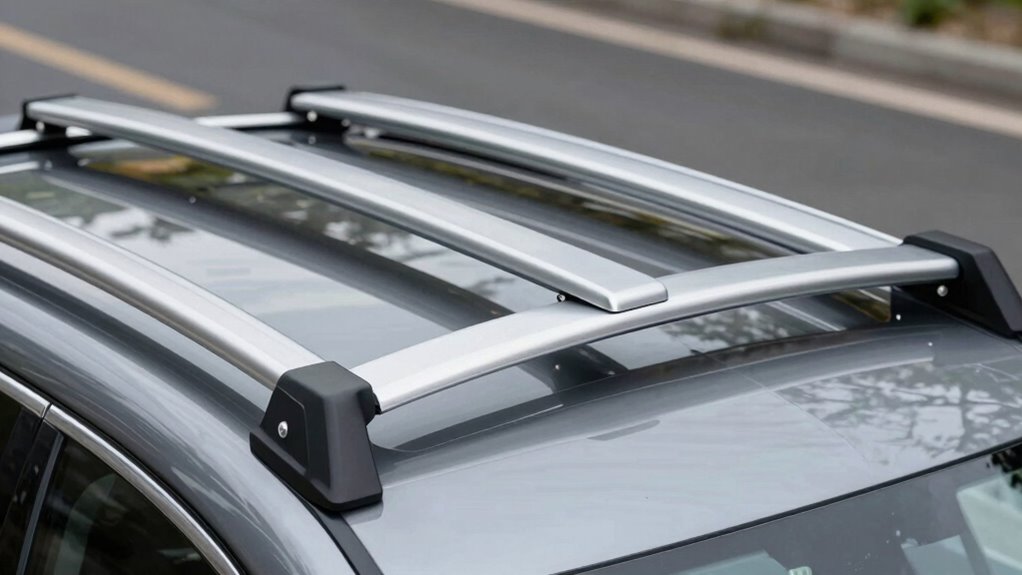
Choosing the right crossbar width is vital because it directly affects how well your roof rack fits your vehicle. Aesthetically, a wider or narrower crossbar can change the overall look, so you want something that complements your vehicle’s style. Beyond appearance, brand compatibility is essential; not all crossbars fit all roof racks. Ensuring the width matches your rack’s specifications guarantees a secure, stable fit. If the crossbar is too narrow, it won’t support your gear properly, and if too wide, it may cause instability or damage. Selecting the proper width also simplifies installation and removes the guesswork, giving you peace of mind. Additionally, understanding compatibility standards helps you choose a roof rack system that performs reliably and safely. Paying attention to these standards ensures your system adheres to industry safety guidelines, which is crucial for safe use. Being aware of material durability can also influence your choice, as it impacts the longevity and safety of the roof rack. Moreover, considering manufacturing tolerances ensures the crossbars will fit precisely within the accepted industry ranges, reducing installation issues. Ultimately, paying attention to crossbar width ensures your roof rack functions safely and looks great on your vehicle. Understanding compatibility is crucial for making ethical and informed consumer choices.
As an affiliate, we earn on qualifying purchases.
How to Measure Your Roof and Crossbars Accurately
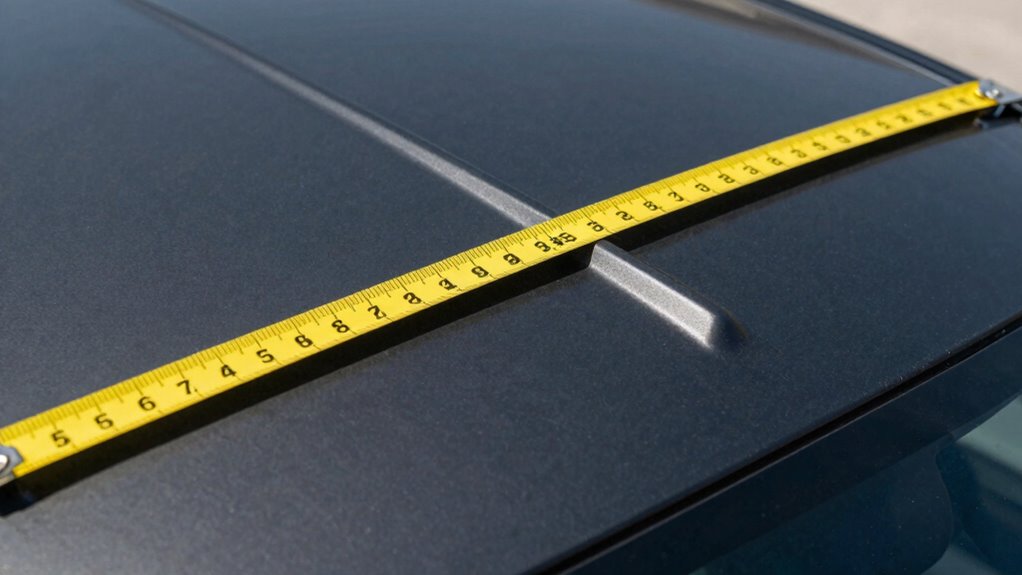
Accurately measuring your roof and crossbars guarantees your roof rack accessories will fit securely and function safely. Start by measuring the width and length of your roof using a tape measure, noting any curves or contours. For crossbars, measure the distance between the mounting points and the overall width to ensure compatibility. When measuring, keep the tape level and tight to avoid errors. This step is vital for choosing the right roof rack accessories, like cargo baskets or bike racks. Proper measurement techniques help prevent mismatches and ensure a secure fit. Ensuring you understand standard dimensions can simplify the selection process and reduce guesswork. Familiarity with manufacturer specifications can further assist in selecting compatible parts. Follow installation tips carefully—double-check measurements before attaching any components. Precise measurements prevent issues like overhang or instability, ensuring a safe and secure fit. Taking your time now saves you from headaches later and guarantees your gear stays safe during travel. Measuring accurately ensures all components work together seamlessly and proper fit is maintained.
As an affiliate, we earn on qualifying purchases.
Standard Crossbar Widths and Vehicle Compatibility Tips
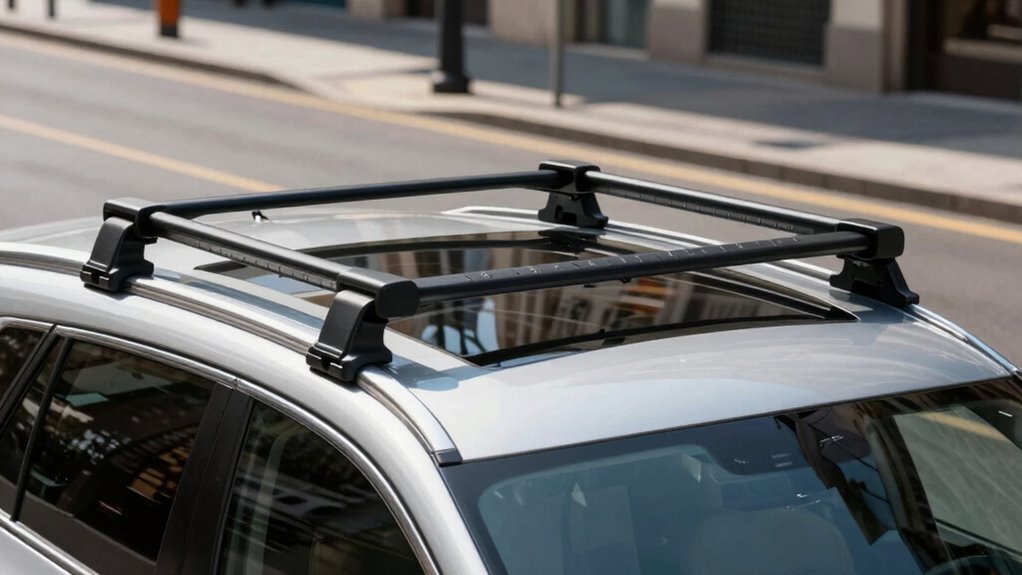
Understanding standard crossbar widths is essential because most vehicle manufacturers design roof racks to fit specific dimensions. Knowing the typical crossbar spacing helps guarantee compatibility with your vehicle’s roof. Most crossbars come in standard widths, but your vehicle’s roof width determines the best fit. Proper crossbar spacing is vital for stability and safety, especially when carrying heavy loads or bulky gear. Keep in mind that wider crossbars may impact vehicle aerodynamics, increasing wind resistance and noise. To find the right fit, check your vehicle’s specifications for maximum crossbar width and spacing. If you’re unsure, consult your vehicle’s manual or manufacturer’s guidelines. Selecting the correct crossbar width and spacing guarantees a secure fit, minimizes wind drag, and enhances overall driving comfort. Additionally, standard crossbar sizes are designed to accommodate a variety of vehicle models, simplifying the selection process. Being aware of vehicle roof dimensions can further streamline your choice and ensure optimal compatibility. Understanding roof rack compatibility is also crucial to avoid issues during installation or while on the road. Paying attention to crossbar load limits helps prevent overloading and potential damage to your vehicle or roof rack. Recognizing manufacturer specifications ensures you adhere to safety standards and avoid voiding warranties.
car roof rack compatibility guide
As an affiliate, we earn on qualifying purchases.
As an affiliate, we earn on qualifying purchases.
What Happens When Your Roof Rack Doesn’t Fit Properly
What Happens When Your Roof Rack Doesn’t Fit Properly
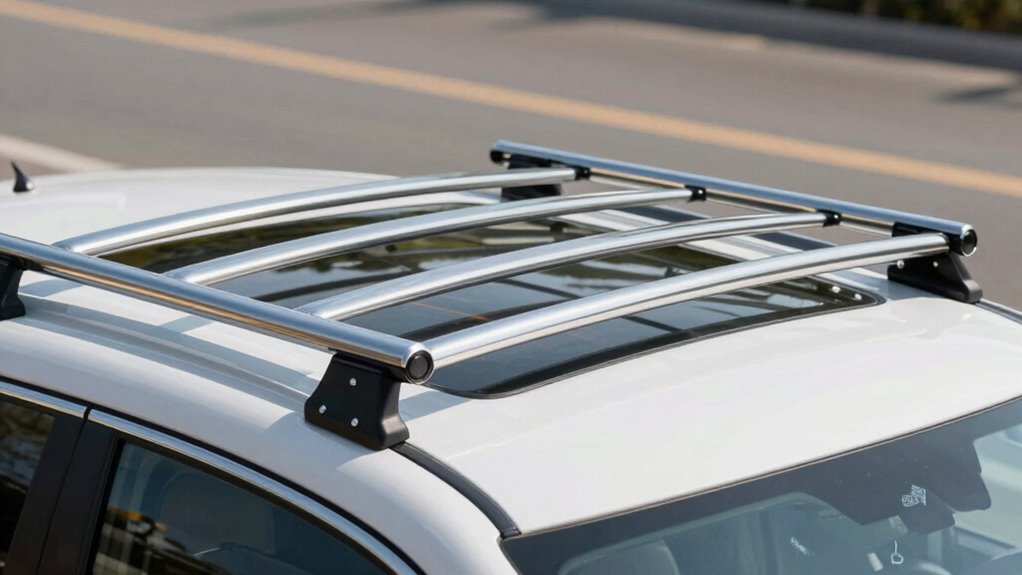
When your roof rack doesn’t fit properly, it can lead to a range of safety and performance issues. An ill-fitting rack can compromise vehicle stability, damage your roof, or cause gear to shift unexpectedly. You might also face aesthetic considerations, as a poorly fitting rack can look awkward or unprofessional, reducing your vehicle’s overall appearance. Additionally, a rack that doesn’t fit well is easier for thieves to target, increasing theft risk. Ensuring proper installation techniques can help prevent these issues and keep your gear secure. Proper fit also depends on understanding the correct measurements to avoid mismatches. Misjudging these measurements can result in improper weight distribution, which affects handling and safety. When in doubt, consulting a professional installer can help ensure the rack fits correctly and functions safely. Here’s what can happen: 1. Increased risk of gear falling off or causing accidents. 2. Damage to your vehicle’s roof or paintwork. 3. Reduced theft prevention, making your gear more vulnerable. Proper fit isn’t just about performance—it’s about safety, style, and security. Regularly checking your rack fit can help identify issues before they become serious problems.
How to Choose the Right Roof Rack Width for Your Vehicle and Gear
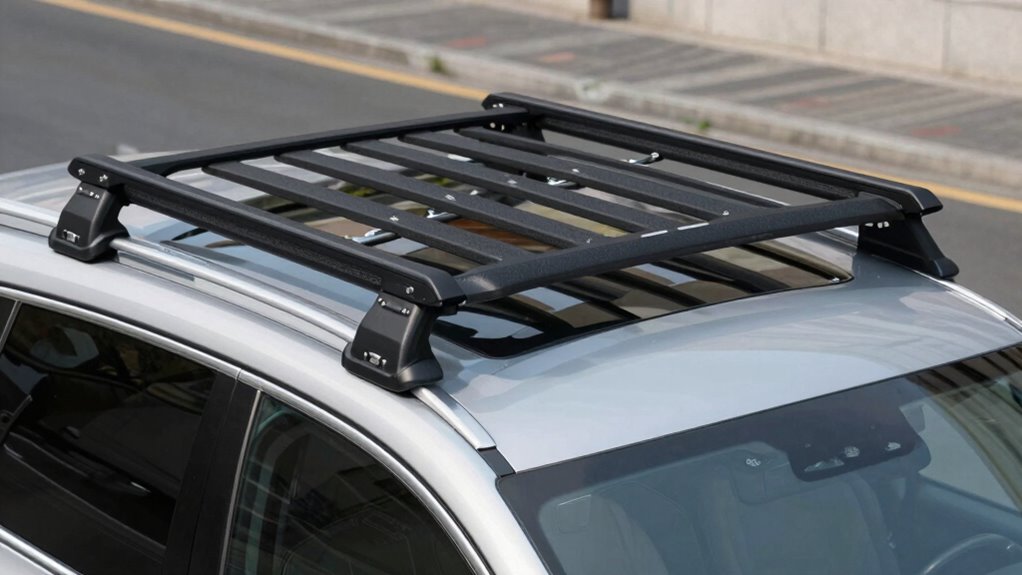
Choosing the right roof rack width is essential to guarantee compatibility with your vehicle and gear. Start by evaluating your vehicle’s roof dimensions and consider available mounting options. A rack that’s too narrow may limit space, while one that’s too wide could interfere with side mirrors or overhang the vehicle. Check the weight capacity to ensure it can handle your gear safely without risking damage or instability. Measure the width of your gear, like bikes or cargo boxes, and select a rack that provides enough clearance for secure attachment. Remember, a proper fit not only improves safety but also prevents damage to your vehicle and gear during transit. Additionally, understanding the importance of proper measurements can significantly enhance the overall safety and functionality of your roof rack setup. Taking the time to compare different models can lead to a more tailored and secure fit.
Frequently Asked Questions
Can I Modify My Roof Rack for a Better Fit?
Yes, you can modify your roof rack for a better fit by exploring modification options like adjusting clamps or adding adapters. Custom fitting is often possible with certain racks, allowing you to tailor the fit to your vehicle’s specific roof type. Just verify any modifications are secure and compatible with your rack’s design to avoid damage or safety issues. When in doubt, consult the manufacturer for guidance.
Are There Universal Roof Rack Widths That Fit Most Vehicles?
Like Cinderella’s slipper, universal roof rack sizes aim to fit most vehicles, but they’re not always perfect. While some brands offer a “universal fit,” the reality is that roof rack widths vary by vehicle. To guarantee a good fit, measure your roof’s width and compare it to the rack’s specifications. This way, you avoid a mismatched fit, just as the slipper only fits one.
How Does Weather Affect Different Roof Rack Materials?
Weather notably impacts different roof rack materials. If you choose aluminum, you’ll benefit from excellent weather resistance and high material durability, making it ideal for harsh conditions. Steel racks, while durable, can rust if exposed to moisture long-term, reducing their weather resistance. Plastic components may degrade or crack with sun exposure and temperature changes. To guarantee longevity, pick a roof rack with strong material durability and weather resistance suited to your climate.
What Safety Features Should I Look for in a Roof Rack?
Imagine you’re on a road trip, and your roof rack suddenly detaches. To prevent this, look for safety features like a high load capacity that supports your gear without risking collapse. Additionally, anti-theft features, such as locking mechanisms, keep your gear secure. These safety features protect your cargo, your vehicle, and your peace of mind, ensuring you can enjoy your trip without worries.
How Long Does It Typically Take to Install a Roof Rack?
Installing a roof rack usually takes about 1 to 2 hours with professional installation. The timeline depends on your vehicle type and the rack model. If you opt for professional installation, expect it to be quick and efficient, ensuring proper fit and safety. Some installations may take longer if additional adjustments are needed. Always check with your installer beforehand to get an accurate installation timeline.
Conclusion
Choosing the right roof rack width is essential for a secure fit and safe travels. Imagine you install a rack that’s too narrow—your gear could slip or damage your vehicle. Conversely, an overly wide rack might cause wind noise or instability. By measuring your roof and crossbars accurately, you guarantee a perfect fit. For example, a driver with correctly sized crossbars avoided gear mishaps on a cross-country trip, proving that proper measurement keeps your adventures safe and smooth.
Fall Picks
fall essentials
As an affiliate, we earn on qualifying purchases.