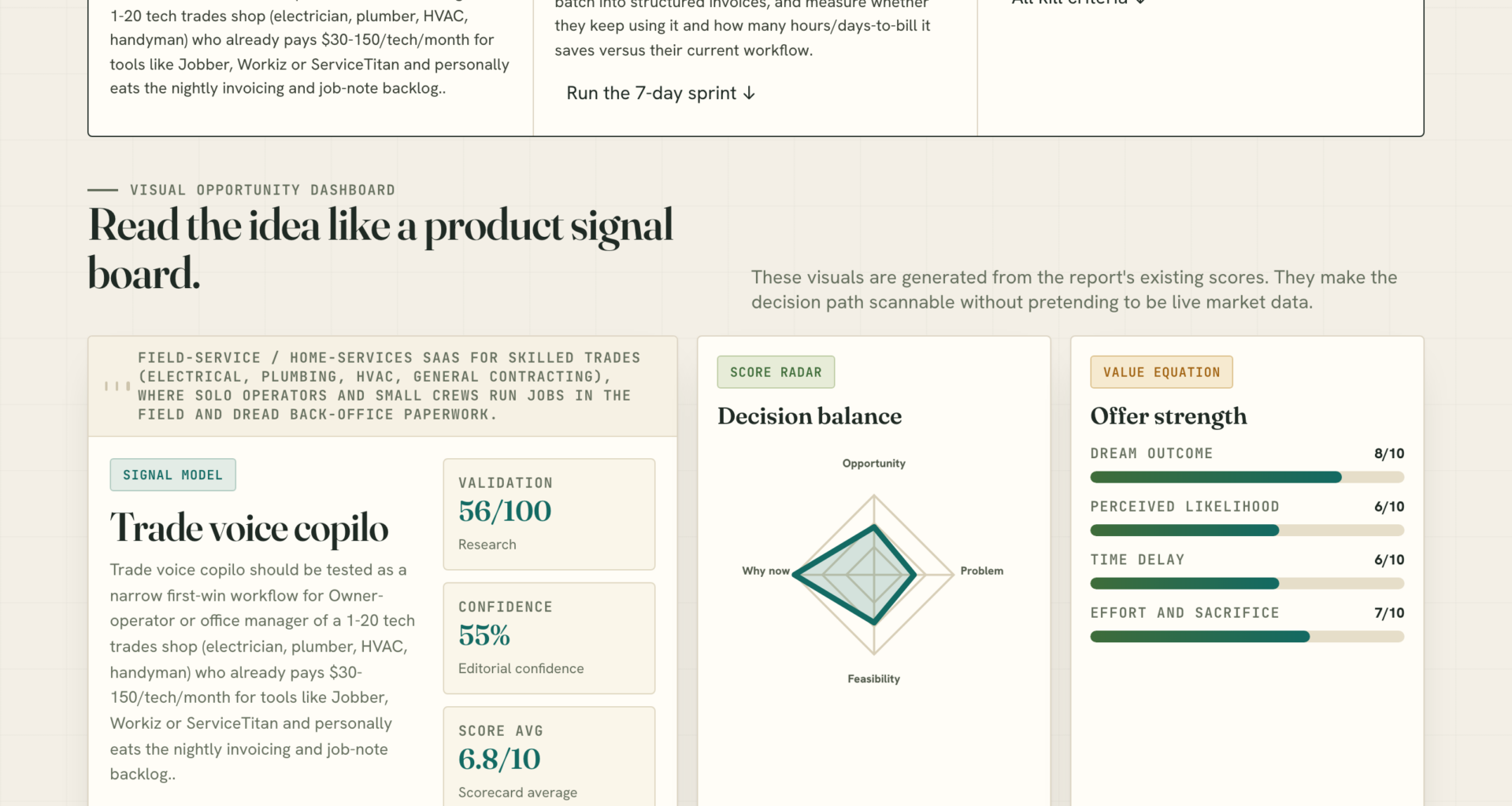

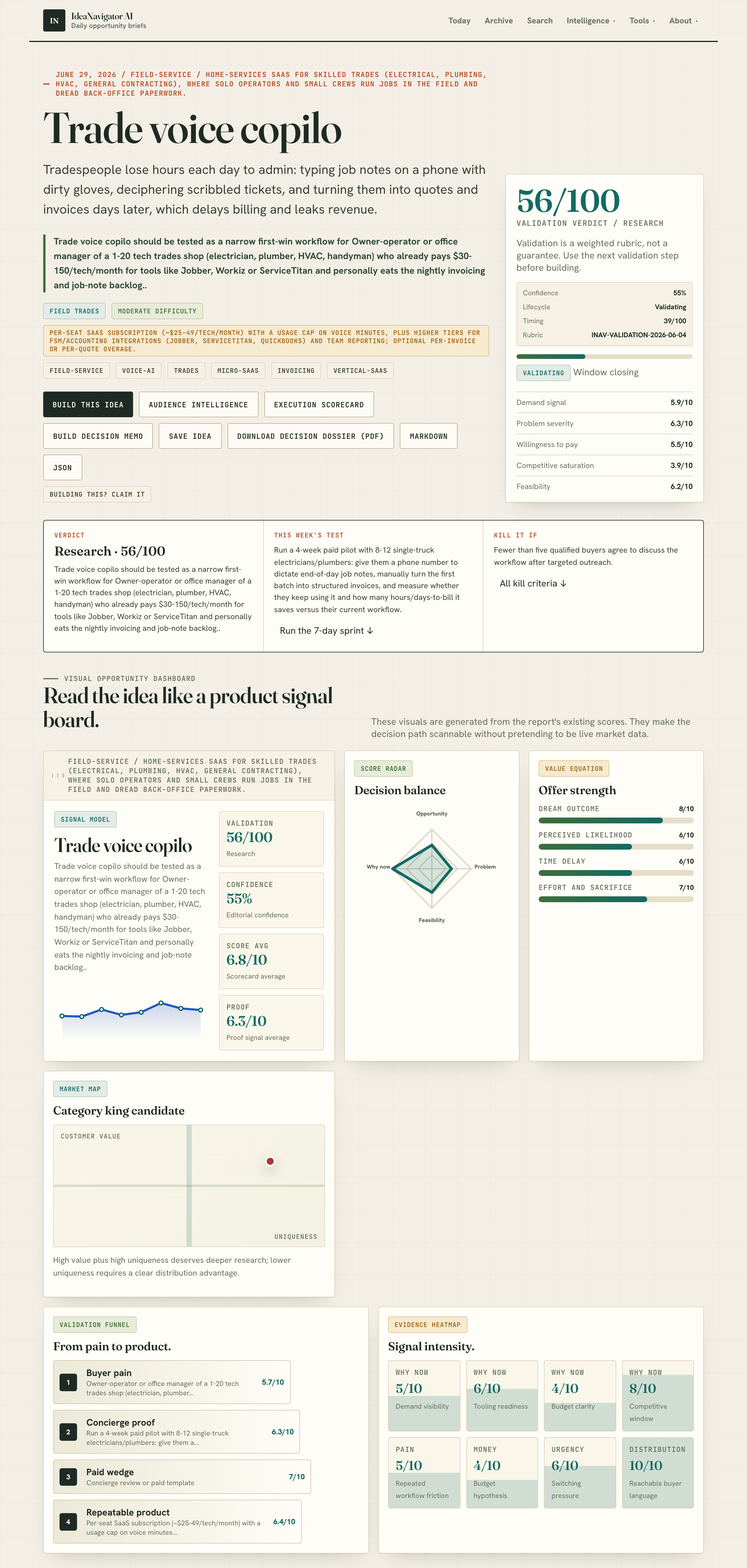
📊 Full opportunity report: Trade voice copilo on IdeaNavigator AI — validation score, market gap, and execution plan.

Get monitors, keyboards and dev gear delivered free — and shop member deals
- Fast, free delivery on millions of items
- Access to Prime Big Deal Days deals on October 6–7
- Prime Video, Amazon Music and more included
TL;DR
Trade voice copilo is now in pilot testing for small trades businesses, aiming to automate job notes and invoicing through speech recognition and AI. The initiative targets owner-operators and office managers seeking efficiency gains amidst labor shortages.
A new voice-based workflow tool called Trade Voice Copilo is being tested with small trades businesses, including electricians, plumbers, and HVAC contractors. The tool aims to automate job note-taking and invoicing, potentially saving hours of administrative work each day. Trade and supply-chain operations signal monitor. This development comes as labor shortages and administrative burdens intensify challenges for small trades firms, making efficiency improvements increasingly critical. Trade and supply-chain operations signal monitor.
Trade Voice Copilo is designed for owner-operators and office managers of small trades businesses with 1-20 technicians. The tool leverages advanced speech-to-text technology combined with large language models (LLMs) to transcribe and structure job details, such as client info, work performed, parts used, and time spent. The structured data can then be pushed into popular field service management (FSM) platforms like Jobber or QuickBooks via API, enabling one-tap approval of drafts for invoicing or quoting.
The pilot involves 8-12 single-truck tradespeople who will use a dedicated phone number or mobile app to dictate job summaries at the end of each day. Trade and supply-chain operations signal monitor. The goal is to assess whether the tool reduces the time-to-bill and helps prevent revenue leaks caused by delayed invoicing. The initiative is supported by the increasing availability of affordable, accurate speech recognition suitable for noisy field conditions and the urgent need for small firms to optimize billable hours amid staffing shortages.
Potential Impact on Small Trades Business Operations
This pilot could demonstrate a practical solution to a widespread problem: small trades firms often spend hours manually entering job notes and invoices, especially after a long day in the field. By automating this process, Trade Voice Copilo could significantly reduce administrative overhead, accelerate cash flow, and improve profitability for owner-operators. As labor shortages persist, tools that maximize billable hours and streamline workflows are increasingly vital for small businesses to remain competitive and financially sustainable.
As an affiliate, we earn on qualifying purchases.
Growing Need for Administrative Efficiency in Trades
Many small trades businesses currently rely on manual note-taking, scribbled tickets, and delayed invoicing, which can lead to revenue leakage and cash flow issues. Existing software like Jobber, Workiz, and ServiceTitan offer management solutions but do not fully address the time-consuming task of capturing detailed job information in real-time. Recent advances in speech recognition technology and AI have made hands-free, accurate transcription feasible even in noisy environments, opening new opportunities for automation. The current pilot reflects an industry-wide push to adopt innovative tools that reduce administrative burdens and improve operational efficiency, especially as the skilled trades face a labor shortage that emphasizes the importance of maximizing billable hours.
“Using voice to quickly document jobs at the end of the day could save me hours each week, helping me get paid faster and focus on the work.”
— a trades business owner participating in the pilot
As an affiliate, we earn on qualifying purchases.
Uncertainties About Pilot Outcomes and Adoption
It is not yet clear how accurately the voice copilot will perform in real-world noisy field conditions or how well small trades firms will adopt the technology long-term. The pilot’s success depends on user engagement, transcription accuracy, and seamless integration with existing software. Additionally, questions remain about the scalability of the solution and whether it can handle diverse job types and vocabulary typical of different trades. Further testing will be needed to validate these aspects before wider deployment.
As an affiliate, we earn on qualifying purchases.
Next Steps for Validation and Broader Rollout
The current pilot will run for four weeks, during which participating firms will provide feedback on usability, accuracy, and time savings. Based on the results, developers plan to refine the tool and potentially expand the pilot to more users. If successful, a broader rollout could follow, with subscription plans targeting small trades businesses and additional features like advanced reporting and integrations. The company behind the tool aims to establish a proven, scalable solution that addresses a critical pain point in the trades industry.
invoice automation tools for small trades
As an affiliate, we earn on qualifying purchases.
As an affiliate, we earn on qualifying purchases.
Key Questions
How does Trade Voice Copilo work?
The tool allows tradespeople to dictate job details via a phone number or app. The AI transcribes and structures the information into a job record, which can then be reviewed and approved for invoicing within existing management platforms.
Who is this tool designed for?
It targets owner-operators and office managers of small trades businesses with 1-20 technicians, especially those already using tools like Jobber, Workiz, or ServiceTitan.
What benefits does it offer?
It aims to save hours spent on administrative tasks, reduce delays in billing, and improve cash flow by automating job note documentation and invoice creation.
When will the pilot results be available?
The pilot is scheduled for four weeks, with initial feedback expected shortly afterward to assess effectiveness and user satisfaction.
Are there any risks or limitations?
Potential challenges include transcription accuracy in noisy environments and user adoption. Further testing is needed to confirm long-term viability.
Source: IdeaNavigator AI
Halloween Picks
halloween
As an affiliate, we earn on qualifying purchases.