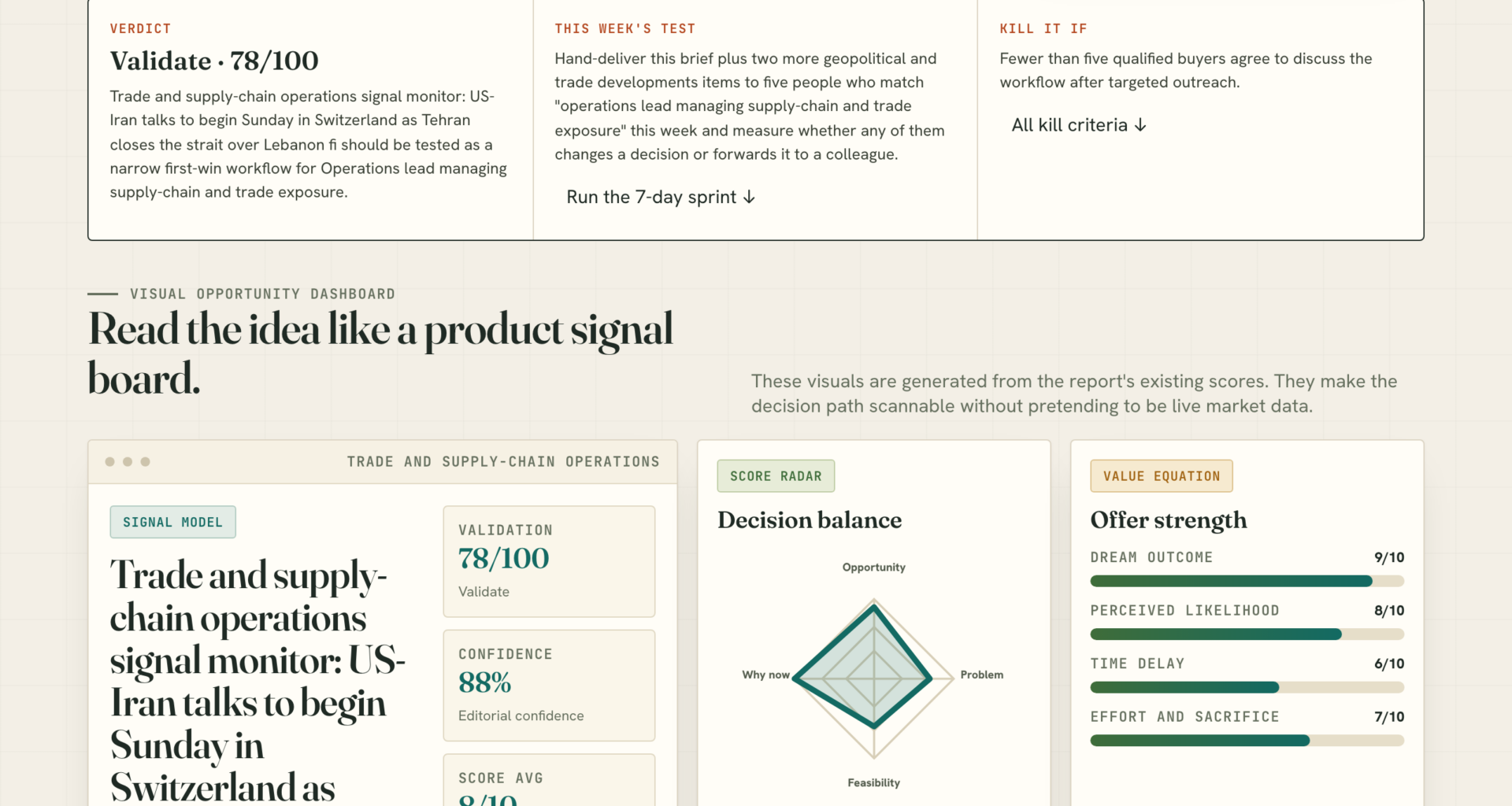

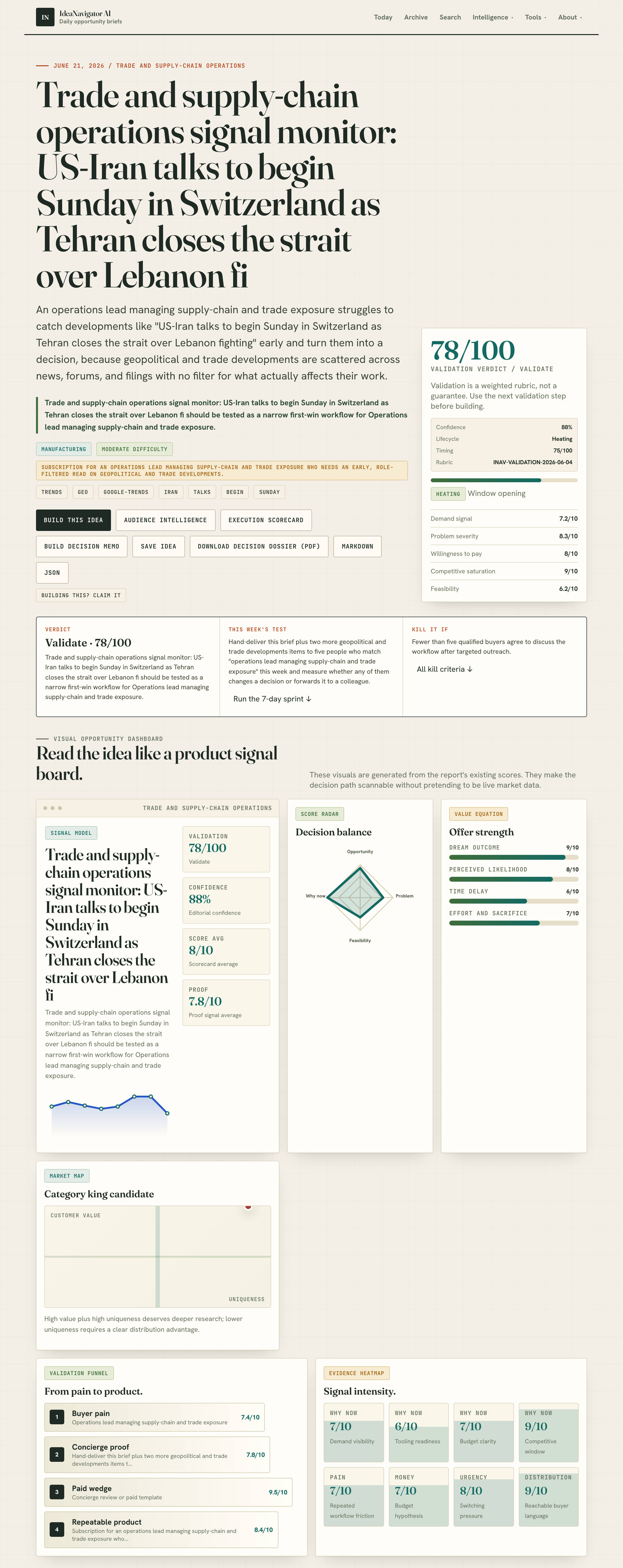
📊 Full opportunity report: Trade and supply-chain operations signal monitor: US-Iran talks to begin Sunday in Switzerland as Tehran closes the strait over Lebanon fi on IdeaNavigator AI — validation score, market gap, and execution plan.

Get business pricing on monitors, keyboards and dev gear
- Business-only prices and quantity discounts
- Tax-exempt purchasing
- Multiple users, one account, clear invoices
TL;DR
U.S.-Iran talks are scheduled to begin this Sunday in Switzerland. Iran has closed the Strait of Hormuz over Lebanon fighting, raising concerns about supply chain disruptions. The development is confirmed and could significantly affect global trade.
U.S.-Iran talks are scheduled to commence this Sunday in Switzerland, amid Iran’s decision to close the Strait of Hormuz over ongoing fighting in Lebanon, according to confirmed reports. This development has immediate implications for global trade routes and supply chains, making it a critical event for stakeholders managing trade exposure.
Iran has announced the closure of the Strait of Hormuz, a vital chokepoint for global oil and trade shipments, citing the fighting in Lebanon as the reason. The talks between the U.S. and Iran are set for Sunday in Switzerland, with officials from both sides expected to discuss de-escalation and potential easing of sanctions. The closure of the strait could disrupt maritime traffic, increase shipping costs, and create volatility in energy markets. Experts note that this signals a significant escalation in regional tensions, with immediate effects on supply chains that rely on the Strait of Hormuz for transportation.
Sources confirm that the negotiations are a key diplomatic effort to prevent further escalation, though details of the agenda remain undisclosed. The U.S. State Department has acknowledged the talks but has not confirmed specific outcomes. Meanwhile, Iran’s decision to close the strait is viewed as a response to regional conflicts and ongoing sanctions pressures. The situation has prompted warnings from international shipping companies and traders about potential disruptions.
Implications of the US-Iran Negotiations and Strait Closure
This development matters because the Strait of Hormuz accounts for approximately 20% of the world’s oil trade. Its closure could lead to increased transportation costs, supply chain delays, and heightened market volatility. For operations managers overseeing global trade, understanding these geopolitical shifts is crucial for risk mitigation and contingency planning. The negotiations may also influence future regional stability and trade policies, impacting broader economic conditions.
Products Worth Considering

Apple Watch SE (2nd Gen) GPS 40mm with Starlight Aluminum Case and Sport Band (S/M)

Apple Watch Series 8 GPS, 41mm, Midnight Aluminum Case with Midnight Sport Band (S/M)

LG UltraGear 27GX704A-B 27-inch QHD OLED Gaming Monitor
As an affiliate, we earn on qualifying purchases.
Recent Escalations and Historical Tensions in the Region
The Strait of Hormuz has been a focal point of regional tension for decades, with Iran threatening to close it during previous conflicts. The current situation escalates amid ongoing fighting in Lebanon, which Iran supports, and rising U.S.-Iran geopolitical friction. Past incidents, such as tanker seizures and sanctions, have demonstrated how regional conflicts can quickly ripple into global trade disruptions. The upcoming negotiations are viewed as a potential de-escalation opportunity, but their success remains uncertain amid heightened tensions. Show HN: Kage could be relevant for monitoring online activity related to regional tensions.
“The talks are a critical step toward de-escalation, but the situation remains volatile. The closure of the strait is a serious concern for global trade.”
— an anonymous diplomat
Unresolved Questions About Negotiation Outcomes and Strait Status
It is not yet clear whether the talks will lead to a de-escalation or if Iran will maintain the closure of the Strait of Hormuz. The specific agenda and possible agreements remain undisclosed, and the potential for further escalation persists. The duration of the closure and its actual impact on maritime traffic are still uncertain, as are the responses from the international community and affected nations.
Next Steps in Diplomatic and Maritime Responses
The negotiations are scheduled for Sunday, with international observers monitoring for signs of progress or escalation. Stakeholders in global supply chains should prepare for possible disruptions, including rerouting options and contingency plans. Further diplomatic statements and potential reopening of the strait could follow, depending on the negotiation outcomes. Market analysts will closely watch energy prices and shipping indices for early signs of impact.
Key Questions
What is the significance of the Strait of Hormuz?
The Strait of Hormuz is a critical maritime chokepoint through which about 20% of the world’s oil passes. Its closure can severely disrupt global energy supplies and trade routes.
Why are the US and Iran negotiating now?
The negotiations are part of ongoing efforts to de-escalate regional tensions amid Iran’s response to sanctions and conflicts in Lebanon, with the aim of preventing further disruptions to global trade.
Could the Strait closure last long?
It is currently uncertain how long Iran will maintain the closure, as negotiations are ongoing and the situation remains fluid.
What are the potential impacts on supply chains?
Disruptions could lead to delays, higher shipping costs, and rerouting of maritime traffic, affecting industries reliant on timely global trade.
What happens if negotiations fail?
If talks do not lead to de-escalation, tensions may escalate further, potentially leading to increased sanctions, military confrontations, or extended disruptions at the strait.
Source: IdeaNavigator AI