

🔍 Read the full analysis: Thirteen AI Automation Software Tools To Watch In 2026 on ThorstenMeyerAI.com
TL;DR
In 2026, thirteen AI automation tools stand out for their capabilities in streamlining workflows across development, testing, and network operations. This report identifies the top tools, their features, and the implications for businesses and developers.
Thirteen AI automation software tools are emerging as key players to watch in 2026, offering diverse features for automating complex workflows across development, testing, and network management. These tools are gaining attention for their ability to integrate AI seamlessly into existing systems, with some excelling in scalability and ease of use. The landscape reflects a growing emphasis on minimal coding, API support, and flexible deployment options, making them highly relevant for both small teams and large enterprises.
The selected tools include a mix of general-purpose automation platforms and specialized solutions. For instance, Google AI Studio is noted for building scalable workflows with extensive cloud integration, while Spec-Driven AI Testing focuses on automating testing processes with AI-driven precision. The overall trend emphasizes combining AI agents with low-code interfaces to enable rapid development of automation tasks. Evaluation criteria for these tools included their ability to automate complex workflows, ease of integration with existing development pipelines, scalability, user experience, and overall value. Many tools support popular programming languages like Python and JavaScript, with strong API and CI/CD pipeline support, facilitating seamless workflow integration.
Pricing models vary, with premium solutions offering advanced features suitable for large-scale operations, while more affordable options cater to smaller teams or individual developers. Active community support, comprehensive documentation, and ongoing development are common traits among the top-ranked tools. Despite these advancements, some uncertainties remain regarding long-term scalability for enterprise deployments and the full extent of customization available in certain AI automation tools. It is also not yet clear how these tools will evolve to meet future demands for security and data privacy in automation workflows.
The 13 picks
- 1
 Software Testing with Generative AIView on Amazon →
 - 2
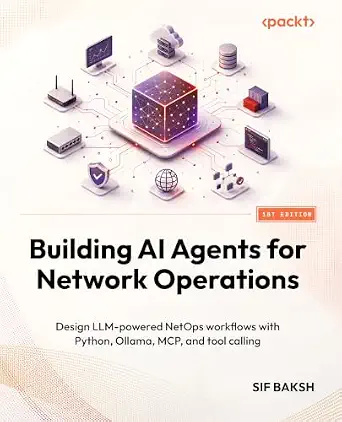 Building AI Agents for Network Operations: Design LLM-powered NetOps workflow…View on Amazon →
 - 3
 40 Python Programming Projects for AI Agents and AutomationsView on Amazon →
 - 4
 The Claude Code Operating Model: Build Scalable AI Coding Systems with Skills…View on Amazon →
 - 5
 Spec-Driven AI Engineering: Build Reliable Software from Requirements to Code…View on Amazon →
 - 6
 Building Agentic AI Systems: A Step-by-Step Guide to Creating LLM-Powered AI…View on Amazon →
 - 7
 AI for Quality Assurance and Software Testing: The Practitioner’s Complete Gu…View on Amazon →
 - 8
 Building Intelligent Applications with Claude AI: A Practical Guide to Creati…View on Amazon →
 - 9
 Spec-Driven Software Testing with AI: Build Reliable Test Suites from Specifi…View on Amazon →
 - 10
 Mastering Claude AI: The Complete Practical Guide to Prompt Engineering, Proj…View on Amazon →
 - 11
 Claude AI Automation & Monetization: Build AI-Powered Systems, Automate Workf…View on Amazon →
 - 12
 Google AI Studio Guide 2026: Master Google AI Studio to Build Intelligent AI…View on Amazon →
 - 13
 Agentic Coding with Claude Code (5-in-1): A Practical Developer’s Handbook fo…View on Amazon →
Implications for Business Automation in 2026
The prominence of these thirteen AI automation tools indicates a significant shift toward AI-driven workflows in software development, testing, and network management. Their capabilities to reduce manual effort, improve accuracy, and accelerate deployment cycles can lead to increased productivity and cost savings for organizations. For developers, these tools offer the potential to streamline complex tasks with minimal coding, democratizing automation and expanding its accessibility. For enterprises, the ability to scale automation efforts efficiently could redefine operational standards and competitive advantage. However, the rapid evolution of these platforms also raises questions about standardization, security, and long-term support, making it crucial for organizations to carefully evaluate their options.
2026 AI Automation Landscape and Trends
The AI automation market has experienced rapid growth over the past few years, driven by advances in machine learning, cloud computing, and API-based integrations. Early 2020s saw the emergence of platforms focused on simple task automation, but by 2026, the landscape has matured to include sophisticated tools capable of handling enterprise-grade workflows. Notable trends include the rise of low-code and no-code interfaces, increased emphasis on testing automation, and the integration of AI agents into existing DevOps pipelines. Major players like Google, Microsoft, and emerging startups are competing to offer comprehensive solutions that cater to diverse needs—from coding assistance to network operations. Despite the crowded market, only a handful of tools have demonstrated the scalability and flexibility required for long-term adoption, making the selection process critical for organizations.
Unanswered Questions About Long-Term Adoption
While these thirteen tools are prominent in 2026, several uncertainties remain. It is not yet clear how well they will scale in large, distributed enterprise environments over time or how they will adapt to evolving security and privacy standards. Additionally, the extent of customization and integration flexibility in some platforms remains to be fully tested in real-world scenarios. Long-term support, vendor stability, and the availability of dedicated community resources are also still developing factors that could influence their adoption and effectiveness.
Next Steps for Organizations Considering These Tools
Organizations interested in leveraging these AI automation tools should conduct pilot programs to evaluate compatibility with existing workflows and scalability. Monitoring updates from vendors and participating in user communities can provide insights into ongoing improvements and support quality. As the market evolves, future releases may address current limitations related to security and customization. Additionally, organizations should develop clear automation strategies aligned with their operational goals to maximize the benefits of these tools while managing potential risks.
Key Questions
Which of these tools is best suited for small teams?
Tools emphasizing ease of use, minimal coding, and quick setup—such as certain low-code platforms—are generally more suitable for small teams. Evaluating affordability and support resources is also important.
Can these tools integrate with existing development pipelines?
Yes, most leading tools support integration with popular CI/CD platforms, APIs, and development environments like Jenkins, GitHub, and Docker, enabling seamless workflow automation.
What are the main factors to consider when choosing an AI automation tool?
Key factors include scalability, customization options, ease of integration, cost, user experience, and the level of community and vendor support.
Will these tools replace human developers entirely?
Current tools are designed to augment human effort by automating repetitive tasks and assisting decision-making but are not expected to replace developers entirely in the foreseeable future.
How secure are these AI automation platforms?
Security varies by platform; many are actively improving security features, but organizations should evaluate each tool’s compliance with their data privacy and security standards before deployment.
Source: ThorstenMeyerAI.com