
📊 Full opportunity report: Trade and supply-chain operations signal monitor: U.S. strikes Iranian military sites after ship was hit in Strait of Hormuz on IdeaNavigator AI — validation score, market gap, and execution plan.

Get business pricing on monitors, keyboards and dev gear
- Business-only prices and quantity discounts
- Tax-exempt purchasing
- Multiple users, one account, clear invoices
TL;DR
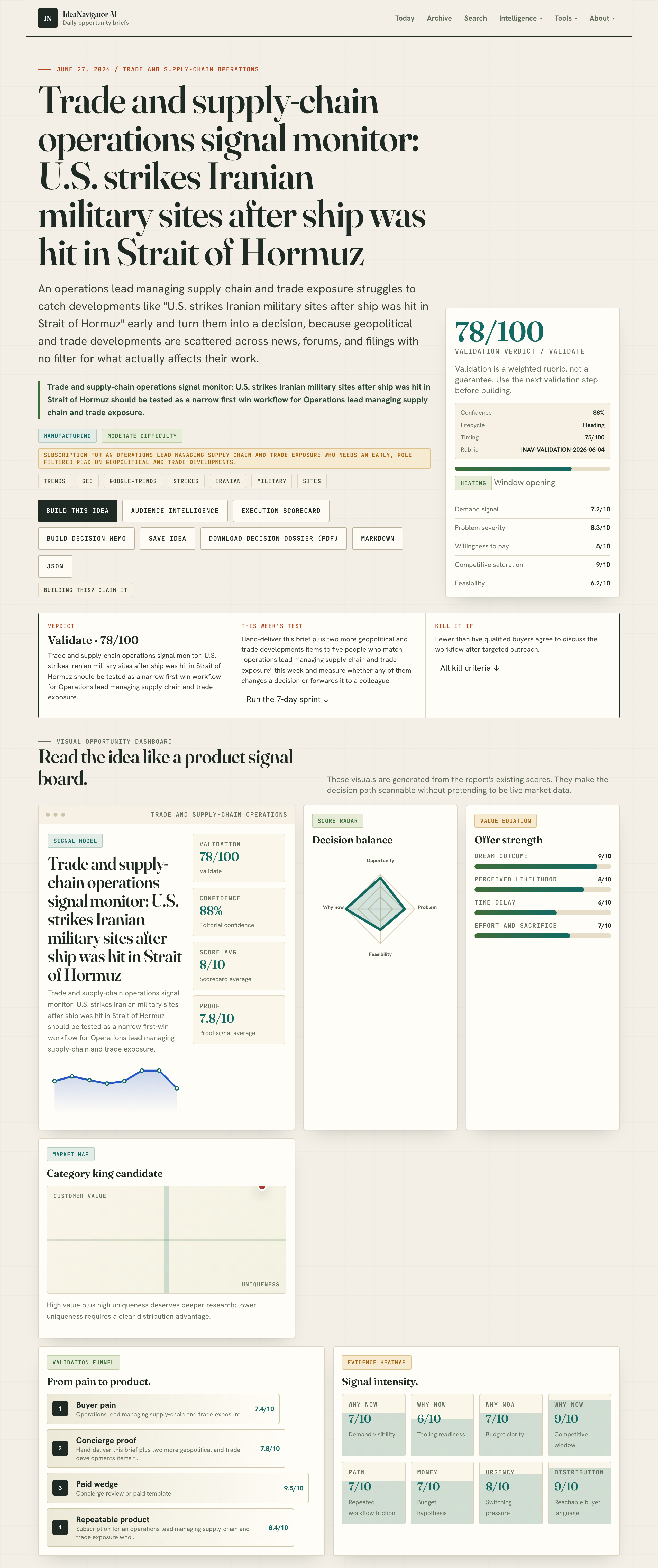
The U.S. military has conducted strikes on Iranian military sites after a ship was hit in the Strait of Hormuz. This development is confirmed and signals rising tensions in the region, with ongoing uncertainty about broader escalation.
The U.S. military has confirmed it launched strikes on Iranian military sites in response to an attack on a commercial vessel in the Strait of Hormuz. This development marks a notable escalation in U.S.-Iran tensions and has immediate implications for regional security and trade routes.
According to U.S. officials, the strikes targeted military infrastructure in Iran believed to be responsible for or associated with the attack on a commercial ship in the Strait of Hormuz. The incident occurred earlier this week, and the U.S. response was coordinated with intelligence assessments indicating Iranian involvement. Trade and supply-chain operations signal monitor: US-Iran talks to begin Sunday in Switzerland as Tehran closes the strait over Lebanon fi
Iranian authorities have not yet officially responded to the strikes, and it remains unclear whether the military actions will escalate further or lead to broader conflict. The targeted sites reportedly included military installations and weapon storage facilities, but the full extent of the strikes has not been independently verified.
Implications for Regional Stability and Global Trade
This escalation underscores rising tensions between the U.S. and Iran over the Strait of Hormuz, a critical chokepoint for global oil shipments. Technology operations signal monitor: I admire Fabrice Bellard. He is almost certainly a better overall programmer The strikes could impact regional stability, threaten maritime security, and disrupt international trade routes, especially if tensions escalate further.
For global markets and supply chains, heightened conflict in this area raises concerns about potential disruptions to oil supplies and shipping lanes, which could influence prices and trade flows worldwide.
As an affiliate, we earn on qualifying purchases.
Recent Escalations and U.S.-Iran Tensions in the Strait
Over the past year, tensions between the U.S. and Iran have increased due to ongoing disputes over Iran’s nuclear program, regional influence, and maritime security. The Strait of Hormuz has been a flashpoint, with several incidents involving ships and military activity.
This recent attack on a vessel and the subsequent U.S. strikes follow a pattern of escalating military and diplomatic exchanges, reflecting a fragile security situation in the region.
“We targeted military sites linked to Iran in response to the attack on the vessel in the Strait of Hormuz. Our actions are aimed at deterring further aggression.”
— U.S. Defense Department spokesperson
military site surveillance equipment
As an affiliate, we earn on qualifying purchases.
As an affiliate, we earn on qualifying purchases.
Unconfirmed Details and Potential for Escalation
It is not yet clear whether the strikes will lead to further military actions or broader conflict between the U.S. and Iran. The full scope and impact of the strikes remain uncertain, and regional responses could vary.
Additionally, independent verification of the targets and extent of the strikes is still pending, and Iran’s next moves are unpredictable.
maritime security monitoring tools
As an affiliate, we earn on qualifying purchases.
As an affiliate, we earn on qualifying purchases.
Monitoring Regional Responses and Diplomatic Efforts
Next steps include closely watching Iran’s official response, potential retaliatory actions, and cybersecurity developments to de-escalate tensions. The U.S. and allied countries are likely to assess the situation in the coming days for further military or diplomatic measures.
International actors may also increase efforts to mediate or contain the conflict, but the situation remains fluid and unpredictable.
As an affiliate, we earn on qualifying purchases.
Key Questions
What prompted the U.S. to strike Iranian military sites?
The strikes were in response to an attack on a commercial vessel in the Strait of Hormuz, which U.S. officials attribute to Iran.
Has Iran officially responded to the strikes?
Iranian officials have not confirmed involvement or responded directly to the strikes, indicating diplomatic ambiguity.
Could this lead to a wider conflict?
The situation remains uncertain. While the strikes are a significant escalation, it is unclear if further military actions will follow or if diplomatic efforts will contain the conflict.
What does this mean for global trade?
The incident heightens risks to maritime security in the Strait of Hormuz, which could disrupt oil shipments and impact global markets if tensions escalate further.
What should supply-chain operators do now?
Operators should monitor regional developments closely, assess exposure to the Strait of Hormuz, and prepare contingency plans for potential disruptions.
Source: IdeaNavigator AI
Fall Picks
fall essentials
As an affiliate, we earn on qualifying purchases.