
To safely chop, dice, and julienne, start by prioritizing knife safety. Use a sharp, quality knife for better control and practice a secure grip. Hold the knife handle firmly with your dominant hand while tucking your non-dominant fingers inward to avoid cuts. Keep a non-slip cutting board for stability. Focus on smooth, even motions and take your time to build confidence in your technique. With practice, you’ll master these skills and boost your culinary efficiency. There’s more to discover!
Key Takeaways
- Ensure your workspace is clean and organized to minimize accidents while chopping, dicing, or julienning ingredients.
- Use a sharp, high-quality knife to enhance control and reduce the risk of slips while cutting.
- Maintain a secure grip by holding the handle firmly and using your non-dominant hand in a claw shape to protect fingertips.
- Practice smooth, even motions during cutting to build confidence and improve safety with each technique—chopping, dicing, and julienning.
- Utilize a non-slip cutting board for stability, ensuring a safe and effective chopping environment.
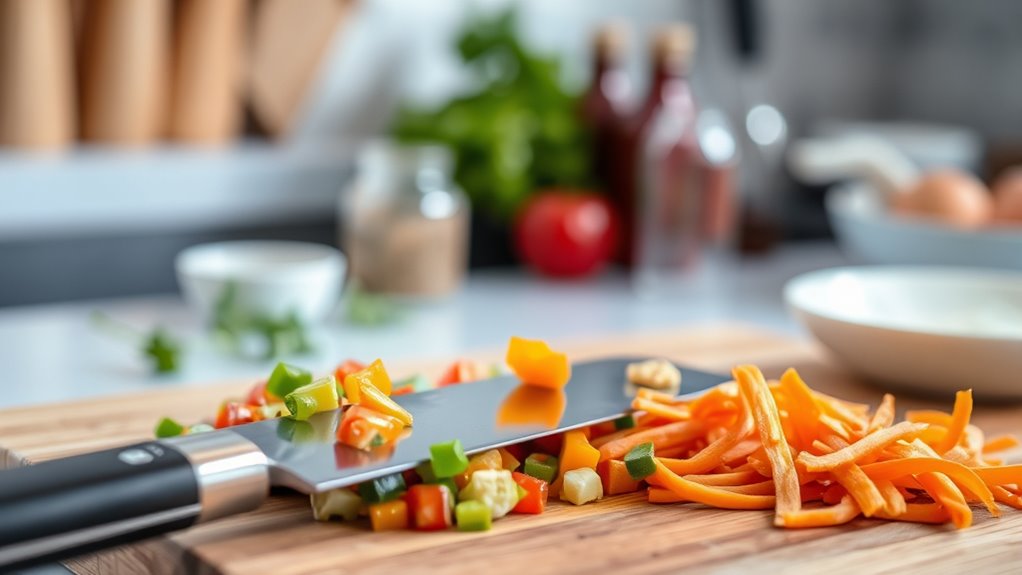
Have you ever wondered how professional chefs make chopping vegetables look so effortless? The secret lies in mastering their knife skills, which not only speeds up your prep time but also enhances the safety of your cooking experience. With the right techniques, you can chop, dice, and julienne like a pro while maintaining proper knife safety.
First things first: knife safety should always be your top priority. Before you even pick up a knife, make sure your workspace is clean and organized. A cluttered area can lead to accidents, so clear away any unnecessary items. When you’re ready to start, choose a sharp knife. A dull blade requires more force to cut through food and increases the chances of slipping. Remember, it’s better to invest in a quality knife than to take risks with a cheap one.
Knife safety is paramount; keep your workspace organized and always use a sharp, quality knife to prevent accidents.
Now, let’s talk about the proper grip. Hold the handle firmly with your dominant hand, and place your thumb and the side of your index finger on either side of the blade’s base. This grip gives you better control as you slice. Your other fingers should wrap around the handle for added stability. It may feel a bit awkward at first, but practice makes perfect. As you get comfortable, you’ll find that this grip allows for more precision and speed.
When you’re chopping, keep your non-dominant hand in a claw shape. Tuck your fingertips inward, ensuring they’re away from the blade. This not only protects your fingers but also helps guide the food securely as you chop. Use a cutting board with a non-slip surface to prevent sliding. A stable base is essential for knife safety, so invest in a good-quality board that suits your needs.
As you start chopping, remember to use smooth, even motions. Don’t rush; take your time to build confidence in your movements. Whether you’re dicing onions or julienning carrots, consistency is key. If you find yourself struggling, slow down and focus on your technique. The more you practice, the more natural it’ll become. Additionally, just like in home cinema projectors, mastering your technique will greatly enhance your overall cooking experience.
Incorporating these knife skills into your cooking routine will not only improve your efficiency but also your enjoyment in the kitchen. You’ll feel empowered, knowing you can handle your knife safely and effectively. So grab your knife, practice your grip, and chop away!
Frequently Asked Questions
What Type of Knife Is Best for Beginners?
For beginners, a chef’s knife is the best choice. Its versatile blade allows you to tackle various tasks with ease. When you grip the knife, make sure to hold it firmly with your dominant hand, while placing your other hand on the ingredient for stability. After you’re done, store your knife properly in a block or magnetic strip to keep it safe and sharp. This way, you’ll develop good habits right from the start!
How Often Should I Sharpen My Knives?
You should sharpen your knives every few months, but it really depends on how often you use them. If you’re slicing daily, consider sharpening them every month. Maintaining sharp knives is vital for safety and efficiency in the kitchen. Regular honing can also help extend the time between sharpenings. Trust your instincts; if your knife feels dull, it’s time to sharpen. Keeping them sharp makes cooking easier and more enjoyable!
Can I Use a Dull Knife Safely?
Using a dull knife is like trying to cut a steak with a spoon—it’s not safe! You can’t control a dull knife, which increases the risk of slipping and causing injuries. The dangers of a dull knife can’t be overstated; it requires more force, leading to accidents. Always prioritize knife safety by keeping your knives sharp. A well-maintained knife not only makes your tasks easier but also helps you avoid unnecessary hazards in the kitchen.
What Are the Best Cutting Boards for Knife Skills?
The best cutting boards for your knife skills are typically made of wood or plastic. Wooden boards are gentle on your blades and can be more durable, while plastic boards are easy to clean and often dishwasher safe. For maintenance, regularly oil your wooden boards to prevent cracking, and sanitize plastic ones after each use. Avoid glass or ceramic boards, as they can dull your knives quickly. Choose what suits your cooking style best!
How Do I Properly Clean and Maintain My Knives?
To keep your knives gleaming like stars in the night sky, wash them gently in warm, soapy water, then dry them thoroughly. Store them in a knife block or magnetic strip to safeguard their edges. Regularly hone the blades to maintain sharpness, and apply a light coat of mineral oil to prevent rust. With these simple steps, your knives will remain a chef’s best friend, ready for culinary adventures.
Conclusion
Mastering culinary knife skills is like learning to dance; with practice, your movements become fluid and precise. As you chop, dice, and julienne, remember to keep your fingers safe and your techniques sharp. With each slice, you’re not just preparing ingredients—you’re creating art in the kitchen. So, grab your knife, embrace the rhythm, and let your culinary journey unfold. With patience and practice, you’ll transform simple ingredients into a masterpiece.