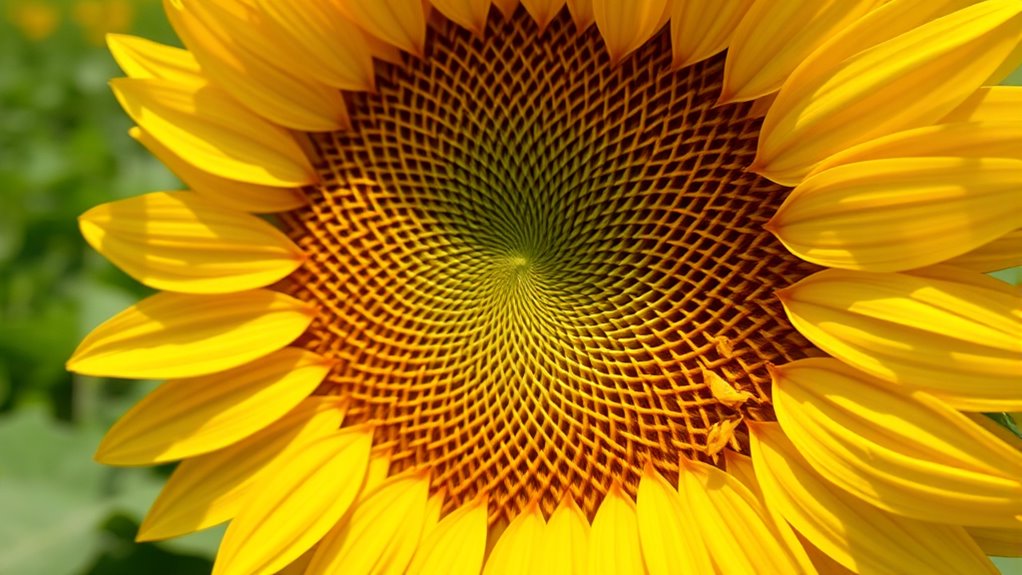

The Fibonacci sequence starts with 0 and 1, and each number is the sum of the two before it. You’ll find it everywhere—like in the spiral patterns of shells, tree branches, and even in sunflowers! This sequence connects to the golden ratio, which brings beauty and harmony to art and architecture. It’s fascinating how such a simple sequence influences nature and human creations. Keep exploring to uncover more about its intriguing presence in the world!
Key Takeaways
- The Fibonacci sequence starts with 0 and 1, with each number being the sum of the two preceding ones, producing a pattern: 0, 1, 1, 2, 3, 5, 8, etc.
- Fibonacci numbers are found in nature, including leaf arrangements, tree branching, and the spirals of shells and galaxies.
- The ratio of successive Fibonacci numbers approaches the golden ratio, which is linked to aesthetic appeal and beauty in art and architecture.
- Artists, architects, and musicians utilize Fibonacci patterns and the golden ratio to create visually pleasing designs and harmonies in their works.
- The pervasive presence of Fibonacci numbers reflects a natural tendency for efficiency and beauty, illustrating interconnectedness between mathematics and the natural world.
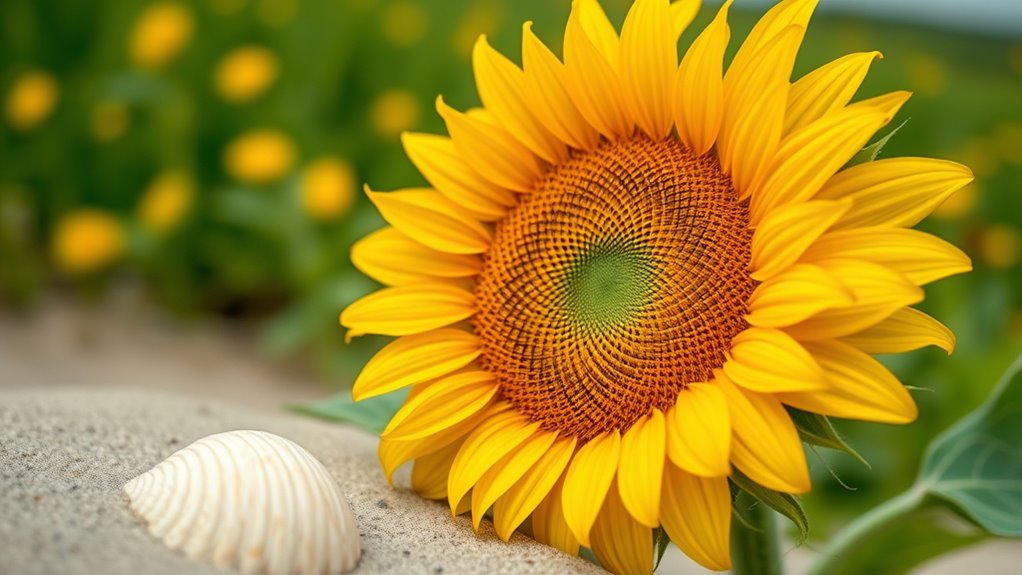
Have you ever wondered how a simple sequence of numbers can appear in nature, art, and mathematics? The Fibonacci sequence, starting with 0 and 1, creates a pattern where each subsequent number is the sum of the two preceding ones. So, you get 0, 1, 1, 2, 3, 5, 8, and so on. What’s fascinating is how this sequence manifests in nature patterns, such as the arrangement of leaves on a stem, the branching of trees, or the spirals of shells and galaxies. You might spot these patterns in sunflowers, which possess seeds arranged in spirals that correspond to Fibonacci numbers, optimizing space and growth.
The Fibonacci sequence reveals a stunning connection between numbers and the natural patterns we observe in the world around us.
When you explore the mathematical properties of the Fibonacci sequence, you’ll find its significance extends beyond mere numbers. The ratio of successive Fibonacci numbers converges to the golden ratio, approximately 1.618. This ratio holds aesthetic appeal, often associated with beauty in art and architecture. Artists and architects have utilized this ratio for centuries, believing it creates pleasing proportions. High refresh rates can also enhance the viewing experience in movie screenings, similar to how Fibonacci patterns enhance visual appeal in art. So, the next time you admire a piece of art or a building, you might recognize the influence of this mathematical property.
You may also notice Fibonacci numbers in various other sectors, such as music and computer algorithms. In music, composers often structure their compositions based on Fibonacci numbers to create rhythm and harmony. In computer science, algorithms utilize Fibonacci numbers for efficient data sorting and searching. It’s amazing how this simple numerical sequence can find relevance across diverse fields, isn’t it?
Moreover, you can find Fibonacci patterns in the animal kingdom. For example, the number of spirals in a pine cone or the petals on certain flowers often corresponds to Fibonacci numbers. Nature seems to follow this sequence to maximize efficiency and beauty, demonstrating an inherent connection between mathematics and the natural world.
As you explore the Fibonacci sequence, you’ll uncover a deeper understanding of how interconnected everything is. It’s a reminder of the mathematical fabric that underlies our universe, influencing everything from tiny seeds to grand architectural feats. So, the next time you see patterns in nature or art, think about the Fibonacci sequence and the remarkable ways it shapes our world. You’ll likely find a newfound appreciation for the beauty that mathematics brings to life.
Frequently Asked Questions
Who Discovered the Fibonacci Sequence First?
You might be surprised to learn that the Fibonacci sequence was first introduced to the Western world by the Italian mathematician Leonardo of Pisa, known as Fibonacci, in the 13th century. His historical discovery emerged from earlier mathematical origins in Indian mathematics. While Fibonacci popularized the sequence, it had been recognized long before him. So, while he’s credited with its introduction, the sequence itself has deeper roots in ancient mathematics.
How Does the Fibonacci Sequence Relate to Art?
The Fibonacci sequence’s influence on art is nothing short of magical! It’s deeply connected to the Golden ratio, which artists use to create visual harmony in their works. When you apply these numbers, you’ll often find compositions that feel balanced and pleasing to the eye. From classic paintings to modern designs, the Fibonacci sequence helps you achieve that perfect aesthetic, guiding your creativity and enhancing your artistic expression in extraordinary ways.
Can the Fibonacci Sequence Predict Stock Market Trends?
Yes, the Fibonacci sequence can be used in financial forecasting to help predict stock market trends. You’ll find that many traders incorporate Fibonacci retracement levels in their market analysis to identify potential reversal points. By analyzing price movements and applying these levels, you can make more informed decisions about buy and sell opportunities. However, it’s important to remember that while it can provide insights, it shouldn’t be your sole strategy for trading.
What Are Real-World Applications of the Fibonacci Sequence?
You’ll find the Fibonacci sequence in various real-world applications, especially in biological patterns and architectural design. In nature, it governs the arrangement of leaves, flowers, and even shells, helping plants maximize sunlight and space. In architecture, it’s used to create aesthetically pleasing structures, often guiding proportions in design. By understanding these applications, you can appreciate how the Fibonacci sequence influences both the natural world and human creativity in unexpected ways.
Is the Fibonacci Sequence Present in Music Compositions?
Yes, the Fibonacci sequence weaves itself into music like a thread through a rich tapestry. You’ll find it shaping composition structures, guiding the flow and progression of melodies. Composers often use it to create musical harmony, ensuring that their pieces resonate deeply. As you listen, you might notice how the rhythm and phrasing echo this sequence, adding a layer of beauty that feels both natural and compelling. It’s music’s hidden blueprint!
Conclusion
In the grand tapestry of existence, the Fibonacci sequence isn’t just a number pattern—it’s the cosmic blueprint! From the spirals of galaxies to the arrangement of leaves on a stem, it’s like the universe’s secret code, whispering its secrets everywhere you look. You can’t escape it! It’s in your morning coffee, the way you breathe, and even in the rhythm of your heartbeat. So, next time you marvel at nature, remember: the Fibonacci sequence is the universe’s way of saying, “I’m alive!”