
For most homes with gigabit internet, my best overall pick is the TP-Link Archer AX73, which pairs Wi-Fi 6 capacity with a stronger feature set than basic gigabit routers. The TP-Link Archer BE230 is a standout for buyers who want Wi-Fi 7 without moving to a tri-band model, while the Archer AX21 is a simpler Wi-Fi 6 choice for everyday use. The main tradeoffs are wireless capacity, coverage, wired-port limits, and whether newer Wi-Fi standards will benefit your devices. A router’s advertised wireless speed also does not mean a single device will reach gigabit speeds over Wi-Fi. Continue reading for the full comparison and help matching a router to your home, equipment, and internet plan.

Get business pricing on monitors, keyboards and dev gear
- Business-only prices and quantity discounts
- Tax-exempt purchasing
- Multiple users, one account, clear invoices
Key Takeaways
The Archer AX73 leads as an all-around Wi-Fi 6 choice; it offers a more capable balance than entry-level AX1800 and AC routers without requiring a Wi-Fi 7 upgrade.
The Archer BE230, NETGEAR RS90, NETGEAR RS140, and TP-Link BE400 bring Wi-Fi 7 to the lineup, but newer wireless technology pays off most when your devices can use it.
Wi-Fi 6E models such as the Archer AXE75 add access to the 6 GHz band; compatible devices can benefit, but older devices cannot use that band.
Several affordable options use Wi-Fi 6 with AX1800 or AX3000-class ratings, making them sensible for routine home use, though their headline ratings do not promise gigabit throughput to one wireless device.
The lineup includes both newer wireless standards and older Wi-Fi 5 AC routers; the Archer A6 and A8 can suit modest needs, but they are less compelling when building a network around gigabit service.
| TP-Link AX5400 WiFi 6 Router (Archer AX73) |  | Best Overall Wi-Fi 6 Pick | Wi-Fi standard: Wi-Fi 6 (802.11ax) | Maximum combined speed: 5400 Mbps | Bands: Dual-band | VIEW ON AMAZON | See Our Full Breakdown |
| TP-Link Archer A8 AC1900 Smart WiFi Router |  | Best Simple Gigabit Basics | Wireless standard: Wi-Fi 5 (802.11ac) | Maximum combined speed: AC1900: 600 Mbps (2.4 GHz) + 1,300 Mbps (5 GHz) | Bands: Dual-band, 2.4 GHz and 5 GHz | VIEW ON AMAZON | See Our Full Breakdown |
| LNN-AX3000 WiFi 6 Router, No App Required |  | Best for App-Free Setup | Wireless standard: Wi-Fi 6 (802.11ax) | Bands: Dual-band, 2.4 GHz and 5 GHz | Listed 5 GHz speed: Up to 2,402 Mbps | VIEW ON AMAZON | See Our Full Breakdown |
| TP-Link AXE5400 Tri-Band WiFi 6E Router (Archer AXE75) |  | Best for 6 GHz Devices | Wi-Fi generation: Wi-Fi 6E | Maximum combined speed: 5400 Mbps | Bands: Tri-band: 2.4 GHz, 5 GHz, and 6 GHz | VIEW ON AMAZON | See Our Full Breakdown |
| TP-Link Dual-Band Wi-Fi 7 Router, Archer BE230 |  | Best Wi-Fi 7 Upgrade Without 6 GHz | Wireless standard: Wi-Fi 7 (802.11be) | Maximum data rate: 3.6 Gbps | Bands: Dual-band | VIEW ON AMAZON | See Our Full Breakdown |
| TP-Link Dual-Band AX3000 Wi-Fi 6 Wireless Gigabit Internet Router for Home | 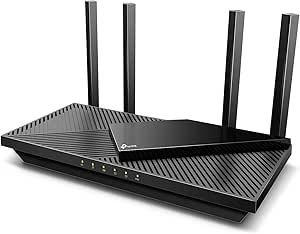 | Best Overall Wi-Fi 6 Pick | Wireless standard: Wi-Fi 6 (802.11ax) | Bands: Dual-band | Maximum data rate: 2,976 Mbps combined | VIEW ON AMAZON | See Our Full Breakdown |
| NETGEAR Nighthawk WiFi 6 Router R6700AX, Up to 1,500 sq ft, 1.8 Gbps |  | Best for Small Homes | Wireless standard: Wi-Fi 6 (802.11ax) | Bands: Dual-band, 2.4 GHz and 5 GHz | Maximum speed: Up to 1.8 Gbps | VIEW ON AMAZON | See Our Full Breakdown |
| ASUS RT-AX1800S Dual Band WiFi 6 Router |  | Best for Security and Wired Setups | Wireless standard: Wi-Fi 6 (802.11ax) | Wireless speed: Up to 1,800 Mbps | Bands: Dual-band | VIEW ON AMAZON | See Our Full Breakdown |
| NETGEAR Nighthawk WiFi 7 Router RS140, Up to 2,250 sq ft, 5 Gbps |  | Best for Large, Device-Heavy Homes | Wireless generation: Wi-Fi 7 | Maximum speed: Up to 5 Gbps | Stated coverage: Up to 2,250 sq ft | VIEW ON AMAZON | See Our Full Breakdown |
| NETGEAR Nighthawk WiFi 7 Router RS90, Up to 2,000 sq ft, 3.6 Gbps |  | Best Wi-Fi 7 Step-Up for Mid-Size Homes | Wireless generation: Wi-Fi 7 | Maximum speed: Up to 3.6 Gbps | Stated coverage: Up to 2,000 sq ft | VIEW ON AMAZON | See Our Full Breakdown |
| TP-Link AC1200 Gigabit Dual Band WiFi Router (Archer A6) |  | Best Basic Gigabit Match | Wi-Fi generation: Wi-Fi 5 | Wireless speed: Up to 1200 Mbps | Bands: 2.4 GHz and 5 GHz | VIEW ON AMAZON | See Our Full Breakdown |
| NETGEAR Nighthawk WiFi 6 Router (RAX36) – AX3000 Dual-Band Gigabit Router, Covers 2,000 sq. ft., Supports 25 Devices, Built-in VPN and USB 3.0 |  | Best for Larger Wi-Fi 6 Homes | Wi-Fi generation: Wi-Fi 6 (802.11ax) | Wireless speed: Up to 3 Gbps | Bands: Dual-band | VIEW ON AMAZON | See Our Full Breakdown |
| TP-Link AX1800 WiFi 6 Router (Archer AX21 V5) |  | Best Value Wi-Fi 6 Upgrade | Wi-Fi generation: Wi-Fi 6 (802.11ax) | Total bandwidth: Up to 1.8 Gbps | Bands: 2.4 GHz and 5 GHz | VIEW ON AMAZON | See Our Full Breakdown |
| TP-Link AX4400 Mesh Dual Band 6-Stream Router (Renewed) |  | Best High-Capacity Renewed Pick | Wi-Fi speed: Up to 4,400 Mbps | Bands: Dual-band | Streams: 6 | VIEW ON AMAZON | See Our Full Breakdown |
| TP-Link BE6500 Dual-Band WiFi 7 Router (BE400) |  | Best for Multi-Gigabit Headroom | Wi-Fi standard: Wi-Fi 7 | Bands: Dual-band | Maximum stated speed: Up to 5,764 Mbps on 5 GHz and 688 Mbps on 2.4 GHz | VIEW ON AMAZON | See Our Full Breakdown |
| wifi routers for gigabit internet | Bands | Security | Antennas | Ports |
|---|---|---|---|---|
| TP-Link AX5400 WiFi 6 Router | Dual-band | WPA2, WPA3 | 6 | 5, including Ethernet and USB 3.0 |
| TP-Link Archer A8 AC1900 Smart | Dual-band, 2.4 GHz and 5 GHz | WPA2-PSK | 3 fixed external | 1 Gigabit WAN and 4 Gigabit LAN |
| LNN-AX3000 WiFi 6 Router | Dual-band, 2.4 GHz and 5 GHz | WPA3 | 5 | 1 WAN and 3 LAN |
| TP-Link AXE5400 Tri-Band WiFi | Tri-band: 2.4 GHz, 5 GHz, and 6 GHz | WPA2, WPA3 | 8 | 5, including a 2.5 Gbps WAN port |
| TP-Link Dual-Band Wi-Fi 7 Rout | Dual-band | WPA, WPA2, WPA3 | — | 5, including 2.5 Gbps ports |
| TP-Link Dual-Band AX3000 Wi-Fi | Dual-band | WPA2-Enterprise, WPA2-PSK, WPA3 | 4 external high-gain antennas | 5 Ethernet/USB ports |
| NETGEAR Nighthawk WiFi 6 Route | Dual-band, 2.4 GHz and 5 GHz | WPA2, WPA3 | Internal | — |
| ASUS RT-AX1800S Dual Band WiFi | Dual-band | AiProtection Classic, VPN | 4 external | 1 WAN, 4 LAN Gigabit |
| NETGEAR Nighthawk WiFi 7 Route | Dual-band | WPA3, Advanced Router Protection | — | — |
| NETGEAR Nighthawk WiFi 7 Route | Dual-band | WPA2, WPA3 | — | — |
| TP-Link AC1200 Gigabit Dual Ba | 2.4 GHz and 5 GHz | WPA3 | 4 external antennas | — |
| NETGEAR Nighthawk WiFi 6 Route | Dual-band | WPA3 and built-in VPN | 2 internal antennas | — |
| TP-Link AX1800 WiFi 6 Router | 2.4 GHz and 5 GHz | WPA/WPA2 and WPA3 | 4 | — |
| TP-Link AX4400 Mesh Dual Band | Dual-band | HomeShield | 6 | — |
| TP-Link BE6500 Dual-Band WiFi | Dual-band | WPA3 and HomeShield | 6 high-performance antennas | 1 × 2.5 Gbps WAN/LAN, 1 × 2.5 Gbps LAN, 3 × 1 Gbps LAN |
More Details on Our Top Picks
TP-Link AX5400 WiFi 6 Router (Archer AX73)
The Archer AX73 is my strongest all-around fit for a gigabit connection when you want Wi-Fi 6 capacity without moving to Wi-Fi 7. Its listed 5400 Mbps combined wireless rate, six antennas, MU-MIMO, and OFDMA give busy homes more room for simultaneous streaming, gaming, and smart-home traffic; those figures describe aggregate Wi-Fi capacity, not a promise of gigabit speed on every device. Compared with the older Archer A8, it offers a newer wireless standard and more room for multiple active devices, while the Archer AXE75 adds a 6 GHz band for compatible devices. The AX73 is the more straightforward choice if your devices mainly use 2.4 and 5 GHz. Its tradeoffs are that it needs a separate modem in most setups and its feature-rich configuration may take more effort than the A8’s app-led management. Coverage is listed at up to 2,000 square feet, but walls and interference can reduce it.
Pros:- Wi-Fi 6 with MU-MIMO and OFDMA supports busy networks with many connected devices.
- Six antennas and a stated coverage area of up to 2,000 square feet suit broader home coverage.
- WPA2 and WPA3 security options, plus TP-Link HomeShield features.
- Five ports, including Ethernet and USB 3.0, provide wired connections and an extra USB connection.
Cons:- Requires a separate modem for most internet service providers.
- Feature-rich setup may be less approachable than the Archer A8’s Tether App management.
- Dual-band Wi-Fi lacks the 6 GHz band available on the Archer AXE75.
Best for: Households with a gigabit plan, several Wi-Fi 6 devices, and regular simultaneous streaming, gaming, and smart-home use.
Not ideal for: Buyers seeking the simplest setup or a 6 GHz band for compatible devices; consider the Archer A8 for simpler Wi-Fi 5 needs or the Archer AXE75 for Wi-Fi 6E.
- Wi-Fi standard:Wi-Fi 6 (802.11ax)
- Maximum combined speed:5400 Mbps
- Bands:Dual-band
- Listed coverage:Up to 2,000 sq. ft.
- Antennas:6
- Ports:5, including Ethernet and USB 3.0
- Security:WPA2, WPA3
Our verdict“Choose the Archer AX73 for a capable Wi-Fi 6 gigabit home network, unless 6 GHz access or especially simple setup matters more.”
TP-Link Archer A8 AC1900 Smart WiFi Router
The Archer A8 makes sense for a gigabit connection when your priority is reliable wired networking and everyday Wi-Fi, not the newest wireless generation. Its five Gigabit Ethernet ports—one WAN and four LAN—give desktops, TVs, and consoles direct connections, while the AC1900 dual-band rating is suited to routine browsing and streaming. Compared with the Wi-Fi 6 Archer AX73, the A8 has less headroom for newer devices and dense, simultaneous wireless traffic; its strength is a simpler feature set with Tether App management and parental controls. OneMesh compatibility provides an expansion path, though an extender is needed for broader coverage. The listed coverage is up to 1,200 square feet, and there is no USB port for shared storage or a printer. Buyers planning to get the most from a gigabit plan over Wi-Fi should look at a Wi-Fi 6 option instead.
Pros:- Four Gigabit LAN ports support wired TVs, consoles, computers, and other devices.
- Tether App management and parental controls provide accessible everyday network controls.
- MU-MIMO and beamforming help serve compatible devices across the two bands.
- OneMesh compatibility offers an extender-based coverage expansion option.
Cons:- Wi-Fi 5 has less capacity for newer devices and busy networks than the Archer AX73’s Wi-Fi 6.
- Coverage is listed at up to 1,200 square feet, less than the AX73 and several other options here.
- No USB port, VPN server support, or WPA3 security is listed.
Best for: Small-home users with mostly Wi-Fi 5 devices who want multiple Gigabit Ethernet connections and straightforward app management.
Not ideal for: Households with many newer Wi-Fi 6 devices, large coverage needs, or a goal of getting greater wireless capacity from a gigabit plan.
- Wireless standard:Wi-Fi 5 (802.11ac)
- Maximum combined speed:AC1900: 600 Mbps (2.4 GHz) + 1,300 Mbps (5 GHz)
- Bands:Dual-band, 2.4 GHz and 5 GHz
- Ports:1 Gigabit WAN and 4 Gigabit LAN
- Antennas:3 fixed external
- Listed coverage:Up to 1,200 sq. ft.
- Security:WPA2-PSK
- Management:TP-Link Tether App
Our verdict“Pick the Archer A8 for a small home that values wired Gigabit ports and simple controls over newer Wi-Fi features.”
LNN-AX3000 WiFi 6 Router, No App Required
The LNN-AX3000 stands apart by pairing Wi-Fi 6 with browser-based setup, making it a fit for buyers who would rather configure a router from a computer than install a management app. Its listed 5 GHz rate of 2,402 Mbps, WPA3 security, and support for features such as QoS and EasyMesh cover the basics for a gigabit home network with compatible devices. Compared with the Archer A8, it brings a newer wireless standard and a stated 2,000-square-foot coverage area; compared with the Archer AX73, its listed speed is lower and the brand’s product data gives less detail about ports and management features. The four ports are one WAN and three LAN, so wired-heavy households may prefer a router with more LAN connections. Coverage depends on layout and interference, and extending the network requires compatible mesh equipment.
Pros:- Browser-based setup avoids requiring a dedicated mobile app.
- Wi-Fi 6 features including MU-MIMO and OFDMA support multiple active devices.
- WPA3, parental controls, and QoS offer useful network controls.
- EasyMesh support provides a path to extend coverage with compatible equipment.
Cons:- Only three LAN ports are listed, fewer than the Archer A8’s four LAN ports.
- No dedicated mobile app is available for setup or management.
- Actual coverage can vary with home layout and interference, and mesh expansion requires compatible routers.
Best for: Wi-Fi 6 households that prefer browser-based router setup and want WPA3, parental controls, and mesh expansion support.
Not ideal for: Buyers who rely on a dedicated mobile app, need more than three LAN ports, or want a more established, feature-detailed alternative such as the Archer AX73.
- Wireless standard:Wi-Fi 6 (802.11ax)
- Bands:Dual-band, 2.4 GHz and 5 GHz
- Listed 5 GHz speed:Up to 2,402 Mbps
- Listed 2.4 GHz speed:Up to 574 Mbps
- Ports:1 WAN and 3 LAN
- Antennas:5
- Listed coverage:2,000 sq. ft.
- Security:WPA3
- Setup and expansion:Browser-based setup; EasyMesh support
Our verdict“Choose the LNN-AX3000 if app-free setup and Wi-Fi 6 matter more to you than extra LAN ports or app-based control.”
TP-Link AXE5400 Tri-Band WiFi 6E Router (Archer AXE75)
The Archer AXE75 is the specialist pick for a gigabit home with Wi-Fi 6E devices: its 6 GHz band adds a less-crowded connection option for compatible nearby phones, computers, and other clients. Three bands also give the network more room to distribute traffic than the dual-band Archer AX73, though devices that do not support 6 GHz cannot use that added band. Its 5400 Mbps figure is a combined wireless rating, not a guarantee that one client will receive gigabit speeds. A listed 2.5 Gbps WAN port offers more headroom at the internet connection than a standard Gigabit WAN port, but the router still needs a separate modem for most providers. This model makes less sense for homes whose devices are mostly Wi-Fi 5 or Wi-Fi 6 without 6E: the AX73 may better match those clients, and advanced app-controlled features can take extra setup.
Pros:- Wi-Fi 6E adds a 6 GHz band for compatible devices.
- Tri-band design gives compatible clients another band alongside 2.4 GHz and 5 GHz.
- Listed 2.5 Gbps WAN port offers more connection headroom than a standard Gigabit WAN port.
- EasyMesh compatibility and WPA3 support provide network expansion and modern security options.
Cons:- Devices without Wi-Fi 6E cannot use the 6 GHz band, reducing its value in older-device households.
- Requires a separate modem for most internet service providers.
- Feature setup may be complex for less technical users.
Best for: Households with Wi-Fi 6E devices that want a dedicated 6 GHz band and a 2.5 Gbps WAN port for their gigabit-class network.
Not ideal for: Homes with few or no Wi-Fi 6E clients, or buyers who want simple setup and do not need tri-band networking.
- Wi-Fi generation:Wi-Fi 6E
- Maximum combined speed:5400 Mbps
- Bands:Tri-band: 2.4 GHz, 5 GHz, and 6 GHz
- Processor:1.0 GHz dual-core
- Memory:512 MB RAM
- Antennas:8
- Ports:5, including a 2.5 Gbps WAN port
- Security:WPA2, WPA3
- Mesh compatibility:EasyMesh
Our verdict“Choose the Archer AXE75 when 6 GHz support and tri-band capacity serve your devices; otherwise, the dual-band Archer AX73 is a more direct fit.”
TP-Link Dual-Band Wi-Fi 7 Router, Archer BE230
The Archer BE230 is the Wi-Fi 7 choice for buyers who want newer wireless features but do not need a 6 GHz band. Its listed 3.6 Gbps wireless rate, Multi-Link Operation, Multi-RUs, and 4K-QAM are aimed at improving how compatible devices share a busy network. Multiple 2.5 Gbps ports can also be useful if your internet plan or wired equipment exceeds Gigabit Ethernet, though the supplied product data does not identify the port layout. Unlike the tri-band Archer AXE75, the BE230 is dual-band, so Wi-Fi 6E devices do not get a dedicated 6 GHz option. Compared with the Wi-Fi 6 Archer AX73, it offers a newer standard and listed coverage up to 2,000 square feet, but actual results depend on building materials and placement. It requires a separate modem and may be more router than a basic gigabit household needs.
Pros:- Wi-Fi 7 features include Multi-Link Operation, Multi-RUs, and 4K-QAM.
- Listed 2.5 Gbps ports can suit multi-gigabit internet service or wired equipment.
- Coverage is listed at up to 2,000 square feet, with support for up to 60 devices in the product description.
- Tether App management and mesh networking support make setup and future expansion more accessible.
Cons:- Dual-band design has no 6 GHz band, unlike the tri-band Archer AXE75.
- Requires a separate modem for most internet service providers.
- The benefit of Wi-Fi 7 features depends on compatible client devices.
Best for: Buyers planning to use Wi-Fi 7 devices or multi-gigabit wired equipment who want a dual-band router rather than a 6 GHz model.
Not ideal for: Households that need 6 GHz access, have mostly older devices, or want the simplest route to everyday gigabit Wi-Fi.
- Wireless standard:Wi-Fi 7 (802.11be)
- Maximum data rate:3.6 Gbps
- Bands:Dual-band
- Wireless compatibility:802.11be, 802.11ac, 802.11ax, 802.11g, 802.11n
- Ports:5, including 2.5 Gbps ports
- Listed coverage:Up to 2,000 sq. ft.
- Processor:Quad-core CPU
- Security:WPA, WPA2, WPA3
- Control methods:App, remote, voice
Our verdict“Pick the Archer BE230 for Wi-Fi 7 features and multi-gigabit ports without needing 6 GHz; choose the AXE75 if 6 GHz devices are your priority.”
TP-Link Dual-Band AX3000 Wi-Fi 6 Wireless Gigabit Internet Router for Home
For a gigabit plan shared across phones, TVs, consoles, and smart-home gear, this TP-Link pairs Wi-Fi 6, OFDMA, and MU-MIMO with a stated 2,976 Mbps combined maximum data rate. That capacity helps multiple devices communicate more efficiently, though it does not mean one wireless device will receive gigabit speeds. Its four external antennas and beamforming make it a more flexible coverage pick than the compact NETGEAR R6700AX, whose antennas are internal. You also get WPA3 and app management, but some advanced controls may take more setup familiarity. Like the other standalone routers here, it needs a separate modem for most providers. I’d choose it as the balanced Wi-Fi 6 option, not as a future-proofing choice over the Wi-Fi 7 RS90 or RS140.
Pros:- Wi-Fi 6 with OFDMA and MU-MIMO supports more efficient use of the network when several devices are active.
- Four external high-gain antennas and beamforming are designed to improve signal coverage.
- WPA3 support and TP-Link HomeShield provide security features beyond basic connectivity.
- App control offers a straightforward way to manage the router.
Cons:- A separate modem is required for most internet providers.
- Dual-band Wi-Fi offers less spectrum flexibility than the Wi-Fi 7 NETGEAR RS140 and RS90.
- Some advanced features may require time to learn in the app.
Best for: Households with a gigabit plan, several active Wi-Fi 6 devices, and a separate modem that want a balanced router for streaming, gaming, and smart-home use.
Not ideal for: Buyers who want a built-in modem, a tri-band network, or Wi-Fi 7 support for newer client devices.
- Wireless standard:Wi-Fi 6 (802.11ax)
- Bands:Dual-band
- Maximum data rate:2,976 Mbps combined
- 5 GHz speed:Up to 2,402 Mbps
- 2.4 GHz speed:Up to 574 Mbps
- Antennas:4 external high-gain antennas
- Ports:5 Ethernet/USB ports
- Security:WPA2-Enterprise, WPA2-PSK, WPA3
Our verdict“Choose this TP-Link for a capable, feature-balanced Wi-Fi 6 network on a gigabit plan if you already have a modem and do not need Wi-Fi 7.”
NETGEAR Nighthawk WiFi 6 Router R6700AX, Up to 1,500 sq ft, 1.8 Gbps
The R6700AX is the compact, straightforward choice for an apartment or smaller home where a gigabit connection does not need to serve a sprawling floor plan. Its Wi-Fi 6 throughput is rated up to 1.8 Gbps, and the stated coverage is up to 1,500 square feet, giving it a sensible fit for everyday streaming, calls, and gaming across a modest number of rooms. Compared with the TP-Link AX3000, it has a lower stated maximum rate and internal rather than external antennas, so the TP-Link is the stronger fit when extra antenna flexibility matters. The Nighthawk’s simpler scale is its appeal, not a match for larger households: it is rated for up to 20 devices. It also requires a separate modem, and its dual-band design is less capable of spreading heavy traffic than a higher-capacity Wi-Fi 7 model.
Pros:- Wi-Fi 6 supports current devices and efficient handling of everyday network traffic.
- Stated coverage of up to 1,500 square feet suits many apartments and smaller homes.
- Supports up to 20 devices, according to the product specifications.
- Nighthawk app and browser management provide two ways to configure the router.
Cons:- Internal antennas offer less placement flexibility than the TP-Link AX3000’s external antennas.
- The 1.8 Gbps maximum is lower than the Wi-Fi 6 TP-Link AX3000 and both Wi-Fi 7 Nighthawk models.
- A separate modem or gateway is required.
Best for: Apartment residents or owners of small homes with a separate modem, a gigabit plan, and a modest number of connected devices.
Not ideal for: Large households, homes over the stated 1,500-square-foot coverage area, or buyers who need capacity for many simultaneous devices.
- Wireless standard:Wi-Fi 6 (802.11ax)
- Bands:Dual-band, 2.4 GHz and 5 GHz
- Maximum speed:Up to 1.8 Gbps
- Stated coverage:Up to 1,500 sq ft
- Supported devices:Up to 20
- Ethernet ports:4
- Antennas:Internal
- Security:WPA2, WPA3
Our verdict“Pick the R6700AX for a modest-size home that values simple Wi-Fi 6 coverage over higher device capacity or Wi-Fi 7 headroom.”
ASUS RT-AX1800S Dual Band WiFi 6 Router
The RT-AX1800S makes sense when security controls and wired connections matter as much as wireless speed. Its Wi-Fi 6 design includes MU-MIMO and OFDMA, while AiProtection Classic, VPN support, and parental controls add management options that are useful for households with varied users and devices. Four LAN Gigabit ports let a buyer connect a desktop, console, or television directly rather than relying on Wi-Fi. Its 1,800 Mbps stated wireless speed is more modest than the TP-Link AX3000’s 2,976 Mbps combined rate and far below the Wi-Fi 7 NETGEAR RS90, so it is not the pick for maximizing wireless capacity on a gigabit plan. The dual-band layout also lacks a third band. In return, app, web GUI, and touch control provide several management routes.
Pros:- AiProtection Classic, VPN support, and parental controls add useful network-management features.
- Four Gigabit LAN ports suit wired PCs, consoles, and smart TVs.
- MU-MIMO and OFDMA support more efficient Wi-Fi 6 connections with multiple devices.
- Can be managed through an app or web interface.
Cons:- Its stated 1,800 Mbps wireless speed is lower than the TP-Link AX3000 and the Wi-Fi 7 NETGEAR options.
- Dual-band operation offers less flexibility for busy networks than tri-band alternatives in the wider roundup.
- Coverage and throughput depend on the home layout and wireless interference.
Best for: Security-conscious households and home-office users who want Wi-Fi 6, VPN and parental-control features, and several gigabit wired connections.
Not ideal for: Buyers seeking the highest wireless headroom for a gigabit plan, Wi-Fi 7, or tri-band operation.
- Wireless standard:Wi-Fi 6 (802.11ax)
- Wireless speed:Up to 1,800 Mbps
- Bands:Dual-band
- Antennas:4 external
- Processor:Dual-core
- Ports:1 WAN, 4 LAN Gigabit
- Security:AiProtection Classic, VPN
- Management:App, touch, web GUI
Our verdict“Choose the ASUS if its security and wired-control features matter more than the extra wireless capacity offered by the TP-Link AX3000 or Wi-Fi 7 routers.”
NETGEAR Nighthawk WiFi 7 Router RS140, Up to 2,250 sq ft, 5 Gbps
Among these five, the RS140 has the strongest stated capacity for a large, busy household: Wi-Fi 7, up to 5 Gbps, coverage up to 2,250 square feet, and support for up to 80 devices. That combination gives newer Wi-Fi 7 clients more room to operate while keeping older Wi-Fi 6 devices compatible. It is a substantial step up from the RS90, which is rated for 3.6 Gbps, 2,000 square feet, and 50 devices; for a smaller household, those extra limits may not justify choosing the larger-capacity option. A 2.5 Gigabit WAN port also leaves more connection headroom than a standard gigabit WAN port, though actual internet speeds depend on the service and connected devices. The tradeoffs are its need for a separate modem and possible bridge-mode setup with some gateways.
Pros:- Wi-Fi 7 and a stated maximum speed of 5 Gbps provide the highest listed wireless capacity in this group.
- Rated coverage of up to 2,250 square feet and support for up to 80 devices suit busy homes.
- A 2.5 Gigabit WAN port offers more wired internet headroom than a standard gigabit WAN connection.
- Compatible with Wi-Fi 6 and earlier devices.
Cons:- Requires a separate modem or gateway for internet service.
- Some gateways may need bridge-mode configuration before the router can be used as intended.
- Its extra capacity may go unused in smaller homes with few Wi-Fi 7 devices.
Best for: Larger households with many connected devices, Wi-Fi 7 clients, and a separate modem or gateway that can be configured for router use.
Not ideal for: Small households with mostly Wi-Fi 6 devices or anyone wanting an all-in-one modem-router without gateway configuration.
- Wireless generation:Wi-Fi 7
- Maximum speed:Up to 5 Gbps
- Stated coverage:Up to 2,250 sq ft
- Supported devices:Up to 80
- Bands:Dual-band
- WAN port:2.5 Gigabit
- Ethernet ports:4
- Processor:Quad-core 2.0 GHz
- Security:WPA3, Advanced Router Protection
Our verdict“Choose the RS140 for a large, device-heavy home that can use Wi-Fi 7 and its 2.5 Gigabit WAN, rather than paying for capacity a smaller setup will not need.”
NETGEAR Nighthawk WiFi 7 Router RS90, Up to 2,000 sq ft, 3.6 Gbps
The RS90 is the more restrained Wi-Fi 7 option here: it brings a stated 3.6 Gbps maximum, coverage up to 2,000 square feet, and capacity for up to 50 devices without reaching the RS140’s higher 5 Gbps and 80-device ratings. For a mid-size home with a gigabit plan and some newer clients, that balance can make more sense than choosing the RS140’s larger capacity by default. Its 2.5 Gigabit WAN port also supports an internet connection beyond one gigabit, subject to the plan, modem, and client equipment. Four Ethernet ports help keep fixed devices wired. The limits are shared with its sibling: it is dual-band, requires a separate modem or gateway, and actual coverage varies with layout and interference. Buyers with mostly Wi-Fi 6 devices may get better value from the TP-Link AX3000 instead.
Pros:- Wi-Fi 7 and a stated 3.6 Gbps maximum offer more wireless headroom than the Wi-Fi 6 options here.
- Coverage is rated for up to 2,000 square feet, with support for up to 50 devices.
- A 2.5 Gigabit WAN port can accommodate internet service above one gigabit.
- Four Ethernet ports allow wired connections for stationary devices.
Cons:- The RS140 offers higher stated speed, coverage, and device capacity for homes that need more headroom.
- A separate modem or gateway is required for internet access.
- Dual-band Wi-Fi and home-layout limits may constrain performance in crowded or unusually arranged homes.
Best for: Mid-size households that want Wi-Fi 7 and a 2.5 Gigabit WAN port but do not need the RS140’s higher device and coverage ratings.
Not ideal for: Buyers with a small network of Wi-Fi 6 devices, a need for a built-in modem, or a home that exceeds the stated coverage area.
- Wireless generation:Wi-Fi 7
- Maximum speed:Up to 3.6 Gbps
- Stated coverage:Up to 2,000 sq ft
- Supported devices:Up to 50
- Bands:Dual-band
- WAN port:2.5 Gigabit
- Ethernet ports:4
- Processor:Quad-core 2.0 GHz
- Security:WPA2, WPA3
Our verdict“Pick the RS90 for a mid-size home seeking a measured Wi-Fi 7 upgrade, and step up to the RS140 only if its extra capacity fits your household.”
TP-Link AC1200 Gigabit Dual Band WiFi Router (Archer A6)
The Archer A6 is a sensible fit when your gigabit plan matters more to wired devices than to peak wireless speeds. Its four Gigabit LAN ports can connect a desktop, console, or TV at gigabit link rates, while dual-band Wi-Fi 5 is a more modest choice for wireless households than the Wi-Fi 6 Archer AX21 V5 or Nighthawk RAX36. That gap matters if many devices share the network or you want newer Wi-Fi features; a 1200 Mbps headline is a combined wireless figure, not a promise of gigabit speed to one Wi-Fi device. WPA3, Tether app setup, and OneMesh compatibility add practical flexibility. The tradeoff is older Wi-Fi 5 performance, and it needs a separate modem for most ISP connections.
Pros:- Four Gigabit LAN ports for wired devices
- Dual-band Wi-Fi with Beamforming and MU-MIMO
- WPA3 support and app-based Tether management
- OneMesh compatibility for extending coverage
Cons:- Wi-Fi 5 is less capable with busy, newer-device households than the Wi-Fi 6 alternatives
- The 1200 Mbps combined wireless rating does not mean a single device will receive gigabit Wi-Fi
- Requires a separate modem for most ISP connections
Best for: Households with a gigabit plan, a few wireless devices, and several wired devices that want a straightforward, lower-feature router.
Not ideal for: Homes seeking near-gigabit wireless speeds, Wi-Fi 6 capacity, or a router with an integrated modem.
- Wi-Fi generation:Wi-Fi 5
- Wireless speed:Up to 1200 Mbps
- Bands:2.4 GHz and 5 GHz
- Ethernet ports:4 Gigabit LAN ports
- Antennas:4 external antennas
- Wireless features:MU-MIMO and Beamforming
- Security:WPA3
- Management:TP-Link Tether app
- Mesh compatibility:OneMesh
Our verdict“Choose the Archer A6 when wired gigabit connections and simple Wi-Fi matter more than newer wireless performance.”
NETGEAR Nighthawk WiFi 6 Router (RAX36) – AX3000 Dual-Band Gigabit Router, Covers 2,000 sq. ft., Supports 25 Devices, Built-in VPN and USB 3.0
The Nighthawk RAX36 combines a gigabit wired connection with Wi-Fi 6 and a stated 2,000-square-foot coverage area, making it a stronger fit for a busier home than the Wi-Fi 5 Archer A6. Its dual-band AX3000 rating provides more wireless capacity on paper, and WPA3 plus built-in VPN support may appeal to households that want extra network security options. For gigabit internet, the key distinction is that its Ethernet ports are rated at 1 Gbps: they suit gigabit service, but do not provide a faster wired link for plans above that level. Compared with the TP-Link AX21 V5, this model claims a larger coverage area and adds VPN, but it supports up to 25 devices and has no mesh capability listed. It also needs a separate modem.
Pros:- Wi-Fi 6 with a combined wireless speed rating of up to 3 Gbps
- Stated coverage of up to 2,000 square feet
- WPA3 and built-in VPN support
- Four Ethernet ports for wired connections
Cons:- Gigabit Ethernet ports are a limit for wired service above 1 Gbps
- No mesh capability is listed for extending coverage
- Requires a separate modem
Best for: Households with a gigabit plan, up to 25 connected devices, and a need for Wi-Fi 6 coverage across a larger single-router space.
Not ideal for: Homes with more than 25 devices, a need to extend coverage through mesh, or internet service faster than its 1 Gbps Ethernet ports.
- Wi-Fi generation:Wi-Fi 6 (802.11ax)
- Wireless speed:Up to 3 Gbps
- Bands:Dual-band
- Coverage:Up to 2,000 sq. ft.
- Supported devices:Up to 25
- Ethernet ports:4, with 1,000 Mbps LAN bandwidth
- Security:WPA3 and built-in VPN
- Antennas:2 internal antennas
Our verdict“Pick the RAX36 for a larger single-router Wi-Fi 6 setup with VPN features, but not for multi-gig wired internet or mesh expansion.”
TP-Link AX1800 WiFi 6 Router (Archer AX21 V5)
The Archer AX21 V5 offers a balanced step up from the Archer A6: Wi-Fi 6, OFDMA for handling multiple connected devices, and five Ethernet ports make it a flexible home-router choice for gigabit service. Its AX1800 wireless rating is below the Nighthawk RAX36’s AX3000 figure, so I would favor the NETGEAR for a larger stated coverage area or a higher wireless capacity target. The AX21 instead suits buyers who want current-generation Wi-Fi and several wired connections without moving to a higher-tier model. Beamforming and four high-gain antennas are intended to help distribute signal, but the supplied data gives no measured coverage area, so I would not treat “wide coverage” as a guarantee for a large or multi-storey home. It needs a separate modem and has no 6 GHz band.
Pros:- Wi-Fi 6 with an AX1800 combined bandwidth rating
- OFDMA helps serve multiple devices efficiently
- Five Ethernet ports for wired equipment
- Four antennas with Beamforming and WPA3 support
Cons:- No 6 GHz band
- Coverage is described as wide but no area figure is supplied
- Requires a separate modem, and setup may feel complex to non-technical buyers
Best for: Gigabit-plan households upgrading from Wi-Fi 5 that want Wi-Fi 6, multiple wired connections, and support for everyday device mix.
Not ideal for: Buyers who need 6 GHz Wi-Fi, a specified large coverage radius, or a router with an integrated modem.
- Wi-Fi generation:Wi-Fi 6 (802.11ax)
- Total bandwidth:Up to 1.8 Gbps
- Bands:2.4 GHz and 5 GHz
- Ethernet ports:5
- Antennas:4
- Multi-device technology:OFDMA
- Security:WPA/WPA2 and WPA3
- Control methods:App and voice
- Warranty:2 years
Our verdict“Choose the Archer AX21 V5 for an accessible Wi-Fi 6 upgrade with ample wired ports, rather than the RAX36’s higher stated wireless speed and coverage.”
TP-Link AX4400 Mesh Dual Band 6-Stream Router (Renewed)
For a gigabit connection shared among many Wi-Fi devices, the AX4400’s six-stream Wi-Fi 6 design offers more wireless headroom on paper than the AX1800 Archer AX21 V5. MU-MIMO and OFDMA help manage simultaneous device traffic, while six antennas and Beamforming are aimed at broad coverage. That can make this a better fit for busy streaming and smart-home use than the more basic Archer A6, though the 4400 Mbps figure is a combined wireless rating, not a single-device speed guarantee. The renewed condition is the main caveat: warranty coverage may be limited, so buyers should check the specific seller’s terms. A USB 3.0 port adds peripheral flexibility, but the supplied details do not specify Ethernet port speeds or a coverage measurement, which makes wired gigabit suitability less explicit than on models with stated Gigabit ports.
Pros:- Six-stream Wi-Fi 6 with a combined speed rating up to 4,400 Mbps
- MU-MIMO and OFDMA support for concurrent device traffic
- Six antennas and Beamforming for broader signal distribution
- USB 3.0 port and Tether app setup
Cons:- Renewed condition may come with limited warranty coverage
- Ethernet port count and speeds are not specified in the supplied product data
- Wi-Fi 6 benefits depend on compatible client devices
Best for: Technically comfortable buyers who want a high-capacity Wi-Fi 6 router for many wireless devices and accept the uncertainty of a renewed unit.
Not ideal for: Buyers who need a clearly stated gigabit Ethernet port specification, a new unit with predictable warranty coverage, or guaranteed whole-home mesh expansion.
- Wi-Fi speed:Up to 4,400 Mbps
- Bands:Dual-band
- Streams:6
- Antennas:6
- Wireless features:MU-MIMO, OFDMA, and Beamforming
- Security:HomeShield
- USB:1 USB 3.0 port
- Setup:TP-Link Tether app
- Condition:Renewed
Our verdict“Consider this renewed AX4400 for wireless capacity and USB flexibility, but favor the Archer AX21 V5 if clearly specified gigabit ports and a less uncertain purchase matter more.”
TP-Link BE6500 Dual-Band WiFi 7 Router (BE400)
The TP-Link BE6500 is the forward-looking choice here for households that may move beyond gigabit internet: it includes a 2.5 Gbps WAN/LAN port and a separate 2.5 Gbps LAN port, unlike the gigabit-only RAX36 and Archer A6. Wi-Fi 7 and Multi-Link Operation can benefit compatible devices, while six antennas and a stated 2,400-square-foot coverage area suit a wider range of home layouts. On a standard gigabit plan, those multi-gig ports are headroom rather than an immediate speed boost; wireless results still depend on the client device and home conditions. Compared with the AX4400 renewed router, this is a newer Wi-Fi generation with specified multi-gig ports and coverage, but it costs the buyer more setup complexity and is not compatible with Deco mesh systems. A separate modem is required.
Pros:- Wi-Fi 7 with Multi-Link Operation
- Two 2.5 Gbps ports provide wired headroom beyond gigabit
- Stated coverage of up to 2,400 sq. ft.
- WPA3, HomeShield, and six high-performance antennas
Cons:- A gigabit-only plan cannot use the full capacity of its 2.5 Gbps ports
- Not compatible with Deco mesh systems
- Requires a separate modem, and advanced features may take technical setup
Best for: Households planning for multi-gigabit service or buying newer Wi-Fi 7 devices, while needing a router with specified 2.5 Gbps ports.
Not ideal for: Buyers with only basic gigabit needs who prefer a simple setup, or anyone planning to extend coverage using a Deco mesh system.
- Wi-Fi standard:Wi-Fi 7
- Bands:Dual-band
- Maximum stated speed:Up to 5,764 Mbps on 5 GHz and 688 Mbps on 2.4 GHz
- Coverage:Up to 2,400 sq. ft.
- Ports:1 × 2.5 Gbps WAN/LAN, 1 × 2.5 Gbps LAN, 3 × 1 Gbps LAN
- Antennas:6 high-performance antennas
- Security:WPA3 and HomeShield
- Dimensions:10.6 × 6 × 1.9 inches
Our verdict“Choose the BE6500 if multi-gigabit expansion and Wi-Fi 7 matter; for a straightforward gigabit-only setup, the Archer AX21 V5 is less future-focused but more proportionate.”

How We Picked
I ranked these routers around the needs behind gigabit internet: the ability to handle fast service, support multiple active devices, and offer useful wired connections. I also weighed Wi-Fi generation and band choices against practical value. A Wi-Fi 7 or Wi-Fi 6E label can be an advantage, but it matters less if a household has few compatible devices or needs stronger coverage more than newer wireless features. Advertised wireless rates are theoretical combined figures, not a promise of a gigabit speed test on every device.
The order favors well-balanced capability for typical gigabit households ahead of models that are either entry-level or aimed at early adopters. I considered setup simplicity, useful extras, and the likely lifespan of the wireless standard, while treating coverage claims as estimates rather than guarantees. Older AC models rank lower for a gigabit-focused setup, though they may still make sense for light use or a limited budget. The Renewed mesh-oriented AX4400 is judged with added caution because condition and support details can differ from a new router.
Factors to Consider When Choosing Wifi Routers For Gigabit Internet
I’d choose a router by working backward from the wired service, home layout, and devices that will connect—not by picking the biggest number on the box. These broader checks help prevent paying for features a household cannot use or expecting a router to solve a coverage problem it was not built to solve.
Match the WAN and LAN Ports to Your Service
A gigabit internet plan needs a router with a WAN port capable of accepting gigabit service, but that alone does not make every connected device gigabit-fast. Check how many LAN ports you need for a desktop, television, console, or network storage, and whether a switch would be required. Some routers advertise wireless rates well above a gigabit while their wired ports remain the practical limit for a single connection. If your provider offers service faster than one gigabit, verify the router’s port speeds rather than assuming a Wi-Fi 7 badge means multi-gigabit wired support. I’d also check whether the modem or fiber gateway already provides routing, since running two routers without configuring them can create network complications.
Choose Wi-Fi Generation for Your Devices, Not Just Your Plan
Wi-Fi 6 is a solid baseline for a busy home with recent phones, computers, and streaming devices. Wi-Fi 6E adds 6 GHz, which can offer a less congested band for compatible devices, but it does not give older equipment access to that spectrum. Wi-Fi 7 may be a better long-term fit when you already own compatible clients or expect to add them soon; otherwise, the extra capability may sit unused. A common mistake is to treat the router’s combined advertised rate as the speed a single client will receive. Check the wireless standards supported by your most important devices and pay for newer generations when they solve a real household need.
Treat Coverage Claims as Starting Points
Coverage estimates cannot fully account for wall materials, floor layout, interference, or where the router must sit. A high-capacity router in a poor location may perform worse in a far room than a more modest router placed centrally. Before upgrading, consider whether you can move the router away from cabinets, appliances, and exterior walls. For a long or multi-floor home, mesh placement or wired access points may address dead zones more reliably than buying a router with a higher speed rating. If the router supports mesh expansion, check which system or compatible units it works with before planning a later upgrade.
Count Active Devices and Busy-Hour Use
Gigabit service can still feel slow when many devices compete for airtime or when a router struggles to manage simultaneous activity. Think about what happens at peak times: video calls, game downloads, streaming, smart-home traffic, and backups may all overlap. Features tied to traffic management and newer Wi-Fi standards can help in a device-dense home, but they cannot increase the speed supplied by your internet provider. Homes with only a few active clients may get better value from a simpler Wi-Fi 6 router than from a premium model. Focus on the number and type of devices that are actually in use, not just the total count connected to the network.
Decide Whether to Pay for Future-Proofing
Paying more for Wi-Fi 7 or tri-band Wi-Fi 6E makes the most sense when compatible devices, heavy household traffic, or a planned multi-gigabit service can use the added capacity. For a household whose devices are mostly Wi-Fi 5 or Wi-Fi 6, a capable Wi-Fi 6 router may be the better allocation of the budget. Also check the router’s support and software update policy, since a longer useful life depends on more than radio specifications. Extra bands and features can add setup choices without improving everyday performance for every home. I’d compare the cost of a premium router with the cost of improving placement or adding a wired access point if coverage is the main complaint.
Check Setup, Controls, and Ongoing Support
Router setup ranges from guided app flows to more hands-on web interfaces, and the right choice depends on how much control you want. Before buying, confirm whether core setup or management features require an account, an app, or a subscription. A no-app-required model may appeal to buyers who prefer local configuration, while app-led systems can make guest networks and routine changes easier. Check whether parental controls, VPN options, and security tools are built in, limited, or tied to extra services. A router that is easy to maintain can be a better fit than a more advanced model whose settings you are unlikely to use.
Frequently Asked Questions
Will any of these routers deliver a full gigabit over Wi-Fi to one device?
Not reliably in every home. A router’s advertised wireless rate usually combines theoretical capacity across bands and streams, while one device uses only the bands and antennas it supports. Distance, interference, walls, and the client’s Wi-Fi standard all affect real throughput. For a dependable result near the full plan speed, a wired Ethernet connection is usually the clearest option, provided the router and device ports support gigabit. Treat Wi-Fi ratings as a guide to capacity, not a single-device speed guarantee.
Should I choose Wi-Fi 7 or save money with Wi-Fi 6?
Choose Wi-Fi 7 when you have compatible devices now, expect to add them soon, or want newer wireless capabilities for a demanding network. If most of your devices use Wi-Fi 5 or Wi-Fi 6, a good Wi-Fi 6 router can already make better use of gigabit service than an older AC model. Remember that the internet plan, client device, and wired ports can each limit performance regardless of the router’s wireless generation. For many households, improving router placement or adding wired coverage solves more problems than buying the newest standard. I’d pay for Wi-Fi 7 for a clear device or upgrade plan, not just to match the service plan’s label.
Is Wi-Fi 6E worth choosing over a dual-band Wi-Fi 6 router?
Wi-Fi 6E is most useful when at least some of your devices support 6 GHz and your home has congestion on the 2.4 GHz and 5 GHz bands. Its additional band can give compatible devices a cleaner route, especially near the router, but its signal does not travel through obstacles as well as lower-frequency bands. Older devices will continue using the bands they support and will not gain 6 GHz access. If your clients are not 6E-capable or the router must cover a large obstructed space, a dual-band Wi-Fi 6 model may be the more practical choice. Check device compatibility before paying extra for 6E.
Do I need mesh for gigabit internet in a large or multi-floor home?
Not automatically; a single router may be enough if it can sit near the center of the home and reach the rooms you use. Mesh can help when walls, floors, or distance create persistent dead zones, but wireless links between mesh units share capacity with client traffic. A wired Ethernet backhaul can improve that arrangement when cabling is available. Before replacing a router, test whether a better placement or a wired access point would solve the weak-area problem. Also check compatibility carefully, since not every router can join every mesh system.
Can I keep my provider’s modem or gateway when adding one of these routers?
In many setups, yes: a separate router can connect to the provider’s modem or gateway. If the gateway also performs routing, placing another router behind it may create double NAT, which can complicate some games, remote access, or port forwarding. Ask the provider whether bridge or passthrough mode is available, or configure the new device as an access point if that fits your needs. Keep in mind that the modem or gateway itself must support your internet service and its speed. Check the provider’s requirements before disconnecting or replacing rented equipment.
Conclusion
For a typical gigabit household, I’d start with the TP-Link Archer AX73 as the best overall: it balances Wi-Fi 6 capability and everyday flexibility without requiring a Wi-Fi 7 device upgrade. The best value depends on what you need; the Archer AX21 is a sensible Wi-Fi 6 starting point, while the Archer A6 or A8 may suit lighter use if their older Wi-Fi 5 standard is acceptable. For a best premium direction, compare the Wi-Fi 7 RS140, RS90, BE230, and BE400 against your devices and wired-port needs rather than choosing by the largest advertised rate. The best for beginners is a straightforward dual-band Wi-Fi 6 model such as the Archer AX21, while buyers who specifically want 6 GHz should look at the Archer AXE75. For a home with dead zones, prioritize mesh compatibility or wired access points—including the Renewed AX4400 only if its condition and support terms suit you—over expecting a single router to cover every layout. Choose the least expensive option that meets your coverage, device, and port requirements, and step up only when a newer band or standard will make a practical difference.
Columbus Day / Indigenous Peoples' Day Picks
long weekend sales
As an affiliate, we earn on qualifying purchases.