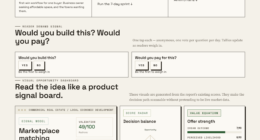

📊 Full opportunity report: Can AI Accelerate Engineering Milestones? Asana’s 5-Year Leap In 2 Weeks on ThorstenMeyerAI.com — validation score, market gap, and execution plan.

Get monitors, keyboards and dev gear delivered free — and shop member deals
- Fast, free delivery on millions of items
- Access to Prime Big Deal Days deals on October 6–7
- Prime Video, Amazon Music and more included
TL;DR
OpenAI states that Asana used Codex to finish five years of engineering work in just two weeks. The claim is based on a vendor announcement without detailed verification or scope clarification. The broader implications depend on future evidence.
OpenAI has publicly stated that Asana used Codex to complete what it describes as five years of engineering work within a two-week period as detailed in the original analysis. This claim, made in an official vendor announcement, underscores a potential breakthrough in AI-assisted software development, though specific details remain undisclosed.
The announcement does not specify the nature of the tasks completed, the programming languages involved, or the number of engineers participating. For more context on how AI tools like Codex can accelerate development, see this overview of AI-assisted coding. Nor does it clarify whether the work was coded, reviewed, deployed, or simply removed from a backlog. The figure of ‘five years’ could refer to accumulated work, planned tasks, or an estimate of effort, but the exact definition is unclear.
OpenAI attributes this achievement to Codex, an AI coding system designed to assist with software tasks, but the announcement lacks independent verification, detailed methodology, or metrics on quality and operational impact. For a deeper dive into how AI is transforming software engineering, check out this comprehensive report. It remains uncertain whether the result was verified through testing, review, or real-world deployment.
Potential Impact of AI on Engineering Productivity
If supported by further evidence, this development suggests that AI tools like Codex could dramatically reduce the time required for complex engineering tasks, enabling companies to address technical debt, backlog, and maintenance more rapidly. It could influence how organizations plan project timelines and allocate resources, especially in environments with staffing constraints.
However, without details on the quality, review process, or operational safety of the output, it is uncertain whether such accelerated work translates into reliable, deployable code. The broader adoption of AI in enterprise engineering will depend on these factors, as well as cost, security, and governance considerations.
As an affiliate, we earn on qualifying purchases.
Background on AI-Assisted Software Development Claims
OpenAI’s Codex has been available for several years, primarily used in developer tools and research settings. Prior to this announcement, there have been demonstrations of AI accelerating coding tasks, but concrete claims of multi-year workload completion in a short span have been rare.
Asana, a workplace management company, has integrated AI tools into its engineering workflows, making this claim notable as an example of enterprise AI deployment. The announcement follows a pattern of AI vendors highlighting rapid productivity gains, though independent validation remains limited.
“The claim that five years of engineering work was completed in two weeks is significant but requires verification through detailed case studies.”
— an anonymous researcher
As an affiliate, we earn on qualifying purchases.
Unverified Aspects of the AI-Driven Engineering Claim
It is not yet clear how the ‘five years’ figure was calculated, whether the work was reviewed or deployed, or if the tasks involved complex or simple coding. The announcement does not disclose the number of engineers involved, error rates, or quality metrics. Independent verification and detailed methodology are absent, leaving the claim’s reproducibility uncertain.
programming notebooks for developers
As an affiliate, we earn on qualifying purchases.
As an affiliate, we earn on qualifying purchases.
Next Steps for Confirming AI Productivity Gains
Further transparency from OpenAI and Asana is expected, potentially including detailed case studies, technical metrics, and independent audits. Future disclosures may clarify the scope, quality, and operational safety of AI-accelerated engineering work. Industry experts will watch for replication attempts and validation in other enterprise contexts.
As an affiliate, we earn on qualifying purchases.
Key Questions
What specific tasks did Codex complete for Asana?
The announcement does not specify which tasks, repositories, or programming languages were involved. Details on whether the work was coded, reviewed, or deployed are also not provided.
Can other companies expect similar results using AI tools?
Reproducibility is uncertain at this stage. Without detailed methodology, it is unclear whether comparable teams can achieve similar productivity gains.
Does this mean AI can replace human engineers?
Not necessarily. The claim focuses on acceleration, but quality, review, and operational safety are critical factors that remain unverified. AI is currently a tool to assist, not replace, human engineers.
What are the risks of relying on AI for engineering tasks?
Potential risks include errors, security vulnerabilities, and operational failures if outputs are not properly reviewed. The announcement does not address these issues in detail.
Will this change how companies approach software development?
If validated, it could encourage greater adoption of AI tools to speed up workflows, but organizations will need to evaluate safety, quality, and governance before full integration.
Source: ThorstenMeyerAI.com
Fall Picks
fall essentials
As an affiliate, we earn on qualifying purchases.