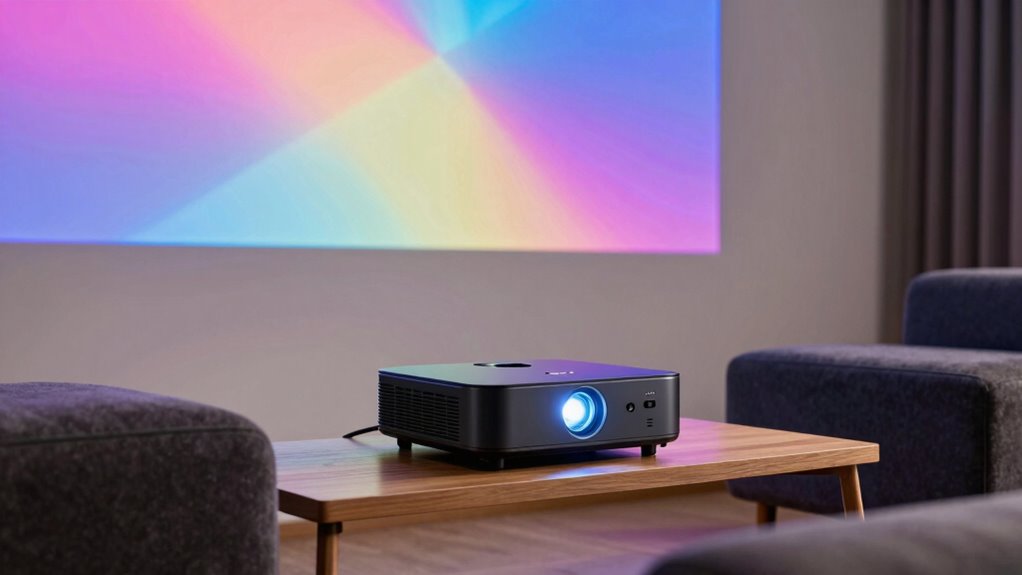
The best short throw projector overall in this roundup is the Optoma GT1080HDR, a strong fit for Full HD gaming and entertainment when you want a large image from a short distance. For a more permanent, bright installation, the ViewSonic LSD400HD-ST adds laser light and 1080p resolution, while the Hisense PL2 is a more cinema-focused ultra-short-throw option with 4K UHD and Dolby Vision. The key tradeoffs are image quality and placement flexibility versus room brightness, built-in smart features, and the cost of moving up to laser or ultra-short-throw designs. Compact portable models add convenience but may involve compromises in brightness, sound, or setup control. Read on for the full breakdown and a guide to choosing the right short throw projector for your room.

Get business pricing on monitors, keyboards and dev gear
- Business-only prices and quantity discounts
- Tax-exempt purchasing
- Multiple users, one account, clear invoices
Key Takeaways
- Optoma GT1080HDR is the clearest all-round fit for gaming and everyday Full HD viewing; its short-throw design and low input lag suit buyers who value responsiveness over 4K resolution.
- Laser models split into distinct use cases: ViewSonic LSD400HD-ST pairs 1080p with a bright 4,000-lumen specification, while Optoma ZW350ST prioritizes WXGA resolution, dust resistance, and long-life laser operation.
- Ultra-short-throw models are a separate placement choice, not just a premium version of standard short throw: Hisense PL2 and AWOL VISION LTV-3000 Pro are aimed at large-screen home theater setups near a wall.
- Portable smart projectors trade installation simplicity for fewer fixed-room advantages; the Google TV Stick model and Optoma ML1080UST put streaming and compact placement ahead of a dedicated high-brightness installation.
- Several product names promise 4K support without naming native 4K resolution, so buyers should check the distinction between input compatibility and the projector’s displayed resolution before choosing.
| Optoma GT1080HDR Full HD 1080p Short Throw Projector |  | Best for Bright-Room Gaming | Native resolution: 1920 × 1080 | Display technology: DLP | Brightness: 3,800 lumens | VIEW ON AMAZON | See Our Full Breakdown |
| BenQ TH671ST 3000 Lumens 1080p Short Throw Home Entertainment Projector |  | Best for Short-Throw Gaming Value | Native resolution: 1920 × 1080 | Display technology: DLP | Brightness: 3,000 lumens | VIEW ON AMAZON | See Our Full Breakdown |
| Optoma ZW350ST WXGA Short Throw Laser Projector |  | Best for Business and Continuous Use | Native resolution: 1280 × 800 | Maximum resolution: 1920 × 1080 | Brightness: 3,600 lumens | VIEW ON AMAZON | See Our Full Breakdown |
| Portable Smart Projector with Google TV Stick, 4K Support, HDR10, WiFi & Bluetooth |  | Best Portable Smart Pick | Native resolution: 1080p | 4K support: 4K decoding | HDR: HDR10 | VIEW ON AMAZON | See Our Full Breakdown |
| ViewSonic LSD400HD-ST Bright 4000 Lumens 1080p Short Throw Laser Projector |  | Best for Bright Professional Installations | Native resolution: 1920 × 1080 | Display technology: Laser | Brightness: 4,000 lumens | VIEW ON AMAZON | See Our Full Breakdown |
| Short Throw 4K Portable AI Auto Focus Keystone Projector |  | Best Portable Smart Pick | Native resolution: 1920 × 1080 | Maximum resolution: 3840 × 2160 | Throw ratio: 1.1:1 | VIEW ON AMAZON | See Our Full Breakdown |
| Optoma GT2000HDR Ultra-Compact Short Throw Full HD Home Laser Projector |  | Best Efficient Laser Pick | Native resolution: 1920 × 1080 | Brightness: 3,500 lumens | Contrast ratio: 300,000:1 | VIEW ON AMAZON | See Our Full Breakdown |
| Mini Projector with 4K Support, Portable Short Throw |  | Best Flexible Setup Pick | Native resolution: 1080p | Supported resolution: 1920 × 1080 | Contrast ratio: 20,000:1 | VIEW ON AMAZON | See Our Full Breakdown |
| AWOL VISION LTV-3000 Pro 4K 3D Ultra Short Throw Triple Laser Projector, Dolby Vision & Atmos, HDR10+, 150″ UST Laser TV Home Theater |  | Best Ultra Short Throw Home Theater | Native resolution: 3840 × 2160 | Brightness: 2,000 lm | Maximum white brightness: 3,000 ANSI lumens | VIEW ON AMAZON | See Our Full Breakdown |
| Optoma GT2400HDR Full HD 1080p Short Throw Laser Projector |  | Best for Bright Rooms and Gaming | Native resolution: 1920 × 1080 | Maximum supported resolution: 3840 × 2160 | Brightness: 4,200 lumens | VIEW ON AMAZON | See Our Full Breakdown |
| Hisense PL2 Ultra Short Throw 4K UHD Laser Projector with Dolby Vision & Atmos |  | Best Overall Ultra Short Throw | Resolution: 3840 × 2160 (native 4K UHD) | Brightness: 2,700 lumens | Projection size: 80–150 inches | VIEW ON AMAZON | See Our Full Breakdown |
| VIDAA 4K Projector with 65W Audio, Voice Control, and Short Throw |  | Best Built-In Audio and Smart Features | Resolution: 4K | Brightness: 5,000 ANSI lumens | Audio power: 65W stereo | VIEW ON AMAZON | See Our Full Breakdown |
| Optoma ML1080UST 1080p Photon Go Ultra Short Throw Full HD LED Triple Laser DLP Google TV Smart Projector |  | Best Portable Ultra Short Throw | Native resolution: 1920 × 1080 | Brightness: 650 lumens | Maximum image size: 100 inches | VIEW ON AMAZON | See Our Full Breakdown |
| AWOL Aetherion Pro 4K Projector, 2600 ISO Lumens Short Throw, Google TV, PixelLock Clarity, 6000:1 Native Contrast, 200” Display, Dolby Vision |  | Best for Extra-Large 4K Screens | Native resolution: 3840 × 2160 | Brightness: 3,000 lumens; maximum white brightness listed as 3,000 ANSI lumens | Maximum image size: 200 inches | VIEW ON AMAZON | See Our Full Breakdown |
| short throw projector | Native resolution | Brightness | Connectivity | Contrast ratio |
|---|---|---|---|---|
| Optoma GT1080HDR Full HD 1080p | 1920 × 1080 | 3,800 lumens | HDMI | 50,000:1 |
| BenQ TH671ST 3000 Lumens 1080p | 1920 × 1080 | 3,000 lumens | — | — |
| Optoma ZW350ST WXGA Short Thro | 1280 × 800 | 3,600 lumens | Dual HDMI, USB-A, Ethernet, RS232 | — |
| Portable Smart Projector with | 1080p | — | — | — |
| ViewSonic LSD400HD-ST Bright 4 | 1920 × 1080 | 4,000 lumens | Ethernet, HDMI, USB | 3,000,000:1 |
| Short Throw 4K Portable AI Aut | 1920 × 1080 | 300 lumens | Bluetooth, HDMI | — |
| Optoma GT2000HDR Ultra-Compact | 1920 × 1080 | 3,500 lumens | HDMI, USB, RCA, 3.5 mm audio | 300,000:1 |
| Mini Projector with 4K Support | 1080p | — | 3.5 mm jack, HDMI, USB | 20,000:1 |
| AWOL VISION LTV-3000 Pro 4K 3D | 3840 × 2160 | 2,000 lm | — | 2,500:1 |
| Optoma GT2400HDR Full HD 1080p | 1920 × 1080 | 4,200 lumens | Ethernet, HDMI, USB, VGA | — |
| Hisense PL2 Ultra Short Throw | — | 2,700 lumens | HDMI, USB, Ethernet, Wi-Fi 6E, Bluetooth | 3,000:1 |
| VIDAA 4K Projector with 65W Au | — | 5,000 ANSI lumens | — | 50,000:1 |
| Optoma ML1080UST 1080p Photon | 1920 × 1080 | 650 lumens | — | — |
| AWOL Aetherion Pro 4K Projecto | 3840 × 2160 | 3,000 lumens; maximum white brightness listed as 3,000 ANSI lumens | HDMI, USB 2.0 | 3,000,000:1 in supplied specifications; title states 6,000:1 native |
More Details on Our Top Picks
Optoma GT1080HDR Full HD 1080p Short Throw Projector
The Optoma GT1080HDR is a strong fit when a short throw setup needs to serve both gaming and shared-room viewing. Its 3,800-lumen brightness gives it an advantage over the BenQ TH671ST’s 3,000 lumens when some ambient light remains, while the short throw design can produce a 100-inch image from just over three feet away. Low input lag also suits responsive console play. The tradeoff is that its panel is native 1080p: 4K HDR input compatibility does not make it a 4K projector. It also lacks built-in streaming and Wi-Fi, and its image benefits from a darker room despite the bright output. I’d choose it over the BenQ for the extra brightness, but not for an all-in-one smart setup.
Pros:- 3,800 lumens provide more brightness headroom than the BenQ TH671ST
- Short throw design supports a large image from a close position
- Low input lag is suited to responsive gaming
- Accepts 4K HDR input while displaying at Full HD resolution
Cons:- Native resolution is Full HD, not 4K
- No built-in Wi-Fi or smart streaming features
- A darkened room is still preferable for the best image
Best for: Console gamers and households that want a bright short throw image for games, sports, and movies without placing the projector far from the screen.
Not ideal for: Buyers seeking native 4K, built-in streaming apps, or dependable picture quality in a brightly lit room.
- Native resolution:1920 × 1080
- Display technology:DLP
- Brightness:3,800 lumens
- Contrast ratio:50,000:1
- Minimum throw distance:1.3 feet
- Maximum throw distance:11.5 feet
- Maximum image size:307 inches
- Light-source operating life:Up to 15,000 hours
- Connectivity:HDMI
Our verdict“Choose the GT1080HDR if you want a bright, close-placement gaming projector and can supply your own streaming device.”
BenQ TH671ST 3000 Lumens 1080p Short Throw Home Entertainment Projector
The BenQ TH671ST makes sense for buyers who want a straightforward Full HD short throw projector with gaming-friendly responsiveness and useful physical connections. Its 0.69–0.83 throw ratio and 1.2x zoom allow some placement flexibility, while two HDMI ports make it easier to leave multiple sources connected. Compared with the brighter Optoma GT1080HDR, the BenQ’s 3,000 lumens offer less headroom when room lights are on; its stated projection range also focuses on a more modest 60-to-120-inch image. Its lamp life, especially in normal mode, is another tradeoff against the laser-based Optoma ZW350ST. In return, the BenQ is a focused home entertainment pick with a 5W speaker and broad input selection. It has no native 4K resolution, so detail-focused buyers should look elsewhere.
Pros:- Short 0.69–0.83 throw ratio suits smaller rooms
- Two HDMI inputs simplify switching between connected sources
- Vertical keystone adjustment offers installation flexibility
- Low input lag and Full HD resolution suit gaming and home video
Cons:- 3,000 lumens are lower than the Optoma GT1080HDR and ViewSonic LSD400HD-ST
- Lamp life is limited to 4,000 hours in normal mode
- Projection size is specified at 60 to 120 inches
Best for: Gamers and movie watchers setting up a 60-to-120-inch screen in a small room who value HDMI flexibility and a short throw lens.
Not ideal for: Buyers who need a laser light source, a very large image, stronger brightness for ambient light, or native 4K detail.
- Native resolution:1920 × 1080
- Display technology:DLP
- Brightness:3,000 lumens
- Throw ratio:0.69–0.83
- Zoom ratio:1.2x
- Projection size:60–120 inches
- Lamp life:4,000 hours normal; 10,000 hours Eco
- Inputs:2 HDMI, USB Type-A, USB mini-B, PC (D-Sub), audio in/out, RS232, IR receiver
- Weight:2.7 kg
Our verdict“Pick the TH671ST for a compact-room gaming setup with flexible inputs, but choose a brighter laser model for longer, lower-maintenance use.”
Optoma ZW350ST WXGA Short Throw Laser Projector
The Optoma ZW350ST is the lineup’s practical choice for classrooms, signage, and installations where operating hours and upkeep matter more than fine image detail. Its 0.52:1 throw ratio puts a large image close to the wall, while the 30,000-hour laser source and IP6X dust resistance suit demanding, frequent use. Compared with the ViewSonic LSD400HD-ST, it offers a shorter stated throw ratio and dust-resistant construction, but the ViewSonic has native 1080p resolution and higher stated brightness. The ZW350ST’s native WXGA resolution is the main compromise: it works better for presentations and general video than detailed 1080p graphics. Dual HDMI, Ethernet, and support for 24/7 and 360-degree operation add installation flexibility, though it has no built-in Wi-Fi.
Pros:- 0.52:1 throw ratio supports close placement in tight installations
- 30,000-hour laser light source reduces routine lamp replacement
- IP6X dust resistance and 24/7 operation support demanding environments
- Ethernet, dual HDMI, and 360-degree operation add deployment options
Cons:- Native 1280 × 800 resolution is lower than the ViewSonic LSD400HD-ST’s 1080p
- No built-in Wi-Fi
- Precise placement is needed to make the most of the short throw lens
Best for: Schools, businesses, and signage operators who need a short-throw projector for extended daily operation and can work with WXGA detail.
Not ideal for: Home theater buyers, 1080p gaming enthusiasts, or anyone who needs built-in wireless streaming and high-resolution fine text.
- Native resolution:1280 × 800
- Maximum resolution:1920 × 1080
- Brightness:3,600 lumens
- Throw ratio:0.52:1
- Light-source operating life:Up to 30,000 hours
- Maximum image size:300 inches
- Dust resistance:IP6X
- Operating modes:24/7 and 360°
- Connectivity:Dual HDMI, USB-A, Ethernet, RS232
Our verdict“Choose the ZW350ST for dust-resistant, long-running business or education installations where WXGA resolution is sufficient.”
Portable Smart Projector with Google TV Stick, 4K Support, HDR10, WiFi & Bluetooth
This compact projector prioritizes portability and easy streaming rather than the shortest placement distance or the strongest room-filling image. At 2.6 pounds, with Wi-Fi 6, Bluetooth 5.3, and Android 14.0, it is easier to move between rooms or take along than the Optoma GT1080HDR or BenQ TH671ST. Its stated throw ratio of 0.8:1 is short throw, but a 100-inch picture still needs about 5.9 feet—farther than the close-placement appeal of those gaming-focused models. Native 1080p with 4K decoding should not be confused with native 4K, and the supplied details do not specify brightness, so I would not pick it for a room with much ambient light. Auto-focus and screen-fit features help simplify setup, but larger images may look softer and external audio may be preferable.
Pros:- Lightweight 2.6-pound design suits travel and room-to-room use
- Android 14.0, Wi-Fi 6, and Bluetooth 5.3 support connected streaming
- Auto-focus, keystone, obstacle avoidance, and screen fit simplify setup
- Native 1080p resolution with HDR10 and 4K decoding
Cons:- A 100-inch image requires about 5.9 feet of throw distance
- 4K support is decoding, not native 4K display resolution
- Image may soften at larger sizes, and built-in speakers are limited
Best for: Travelers and casual home viewers who want a lightweight short-throw projector with built-in apps and quick automatic setup.
Not ideal for: Gamers seeking a clearly specified low-latency model, buyers needing a 100-inch image from a very short distance, or viewers who watch in lit rooms.
- Native resolution:1080p
- 4K support:4K decoding
- HDR:HDR10
- Throw ratio:0.8:1
- Projection distance examples:60 inches at 3.5 ft; 80 inches at 4.6 ft; 100 inches at 5.9 ft; up to 120 inches at 6.9 ft
- Operating system:Android 14.0
- Wireless connectivity:Wi-Fi 6 and Bluetooth 5.3
- Memory and storage:1GB RAM and 32GB storage
- Weight:2.6 lb
Our verdict“Choose this model for portable streaming and low-effort setup, not for the closest throw, bright-room viewing, or high-end gaming.”
ViewSonic LSD400HD-ST Bright 4000 Lumens 1080p Short Throw Laser Projector
The ViewSonic LSD400HD-ST is the strongest fit here for professional or educational spaces that need native Full HD detail and a bright, lamp-free light source. Its 4,000 lumens exceed the Optoma ZW350ST’s 3,600 lumens, and its native 1920 × 1080 resolution gives slides, video, and graphics more detail than the Optoma’s WXGA panel. A sealed optical engine and 20,000-hour laser life help reduce routine maintenance, while 360-degree and portrait projection allow more specialized installations. The tradeoff is that its documented installation features lean toward fixed setups: ceiling mounting, Ethernet control, and a throw distance range that requires careful planning. It is less tailored to casual living-room use than the portable smart projector, and the supplied specifications do not list a throw ratio or built-in audio.
Pros:- 4,000-lumen brightness is the highest listed in this group
- Native 1080p laser display provides more detail than the Optoma ZW350ST
- Lamp-free light source is rated for 20,000 hours
- 360-degree projection and portrait mode support varied installations
Cons:- Ceiling-mount-oriented setup may be less convenient for casual use
- Supplied specifications do not give a throw ratio
- No built-in Wi-Fi or smart operating system is listed
Best for: Schools, offices, and venue operators who need bright native 1080p projection, low lamp-maintenance demands, and flexible mounting orientations.
Not ideal for: Buyers looking for a portable streaming projector, a specified ultra-short throw ratio, or an easy tabletop home entertainment setup.
- Native resolution:1920 × 1080
- Display technology:Laser
- Brightness:4,000 lumens
- Contrast ratio:3,000,000:1
- Light-source operating life:Up to 20,000 hours
- Minimum throw distance:0.44 m
- Maximum throw distance:3.29 m
- Maximum image size:300 inches
- Connectivity:Ethernet, HDMI, USB
Our verdict“Choose the LSD400HD-ST for bright, detailed fixed installations where laser longevity and flexible projection orientation matter more than portability.”
Short Throw 4K Portable AI Auto Focus Keystone Projector
The 1.1:1 throw ratio makes this portable model a better fit than a standard-throw projector when a small room or temporary outdoor setup needs a larger image from limited distance. Its native resolution is 1080p, despite support for 4K input, so buyers should not expect the same detail as the AWOL VISION LTV-3000 Pro’s native 4K picture. Built-in Netflix, YouTube, and Prime Video apps reduce dependence on extra streaming hardware, while AI focus and 6D keystone correction simplify positioning. The tradeoff is brightness: 300 lumens suits dark rooms far better than daylight or a bright living room. I’d choose it for flexible, casual viewing, not for a bright-room theater setup.
Pros:- 1.1:1 throw ratio can produce a large image where projector placement distance is limited.
- Built-in Netflix, YouTube, and Prime Video apps reduce the need for a separate streaming device.
- AI autofocus and 6D keystone correction make setup more forgiving than fixed-focus options.
- Compact design with an ergonomic handle and stand supports portable use.
Cons:- 300-lumen brightness is poorly suited to daylight or rooms with substantial ambient light.
- Native resolution is 1080p, not 4K.
- The remote requires batteries that are not included.
Best for: Viewers who want a compact projector with built-in streaming for dark bedrooms, small living rooms, or occasional outdoor movie nights.
Not ideal for: Buyers planning to watch in daylight or a brightly lit room, or those who want native 4K detail rather than 1080p with 4K input support.
- Native resolution:1920 × 1080
- Maximum resolution:3840 × 2160
- Throw ratio:1.1:1
- Brightness:300 lumens
- Display type:LCD
- Built-in apps:Netflix, YouTube, Prime Video
- Focus and correction:AI autofocus; 6D keystone correction
- HDR:HDR10+
- Connectivity:Bluetooth, HDMI
Our verdict“Choose this for portable, app-based viewing in dark spaces, but pick the brighter Optoma GT2400HDR for rooms with more ambient light.”
Optoma GT2000HDR Ultra-Compact Short Throw Full HD Home Laser Projector
The Optoma GT2000HDR offers a practical middle ground between portable, dim models and the more powerful GT2400HDR. Its 3,500-lumen laser output is a major step up from the 300-lumen portable projector in this roundup, giving it more flexibility when a room is not fully dark. The short-throw lens can create a 120-inch image from just over four feet, which helps in compact home theaters and gaming spaces. A rated 30,000-hour laser life also means less lamp maintenance over years of use. It accepts 4K HDR content but displays at native 1080p, so it does not match the AWOL VISION LTV-3000 Pro for resolution or ultra-short-throw placement. Its body is still relatively substantial, and a dark room remains preferable for best contrast.
Pros:- 3,500-lumen brightness offers more room-light flexibility than the portable 300-lumen model.
- Short-throw lens produces a 120-inch image from just over four feet.
- Laser light source is rated for up to 30,000 hours of operation.
- Dust resistance and multiple inputs support flexible home use.
Cons:- Native display resolution is 1080p rather than 4K.
- Its dimensions are less compact than the product name may suggest.
- Best contrast and viewing quality still depend on controlling room light.
Best for: Home theater and gaming buyers who want a bright, low-maintenance 1080p laser projector and have a few feet of placement distance.
Not ideal for: Shoppers seeking a pocketable projector, native 4K playback, or a unit that can sit immediately beside the screen.
- Native resolution:1920 × 1080
- Brightness:3,500 lumens
- Contrast ratio:300,000:1
- Light source:Laser
- Light source life:Up to 30,000 hours
- Maximum image size:300 inches
- Throw distance:1–10 meters
- Connectivity:HDMI, USB, RCA, 3.5 mm audio
- Dust resistance:IPX6
Our verdict“Pick the GT2000HDR for bright, lower-maintenance 1080p viewing in a compact room; choose the GT2400HDR if you need still more brightness.”
Mini Projector with 4K Support, Portable Short Throw
This mini projector’s 270° rotatable stand gives it a setup advantage over the Optoma GT2000HDR, which is better suited to a more fixed home-theater position. Electric focus and digital keystone correction help when projecting onto a wall from an improvised spot, while the listed 200-inch maximum image leaves room for occasional group movie nights. That maximum size is a capability, not a guarantee of a bright, crisp image at every distance; the listing gives no brightness figure to help buyers judge performance in ambient light. It supports 4K input but has 1080p native resolution, and unlike the Short Throw 4K Portable AI Auto Focus Keystone Projector, it has no built-in apps or Bluetooth. I’d favor it for wired, adaptable setups rather than all-in-one streaming.
Pros:- 270° rotatable stand allows more flexible placement and projection angles.
- Electric focus and digital keystone correction simplify adjustments after positioning.
- 1080p native resolution with support for 4K input.
- HDMI, USB, and 3.5 mm connections accommodate common wired sources.
Cons:- No built-in apps or Bluetooth, unlike the Short Throw 4K Portable AI Auto Focus Keystone Projector.
- Brightness is not provided, making performance in ambient light difficult to gauge.
- iOS devices require a wired connection.
Best for: Buyers who move a projector between rooms or use unusual projection angles and are comfortable connecting a laptop, console, or other source by cable.
Not ideal for: Streamers who want built-in apps or Bluetooth, and anyone who needs a specified brightness level for a well-lit room.
- Native resolution:1080p
- Supported resolution:1920 × 1080
- Contrast ratio:20,000:1
- Maximum image size:200 inches
- Maximum throw distance:16.5 feet
- Light source:LED
- Light source life:50,000 hours
- Connectivity:3.5 mm jack, HDMI, USB
- Stand:270° rotatable
Our verdict“Choose this mini projector for flexible angles and wired sources, but opt for the Short Throw 4K Portable AI Auto Focus Keystone Projector if built-in streaming matters.”
AWOL VISION LTV-3000 Pro 4K 3D Ultra Short Throw Triple Laser Projector, Dolby Vision & Atmos, HDR10+, 150″ UST Laser TV Home Theater
The AWOL VISION LTV-3000 Pro is the clear choice here for buyers who want native 4K and a screen-size home theater without placing a projector several feet back. Its ultra-short-throw design lists a maximum throw distance of 1.68 feet for an image up to 150 inches, compared with the Optoma GT2400HDR’s short-throw placement range of 2.6 to 3.7 feet. That difference can free up room around seating and reduce the chance of someone crossing the beam. Dolby Vision, HDR10+, 3D, and a built-in center-channel speaker make it a more cinema-focused package than the simpler Optoma models. The tradeoffs are careful placement, a need for a suitable screen in brighter rooms, and a higher-end feature set that may be more than casual viewers need.
Pros:- Native 4K resolution delivers more image detail than the 1080p Optoma GT2000HDR and GT2400HDR.
- Ultra-short-throw placement supports a screen up to 150 inches with little distance from the wall.
- Dolby Vision, HDR10+, and 3D support suit a dedicated movie setup.
- Built-in center-channel speaker adds dialogue-focused audio without a separate center speaker.
Cons:- Fixed ultra-short-throw placement calls for careful setup and alignment.
- Bright-room viewing may require a suitable screen, and darker conditions favor image quality.
- Its advanced home-theater features may be unnecessary for casual or portable viewing.
Best for: Home theater buyers who want native 4K, premium HDR formats, and a large image from a projector positioned close to the screen.
Not ideal for: Buyers who need a highly portable projector, easy repositioning, or reliable picture quality in bright rooms without a suitable screen.
- Native resolution:3840 × 2160
- Brightness:2,000 lm
- Maximum white brightness:3,000 ANSI lumens
- Maximum image size:150 inches
- Throw distance:0.5–1.68 feet
- Contrast ratio:2,500:1
- Light source life:25,000 hours
- HDR and 3D:Dolby Vision, HDR10+, 3D
- Control:App, remote, voice
Our verdict“Choose the LTV-3000 Pro for a carefully set up, native-4K home theater close to the screen; the Optoma GT2400HDR is a more practical fit for brighter, flexible-use spaces.”
Optoma GT2400HDR Full HD 1080p Short Throw Laser Projector
With 4,200 lumens, the Optoma GT2400HDR is the brightness-first choice in this group and a stronger candidate for rooms where curtains cannot fully block daylight. Its listed projection distance of 2.6 to 3.7 feet suits compact rooms, gaming setups, and golf simulation without requiring a long throw. Compared with the GT2000HDR, it has more stated brightness, while both offer a 30,000-hour laser life and native 1080p. The AWOL VISION LTV-3000 Pro is the better fit for native 4K and very close placement, but the GT2400HDR favors practical light output and flexible mounting. It accepts 4K input rather than displaying native 4K, and at 9.4 pounds it is not a lightweight portable option.
Pros:- 4,200-lumen brightness is the highest stated output among these five projectors.
- Short projection distance suits compact rooms and gaming or golf-simulation setups.
- Laser light source is rated for up to 30,000 hours.
- Tabletop, wall, and floor mounting options allow varied installation.
Cons:- Native resolution is 1080p; 4K is supported as an input resolution.
- At 9.4 pounds, it is less convenient to carry than the portable mini projectors.
- It needs more distance from the screen than the AWOL VISION LTV-3000 Pro ultra-short-throw model.
Best for: Gamers, golf-simulation users, and households that need a bright short-throw image in a room with some ambient light.
Not ideal for: Buyers who prioritize native 4K, an ultra-short-throw position right beside the screen, or a lightweight projector for frequent travel.
- Native resolution:1920 × 1080
- Maximum supported resolution:3840 × 2160
- Brightness:4,200 lumens
- Projection distance:2.6–3.7 feet
- Light source:Laser
- Light source life:30,000 hours
- Weight:9.4 pounds
- Mounting options:Tabletop, wall, floor
- Connectivity:Ethernet, HDMI, USB, VGA
Our verdict“Pick the GT2400HDR for a bright, flexible 1080p short-throw setup, but choose the AWOL VISION LTV-3000 Pro if native 4K and closer placement matter more.”
Hisense PL2 Ultra Short Throw 4K UHD Laser Projector with Dolby Vision & Atmos
The Hisense PL2 is my strongest fit for buyers who want a dedicated, large-screen setup without placing a projector across the room. Its 0.22-to-1.5-foot throw range supports an 80-to-150-inch image, while native 4K UHD resolution and Dolby Vision give movies more fine detail and HDR impact than the 1080p Optoma ML1080UST. Dolby Atmos support also suits a home theater built around compatible audio gear, though it does not remove the need for a separate sound system if you want room-filling sound.
The tradeoff is placement: this is a stationary unit, and its narrow distance range calls for careful alignment with a suitable wall or screen. The AWOL Aetherion Pro reaches a larger stated maximum image size, but the PL2’s clearly defined ultra-short-throw range is the more straightforward choice for a living-room installation. Its 2,700-lumen rating is not a guarantee of a strong picture in direct sunlight.
Pros:- Native 4K UHD resolution supports fine detail on large images.
- Ultra-short-throw range can place the projector close to the wall or screen.
- Dolby Vision and Dolby Atmos support suit a compatible home theater setup.
- X-Fusion laser light source is rated for 25,000 hours.
Cons:- The narrow placement range makes careful positioning important.
- Stationary design is less convenient to move between rooms than the Optoma ML1080UST.
- Requires a suitable wall or screen and may need a darker room for best results.
Best for: Home theater buyers who want native 4K and a 150-inch-class image from a projector positioned close to the screen.
Not ideal for: People who need a battery-powered or easily moved projector, or viewers who cannot control room light and provide a suitable projection surface.
- Resolution:3840 × 2160 (native 4K UHD)
- Brightness:2,700 lumens
- Projection size:80–150 inches
- Throw distance:0.22–1.5 feet
- Contrast ratio:3,000:1
- Light source:X-Fusion laser; rated for 25,000 hours
- Connectivity:HDMI, USB, Ethernet, Wi-Fi 6E, Bluetooth
Our verdict“Choose the PL2 for a close-to-wall 4K home theater; skip it if portability or simple placement matters more than a fixed installation.”
VIDAA 4K Projector with 65W Audio, Voice Control, and Short Throw
The VIDAA stands apart by combining streaming functions and substantial onboard sound, making it a candidate for buyers who would rather avoid adding a separate speaker system. Its 65W stereo audio, voice and smartphone controls, and listed streaming apps put more of the living-room setup in one device than the Hisense PL2, which is the more clearly specified option for a fixed ultra-short-throw installation.
Its short-throw claim needs a closer look: the listed 4-to-25-foot throw distance covers a broad range, but the product data does not give a throw ratio or a specific image size at each distance. That makes placement harder to predict than the PL2’s 0.22-to-1.5-foot range. The claimed 50-to-500-inch image range is also exceptionally broad, so I would not treat the maximum as a guaranteed practical viewing size. Its 5000 ANSI-lumen claim is paired with a warning that a dark room is needed for best viewing.
Pros:- 65W stereo speakers reduce reliance on separate audio equipment.
- VIDAA includes listed streaming apps and smart controls.
- Voice, smartphone app, and parental-control options support flexible use.
- 360-degree rotatable stand offers multiple positioning options.
Cons:- The 4-to-25-foot throw range does not explain the image size at specific distances.
- The stated 50-to-500-inch image range may be difficult to achieve in many rooms.
- Product information says a dark environment is needed for optimal viewing.
Best for: Viewers who want a smart projector with strong built-in speakers, voice control, and app access for a media room or flexible home setup.
Not ideal for: Buyers seeking a precisely specified ultra-short-throw fit for a small room, or those who need dependable viewing in a bright space.
- Resolution:4K
- Brightness:5,000 ANSI lumens
- Audio power:65W stereo
- Projection size:50–500 inches
- Throw distance:4–25 feet
- Contrast ratio:50,000:1
- Ports:2 × HDMI 2.1, 2 × USB, AV, 3.5 mm headphone jack
- Controls:Voice, smartphone app, parental-control mode
Our verdict“Pick the VIDAA if built-in audio and smart controls matter most, but choose the Hisense PL2 for a more clearly defined ultra-short-throw setup.”
Optoma ML1080UST 1080p Photon Go Ultra Short Throw Full HD LED Triple Laser DLP Google TV Smart Projector
The Optoma ML1080UST is the most flexible pick here for someone who wants ultra-short-throw placement without committing to a permanent room installation. At 6.9 pounds, with a built-in Google TV interface and a 1.5-hour battery, it can move between rooms or support a short viewing session away from an outlet. Its minimum throw distance of 0.34 feet is close to the Hisense PL2’s, but the Optoma tops out at a 100-inch image and uses 1080p resolution rather than the PL2’s native 4K.
That smaller, lower-resolution picture is the cost of portability, and its 650-lumen brightness makes dark-room viewing the sensible expectation. The battery is useful for a film or presentation segment, not a full evening of uninterrupted use. Compared with the fixed-installation PL2, the Optoma is easier to relocate but less suited to a permanent, bright, large-screen theater.
Pros:- Compact 6.9-pound body is easier to move than stationary ultra-short-throw models.
- Built-in battery supports up to 1.5 hours of cordless viewing.
- Google TV provides built-in access to streaming apps.
- Autofocus and auto keystone reduce manual image adjustments.
Cons:- 650 lumens limits its usefulness in rooms with significant ambient light.
- Native 1080p resolution is less detailed than the Hisense PL2’s 4K image.
- The 100-inch maximum image and 1.5-hour battery constrain longer or larger-screen use.
Best for: People who want a compact ultra-short-throw projector with Google TV for moving between rooms or occasional battery-powered viewing.
Not ideal for: Buyers who prioritize native 4K, a screen larger than 100 inches, long battery sessions, or viewing with substantial ambient light.
- Native resolution:1920 × 1080
- Brightness:650 lumens
- Maximum image size:100 inches
- Throw distance:0.34–0.81 feet
- Light source:Triple laser RGB
- Battery life:Up to 1.5 hours
- Weight:6.9 pounds
- Smart platform:Built-in Google TV
Our verdict“Choose the ML1080UST for portable, short-session viewing near a wall; choose the Hisense PL2 for a brighter, more detailed fixed home theater.”
AWOL Aetherion Pro 4K Projector, 2600 ISO Lumens Short Throw, Google TV, PixelLock Clarity, 6000:1 Native Contrast, 200” Display, Dolby Vision
The AWOL Aetherion Pro is aimed at buyers who want a screen larger than the Hisense PL2’s stated 150-inch limit. It supports a claimed 200-inch 4K image, Dolby Vision, and a listed 3,000-ANSI-lumen maximum white brightness, positioning it for a more ambitious cinema setup than the portable Optoma ML1080UST. Its low-end throw distance is listed as 0.5 feet, but the maximum is 20.19 feet, so the data describes a broad placement range rather than a dedicated ultra-short-throw range throughout.
That distinction matters: a 200-inch image needs space and a suitable surface, so this is not automatically a better fit for a small room than the PL2. The listing’s contrast figures also differ: the title cites 6,000:1 native contrast, while the spec data gives 3,000,000:1. I would not choose it based on the latter figure without clarification. Its extensive feature set and large-image ambition suit a planned installation, not buyers seeking simple portability.
Pros:- Supports a stated maximum image size of 200 inches.
- Native 4K resolution and Dolby Vision support target detailed HDR viewing.
- Low listed minimum throw distance offers close-placement flexibility.
- Voice, app, and remote control options support different installation setups.
Cons:- Reaching a 200-inch image calls for substantial room and screen space.
- The listed throw range extends to 20.19 feet, making it less clearly ultra-short-throw than the Hisense PL2.
- Contrast information conflicts between the title and supplied specification data.
Best for: Home cinema buyers planning a large, up-to-200-inch 4K screen who have room for careful projector and screen placement.
Not ideal for: Small-room buyers who need a clearly defined ultra-short-throw setup, or anyone prioritizing compact portability over a large fixed-screen installation.
- Native resolution:3840 × 2160
- Brightness:3,000 lumens; maximum white brightness listed as 3,000 ANSI lumens
- Maximum image size:200 inches
- Throw distance:0.5–20.19 feet
- Contrast ratio:3,000,000:1 in supplied specifications; title states 6,000:1 native
- Light source life:25,000 hours
- Picture features:HDR10, digital zoom, keystone correction
- Connectivity:HDMI, USB 2.0
Our verdict“Choose the Aetherion Pro for a planned, very large 4K cinema screen, but favor the Hisense PL2 when you need a more clearly specified close-wall setup.”

How We Picked
I ranked these short throw projectors by how well their stated features match real room and viewing needs, rather than treating brightness, resolution, or a 4K label as a complete measure of quality. I gave weight to throw style and placement, stated resolution, light source and brightness, gaming features, smart functions, and the intended balance between portability and permanent installation. I also separated standard short throw models from ultra-short-throw units because they need different placement and setup decisions.
The order favors options with a clear, useful role and a persuasive mix of performance and usability. The Optoma GT1080HDR leads as a well-defined Full HD gaming and entertainment pick; laser models rank well for buyers seeking bright or lower-maintenance fixed setups, while the Hisense and AWOL home theater models stand out for larger, feature-rich cinema systems. Portable and less fully specified models appear lower because their convenience can come with compromises, and broad claims such as 4K support do not by themselves establish native resolution or room performance. I treated each model’s listed specifications as claims to compare, not as proof of identical results in every room.
Factors to Consider When Choosing Short Throw Projectors
Short throw describes how close a projector can sit to the screen for a given image size; it does not tell you whether a particular model fits your room or viewing habits. I would start with the room and installation plan, then compare the image and features needed for your main use. These checks can prevent a common mismatch: buying a projector for its headline resolution or brightness while overlooking screen size, ambient light, or setup demands.
Check Throw Distance Against Your Screen Size
Before comparing models, measure the distance from the planned projector position to the screen and decide on a realistic image width. Short throw ratios vary, so two projectors described as short throw may not fill the same screen from the same spot. Ultra-short-throw models sit much closer to the wall than conventional short throw units, making them useful for some living rooms but less interchangeable with ceiling-mounted gaming projectors. A placement calculator or the maker’s throw chart is more useful than relying on the category label alone. Leave space for cables, ventilation, and access to controls rather than measuring only the lens-to-wall gap. If the room layout is fixed, prioritize a model whose specified range matches it over one with a more impressive headline feature.
Choose Brightness for the Room, Not the Box
Brightness matters most when you cannot fully darken the room, but a lumen figure cannot predict the complete viewing experience by itself. Screen size, screen material, image mode, and nearby light all affect perceived picture brightness. A large image spreads available light over more area, so the same projector may look convincing at a moderate size and washed out when pushed much larger. Buyers often focus on the number on the box and forget to ask whether they will watch in daylight, with lamps on, or in a darkened room. If daytime use is a priority, plan for a suitable screen and control stray light instead of expecting projector brightness alone to solve the problem. For movie-first use in a dark room, contrast and black-level performance may matter more than choosing the highest lumen claim.
Separate Native Resolution From 4K Compatibility
A projector that accepts a 4K signal does not necessarily display a native 4K image. Look for the stated native resolution and how the product describes pixel shifting or other image processing before paying extra for 4K compatibility. Native resolution affects fine detail, but perceived sharpness also depends on focus across the screen, image size, source quality, and viewing distance. For gaming or casual video, Full HD may be a sensible match; for a large home theater image viewed nearby, more detail can be valuable. Avoid assuming that HDR support guarantees strong HDR impact, since the result depends on brightness, contrast, tone mapping, and the source. Compare the actual image pipeline, not just the format names on a feature list.
Match the Light Source to Use and Upkeep
Lamp, LED, and laser designs differ in service life, replacement needs, startup behavior, and how they suit frequent use. Laser models can appeal to buyers planning a fixed installation or long viewing sessions, while compact LED designs can make sense when portability and quick setup lead the decision. A long stated light-source life does not remove the need to keep vents clear and the projector free of dust. Check whether filters need cleaning or replacement, whether the model is designed for a dusty setting, and what service options are available. A lower-maintenance light source may justify paying more for a projector that will be used often, but it may be wasted value for occasional movie nights. Treat longevity claims as one part of ownership cost, not a guarantee that every component will last as long.
Account for Gaming Latency and Connection Needs
For gaming, low input lag can matter more than extra resolution, especially in fast competitive games where delayed responses are noticeable. Check whether the latency figure applies at your chosen resolution and refresh rate, and whether a dedicated game mode changes image processing. Also map out the devices you plan to connect: consoles, streaming boxes, sound systems, and computers may compete for ports. A short throw projector can reduce shadows from players crossing the beam, but it does not automatically solve controller latency, screen placement, or sound setup. Buyers who mainly watch films may prefer better image processing or integrated streaming instead of paying for gaming features they will rarely use. Verify the connection details in the product specifications before planning a permanent installation.
Decide How Much Smart Setup You Want
Built-in smart platforms can reduce the need for a separate streaming device, while simpler projectors may offer more flexibility if you already use a preferred media box. Portable models add another question: whether automatic focus and keystone correction save enough setup effort to outweigh the image adjustments they may apply. Digital keystone correction can make a crooked setup look square, but it may reduce usable image detail; careful physical placement is usually better. For an ultra-short-throw projector, a flat, level screen and precise alignment matter because small placement errors can become conspicuous across a large image. Check whether the projector includes the streaming services, audio connections, and control method you actually use. A feature-rich interface is convenient, but it should not distract from matching the projector to your room and screen.
Frequently Asked Questions
Should I choose a standard short throw or an ultra-short-throw projector?
Choose based on where the projector can sit, not just how large an image you want. Standard short throw models can work from a nearby table or mount and may suit gaming rooms where the projector needs to stay behind or beside the seating area. Ultra-short-throw models sit very close to the wall, which can simplify a living-room setup and reduce people walking through the beam. They can be more sensitive to wall and screen flatness, so placement and surface quality matter. Measure your available distance and compare it with the model’s throw chart before deciding.
Is 4K support the same as native 4K resolution?
No. A projector may accept a 4K input signal while displaying the image at a lower native resolution. Check the manufacturer’s stated native resolution and any description of pixel shifting or image processing. This distinction matters most for buyers planning a very large image or sitting close to the screen. It matters less for casual viewing at a modest image size, where Full HD may be sufficient. Do not use “4K support” by itself as a reason to assume a model will show native 4K detail.
Can I use a short throw projector in a room with the lights on?
Possibly, but the result depends on the projector, image size, screen, and amount of ambient light. A brighter model can help, yet light falling on the screen still reduces perceived contrast and can make dark scenes look washed out. A smaller image and a screen suited to the room can help more than simply choosing a larger brightness number. For daylight viewing, control window light where practical and check the projector’s stated brightness alongside its resolution and intended use. If movie contrast matters, a darker room will usually help more than extra lumens alone.
What should I prioritize in a short throw projector for gaming?
Start with input lag at the resolution and refresh rate you plan to use, then check whether the model has a game mode that limits extra image processing. Full HD with responsive performance may be a better fit than a projector with a 4K-compatible input but slower response. Think about your screen size and placement too: short throw can reduce shadows, but it will not make an unsuitable viewing distance or screen disappear. Check connection options for your console and audio system before mounting the projector. If you mostly play slower, story-driven games, picture quality and sound may deserve more weight than the lowest latency figure.
Do I need a special screen for an ultra-short-throw projector?
A special screen is not always required, but the surface can strongly affect the result. Ultra-short-throw projectors send light upward at a steep angle, so waves, texture, or unevenness on a wall can show more clearly than they would with some other setups. A compatible screen can improve image consistency and help in rooms with ambient light, though the right choice depends on the projector and room. If you plan to project onto a wall, check that it is smooth, flat, and correctly aligned before committing to a large image. Factor screen cost and installation into the full setup decision rather than comparing projector specifications alone.
Conclusion
For most buyers seeking a clear balance of short-throw placement, Full HD viewing, and gaming suitability, I recommend the Optoma GT1080HDR as the best overall pick. The Optoma ZW350ST is the best value direction for buyers who can work with WXGA resolution and want a dust-resistant laser design, while the AWOL VISION LTV-3000 Pro is the best premium choice for a feature-rich ultra-short-throw theater setup. Beginners who want a compact smart setup should compare the portable Google TV Stick projector and Optoma ML1080UST, giving priority to the model whose placement and streaming setup best match their room. For a bright fixed 1080p installation, look at the ViewSonic LSD400HD-ST; for 4K UHD ultra-short-throw viewing, consider the Hisense PL2. I would make the final choice only after checking throw distance, native resolution, and the screen you plan to use.
Halloween Picks

Halloween Inflatable Haunted House Maze – 20×20 ft with Removable Roof and Blower

Kalolary 11 ft Halloween Inflatable Archway Ghost House Tunnel

9 ft Halloween Inflatable Haunted Castle with Dragon and Ghost
As an affiliate, we earn on qualifying purchases.