📊 Full opportunity report: How Private Investigation Teams Can Adapt AI Reporting Tools on IdeaNavigator AI — validation score, market gap, and execution plan.

Get business pricing on monitors, keyboards and dev gear
- Business-only prices and quantity discounts
- Tax-exempt purchasing
- Multiple users, one account, clear invoices
TL;DR
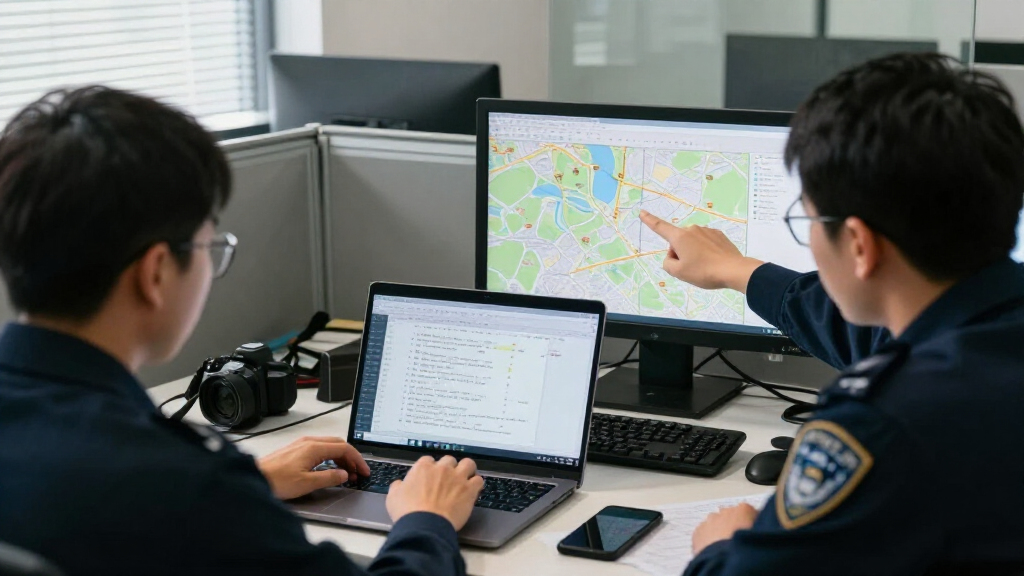
IdeaNavigator AI has outlined a proposed AI report generator for independent investigators and small firms, not a launched product or confirmed industry deployment. Its suggested pilot would convert notes, timestamped photos and GPS tracks into draft chronological reports, then measure time saved and have attorneys review the results.
IdeaNavigator AI has proposed a pilot for an AI reporting tool aimed at independent private investigators and small firms, designed to turn field notes, timestamped photos and GPS records into draft chronological reports. According to the proposal, the tool would address time investigators spend writing reports after surveillance work. Because such documents can affect how a case is assessed in court, the proposal includes attorney review; no product launch, trial results or admissibility findings are reported.
In its proposal, IdeaNavigator AI says the tool would take in field notes, timestamped photographs and GPS tracks, then assemble them into a chronological report with exhibit references. The proposed features also include flagging possible gaps in a timeline and exporting a draft using a firm’s template. The suggested workflow includes human review before a report is used.
IdeaNavigator AI identifies independent investigators and small private investigation firms as intended first buyers. The proposal suggests a monthly, per-seat subscription tiered by report volume and recommends testing the workflow with one buyer group before treating it as a broader investigation-software opportunity. These are proposed product and business plans, not announced commercial terms.
For validation, IdeaNavigator AI proposes converting recent case files from ten firms into reports, asking the firms’ attorneys to review their admissibility quality, and measuring time saved per report. These are suggested test steps, not completed research. The proposal does not provide details about the files, evaluation criteria, privacy safeguards, system accuracy or results.
Why Report Accuracy Matters
IdeaNavigator AI’s proposal describes investigation reports as a way to organize observations collected across time and different formats. It suggests that a tool linking notes, images, timestamps and location records could reduce repetitive drafting and help firms prepare documents in a consistent format. The proposal frames this as a potential benefit for small practices, where report writing may compete with fieldwork and other case responsibilities.
But a faster draft is not automatically a reliable or court-ready report. If an AI system misorders events, omits an observation or assigns an exhibit incorrectly, the polished presentation could obscure the underlying error. The proposal’s emphasis on timeline-gap flags and human review acknowledges these risks, but does not establish that the system can detect every discrepancy or meet legal standards.
The proposed attorney review is intended to test whether the output works for its intended use. Measuring time saved alongside document quality would offer a more useful picture than speed alone. Until testing is reported, the potential benefit described by IdeaNavigator AI remains a product hypothesis, not demonstrated operational or legal performance.
Products Worth Considering

DJI Osmo Pocket 3 Vlogging Camera with 1-Inch CMOS Sensor and 4K Video

DJI Osmo Pocket 3 Creator Combo Vlogging Camera with 1 CMOS & 4K/120fps

Bose QuietComfort Wireless Bluetooth Headphones with Active Noise Cancellation, Mic, USB‑C Charging, Deep Bass, 24‑Hour Battery – White Smok
As an affiliate, we earn on qualifying purchases.
From Case Files to Draft Reports
IdeaNavigator AI’s proposed workflow focuses on converting structured observations into formal narrative. Investigators may collect material in separate formats during a surveillance day, then assemble it into a chronological account with supporting exhibits. The proposal characterizes this reporting work as a recurring burden and says report quality can affect whether investigative work holds up in court; it does not provide independent evidence for those claims.
The proposal argues that language models are suited to transforming structured observations into narrative and that private investigators remain underserved by modern software. These are IdeaNavigator AI’s rationale; the proposal supplies no market study, adoption figures or independent performance evidence. It recommends beginning with a limited use case rather than assuming general-purpose AI is ready to produce final investigative documents.
The proposal does not name a product developer, software integration or existing customer deployment. It describes a possible minimum viable product: ingest a small set of case materials, generate a draft in a firm’s format, identify possible timeline gaps and leave the report for review. The proposed subscription model and ten-firm test are plans, not announced commercial terms or a completed study.
Pilot Results Are Not Available
No test results are reported in IdeaNavigator AI’s proposal, so it is unknown how much drafting time the tool could save, how often it might introduce errors or whether attorneys would find its reports acceptable. The proposal does not define how reviewers would judge admissibility quality, how disagreements would be handled or what comparison would be used to calculate time saved.
The proposal also does not explain how the system would preserve the origin and integrity of evidence, manage sensitive client information, or distinguish an investigator’s direct observation from an AI-generated summary. It does not specify data storage, access controls, retention practices, audit trails or the consequences of a missing or inaccurate timestamp. No legal jurisdiction or report template is identified, and requirements may vary by case and court.
Accordingly, the IdeaNavigator AI document describes a proposed workflow and validation plan. It does not confirm that a working system exists, that ten firms have agreed to participate, or that any generated report has been evaluated by attorneys.
Testing Before Wider Adoption
IdeaNavigator AI’s proposed next step is to test the concept using recent case files from ten firms, create draft reports and have attorneys assess their quality while recording time spent. The proposal says results would help determine whether the tool reduces routine writing without weakening the accuracy and traceability needed in formal documentation.
No schedule, participating firms or completed milestones are identified in the proposal. Before broader use, a pilot would need to explain how the system handles conflicting records, missing timestamps, uncertain observations and sensitive case data, as well as how reviewers can verify every statement against the underlying material. Until those details and results are available, the proposal remains an early product concept, not evidence that AI reporting is ready for courtroom use.
Source: IdeaNavigator AI proposal
Key Questions
Has an AI report generator for private investigators launched?
No launch is reported. IdeaNavigator AI describes a proposed product concept and a plan to test it with small investigation firms.
What information would the proposed tool use?
IdeaNavigator AI’s proposal lists field notes, timestamped photos and GPS tracks as suggested inputs. The system would use them to draft a chronological report with exhibit references and possible timeline-gap flags.
Would AI-generated reports be ready to submit in court?
That has not been established. The proposal includes a human review pass and attorney assessment, but no admissibility results or legal approval are reported.
How would the idea be tested?
IdeaNavigator AI proposes turning recent files from ten firms into reports, asking attorneys to review their quality and measuring time saved per report. No completed trial or findings are available.
Source: IdeaNavigator AI