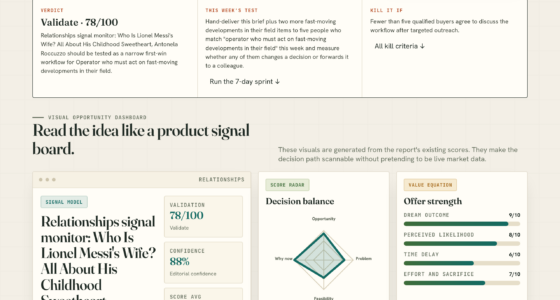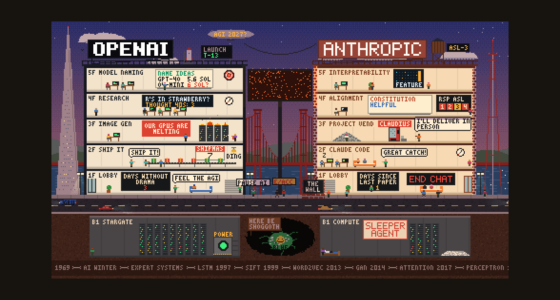

📊 Full opportunity report: 10 AI Trends That Will Define The Next Era In 2026 on ThorstenMeyerAI.com — validation score, market gap, and execution plan.

Get business pricing on monitors, keyboards and dev gear
- Business-only prices and quantity discounts
- Tax-exempt purchasing
- Multiple users, one account, clear invoices
TL;DR
In 2026, ten major AI trends are emerging that will reshape technology, business, and society. This report highlights confirmed developments and ongoing claims, explaining why they matter.
Ten AI trends are forecasted to dominate the technological landscape in 2026, according to industry experts and recent reports. These trends are expected to influence sectors from healthcare to finance, shaping the next era of artificial intelligence development.
Experts from ThorstenMeyerAI.com and leading industry analysts have identified ten key AI trends for 2026, including advances in generative AI, increased adoption of AI in enterprise automation, and the rise of AI-powered ethics frameworks. These developments are grounded in current technological trajectories and ongoing research, with some claims about future capabilities still preliminary.
For example, generative AI models are expected to become more sophisticated, enabling more realistic content creation and automation, as detailed in the original analysis. Simultaneously, AI’s integration into business processes is projected to deepen, driven by improved algorithms and hardware. However, many of these trends are still evolving, and their full impact remains to be seen as the technology matures.
The 10 picks
- 1
 Sonos Arc Ultra Soundbar with Dolby Atmos – BlackView on Amazon →
 - 2
 Sonos Beam Gen 2 – Black – Soundbar with Dolby AtmosView on Amazon →
 - 3
 Bose TV Speaker – Compact Soundbar with Bluetooth and HDMI-ARC, Remote Includ…View on Amazon →
 - 4
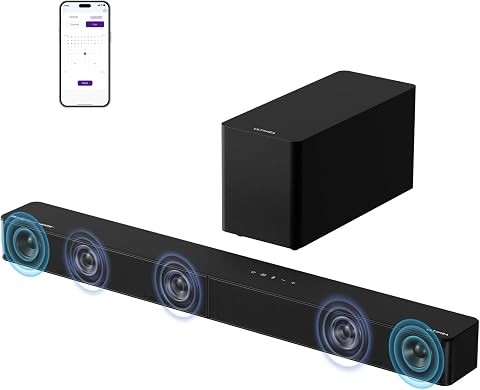 Ultimea 5.1CH Surround Sound Bar System with Dolby Atmos, Poseidon M60View on Amazon →
 - 5
 Fire TV Soundbar Plus (Newest Model) with Built-in Subwoofer, 3.1 Channel, Do…View on Amazon →
 - 6
 Sony S100F 2.0ch Soundbar with Bass Reflex Speaker, Bluetooth, and HDMI ARCView on Amazon →
 - 7
 Amazon Fire TV Soundbar, 2.0 Speaker with DTS Virtual:X and Dolby AudioView on Amazon →
 - 8
 Samsung B-Series Soundbar HW B400F 2.0 Ch with Built-in Subwoofer (2025 Model)View on Amazon →
 - 9
 ULTIMEA Sound Bar with Wireless Subwoofer, App Control, 2.1 ChannelView on Amazon →
 - 10
 Sound Bar for Smart TV with Bluetooth, ARC, Optical, AUX, Detachable Design, 80WView on Amazon →
Implications of 2026’s AI Trends for Society and Industry
The emergence of these ten AI trends in 2026 could significantly transform how businesses operate, how societies function, and how ethical considerations are integrated into AI development. For instance, increased automation may boost productivity but also raises questions about employment and regulation. The adoption of AI ethics frameworks could influence policy and public trust. These developments matter because they will shape economic, social, and technological paradigms in the coming years.
Current State of AI and the Road to 2026
AI has experienced rapid growth over the past decade, with breakthroughs in machine learning, natural language processing, and computer vision. Industry forecasts suggest that by 2026, AI will be more embedded in daily life and enterprise operations than ever before. While some trends, like generative AI, are already visible, others, such as advanced ethical frameworks and AI governance models, are still in early stages.
Leading companies and research institutions are investing heavily in these areas, aiming to address current limitations and unlock new capabilities. The predictions for 2026 build on this momentum, though the precise trajectory remains subject to technological, regulatory, and societal factors.
“The next era of AI will be characterized by not just technological breakthroughs but also deeper integration into societal frameworks, requiring careful navigation of ethical and regulatory landscapes.”
— Dr. Thorsten Meyer
Unconfirmed and Developing Aspects of 2026 AI Trends
Many of the projected AI trends for 2026 are based on current research trajectories and expert forecasts. However, the actual pace of technological advancements, regulatory responses, and societal acceptance remains uncertain. Some claims about breakthroughs in generative AI and ethical frameworks are still preliminary, with ongoing debates about feasibility and impact.
It is not yet clear how quickly these trends will materialize or how they will interact with unforeseen technological or political developments.
Next Steps in AI Development and Monitoring Trends
Researchers and industry leaders will continue refining AI models and frameworks throughout 2024 and 2025, with key milestones including regulatory developments and technological demonstrations. Monitoring these developments will be essential to assess which trends achieve widespread adoption by 2026. Additionally, policymakers and stakeholders are expected to focus on establishing ethical standards and governance structures to guide AI’s future trajectory.
Key Questions
What are the most anticipated AI trends for 2026?
The most anticipated trends include advancements in generative AI, broader enterprise automation, AI-driven ethical frameworks, increased AI personalization, and the rise of autonomous systems across industries.
Are all these AI trends guaranteed to happen in 2026?
No, these trends are projections based on current research and industry forecasts. Their realization depends on technological breakthroughs, regulatory actions, and societal acceptance, which remain uncertain.
How will AI trends impact everyday life by 2026?
If these trends materialize, AI could become more embedded in daily activities, from personalized healthcare and education to smarter home devices and autonomous transportation, significantly changing how people live and work.
What challenges might slow down these AI developments?
Major challenges include technical limitations, ethical concerns, regulatory hurdles, and societal resistance. Overcoming these will be critical for the successful deployment of the predicted AI trends.
Source: ThorstenMeyerAI.com
Fall Picks
fall essentials
As an affiliate, we earn on qualifying purchases.