

🔍 Read the full analysis: Which Camera Lens Works For Your AI Photography Needs In 2027? on ThorstenMeyerAI.com

Get business pricing on monitors, keyboards and dev gear
- Business-only prices and quantity discounts
- Tax-exempt purchasing
- Multiple users, one account, clear invoices
TL;DR
ThorstenMeyerAI.com ranks 10 lens listings by practical use, placing the Canon RF 24-70mm F2.8 L IS USM first for its zoom range, bright aperture and stabilization. The list spans Canon RF and EF lenses and specialized Nikon-mount designs, so camera compatibility and intended use matter as much as the ranking. The source does not establish that these are new 2027 releases or provide independent test results.
ThorstenMeyerAI.com’s lens guide ranks 10 camera-lens listings for different photography needs, naming the Canon RF 24-70mm F2.8 L IS USM its best overall option for a mix of focal-length flexibility, a bright constant aperture and image stabilization. The list is an editorial buying guide, not evidence of new 2027 product launches or a controlled comparison test.
The guide favors the RF 24-70mm f/2.8 for general-purpose shooting, while recommending the RF 24-105mm f/4L IS USM for buyers who value more reach in an everyday zoom. It describes the slower 24-105mm as a broader-coverage choice and the 24-70mm as better suited to dimmer settings and background separation. Those are editorial assessments; the source does not report standardized lab measurements or side-by-side test results.
Other named options include the compact Canon RF 50mm f/1.8 STM, two Canon RF 28-70mm f/2.8 IS STM entries, Canon EF 50mm f/1.8 STM and EF 75-300mm telephoto zoom listings, and two unconventional Retropia lenses in Nikon F and Z mounts. The source treats the second RF 28-70mm listing as a bundle with an accessory, not a distinct optical design. Its supplied text does not identify every model in the 10-item list, so the guide’s complete ranking cannot be reconstructed from that material alone.
The selection criteria described by the publisher include mount compatibility, focal-length coverage, aperture, stabilization and handling. Buyers are advised to check their camera’s exact mount before comparing features: RF and EF are different Canon systems, while the Retropia designs are intended for Nikon mounts. An adapter may allow some combinations, but compatibility and autofocus behavior depend on the specific body, lens and adapter.
The 10 picks
- 1
 Canon RF 24-70mm F2.8 L IS USM LensView on Amazon →
 - 2
 Canon RF 24-105mm f/4L IS USM LensView on Amazon →
 - 3
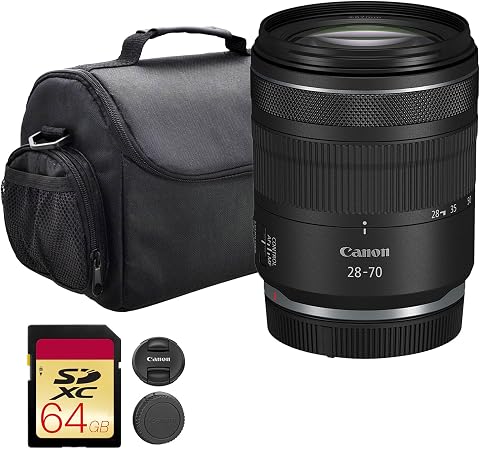 Canon RF 28-70mm f/2.8 IS STM Lens and Camera Bag BundleView on Amazon →
 - 4
 Canon RF 28-70mm F2.8 IS STM Zoom Lens, BlackView on Amazon →
 - 5
 Canon RF 75-300mm F4-5.6 Zoom Lens with UV Filter and Cleaning KitView on Amazon →
 - 6
 Canon RF 50mm f/1.8 STM LensView on Amazon →
 - 7
 Canon EF 50mm f/1.8 STM Lens for Canon EOS DSLR CamerasView on Amazon →
 - 8
 Canon EF 75-300mm f/4-5.6 III Telephoto Zoom Lens for Canon SLR Cameras (Rene…View on Amazon →
 - 9
 Retropia Pink 32mm f/11 Repurposed Lens for Nikon Z-MountView on Amazon →
 - 10
 Retropia Repurposed Disposable Camera Lens for Nikon F-Mount DSLRs, 45mm f/10View on Amazon →
How Mounts Shape the Choice
The guide’s practical message is that a highly ranked lens is not automatically the right purchase. Mount fit comes first: a lens that cannot work with a reader’s camera, or that needs an adapter with unwanted compromises, is not a useful recommendation for that buyer. The mix of RF, EF, Nikon F and Nikon Z options makes this especially relevant.
Within compatible choices, the tradeoff is between zoom flexibility, light-gathering ability and portability. A standard zoom covers changing compositions without a lens swap; a 50mm prime is fixed but can be compact and bright; a telephoto zoom reaches distant subjects but is less suited to wide indoor scenes. The recommendations help organize those roles, but do not establish that one lens will deliver the best results for every photographer.
A Guide, Not a 2027 Launch
The supplied source presents a ranked selection and explains how its author weighed lenses against common shooting needs. It does not say that the lenses were introduced in 2027, and it gives no dated announcement, new product specification or evidence of a change in availability. The year in the reader’s question should not be read as a confirmed release date.
The guide compares different categories rather than treating every lens as a direct substitute. Standard zooms, primes, telephoto zooms and effect-focused lenses address distinct shooting situations. Its ranking gives versatility priority, then recognizes more specialized strengths; bundle accessories and renewed condition are described as separate from the optical merits of the lens.
“The RF 24-70mm F2.8 L IS USM leads for versatility.”
— ThorstenMeyerAI.com, in the supplied guide
Limits of the Available Comparison
The supplied material does not provide the full set of 10 model names, prices, publication date or a clear account of how each lens performed in testing. It also does not identify a particular 2027 camera body or confirm that any listed lens is newly released, newly tested or currently available. The ranking should be understood as the publisher’s recommendation, not an independent industry consensus.
Compatibility can vary by exact camera body, lens version and adapter. The source advises buyers to verify autofocus and exposure support but does not document those combinations for every product. It also does not quantify differences in sharpness, autofocus speed, weight or stabilization performance.
Verify Fit Before Buying
Readers considering a lens should first check the mount and compatibility notes for their specific camera, then compare focal length and aperture against the subjects and conditions they photograph most often. Before purchase, verify the exact product listing, whether it is a bundle or renewed item, and current pricing and availability. The source provides no announced follow-up test or product event; any later recommendations would need to be checked against updated body compatibility and market listings.
Key Questions
Which lens does the guide rank first?
It names the Canon RF 24-70mm F2.8 L IS USM as its best overall pick, citing its zoom range, bright constant aperture and stabilization.
Is this a list of new lenses released in 2027?
No such release claim is established in the supplied source. It is a buying guide, and its publication date and the products’ release timing are not confirmed there.
Can I use any Canon lens on any Canon camera?
No. The guide distinguishes Canon RF and EF mounts. Check the exact camera and lens combination; an adapter may support some pairings, but operation can vary.
Why choose the 24-105mm f/4L instead of the 24-70mm f/2.8?
The guide favors the 24-105mm for its broader focal-length coverage and extra reach. It presents the 24-70mm f/2.8 as the stronger fit for dimmer conditions and background separation.
Source: ThorstenMeyerAI.com
Halloween Picks
halloween
As an affiliate, we earn on qualifying purchases.