For most home theaters, I’d start with the Polk Audio Monitor XT12: its 12-inch driver makes it a well-rounded choice for adding weight to movie soundtracks. The Klipsch R-12SW is a strong alternative for buyers who want a higher-powered 12-inch option, while the Sonos Sub Mini suits compact Sonos systems that benefit from wireless setup. The main tradeoffs are room-filling output versus size, system compatibility, and how much control you want over placement and connections. Smaller models can fit tight spaces, but may not deliver the same impact in a large room. Continue reading for the full comparison and guidance on choosing a subwoofer that fits your room and setup.

Get business pricing on monitors, keyboards and dev gear
- Business-only prices and quantity discounts
- Tax-exempt purchasing
- Multiple users, one account, clear invoices
Key Takeaways
- The Polk Audio Monitor XT12 is the strongest all-around match in this group for buyers seeking a conventional 12-inch home theater subwoofer without stepping into a more specialized system.
- The Klipsch R-12SW and Synergy Black Label Sub-120 prioritize larger-driver output; their size and stronger output focus are a better fit for rooms with space than for discreet setups.
- The Edifier T5s, BESTISAN 8-inch, and Klipsch R-8SW trade scale for compactness, making them more appropriate for small rooms or limited placement options than for large theaters.
- The Sonos Sub Mini is the system-specific choice: wireless convenience can simplify a compatible Sonos setup, but it is not a general-purpose substitute for conventional receiver-connected models.
- Several models share a 10-inch format, but they are not interchangeable; connection needs, amplifier claims, enclosure size, and product positioning matter alongside driver diameter.
| Klipsch Synergy Black Label Sub-100 10” Front-Firing Subwoofer with 150 Watts of Continuous Power |  | Best for Simple Klipsch-Based Setups | Woofer diameter: 10 inches | Power output: 150 watts continuous; 300 watts dynamic | Dimensions: 14” H x 12.5” W x 15.7” D | VIEW ON AMAZON | See Our Full Breakdown |
| Rockville Rock Shaker 10″ Black Powered Subwoofer for Home Theater |  | Best for Connection Flexibility | Woofer diameter: 10 inches | Power output: 300W RMS; 600W peak | Frequency response: 20Hz–200Hz | VIEW ON AMAZON | See Our Full Breakdown |
| Klipsch R-100SW 10″ Subwoofer with Deep Bass and Digital Amplifier |  | Best for Adjustable 10-Inch Bass | Woofer diameter: 10 inches | Power output: 300 watts peak | Frequency response: 32Hz–120Hz | VIEW ON AMAZON | See Our Full Breakdown |
| Polk Audio Monitor XT12 12-Inch Powered Subwoofer, Deep Bass, Midnight Black |  | Best for Larger-Room Movie Impact | Subwoofer diameter: 12 inches | Power: 100W | Bass extension stated in description: Down to 24Hz | VIEW ON AMAZON | See Our Full Breakdown |
| Edifier T5s Powered Subwoofer, 70W RMS, 8″ Woofer, 35Hz Deep Bass, Black |  | Best Compact Pick for Smaller Theaters | Woofer size: 8 inches | Power output: 70W RMS | Frequency response: 35Hz | VIEW ON AMAZON | See Our Full Breakdown |
| Klipsch R-120SW Subwoofer, Black |  | Best for High-Output Home Theater | Woofer diameter: 12 inches | Frequency response: 29Hz–120Hz ±3dB | Maximum acoustic output: 116dB | VIEW ON AMAZON | See Our Full Breakdown |
| Klipsch R-12SW 12-Inch 400W Subwoofer |  | Best for Adjustable Bass Integration | Woofer diameter: 12 inches | Power output: 400W | Frequency response: 29–120Hz | VIEW ON AMAZON | See Our Full Breakdown |
| Polk Audio PSW10 10-inch Subwoofer, Compact Design, Up to 100 Watts | 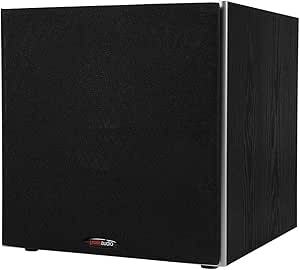 | Best for Small-Room Systems | Woofer diameter: 10 inches | Power output: 100W | Frequency response: 40–160Hz | VIEW ON AMAZON | See Our Full Breakdown |
| BESTISAN 8-inch Powered Subwoofer 120W Peak, Class-D DSP, 35Hz Deep Bass |  | Best Compact Pick with Flexible Connections | Speaker size: 8 inches | Woofer diameter: 6.5 inches | Amplifier output: 80W; 120W peak | VIEW ON AMAZON | See Our Full Breakdown |
| Klipsch Synergy Black Label Sub-120 12” Front-Firing Subwoofer with 200 Watts of Continuous Power |  | Best for a Matched Klipsch Home Theater | Woofer diameter: 12 inches | Power output: 200W continuous; 400W dynamic | Woofer material: Spun-copper Cerametallic | VIEW ON AMAZON | See Our Full Breakdown |
| Sonos Sub Mini – White – Compact Wireless Subwoofer |  | Best for Compact Sonos Theater Setups | Woofer configuration: Dual 6-inch force-canceling woofers | Connectivity: Wi-Fi | Tuning: Trueplay | VIEW ON AMAZON | See Our Full Breakdown |
| Klipsch Reference R-8SW Surround Subwoofer, 150 Watts Peak Power, 8-Inch |  | Best Compact Wired Pick | Woofer diameter: 8 inches | Peak power: 150 watts | Connectivity: Wired RCA and LFE | VIEW ON AMAZON | See Our Full Breakdown |
| Sony SA-CS9M2 10-Inch Powerful & Compact Subwoofer with Deep Bass |  | Best for a Bigger Driver in a Compact Theater | Driver size: 10 inches | Power output: 230 watts | Enclosure: Bass reflex | VIEW ON AMAZON | See Our Full Breakdown |
| subwoofers for home theater | Dimensions | Weight | Woofer diameter | Warranty |
|---|---|---|---|---|
| Klipsch Synergy Black Label Su | 14” H x 12.5” W x 15.7” D | 25.5 pounds | 10 inches | 5 years parts and labor |
| Rockville Rock Shaker 10" Blac | 18.9” D x 18.3” W x 14.6” H | 20 pounds | 10 inches | 1 year |
| Klipsch R-100SW 10" Subwoofer | 14.5” x 12.5” x 16.4” | 26 pounds | 10 inches | 5 years on woofer; 2 years on amplifier |
| Polk Audio Monitor XT12 12-Inc | — | — | — | — |
| Edifier T5s Powered Subwoofer | 15.71” D x 6.69” W x 16.14” H | 10.38 kg | — | 2 years |
| Klipsch R-120SW Subwoofer | — | — | 12 inches | 5 years on woofer; 2 years on amplifier |
| Klipsch R-12SW 12-Inch 400W Su | 20.01 × 20.01 × 17.7 inches | — | 12 inches | 2 years |
| Polk Audio PSW10 10-inch Subwo | 17 × 14.25 × 14.5 inches | 11.8kg | 10 inches | — |
| BESTISAN 8-inch Powered Subwoo | 11.4 × 10 × 10.2 inches | 5.52kg | 6.5 inches | — |
| Klipsch Synergy Black Label Su | 21.3 × 17.7 × 23.7 inches | 36.4lb | 12 inches | 3 years parts and labor |
| Sonos Sub Mini | 8.98 × 8.98 × 11.93 inches | 6,350 g | — | — |
| Klipsch Reference R-8SW Surrou | 15.75 × 11.75 × 13.25 inches | 15 pounds | 8 inches | 1 year |
| Sony SA-CS9M2 10-Inch Powerful | 18.7 × 14.8 × 17.4 inches | 9.45 kg | — | 1 year |
More Details on Our Top Picks
Klipsch Synergy Black Label Sub-100 10” Front-Firing Subwoofer with 150 Watts of Continuous Power
The Klipsch Sub-100 is a straightforward choice for a living-room theater where a 10-inch driver and 150 watts of continuous power are a better fit than a larger, more demanding sub. Its front-firing design can make placement easier when the sub needs to sit near a wall, while the digital amplifier is intended to deliver efficient, controlled output. Compared with the Klipsch R-100SW, this model lists less continuous power, so it suits moderate listening levels more than listeners chasing the strongest movie impact. Its five-year parts-and-labor warranty is a notable advantage over the Rockville Rock Shaker’s one-year warranty. The tradeoff is a relatively basic setup: connection wires are not included, and the product requires an AV receiver or preamp and AC power. Corner placement is recommended for stronger bass, which limits placement flexibility.
Pros:- 150 watts continuous and 300 watts dynamic power suit moderate home theater use.
- Front-firing 10-inch driver can work well in common wall-adjacent placements.
- All-digital amplifier is designed for efficient operation.
- Five-year parts-and-labor warranty.
Cons:- Connection wires are not included.
- Requires an AV receiver or preamp and a separate AC power connection.
- Corner placement is recommended, reducing placement freedom.
Best for: Home theater owners who want a compact 10-inch Klipsch sub for moderate-volume movie and TV listening, especially those building around Klipsch speakers.
Not ideal for: Viewers seeking room-filling, high-output effects or a flexible placement setup; its listed continuous power is lower than the Rockville Rock Shaker’s RMS rating, and corner placement is recommended.
- Woofer diameter:10 inches
- Power output:150 watts continuous; 300 watts dynamic
- Dimensions:14” H x 12.5” W x 15.7” D
- Weight:25.5 pounds
- Enclosure material:Metal and plastic
- Color:Black
- Warranty:5 years parts and labor
Our verdict“Choose the Sub-100 for a modest, Klipsch-friendly theater setup where a long warranty and 10-inch front-firing design matter more than maximum output.”
Rockville Rock Shaker 10″ Black Powered Subwoofer for Home Theater
The Rockville Rock Shaker stands out for a home theater that needs more setup options than a basic RCA-only sub provides. Its RCA and high-level inputs and outputs can help it fit into systems with different receiver and speaker connections, while adjustable volume, crossover, and phase controls give owners room to tune bass to their seating area. The stated 300W RMS output is higher than the Klipsch Sub-100’s 150W continuous rating, making the Rockville a stronger candidate for listeners who want more headroom from a 10-inch unit. That specification advantage comes with a sizable cabinet: at about 18 inches wide and deep, it takes more floor space than the Klipsch R-100SW. The one-year warranty is also shorter than the five-year coverage listed for the Klipsch models, so its broad connectivity comes with a support tradeoff.
Pros:- RCA and high-level inputs and outputs support varied system connections.
- 300W RMS output provides more stated power than the Klipsch Sub-100.
- Volume, crossover, and phase controls support system tuning.
- MDF enclosure.
Cons:- Large footprint can be difficult to accommodate in smaller rooms.
- One-year warranty is shorter than the coverage listed for the Klipsch alternatives.
- Requires an AC power supply and is intended for indoor use.
Best for: Home theater owners with older or mixed-component systems who need both RCA and high-level connections, plus adjustable controls for room setup.
Not ideal for: People with tight floor plans or buyers who prioritize a longer warranty; its cabinet is bulky and its listed warranty is one year.
- Woofer diameter:10 inches
- Power output:300W RMS; 600W peak
- Frequency response:20Hz–200Hz
- Connectivity:RCA line inputs/outputs; high-level speaker inputs/outputs
- Enclosure material:MDF
- Dimensions:18.9” D x 18.3” W x 14.6” H
- Weight:20 pounds
- Warranty:1 year
Our verdict“Pick the Rock Shaker if flexible wiring and higher stated RMS output matter more than a compact cabinet or longer warranty.”
Klipsch R-100SW 10″ Subwoofer with Deep Bass and Digital Amplifier
The Klipsch R-100SW is a good fit when a home theater needs a 10-inch sub with more stated peak output and useful tuning controls. Its 300-watt peak amplifier, phase adjustment, and low-pass crossover give owners ways to balance bass with their main speakers—useful when a system sounds uneven after placement. Compared with the Synergy Black Label Sub-100, the R-100SW lists higher peak power, while both use a front-firing 10-inch driver and digital amplification. It is less connection-flexible than the Rockville Rock Shaker, which adds high-level inputs and outputs; the Klipsch relies on RCA inputs. The R-100SW’s 32Hz lower frequency figure also sets a stated limit for the deepest effects, and its 26-pound cabinet may be awkward in a small room. Its wired-only setup favors conventional receiver systems over wireless arrangements.
Pros:- 300-watt peak digital amplifier in a front-firing 10-inch design.
- Low-pass crossover and phase controls help tailor integration with speakers.
- RCA input supports connection to many home theater receivers.
- Five-year woofer warranty.
Cons:- RCA-only connectivity is less flexible than the Rockville Rock Shaker’s input and output options.
- 32Hz lower frequency response may leave the deepest movie effects less pronounced than subwoofers with lower stated limits.
- Large and heavy for a compact room, with a wired-only setup.
Best for: Home theater owners with an RCA-equipped receiver who want a 10-inch sub with adjustable crossover and phase controls for speaker matching.
Not ideal for: Buyers who need high-level speaker connections, wireless operation, or the deepest stated bass extension; the Rockville offers more connection types, while this model lists a 32Hz lower response limit.
- Woofer diameter:10 inches
- Power output:300 watts peak
- Frequency response:32Hz–120Hz
- Connectivity:RCA inputs
- Dimensions:14.5” x 12.5” x 16.4”
- Weight:26 pounds
- Warranty:5 years on woofer; 2 years on amplifier
Our verdict“Choose the R-100SW for a conventional RCA-based theater that needs adjustable 10-inch bass, but skip it if flexible wiring or compact placement leads your priorities.”
Polk Audio Monitor XT12 12-Inch Powered Subwoofer, Deep Bass, Midnight Black
For a room where movie effects need more scale than a compact sub can provide, the Polk Monitor XT12 brings a 12-inch driver and a stated low-frequency reach of 24Hz. That larger driver and bass extension make it a more natural fit for weighty soundtrack effects than the Edifier T5s, whose 8-inch woofer is aimed at tighter spaces and more modest output. Polk also provides crossover and phase controls, so owners can adjust how the sub blends with their speakers. The tradeoff is not simply size: the listed amplifier power is 100W, below the Klipsch R-100SW’s 300W peak figure, and the Polk uses wired RCA/LFE connections rather than wireless. Its listed frequency-response entry of “40 KHz” conflicts with the description’s 24Hz bass claim, so I would verify the specification with the manufacturer before relying on that field. The 4-ohm impedance may also limit receiver matching.
Pros:- 12-inch driver is suited to larger-scale home theater bass than the Edifier T5s’s 8-inch woofer.
- Description specifies bass extension down to 24Hz.
- Crossover and phase controls allow room and speaker tuning.
- RCA and LFE connectivity supports common theater receiver setups.
Cons:- Listed 100W power is lower than the Klipsch R-100SW’s 300W peak specification.
- No wireless connectivity; operation requires a wired connection.
- The supplied 40 KHz frequency-response entry conflicts with the description’s 24Hz claim, and 4-ohm impedance may not suit every receiver.
Best for: Home theater owners with room for a floor-standing 12-inch sub who prioritize low-frequency movie effects and RCA/LFE integration.
Not ideal for: Small-room listeners or buyers whose receiver compatibility is uncertain; it has a larger driver and 4-ohm impedance, and its supplied frequency-response field conflicts with the stated 24Hz bass claim.
- Subwoofer diameter:12 inches
- Power:100W
- Bass extension stated in description:Down to 24Hz
- Frequency-response field:40 KHz
- Impedance:4 ohm
- Connectivity:RCA, LFE
- Enclosure material:Engineered wood
- Mounting type:Floor standing
Our verdict“Choose the Polk for a larger theater room and deeper stated bass reach, but confirm receiver compatibility and the conflicting frequency specification before buying.”
Edifier T5s Powered Subwoofer, 70W RMS, 8″ Woofer, 35Hz Deep Bass, Black
The Edifier T5s is the space-conscious option in this group: its 8-inch woofer and compact listed width make it easier to accommodate than the 12-inch Polk Monitor XT12 or the broad Rockville Rock Shaker cabinet. For a smaller theater, apartment, or media room, its 70W RMS output and 35Hz stated bass reach add low-end support without committing as much floor space to the sub. Adjustable low-pass filtering and phase selection help it blend with compatible speakers, while RCA, 3.5mm, and series connection options offer more input variety than the RCA-only Klipsch R-100SW. The compromise is output scale: this is not the pick for listeners seeking the stronger impact of a larger driver in a spacious room. It is wired, needs compatible audio equipment, and its 35Hz limit does not reach as low as the Polk’s stated 24Hz extension.
Pros:- Compact footprint is easier to place than the Polk Monitor XT12 or Rockville Rock Shaker.
- 70W RMS output and 35Hz stated bass reach suit smaller-room systems.
- Low-pass filter and phase selector support integration with compatible speakers.
- RCA, 3.5mm, and series connection options provide multiple wired setup paths.
Cons:- 8-inch driver and 70W RMS output are less suited to high-impact bass in large rooms.
- 35Hz stated lower limit does not reach as low as the Polk Monitor XT12’s 24Hz claim.
- No wireless connectivity and requires compatible speakers or an amplifier.
Best for: Apartment dwellers and owners of small media rooms who need a compact powered sub to add bass to compatible speakers without a large cabinet.
Not ideal for: Home theater owners with large rooms or a priority on the deepest, most forceful movie effects; its 8-inch driver and 70W RMS output are more modest than the larger Polk XT12.
- Woofer size:8 inches
- Power output:70W RMS
- Frequency response:35Hz
- Dimensions:15.71” D x 6.69” W x 16.14” H
- Weight:10.38 kg
- Connectivity:RCA, 3.5mm, series connection option
- Built-in features:Auto-standby, phase selector, low-pass filter
- Warranty:2 years
Our verdict“Pick the T5s when limited space and a modest, adjustable bass upgrade matter more than maximum theater impact.”
Klipsch R-120SW Subwoofer, Black
The Klipsch R-120SW suits viewers who want strong, room-filling effects from a conventional wired home theater setup. Its 12-inch driver and stated 116dB maximum acoustic output give it more headroom than the compact BESTISAN 8-inch, which is the better fit when floor space is tight. The listed 29Hz lower response reaches into deep movie bass, while RCA connectivity keeps setup straightforward with a compatible receiver. Its graphite enclosure also offers a more distinctive finish than a basic box, though appearance matters less than giving a subwoofer room to perform.
The tradeoff is a relatively simple connection package: unlike the BESTISAN, it does not list high-level inputs or DSP adjustment. I’d choose it for output and straightforward integration, not flexible system tuning. It also needs its own power outlet and is intended for indoor use.
Pros:- 12-inch woofer and 116dB stated maximum output suit dynamic movie soundtracks.
- 29Hz stated lower frequency response reaches deep bass effects.
- RCA connection offers a straightforward path to a compatible receiver.
- Graphite enclosure and black finish suit a living-room setup.
Cons:- RCA-only wired connectivity offers fewer integration options than the BESTISAN 8-inch.
- Requires a nearby power outlet and is not designed for outdoor or wet locations.
Best for: Home theater owners with a compatible RCA-equipped receiver who want substantial movie bass in a medium or larger room.
Not ideal for: Buyers needing wireless, high-level, or DSP connections, or anyone with very limited placement space.
- Woofer diameter:12 inches
- Frequency response:29Hz–120Hz ±3dB
- Maximum acoustic output:116dB
- Amplifier power:200W RMS, 400W peak
- Enclosure material:Injection-molded graphite
- Connectivity:Wired RCA
- Warranty:5 years on woofer; 2 years on amplifier
Our verdict“Choose the R-120SW if your priority is high-output movie bass and your receiver supports its wired RCA connection.”
Klipsch R-12SW 12-Inch 400W Subwoofer
The Klipsch R-12SW is a fit for home theater owners who want a full-size driver and hands-on control over how bass blends with their speakers. Its adjustable crossover and phase control give it more tuning flexibility than the simpler RCA-focused R-120SW, which may help when placement or speaker matching makes the bass sound uneven. The 12-inch front-firing woofer and stated 400W digital amplifier are aimed at delivering weighty effects, while line/LFE inputs suit a receiver-based system.
That capacity comes with a substantial cabinet: its listed dimensions make it a tougher fit than the Polk PSW10 or compact BESTISAN. The product data also lists an unusually low weight figure, so I would not use that number to plan moving or placement. Pick this Klipsch for controls and scale, not for a small room or a discreet footprint; it has no listed wireless connection.
Pros:- 12-inch front-firing woofer is suited to substantial soundtrack bass.
- Adjustable crossover and phase controls allow more system tuning than the R-120SW lists.
- Line/LFE inputs support common receiver connections.
- Stated 400W amplifier output provides headroom for dynamic content.
Cons:- Large listed dimensions can make placement difficult in smaller rooms.
- No wireless connectivity is listed.
- Requires a compatible line or LFE connection and a power outlet.
Best for: Home theater owners with a receiver and enough floor space who want phase and crossover controls for system matching.
Not ideal for: Apartment listeners or owners of compact rooms who need a small cabinet, wireless setup, or easy repositioning.
- Woofer diameter:12 inches
- Power output:400W
- Frequency response:29–120Hz
- Inputs:Line/LFE
- Dimensions:20.01 × 20.01 × 17.7 inches
- Finish:Brushed black vinyl
- Warranty:2 years
Our verdict“Pick the R-12SW over the simpler R-120SW if you want a large Klipsch subwoofer with crossover and phase adjustments and have room for its cabinet.”
Polk Audio PSW10 10-inch Subwoofer, Compact Design, Up to 100 Watts
The Polk Audio PSW10 makes sense for a modest home theater where a large 12-inch cabinet would dominate the room. Its 10-inch driver and compact footprint are easier to accommodate than either Klipsch 12-inch model, and adjustable crossover helps blend its output with smaller main speakers. Line- and speaker-level inputs also give it broader connection options than the RCA-only R-120SW, a practical advantage for older or less conventional setups.
The compromise is output depth: its listed 40Hz lower response does not reach as low as the 29Hz Klipsch models or the BESTISAN’s stated 35Hz figure. That makes the PSW10 better for adding bass presence than for chasing the deepest cinematic rumble. Its 100W rating is also modest beside the larger Klipsch options. I’d favor it for a small-to-mid-sized room and skip it if theater impact is the main goal.
Pros:- Smaller 10-inch format is easier to place than the listed Klipsch 12-inch cabinets.
- Line- and speaker-level inputs suit a wider range of system connections than the R-120SW.
- Adjustable crossover supports blending with a home theater speaker set.
- Bass Boost and remote control are listed features.
Cons:- 40Hz stated lower frequency limit is higher than the Klipsch models’ 29Hz figure.
- 100W output is modest beside the 12-inch Klipsch options.
- Requires AC power and is intended for indoor use.
Best for: Apartment and small-room home theater owners who want easier placement and flexible wired inputs for a modest system.
Not ideal for: Viewers seeking deep, high-output bass for a large room or the strongest low-frequency movie effects.
- Woofer diameter:10 inches
- Power output:100W
- Frequency response:40–160Hz
- Crossover frequency:80–160Hz
- Dimensions:17 × 14.25 × 14.5 inches
- Weight:11.8kg
- Inputs:Line-level and speaker-level
- Power source:AC
Our verdict“Choose the PSW10 for a compact, flexible-input system in a smaller room, but choose a Klipsch 12-inch model for deeper, stronger movie bass.”
BESTISAN 8-inch Powered Subwoofer 120W Peak, Class-D DSP, 35Hz Deep Bass
The BESTISAN 8-inch powered subwoofer is the most space-conscious option here, with a cabinet small enough to work where the Klipsch R-12SW’s large footprint would be awkward. Its RCA, LFE, and high-level inputs provide more connection flexibility than the Polk PSW10’s listed inputs, and adjustable crossover and phase controls let owners tailor the blend with existing speakers. The stated 35Hz response is ambitious for a compact subwoofer and gives it a deeper listed reach than the Polk’s 40Hz figure.
Its small driver and 80W amplifier rating, with 120W peak output, are not a substitute for the larger Klipsch models’ scale in a big home theater. The multiple connection and tuning choices may also take more setup effort than a straightforward LFE hookup. I’d choose it when compact dimensions and flexible integration matter more than maximum room-filling impact.
Pros:- Compact listed dimensions suit tight spaces better than the Klipsch R-12SW.
- RCA, LFE, and high-level inputs offer flexible system integration.
- Adjustable crossover and phase controls support tuning to existing speakers.
- Stated 35Hz response reaches below the Polk PSW10’s listed 40Hz limit.
Cons:- 8-inch product description and 6.5-inch woofer specification are inconsistent.
- 80W amplifier rating and 120W peak output offer less stated power than the 12-inch Klipsch models.
- Several connection and tuning options may complicate setup for first-time owners.
Best for: Owners of compact home theaters who need several wired input options and want crossover and phase adjustments in a small cabinet.
Not ideal for: Buyers furnishing a large room or prioritizing high-output cinematic bass over size and connection flexibility.
- Speaker size:8 inches
- Woofer diameter:6.5 inches
- Amplifier output:80W; 120W peak
- Frequency response:35Hz stated
- Inputs:RCA, LFE, and high-level
- Dimensions:11.4 × 10 × 10.2 inches
- Weight:5.52kg
- Enclosure material:Wood
Our verdict“Choose the BESTISAN when a compact cabinet and broad wired compatibility matter more than the stronger output potential of a 12-inch subwoofer.”
Klipsch Synergy Black Label Sub-120 12” Front-Firing Subwoofer with 200 Watts of Continuous Power
The Klipsch Synergy Black Label Sub-120 is the lineup’s natural choice for a home theater built around Klipsch Synergy speakers or for buyers who want a substantial front-firing 12-inch subwoofer. Its 200W continuous and 400W dynamic power put it in the same broad output class as the R-120SW, while the spun-copper Cerametallic driver gives this model a distinct material specification. Compared with the compact BESTISAN, the Sub-120 favors larger-scale output over easy placement.
The listed dimensions and 36.4-pound weight make it the bulkiest-feeling commitment in this group, so plan its position before bringing it into a crowded room. The data lists wired, Bluetooth, and Wi-Fi connectivity, but does not specify how wireless connections work; I would verify compatibility rather than assume wireless integration with a receiver. No cables are included, and the listed frequency response of 20kHz does not provide a useful low-frequency range for comparing subwoofer depth.
Pros:- 12-inch front-firing driver is suited to home theater playback.
- 200W continuous and 400W dynamic power are specified.
- Spun-copper Cerametallic woofer provides a distinct driver construction.
- Three-year parts-and-labor warranty is listed.
Cons:- Large dimensions and 36.4-pound weight make placement less convenient than the BESTISAN or Polk PSW10.
- Connection wires are not included.
- Listed 20kHz frequency response does not clarify the subwoofer’s low-frequency extension.
Best for: Owners of Klipsch Synergy home theater speakers who have floor space for a large subwoofer and want a matching front-firing model.
Not ideal for: Buyers who need a compact cabinet, clearly documented low-bass response, or a simple receiver connection with cables included.
- Woofer diameter:12 inches
- Power output:200W continuous; 400W dynamic
- Woofer material:Spun-copper Cerametallic
- Dimensions:21.3 × 17.7 × 23.7 inches
- Weight:36.4lb
- Connectivity listed:Wired, Bluetooth, Wi-Fi
- Frequency response listed:20kHz
- Warranty:3 years parts and labor
Our verdict“Choose the Sub-120 for a spacious Klipsch-centered theater, but verify its connection requirements and placement needs before selecting it.”
Sonos Sub Mini – White – Compact Wireless Subwoofer
The Sonos Sub Mini is the space-conscious choice for a home theater built around compatible Sonos speakers. Its dual 6-inch force-canceling woofers and Trueplay tuning are designed to add bass while limiting cabinet vibration and adapting the sound to the room. At just under 12 inches tall, it is easier to fit near a TV setup than larger options such as the Polk Audio Monitor XT12, though its smaller drivers are not the pick for buyers seeking the scale of a larger subwoofer in a big room. Setup and control through the Sonos app suit an existing Sonos system, but compatibility is the key limitation: this is not a general-purpose wired subwoofer. Wi-Fi-only connectivity also rules out a simple Bluetooth connection, and it is intended for indoor use.
Pros:- Dual force-canceling woofers add bass while helping limit cabinet vibration.
- Trueplay tuning can tailor output to the room.
- Compact footprint fits more easily into small TV areas than larger models such as the Polk Audio Monitor XT12.
- Wi-Fi and Sonos app setup support integration with compatible Sonos systems.
Cons:- Requires compatible Sonos speakers, limiting use with conventional receiver-based systems.
- Wi-Fi-only connectivity excludes Bluetooth and standard wired subwoofer connections.
- Its compact 6-inch drivers are less suited to buyers wanting room-filling impact in a large theater.
Best for: Sonos households adding more controlled bass to a compact living-room theater without a wired subwoofer connection.
Not ideal for: Buyers with non-Sonos receivers, those who need Bluetooth or wired inputs, and anyone seeking the output scale of a larger subwoofer for a spacious theater room.
- Woofer configuration:Dual 6-inch force-canceling woofers
- Connectivity:Wi-Fi
- Tuning:Trueplay
- Maximum power output:250 watts
- Frequency response:25 Hz
- Dimensions:8.98 × 8.98 × 11.93 inches
- Weight:6,350 g
- Power source:Corded electric
Our verdict“Choose the Sub Mini to add app-controlled bass to a compact Sonos theater, but skip it if your system depends on a conventional receiver or needs larger-room output.”
Klipsch Reference R-8SW Surround Subwoofer, 150 Watts Peak Power, 8-Inch
The Klipsch Reference R-8SW suits home theaters that need a conventional wired subwoofer without giving up much floor space. Its 8-inch copper injection-molded graphite woofer, down-firing design, and all-digital amplifier make it a more receiver-friendly option than the Wi-Fi-only Sonos Sub Mini; RCA and LFE connections fit standard home theater wiring. The cabinet is compact beside larger 10- and 12-inch choices in this roundup, but that smaller format also limits its appeal for a large room where a listener wants more physical bass impact. Placement matters, too: the down-firing driver needs a suitable floor position, so it is less flexible than a design that can be placed without regard to its underside. Wired simplicity is its strength, not wireless convenience.
Pros:- RCA and LFE inputs suit conventional receiver-based home theaters.
- 8-inch woofer provides a larger driver than the Sonos Sub Mini’s 6-inch units.
- Compact cabinet is easier to place than larger 10- and 12-inch subwoofers.
- All-digital amplifier supports efficient operation.
Cons:- Wired connectivity lacks the wireless integration offered by the Sonos Sub Mini.
- Down-firing design makes floor placement a factor in setup.
- Smaller driver and compact format are less suited to high-impact bass in a large room.
Best for: Home theater owners with an AV receiver and a small or medium room who want a compact subwoofer with standard RCA or LFE wiring.
Not ideal for: Buyers who want wireless setup, need more output for a large theater, or cannot accommodate a down-firing cabinet on the floor.
- Woofer diameter:8 inches
- Peak power:150 watts
- Connectivity:Wired RCA and LFE
- Enclosure material:MDF, copper, and other materials
- Dimensions:15.75 × 11.75 × 13.25 inches
- Weight:15 pounds
- Warranty:1 year
Our verdict“Pick the R-8SW for compact, receiver-connected theater systems; choose a larger model if your room needs greater bass scale.”
Sony SA-CS9M2 10-Inch Powerful & Compact Subwoofer with Deep Bass
With a 10-inch driver and stated 230-watt power output, the Sony SA-CS9M2 offers a step up in driver size from the 8-inch Klipsch R-8SW while remaining positioned as a compact active subwoofer. Its bass-reflex enclosure is intended to deliver tight low frequencies with minimal vibration, a useful fit for movie soundtracks as well as music. The larger driver makes it the stronger candidate of these two for buyers who want more substantial bass, but its listed dimensions—18.7 inches deep and 17.4 inches tall—still call for deliberate placement. Compared with the Sonos Sub Mini, it has a conventional active-subwoofer format rather than Wi-Fi integration and Trueplay tuning. The supplied data also limits compatibility claims to certain devices, so buyers should check that their receiver or system can connect before choosing it.
Pros:- 10-inch driver is larger than the 8-inch Klipsch R-8SW driver.
- 230-watt power output is specified for its active design.
- Bass-reflex enclosure is designed for low-frequency output with reduced vibration.
- Supports shelf or floor mounting.
Cons:- Its listed dimensions require more placement room than the compact Sonos Sub Mini.
- Compatibility is described as limited to certain devices, so system matching needs checking.
- The supplied specifications do not identify connectivity options.
Best for: Home theater owners seeking a 10-inch active subwoofer for a modest-size room, especially those building around compatible Sony equipment.
Not ideal for: Buyers with very limited placement space, those seeking wireless Sonos integration, or owners whose receiver compatibility is uncertain.
- Driver size:10 inches
- Power output:230 watts
- Enclosure:Bass reflex
- Mounting type:Shelf mount or floor mount
- Dimensions:18.7 × 14.8 × 17.4 inches
- Weight:9.45 kg
- Color:Black
- Warranty:1 year
Our verdict“Choose the Sony for a larger-driver active subwoofer when you have room for its cabinet and have confirmed it matches your theater system.”

How We Picked
I compared these 13 subwoofers as home theater choices, focusing on the factors that affect movie playback rather than treating a wattage figure or driver size as a complete performance verdict. The evaluation considered stated driver size and power, intended room scale, placement flexibility, wired or wireless setup, likely system compatibility, and the practical tradeoff between bass presence and cabinet footprint. I also looked for clear differences in role: a balanced all-rounder should rank ahead of a compact or system-specific option for the broadest set of theater buyers.
The ranking favors useful fit and versatility over the most dramatic specification on a product listing. Larger 12-inch options receive credit for their potential to suit bigger rooms, but their size can be a liability in compact spaces; small models gain points for easier placement but are not presented as room-filling equivalents. Because the listed products span conventional powered subs and a Sonos-specific wireless model, compatibility is part of the ranking, not an afterthought. Buyers should confirm exact inputs, controls, and system requirements for the version they plan to purchase.
Factors to Consider When Choosing Subwoofers For Home Theater
Choosing among home theater subwoofers is less about finding the biggest number on a spec sheet and more about matching the sub to your room, receiver, and listening habits. These factors can help narrow the choice before you compare individual models.
Match the Subwoofer to the Room, Not Just the Screen Size
A large television does not tell you how much bass a room can support; room volume, open doorways, and listening distance matter more. A compact sub may work well in a small enclosed room but can sound restrained in a large or open-plan space. Larger drivers and cabinets may give you more headroom, though they also take up more floor space and may be harder to place discreetly. Avoid buying on driver diameter alone, since design and amplification also affect how a sub behaves. If your room is open to a kitchen or hallway, plan for more output than the seating area alone suggests. When uncertain, favor a model with room to grow rather than running a smaller unit close to its limits.
Check Receiver Connections and System Compatibility
Before choosing a subwoofer, confirm how your receiver or sound system sends bass to it. Many home theater receivers provide a dedicated subwoofer output, but connection type and setup options can vary across components. Wireless does not always mean universal: a system-specific subwoofer may pair only with compatible products from its own ecosystem. Check whether the sub has the input your equipment needs and whether your system can manage crossover and level settings. A mismatch can mean extra adapters, limited control, or a product that cannot join the system at all. Treat compatibility as a deciding factor, especially when comparing the Sonos Sub Mini with conventional powered models.
Think About Placement Before You Buy
A subwoofer can sound very different depending on where it sits, so leave yourself practical placement options. Corners often increase bass energy, but they can also make certain notes boom; moving the sub a short distance may produce smoother results. A large cabinet may limit those experiments in a small room, while a compact model is easier to reposition but may have less output capacity. Keep the sub away from walkways and allow room for its connections and ventilation. Do not assume the spot beside the television is automatically best. If the room has uneven bass, trying more than one location can help before you decide that the sub itself is the problem.
Read Power Claims With Their Context
Power figures are useful for comparing products only when the specifications describe the same kind of rating. A peak figure is not directly comparable to a continuous or RMS figure, and neither one alone predicts how forceful bass will sound in your room. Look at power alongside the driver, enclosure, stated frequency range, and the maker’s intended use. A smaller sub with modest power may be sensible for a desktop or compact living room, while a bigger room typically benefits from more headroom. Avoid choosing solely by the highest wattage listed. The better question is whether the complete design suits your room and listening level without needing to be pushed hard.
Decide How Much Setup Control You Want
Some buyers want straightforward connections and basic level adjustment; others prefer more control over crossover, phase, or placement-related tuning. Those controls can help integrate bass with the main speakers, but they do not replace careful positioning or receiver setup. If you are new to home theater, a simple conventional powered sub can be easier to understand than a system with multiple pairing requirements. Conversely, an existing wireless ecosystem may make a compatible subwoofer more convenient than running a cable across the room. Check which adjustments happen on the sub and which are handled by your receiver or app. Choose a setup you are willing to configure, not just one with the longest feature list.
Know When Paying for More Output Makes Sense
More capable hardware is most useful when your room is large, you sit far from the sub, or you want movie effects to retain impact at higher listening levels. In a small room or at moderate volume, an oversized cabinet may add little practical benefit while making placement harder. A second subwoofer can sometimes smooth bass across multiple seats better than one larger unit, though that also adds cost, connections, and setup work. Buyers focused on music may favor controlled integration over maximum output, while action-movie fans may place more value on headroom. Think about the whole seating area, not just the main chair. Spend more only when the room and listening goals can make use of the added capability.
Frequently Asked Questions
Is a 12-inch subwoofer always better than a 10-inch model for home theater?
No. A 12-inch model may have an advantage when a larger room or higher playback levels call for more headroom, but driver size alone does not establish sound quality or room fit. The 10-inch Klipsch and Polk options can make more sense where cabinet size and placement matter. A small room can also exaggerate bass at certain frequencies, so extra output may make integration harder rather than better. Compare the full design, connection options, and stated ratings, then match the choice to your room and listening level.
Can I add the Sonos Sub Mini to a receiver-based home theater?
The Sonos Sub Mini is intended for compatible Sonos systems, so it should not be treated like a universal subwoofer that connects directly to any AV receiver. Check the current compatibility list for your exact Sonos equipment before buying. If your home theater is centered on a conventional receiver with a subwoofer output, a wired powered model from this roundup is usually the more straightforward fit. Wireless convenience matters only when the rest of the system supports the pairing method. Confirm compatibility first to avoid buying a sub that cannot join your setup.
Will a compact 8-inch subwoofer provide enough bass for action movies?
It can add audible low-end weight in a small room, but compact 8-inch models are not the safest choice for buyers seeking strong, room-filling impact. The Edifier T5s, BESTISAN 8-inch, and Klipsch R-8SW are better matched to limited space or modest listening levels than to a large theater room. Room size, seating distance, and the rest of your speaker system all affect the result. If deep effects at higher levels are a priority, compare larger options such as the Polk Monitor XT12 or Klipsch 12-inch models. A smaller sub can still be the right choice when placement and system scale matter more than maximum output.
Should I buy one powerful subwoofer or two smaller ones?
One subwoofer is simpler to connect, place, and tune, so it is a sensible starting point for many home theaters. Two subs can help deliver more even bass across several seats, particularly when the room has noticeable bass peaks and dips. That benefit depends on receiver support, placement options, and time spent setting levels and phase; two units are not automatically better. If only one seat matters and the room is compact, a single well-matched model may be enough. For a large room or several listeners, consider whether smoother coverage is more valuable than concentrating output in one location.
Do I need a subwoofer if my front speakers already have bass?
A subwoofer can still help because movie soundtracks often send low-frequency effects to the dedicated bass channel, and smaller front speakers may not reproduce those effects with much authority. A receiver can also redirect lower frequencies from the main speakers to the sub, which may reduce the load on those speakers. If your front speakers are large and you listen at moderate levels, the benefit may be less pronounced, but the dedicated sub channel can still add impact. Check your receiver’s bass-management settings and set the crossover to suit the speakers rather than guessing. You can also compare playback with and without the sub to decide whether it improves your system.
Conclusion
For the broadest range of home theater buyers, I recommend the Polk Audio Monitor XT12 as the best overall pick in this group. The Klipsch R-12SW is a compelling alternative for shoppers who want a larger-format, higher-powered option, while the Klipsch Synergy Black Label Sub-120 is another 12-inch candidate for buyers who prefer that lineup. For best value, I’d compare the Polk PSW10 and Klipsch Sub-100 against your room and connection needs rather than assuming the lowest-cost option is the best fit. Beginners who want a conventional route can start by checking receiver compatibility and room size, then favor a straightforward powered model such as the Klipsch R-100SW. Choose the Sonos Sub Mini for a compatible Sonos setup, or consider the Edifier T5s, BESTISAN 8-inch, and Klipsch R-8SW when compact size matters most. In a large room, prioritize the 12-inch options; in a tight space, prioritize fit and system compatibility over driver size.
Halloween Picks
halloween
As an affiliate, we earn on qualifying purchases.