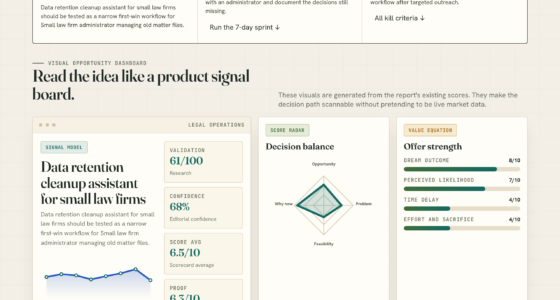

📊 Full opportunity report: Cybersecurity operations signal monitor: A backdoor in a LinkedIn job offer on IdeaNavigator AI — validation score, market gap, and execution plan.

Get business pricing on monitors, keyboards and dev gear
- Business-only prices and quantity discounts
- Tax-exempt purchasing
- Multiple users, one account, clear invoices
TL;DR
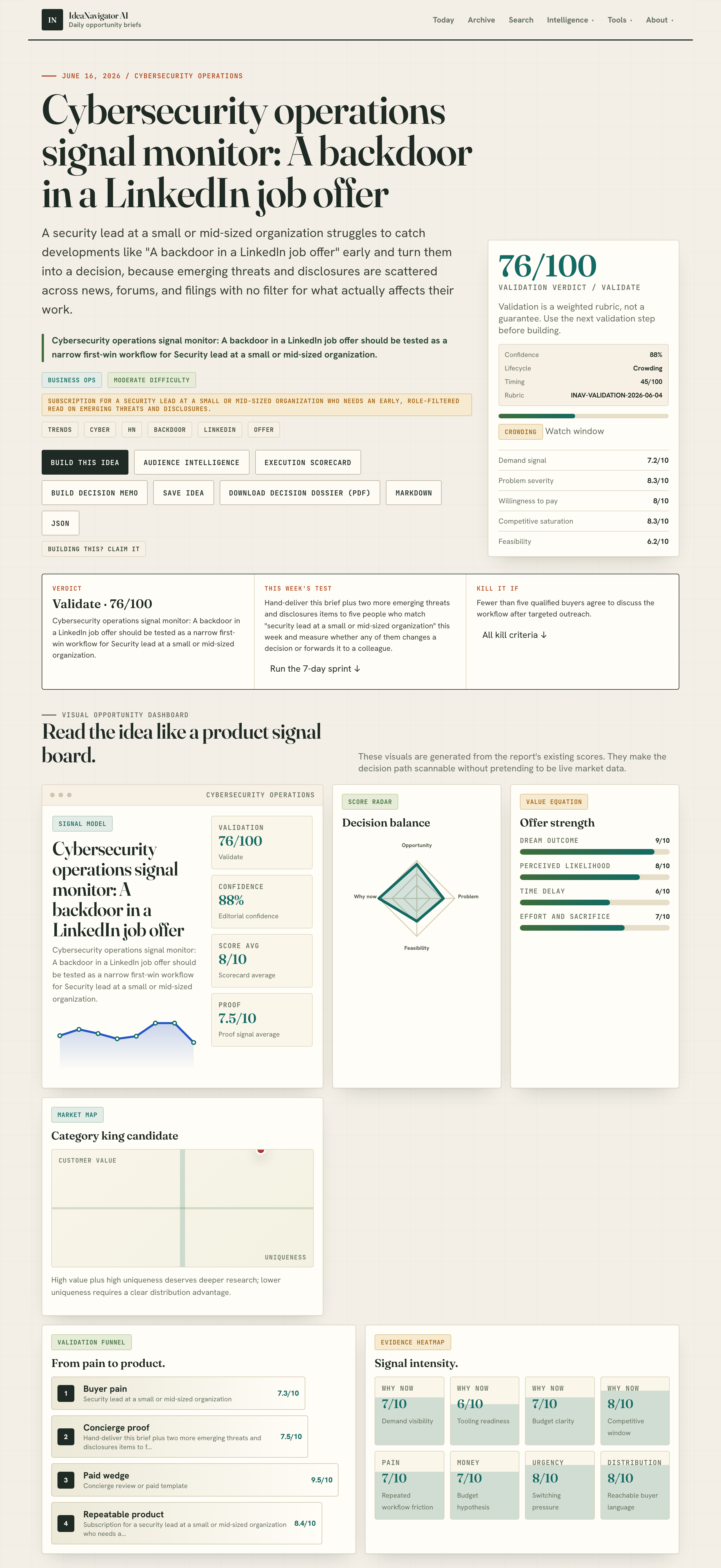
Cybersecurity experts have confirmed the presence of a backdoor in a LinkedIn job offer. This development underscores risks associated with malicious recruitment tactics and emphasizes the need for vigilance among security teams.
Cybersecurity researchers have confirmed the discovery of a backdoor embedded in a LinkedIn job posting, representing a potential security vulnerability and a new tactic in recruitment-based cyber threats. This finding is significant for security teams at small and mid-sized organizations, as it highlights a novel attack vector that could be exploited for malicious purposes.
The backdoor was identified through active monitoring of cybersecurity signals on platforms like Hacker News, where emerging threats are increasingly surfaced in real time. The specific LinkedIn job offer was analyzed by security researchers who confirmed that it contained malicious code designed to establish unauthorized access once interacted with by a job applicant.
According to an anonymous cybersecurity expert involved in the investigation, the backdoor appears to be embedded in the application process, potentially allowing attackers to execute remote code, harvest personal data, or gain persistent access to targeted networks. The phishing-like tactic leverages legitimate recruitment channels, making detection more challenging for security teams.
LinkedIn has been notified of the issue, and the platform has indicated that it is investigating the incident. No public statement has yet confirmed whether the malicious posting has been removed or if other similar postings are active.
Implications for Cybersecurity and Recruitment Security
This discovery underscores a rising trend of cyber threats targeting online recruitment platforms, which are increasingly exploited by attackers to distribute malware or establish backdoors. For organizations, especially smaller ones lacking extensive security oversight, such threats pose risks of data breaches, credential theft, and network compromise. It also highlights the importance of vetting job postings and monitoring for malicious activity within professional networks.
As an affiliate, we earn on qualifying purchases.
Emerging Threats in Online Recruitment Platforms
Recent months have seen a surge in cyber threats exploiting social media and professional networking sites, with attackers embedding malicious code in seemingly legitimate posts and job offers. The technique of embedding backdoors in recruitment ads is not new but has gained renewed attention following this recent detection. Cybersecurity analysts have warned that as attack methods evolve, organizations need to enhance their detection capabilities for such stealthy threats.
Prior incidents have involved phishing campaigns and malware distribution via email, but embedding malicious code directly into job postings represents a novel attack vector that can bypass traditional email security filters. Monitoring signals from cybersecurity communities like Hacker News has proven effective in early threat detection, as evidenced by this recent case.
“The backdoor embedded in this LinkedIn job offer demonstrates a sophisticated approach to covertly establishing access, which could be used for various malicious activities.”
— an anonymous cybersecurity researcher
network intrusion detection system
As an affiliate, we earn on qualifying purchases.
As an affiliate, we earn on qualifying purchases.
Extent and Impact of the Backdoor Threat
It remains unclear how widespread the malicious postings are, whether other similar backdoors exist in different platforms, and what specific payloads are being delivered through these postings. The full scope of the attack and its potential impact on affected organizations are still under investigation.
As an affiliate, we earn on qualifying purchases.
Monitoring and Response Strategies for Organizations
Security teams are advised to enhance their monitoring of online recruitment channels, verify the integrity of job postings, and implement detection measures for embedded malicious code. Platforms like LinkedIn are expected to strengthen their moderation and security protocols. Further updates from cybersecurity researchers and LinkedIn are anticipated as investigations progress.
As an affiliate, we earn on qualifying purchases.
Key Questions
How can organizations protect themselves from such backdoors?
Organizations should verify the legitimacy of job postings, monitor for suspicious activity, and use security tools capable of detecting embedded malicious code in online content.
Is this threat limited to LinkedIn or could it affect other platforms?
While this incident was identified on LinkedIn, similar tactics could be used on other professional or social platforms. Vigilance across multiple channels is recommended.
What should job seekers do to avoid falling victim to such scams?
Job seekers should scrutinize postings for unusual requests or links, verify the legitimacy of the employer, and avoid clicking on suspicious attachments or embedded links.
Are there signs that indicate a job posting might be malicious?
Signs include poor language quality, unusual requests for personal data early in the process, or suspicious links embedded within the posting.
Source: IdeaNavigator AI
Halloween Picks
halloween
As an affiliate, we earn on qualifying purchases.