
TL;DR

Get business pricing on monitors, keyboards and dev gear
- Business-only prices and quantity discounts
- Tax-exempt purchasing
- Multiple users, one account, clear invoices
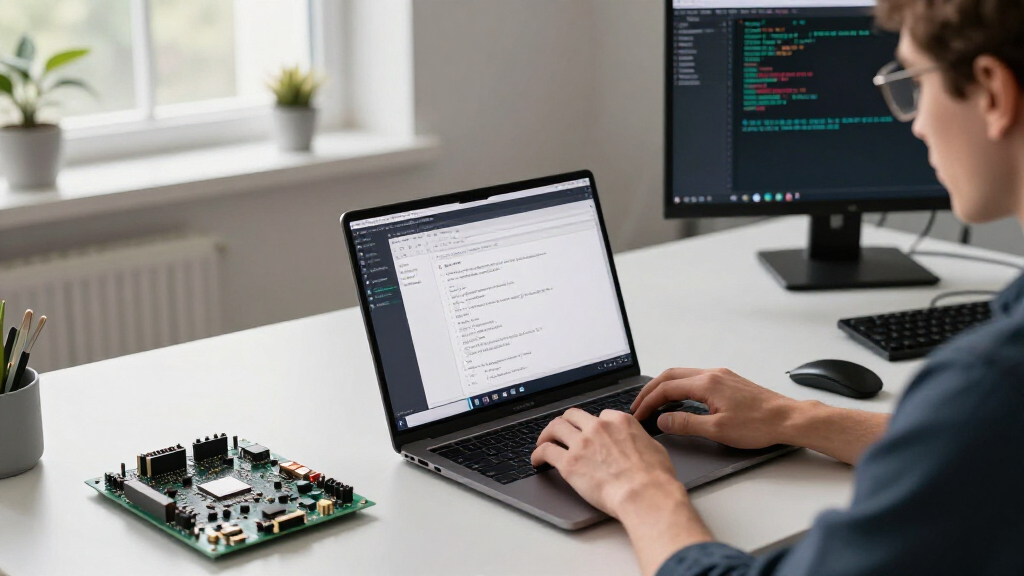
Developers have demonstrated a version of the Project Oberon system running on RISC-V hardware, replacing the original RISC-5 platform. This development signals potential for broader hardware support for Oberon.
A developer has successfully ported the Project Oberon operating system to run on RISC-V architecture, replacing the original RISC-5 platform. The port was shared on Show HN, highlighting a significant step in expanding Oberon’s hardware compatibility and demonstrating the flexibility of its system design.
The port was achieved by a developer known as ‘Elias,’ according to the Show HN post. This new version allows Oberon to operate on RISC-V, an open-source CPU architecture gaining popularity for its flexibility and potential in academic and embedded environments. The developer reported that the port involved adapting the system’s low-level hardware interfaces and device drivers to RISC-V specifications, with initial testing showing successful boot and basic functionality.
While the core Oberon system booted on RISC-V hardware, detailed performance metrics and full hardware support are still under development. The effort appears to be a proof of concept, aiming to demonstrate that Oberon can be adapted beyond its original RISC-5 platform, which was used in the original Oberon hardware designs from the 1980s and 1990s.
Potential Impact of RISC-V Port on Oberon Development
This port could broaden the accessibility of the Project Oberon system by enabling it to run on modern, open-source hardware architectures like RISC-V. It may encourage further development, experimentation, and educational use of Oberon in environments beyond its original hardware. Additionally, it highlights the system’s modularity and portability, which are key to its longevity and relevance in contemporary computing.
As an affiliate, we earn on qualifying purchases.
Historical and Technical Background of Oberon and RISC-V
The Oberon operating system was originally developed by Niklaus Wirth and colleagues at ETH Zurich in the 1980s as part of the Oberon programming language and hardware projects. Its design emphasizes simplicity, efficiency, and minimalism. The system was initially tied to specific hardware, notably the RISC-5 architecture used in Oberon computers.
RISC-V, an open-source instruction set architecture, has gained traction in recent years due to its flexibility and absence of licensing restrictions. It is increasingly adopted in academia, startups, and research projects as a platform for experimentation and custom hardware design. Porting Oberon to RISC-V represents a convergence of these two efforts: legacy system design meeting modern, open hardware.
“Porting Oberon to RISC-V was a challenging but rewarding process, involving significant adaptation of hardware interfaces and drivers. The system now boots successfully on RISC-V hardware, opening new possibilities for experimentation.”
— Elias (developer)
As an affiliate, we earn on qualifying purchases.
Extent of Hardware Support and Performance Details Still Unclear
It is not yet clear how extensive the hardware support is for the RISC-V port, including peripheral compatibility and performance benchmarks. The port appears to be in early testing stages, with full functionality and stability yet to be confirmed.
As an affiliate, we earn on qualifying purchases.
Upcoming Testing, Development, and Community Engagement
Further testing is expected to refine hardware support, improve stability, and potentially add features. The developer plans to share source code and documentation to encourage community involvement and collaborative development. Monitoring the project’s progress will be essential to assess its long-term viability.
As an affiliate, we earn on qualifying purchases.
Key Questions
What is Project Oberon?
Project Oberon is an operating system and hardware design developed at ETH Zurich in the 1980s, emphasizing simplicity, efficiency, and minimalism. It includes a unique programming language and hardware architecture.
Why is porting Oberon to RISC-V significant?
Porting Oberon to RISC-V demonstrates its adaptability to modern, open-source hardware platforms, potentially expanding its use in education, research, and hobbyist projects.
Is the RISC-V port fully functional?
It is currently a proof of concept with successful booting reported, but full hardware support, performance testing, and stability assessments are still underway.
Who developed the RISC-V port?
The port was created by a developer known as ‘Elias,’ who announced it on Show HN.
What are the next steps for this project?
Further development includes expanding hardware support, optimizing performance, and releasing source code for community collaboration.
Source: hn
Columbus Day / Indigenous Peoples' Day Picks
long weekend sales
As an affiliate, we earn on qualifying purchases.