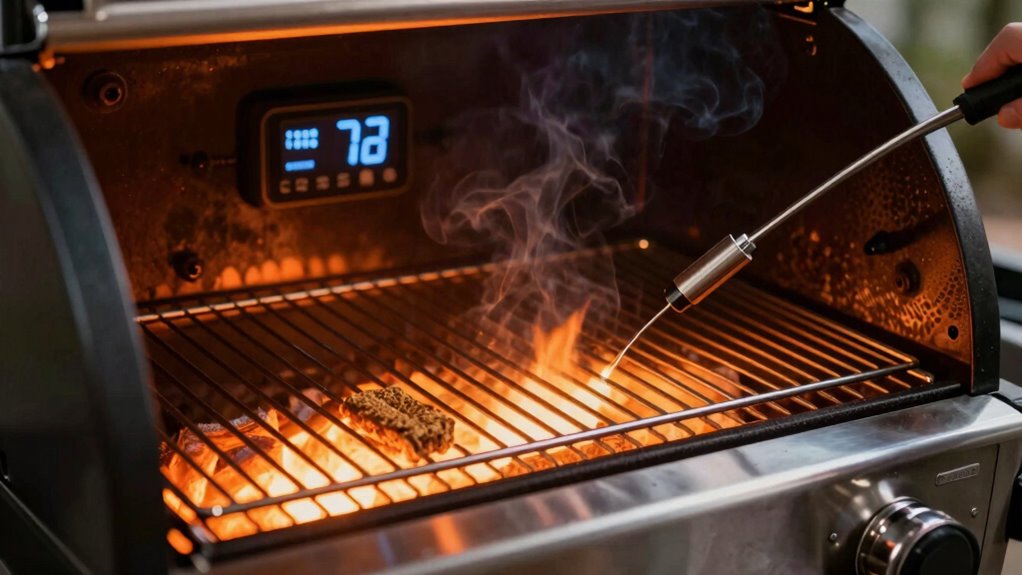
Pellet grills control temperature through a combination of digital controls, an auger system, and airflow management. The digital panel allows you to set precise temperatures, while sensors and feedback loops automatically adjust pellet feed rates and fan speed to keep stable heat. The auger delivers pellets steadily, and the fan circulates heat and smoke for even cooking. If you want a deeper understanding, you’ll discover more about how these systems work together to maintain consistent results.
Key Takeaways
- Digital control panels precisely adjust pellet feed and fan speed to maintain consistent temperatures.
- Sensors monitor internal temperature, triggering automatic adjustments to pellet delivery and airflow.
- The auger system regulates pellet flow, increasing or decreasing feed based on temperature feedback.
- Airflow management via fans ensures even heat distribution and stable cooking conditions.
- Regular cleaning and proper pellet storage prevent jams and airflow issues, ensuring accurate temperature control.
What Are Pellet Grills and How Do They Work?
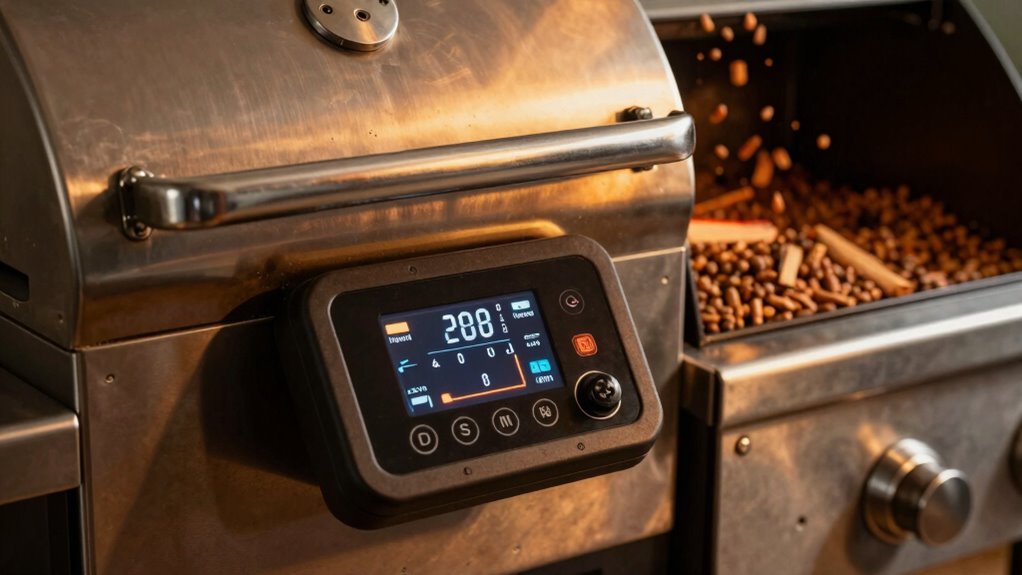
Pellet grills are versatile cooking appliances that use compressed wood pellets as fuel. When you start using one, you’ll notice how easy it is to manage pellet storage; most models have a hopper that holds enough pellets for hours of cooking. The grill’s internal auger feeds pellets into a burn pot, igniting them to create consistent heat and smoke. This process allows for precise temperature control, which is essential for achieving perfect results. To keep your grill functioning smoothly, regular grill cleaning is crucial—removing ash and residue prevents blockages and ensures even heating. Understanding how your pellet grill works helps you maintain it better and enhances your cooking experience, making it easier to produce flavorful, tender dishes every time. Additionally, the temperature regulation system plays a vital role in maintaining consistent cooking conditions, allowing for precise adjustments during the grilling process. Knowing how the pellet feed system operates can help you troubleshoot issues and optimize your grill’s performance. Proper maintenance of the pellet storage can prevent pellet jams and ensure a steady supply during long cooking sessions. Regularly inspecting the ignition system can help ensure reliable startup and consistent heat output. Being aware of the ash removal process can also extend the life of your grill and improve its efficiency.
How the Digital Control Panel Keeps Your Grill at the Perfect Temperature
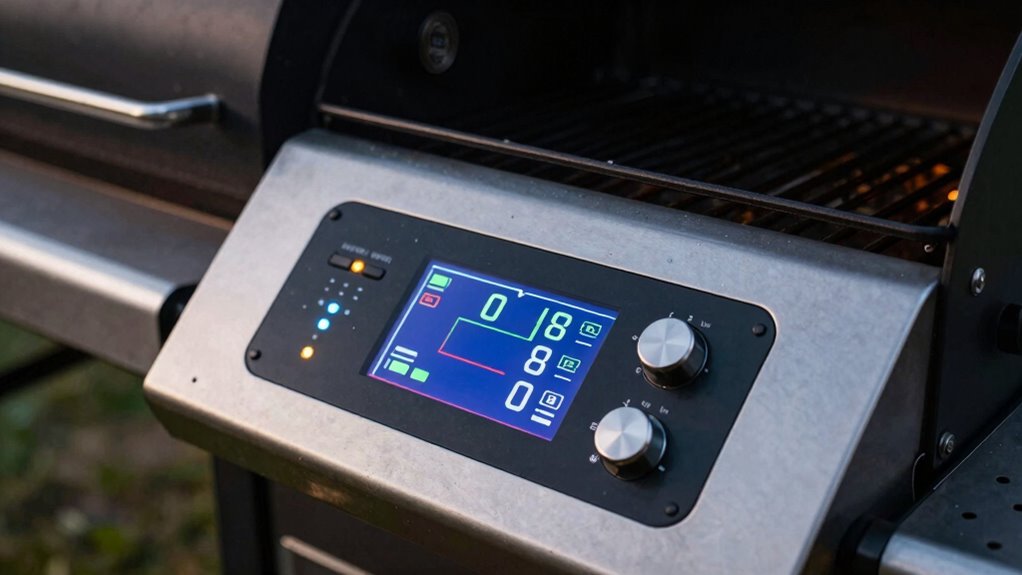
Your digital control panel allows you to make precise temperature adjustments easily. It automatically regulates the heat, so you don’t have to constantly monitor your grill. This keeps your food cooked perfectly every time. Additionally, digital content formats enable you to access and control your grill remotely through smartphone apps, enhancing convenience and precision. Understanding the temperature regulation system helps you optimize your grilling results and ensures consistent performance. Many of these systems incorporate herbal wellness principles, promoting a balanced and enjoyable grilling experience. Moreover, integrating holistic SEO practices can help you better understand and optimize your grilling techniques for superior results. Recognizing how feedback mechanisms work within these systems can further improve your control and cooking outcomes.
Precise Temperature Adjustments
Thanks to advanced digital control panels, maintaining the perfect temperature on your pellet grill is straightforward and highly accurate. These panels allow you to make precise temperature adjustments, giving you control over your cook. Regular temperature calibration ensures your grill hits the target temperature consistently, preventing fluctuations that can spoil your food. The digital display shows real-time readings, so you know exactly when to tweak the settings. Smoke management is also integrated into these controls, helping you balance smoke production with heat levels. This ensures your meat absorbs the right amount of flavor without over-smoking. Proper ventilation is essential for optimal performance and safety when using pellet grills, helping to regulate airflow and prevent buildup of smoke or heat. With this level of temperature regulation, you can confidently cook everything from low-and-slow briskets to quick sears, all while maintaining ideal temperature stability.
Automated Heat Regulation
Modern digital control panels automatically adjust the grill’s heat output to maintain a steady temperature, taking the guesswork out of manual regulation. This precise regulation guarantees your food cooks evenly, enhancing flavor infusion as smoke and heat work harmoniously. The system monitors temperature constantly and adjusts the pellet feed rate to prevent fluctuations. This real-time feedback loop relies on smart thermostat protocols to optimize performance. As the grill operates, ash removal becomes more efficient, preventing buildup that could interfere with airflow and temperature stability. Consistent heat not only improves cooking results but also prolongs the life of your pellet grill by reducing strain on components. With automated heat regulation, you can focus on your cooking without worrying about manual adjustments, knowing your grill keeps the temperature steady for perfect, flavorful results every time.
How the Auger System Delivers Pellets for Consistent Heat
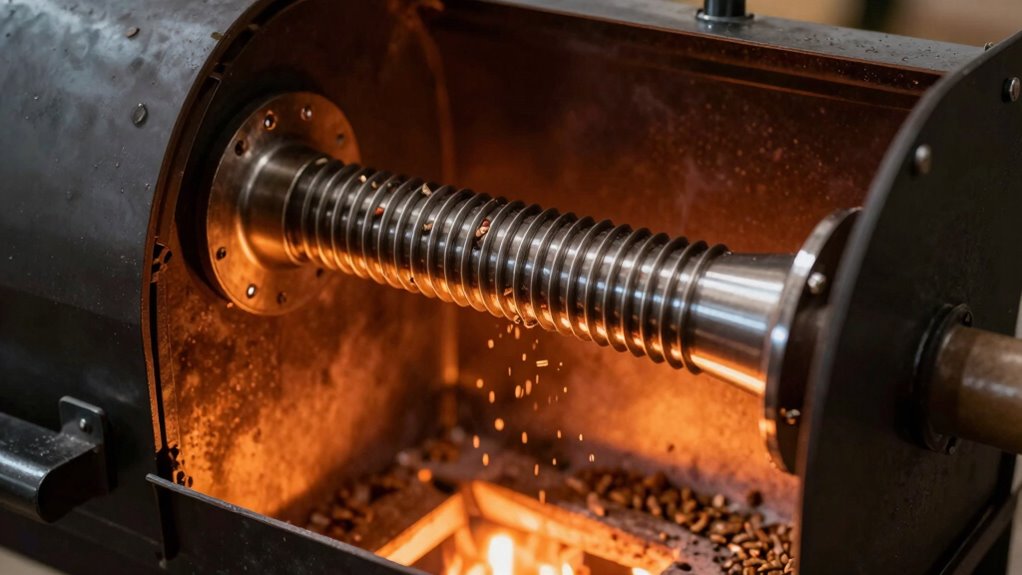
Your grill’s auger system precisely delivers pellets to maintain steady heat. By regulating the auger speed, it guarantees a consistent flow of fuel. This reliable delivery helps your grill produce stable, even temperatures every time you cook. Additionally, some grills incorporate art and culture elements in their design to enhance aesthetic appeal and user experience. Proper solar system safety measures are essential when installing or maintaining your grill setup to prevent accidents and ensure efficient operation. Implementing precise temperature control features further optimizes cooking performance and energy efficiency. Understanding floating on water and their folklore origins can inspire creative design elements or thematic features in outdoor cooking setups.
Pellet Delivery Mechanism
The pellet delivery mechanism relies on an auger system that actively transports pellets from the hopper to the firepot, guaranteeing a steady supply of fuel. Proper pellet storage is essential; keep your pellets dry and free of dust to prevent jams or uneven feeding. The auger moves these pellets consistently, maintaining the right amount of fuel for stable temperature control. Regular auger maintenance, like cleaning out dust and checking for obstructions, helps prevent misfeeds and ensures smooth operation. If the auger gets clogged or worn, your grill may struggle to deliver pellets evenly, causing temperature fluctuations. Ensuring Proper pellet storage and performing routine auger upkeep helps keep the delivery process reliable, which directly impacts your grill’s ability to maintain consistent heat. Additionally, understanding how the auger system functions allows you to troubleshoot issues more effectively and optimize your grill’s performance. Being familiar with the feed rate adjustments can also help you fine-tune temperature control for different cooking styles. Paying attention to the pellet quality can further improve feeding consistency and overall grill performance.
Auger Speed Regulation
Maintaining consistent heat in your pellet grill depends heavily on regulating the auger speed, which controls how quickly pellets are fed into the firepot. The auger motor adjusts its speed based on your temperature settings, ensuring a steady supply of heat. Different wood pellet types, like hardwood or fruitwood, may burn at slightly different rates, so fine-tuning auger speed helps manage these variations. Regular auger motor maintenance, such as cleaning out pellet jams and inspecting for wear, keeps the system running smoothly. When the motor operates efficiently, it delivers pellets at a consistent rate, preventing temperature fluctuations. Proper regulation of auger speed is essential for achieving reliable, even cooking results every time you grill.
Consistent Heat Output
To deliver consistent heat, the auger system carefully controls how pellets are fed into the firepot, ensuring a steady supply of fuel. Temperature sensors monitor the grill’s heat levels constantly, sending real-time data to the control system. When heat drops below your target, the auger increases pellet feed, maintaining steady temperature output. Conversely, if it gets too hot, the system slows pellet delivery. Pellet storage keeps a reserve of fuel, preventing shortages that could cause temperature fluctuations. This coordinated process guarantees a stable burn, making your cooking predictable and reliable. By precisely managing pellet flow and responding to sensor feedback, your pellet grill maintains consistent heat output, so your food cooks evenly without hot spots or temperature swings.
How Heat and Smoke Are Circulated by the Grill’s Fan

When you operate a pellet grill, the fan plays a crucial role in guaranteeing consistent heat and smoke distribution. It creates airflow patterns that circulate the heat and smoke evenly throughout the cooking chamber. By adjusting the fan speed, you control how quickly air moves, which directly affects the temperature stability and smoke infusion. A higher fan speed ramps up airflow, dispersing heat more rapidly and intensifying smoke circulation, while a lower speed slows things down for more gentle, even cooking. The fan’s movement pulls fresh air in and pushes warm, smoky air out, maintaining a steady environment inside the grill. Proper airflow ensures your food cooks evenly and absorbs the right amount of smoke flavor, making temperature control more precise and reliable.
How Temperature Sensors and Feedback Loops Maintain Stable Heat
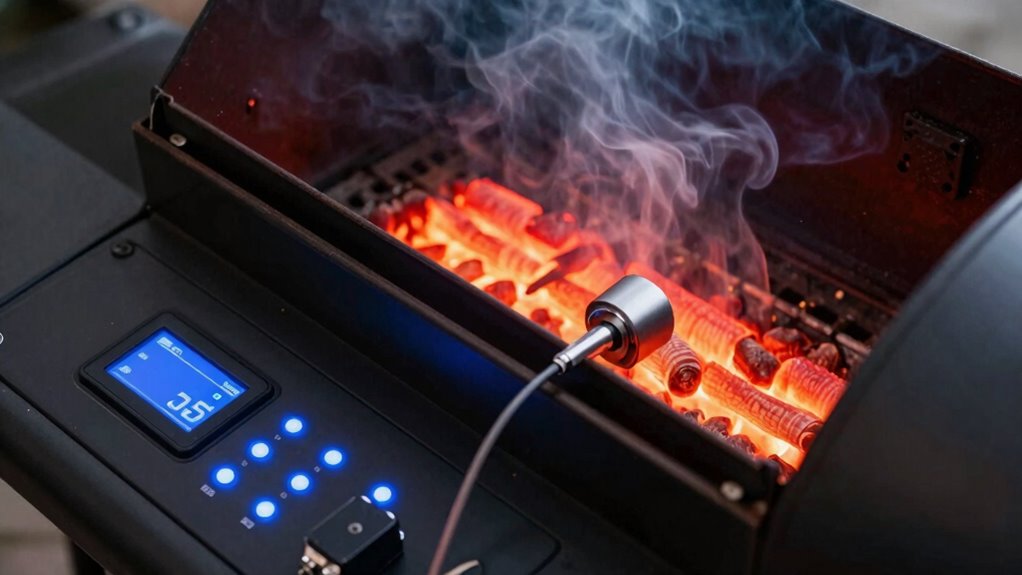
Temperature sensors inside a pellet grill constantly monitor the cooking environment, providing real-time data on the internal temperature. To guarantee accuracy, sensor calibration is essential; uncalibrated sensors can give false readings, leading to inconsistent heat. The grill’s feedback mechanism uses these readings to adjust the pellet feed rate and fan speed, maintaining a steady temperature. When the sensor detects a temperature drop, the system increases pellet intake and fan activity to boost heat. Conversely, if the temperature rises too high, it reduces pellet feeding and airflow. This continuous loop of sensing and adjusting creates a stable cooking environment, allowing you to set your desired temperature with confidence. Proper sensor calibration and an efficient feedback mechanism are key to reliable, precise heat control.
Common Causes of Temperature Fluctuations and How to Fix Them
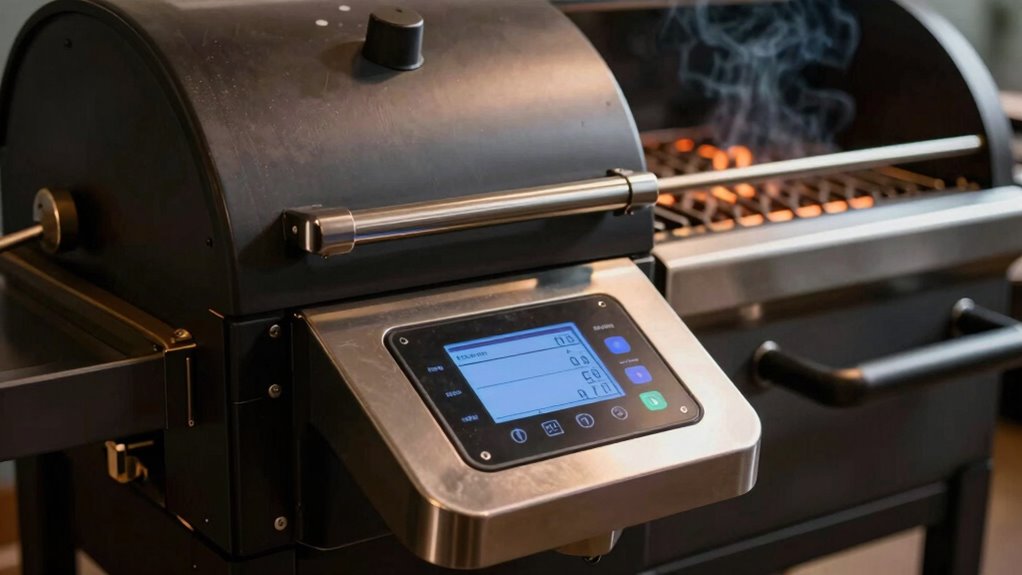
Even with a well-calibrated sensor and a responsive feedback loop, temperature swings can still happen because of several factors. One common cause is airflow disruptions, which can prevent hot air from circulating evenly inside your grill. If vents are blocked or clogged, airflow slows down, leading to uneven heating and unwanted fluctuations. Additionally, opening the lid too frequently causes sudden drops in temperature, disrupting the steady heat. Dirty or poorly maintained fans and exhaust systems can also impair airflow, making it harder to maintain a consistent temperature. To fix these issues, ensure vents are clear and unobstructed, minimize opening the lid, and keep your grill’s components clean. Proper airflow management is key to reducing temperature swings and achieving stable cooking conditions.
Tips to Optimize Temperature Control for Perfect Grilling Results
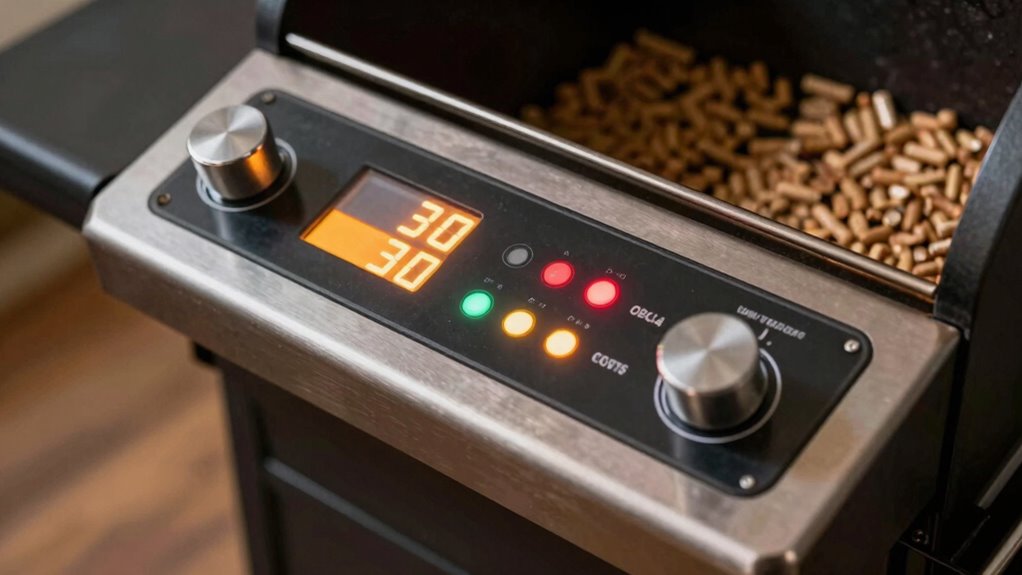
To achieve perfect grilling results, you need to actively manage your pellet grill’s temperature. Start by selecting the right fuel type—hardwood pellets for flavor and consistent burns. Regularly clean your grill following specific cleaning tips to prevent ash buildup that can disrupt airflow and temperature stability. Use the control panel wisely, making incremental adjustments rather than drastic changes. Keep an eye on the hopper to ensure a steady supply of fuel. Remember, maintaining consistent airflow helps regulate temperature. The table below highlights key tips for ideal control:
| Fuel Types | Cleaning Tips | Temperature Stability |
|---|---|---|
| Hardwood Pellets | Remove Ash After Use | Adjust Ventilation Carefully |
| Fruitwood Pellets | Clean Burn Pot Regularly | Monitor Fan Functionality |
| Combo Fuels | Deep Clean Grill Periodically | Use a Thermometer for Accuracy |
Frequently Asked Questions
Can I Manually Override the Digital Temperature Controls on a Pellet Grill?
Yes, you can manually override the digital controls on a pellet grill. Most grills have a manual override feature that allows you to set the temperature directly, bypassing the digital controls. To do this, you typically need to access a specific setting or switch on the control panel. Always consult your grill’s manual for precise instructions, as the process varies by model. This gives you more control during cooking.
How Does Ambient Weather Affect the Pellet Grill’s Temperature Stability?
You notice your pellet grill’s temperature fluctuates during windy days or sudden weather shifts because weather fluctuations and wind impact airflow and heat retention. As wind increases, it cools the grill or disrupts airflow, causing instability. To maintain consistent temps, shield your grill from wind, use insulated covers, and monitor weather conditions. This proactive approach helps you get reliable results regardless of changing outdoor weather.
Are There Different Types of Pellets That Influence Temperature Control?
Yes, different types of pellets influence temperature control. Pellet types, such as hardwood, fruitwood, or combination blends, have unique burn rates and energy outputs, which affect temperature stability. Additionally, flavor profiles vary with pellet types, impacting taste. Choosing the right pellets based on your desired flavor and cooking consistency helps you maintain precise temperature control, making your grilling experience more reliable and flavorful.
How Often Should I Clean the Temperature Sensors for Accurate Readings?
You should clean your temperature sensors every 3 to 4 weeks for accurate readings. Regular cleaning helps maintain sensor calibration, ensuring precise temperature control. If the sensor remains dirty despite cleaning or gives inconsistent readings, consider sensor replacement. Proper maintenance keeps your pellet grill functioning at its best, so staying proactive with cleaning and calibration is key to consistent cooking results.
What Is the Maximum Temperature Range Available on Most Pellet Grills?
Think of your pellet grill as a fiery dragon capable of reaching up to 500°F. Most models offer a maximum temperature range of around 450°F to 500°F, ensuring you get excellent temperature consistency and heat distribution. This high range allows you to sear steaks perfectly while maintaining control over the cooking environment. With precise adjustments, you’ll enjoy even heat and ideal results, whether you’re slow-smoking or searing.
Conclusion
Mastering your pellet grill’s temperature may take some practice, but understanding how it all works makes a difference. Keep an eye on the control panel, verify your pellets are clean and dry, and stay attentive to heat fluctuations. Remember, “A stitch in time saves nine”—address small issues early to prevent bigger problems later. With patience and proper care, you’ll enjoy perfectly grilled meals every time.