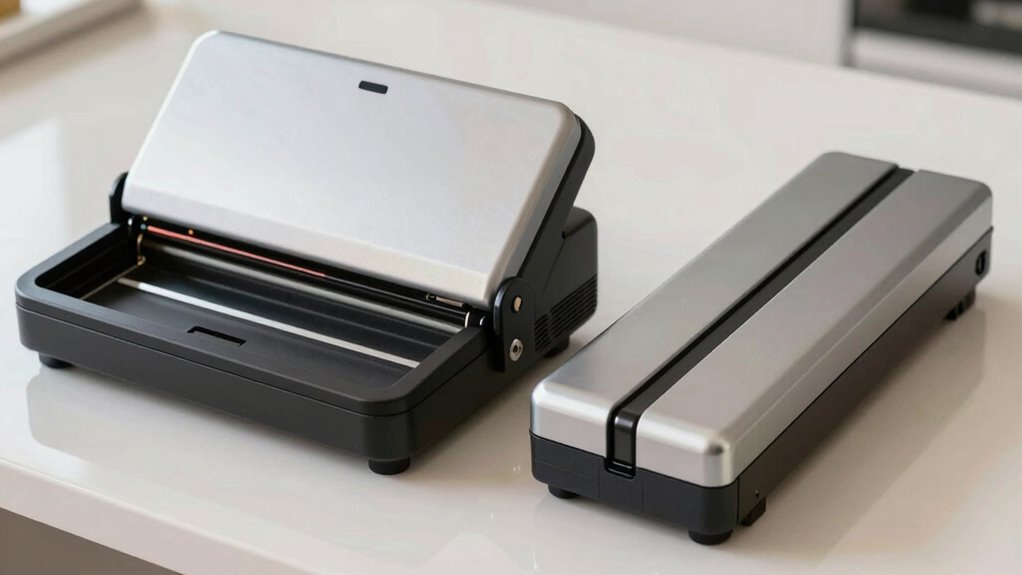

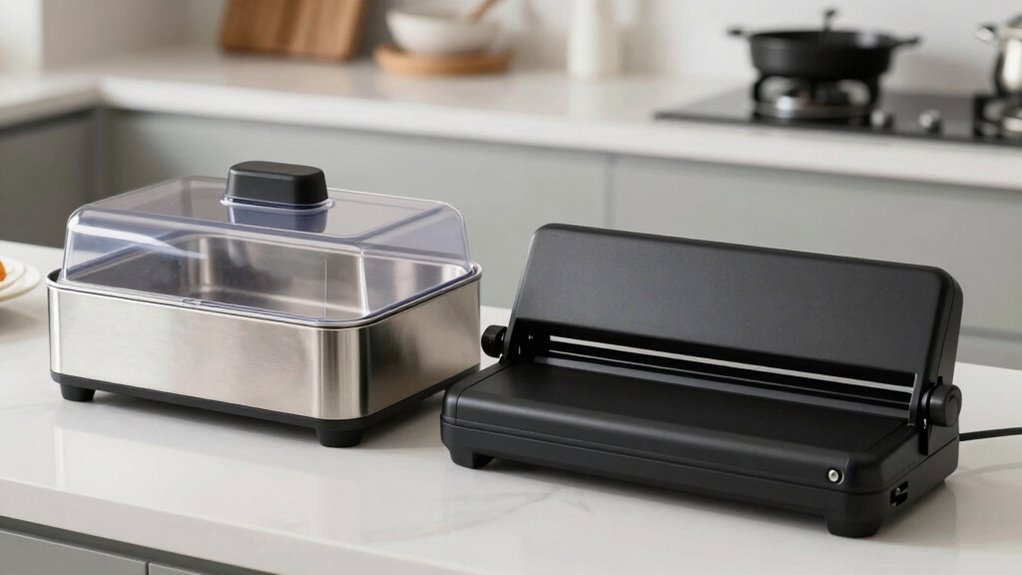
Choosing between a chamber and an edge sealer depends on your needs. If you store大量 bulk, freeze large quantities, or handle liquids often, a chamber sealer is more reliable and provides a stronger, uniform seal. For small-scale use, quick jobs, or tighter budgets, an edge sealer works well and is more convenient. To figure out which suits your situation best, consider your volume, budget, and storage needs—you’ll discover more options by exploring further.

Get business pricing on monitors, keyboards and dev gear
- Business-only prices and quantity discounts
- Tax-exempt purchasing
- Multiple users, one account, clear invoices
Key Takeaways
- Chamber sealers provide uniform sealing and are ideal for bulk, heavy-duty, or moist food packaging.
- Edge sealers are compact, affordable, and best suited for small-scale, occasional sealing tasks.
- Choose a chamber sealer for consistent, airtight seals with liquids; opt for an edge sealer for everyday, lightweight use.
- Consider budget, capacity, and sealing needs when deciding between the two types.
- Both types have unique advantages; select based on your volume, frequency, and packaging material requirements.
chamber vacuum sealer for food preservation
As an affiliate, we earn on qualifying purchases.
As an affiliate, we earn on qualifying purchases.
What Are Vacuum Sealers, and How Do They Work?
Vacuum sealers are devices designed to remove air from specially designed bags or containers, helping to preserve food and other perishable items. They work by tightly sealing the bag after extracting air, which slows down oxidation and bacterial growth. This process, known as vacuum packing, extends the freshness of meats, fruits, and leftovers. You simply place your items in a compatible bag, insert the open end into the sealer, and activate the machine. The vacuum sealer then sucks out the air and seals the bag shut. This method not only preserves food longer but also reduces freezer burn and prevents spoilage. Overall, vacuum sealers are essential tools for efficient food preservation, making it easier to store perishable items safely for weeks or even months.
edge vacuum sealer for small foods
As an affiliate, we earn on qualifying purchases.
As an affiliate, we earn on qualifying purchases.
Chamber vs. Edge Sealers: What’s the Difference?
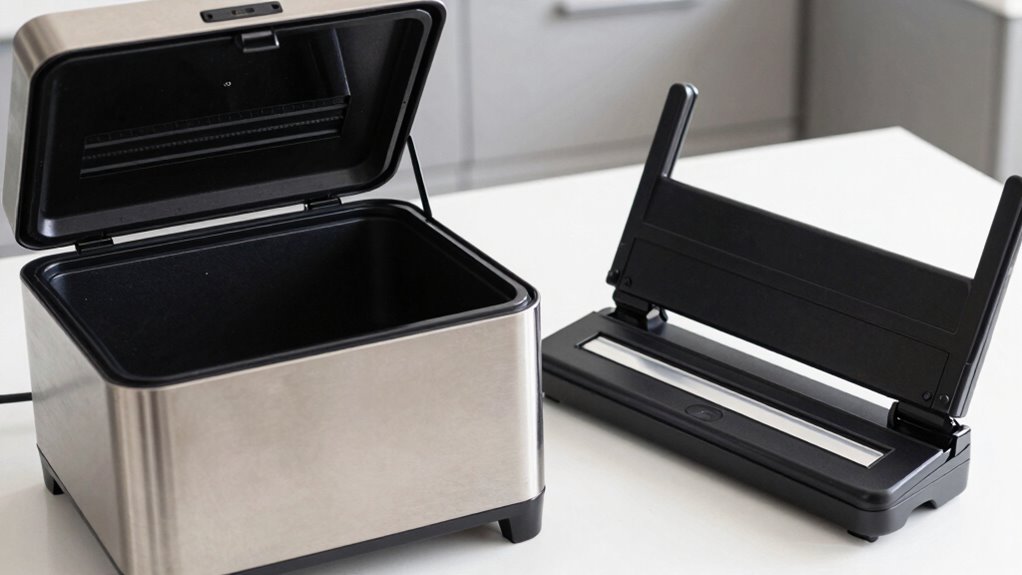
Understanding the difference between chamber and edge sealers is essential when choosing the right vacuum packaging machine for your needs. Chamber sealers use a sealed environment where the entire bag is placed inside the chamber, allowing for uniform sealing of various packaging materials. This technique provides a more consistent seal and can handle thicker or uneven packaging materials more effectively. Additionally, digital content formats can be more easily incorporated into chamber sealing systems for enhanced versatility. For example, the ability to customize sealing parameters makes chamber sealers suitable for specialized packaging needs. The sealing process in chamber sealers often results in higher-quality seals that are less prone to failure, making them ideal for professional or commercial use. Chamber sealers often include features like programmable settings, which improve precision and efficiency in high-volume environments. Edge sealers, on the other hand, seal bags from the outside using a horizontal or vertical sealing bar, making them ideal for simpler, lightweight packaging tasks. Their sealing techniques are generally faster but might be limited to specific packaging materials. Deciding between the two depends on the types of packaging materials you use and the level of sealing precision required for your application.
commercial chamber vacuum sealer
As an affiliate, we earn on qualifying purchases.
As an affiliate, we earn on qualifying purchases.
Pros and Cons of Chamber Sealers for Home and Commercial Use
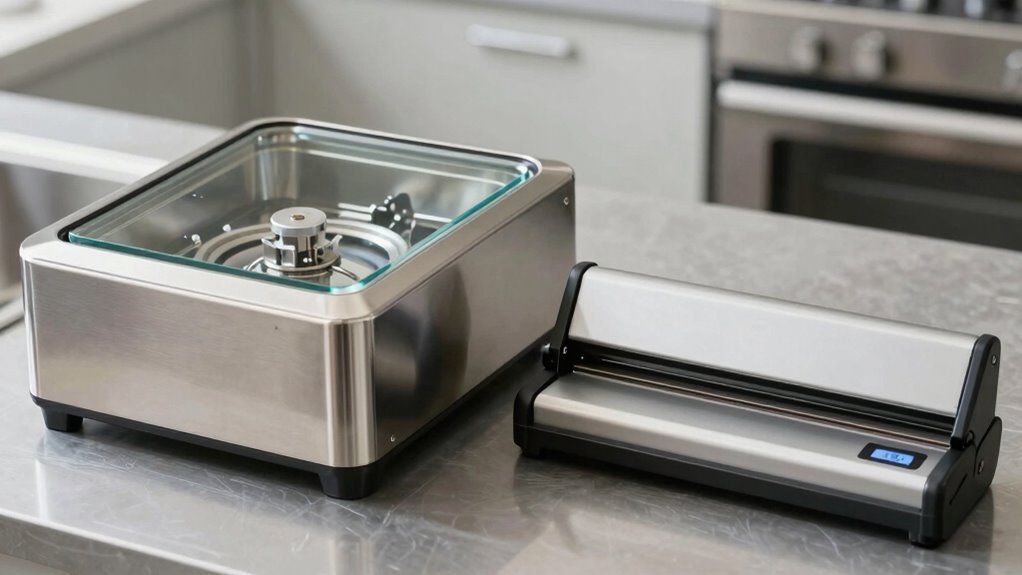
Chamber sealers offer several advantages for both home and commercial use, but they also come with some drawbacks to contemplate. They excel at food storage by providing consistent, airtight seals that extend preservation techniques’ effectiveness. This makes them ideal for bulk storage or freezing large quantities of food, reducing waste and maintaining freshness longer. Additionally, their environmental impact can be minimized when used with reusable storage bags or by properly recycling any packaging materials. Moreover, the cost efficiency of chamber sealers can improve over time, especially when used for high-volume sealing, making them a smart investment for busy kitchens. However, chamber sealers tend to be more expensive and bulkier, which might limit their practicality for small-scale or occasional use. Their operation is typically faster and more reliable for sealing liquids or moist foods, a big plus in commercial settings. On the downside, their size and cost can be prohibitive for home users with limited space or budgets. Overall, chamber sealers are powerful tools for those prioritizing food preservation quality and volume.
As an affiliate, we earn on qualifying purchases.
Advantages and Disadvantages of Edge Sealers for Small-Scale Use

Edge sealers are a popular choice for small-scale food preservation because they are compact, affordable, and easy to use. Their advantages include:
- *Versatility with packaging materials*—they work well with various bag types, making them adaptable for different foods. Packaging flexibility is especially beneficial for users who handle different types of products. Additionally, their ability to seal different bag thicknesses often depends on the seal quality, which can vary based on the sealer’s design and the materials used.
- *Cost-effectiveness*—they typically cost less upfront than chamber models, perfect for limited budgets.
- *Convenience*—their simple operation saves you time, ideal for quick sealing needs.
- *Decent seal quality*—while not as robust as chamber sealers, they still provide a reliable seal for everyday use.
- Workload capacity—since their size limits continuous use, they are best suited for small quantities rather than high-volume preservation. Additionally, their compact design makes storage and handling more manageable for home users.
- Furthermore, safety features such as built-in seal timers and automatic shutoff add to their user-friendliness and reduce the risk of mishaps during operation. This helps prevent overheating or improper sealing that could compromise food safety.
Choosing the Right Vacuum Sealer: Cost, Capacity, and Performance Factors
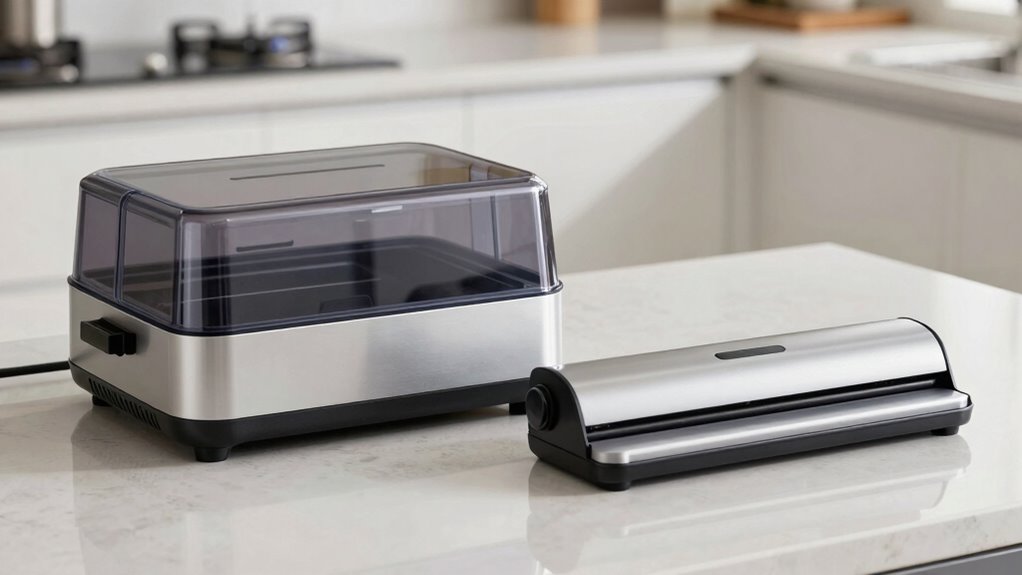
Choosing the right vacuum sealer depends on balancing your budget, storage needs, and desired performance. Start by considering pricing options—there are affordable models for basic use and premium units for heavy-duty tasks. Evaluate capacity based on how much you plan to seal regularly; larger chambers or higher wattage can improve efficiency. Performance factors, like sealing strength and ease of use, also matter. Don’t forget to research brand reputation, as trusted brands typically offer better durability and customer support. While cheaper options might save money upfront, investing in a reputable brand can save you money long-term with fewer repairs. Additionally, understanding breast cancer symptoms can be crucial for early detection, which is vital for effective treatment. When selecting equipment, consider electric power generation with bike generators to see if energy efficiency features are important for your needs. Incorporating AI-powered smart features into vacuum sealers is becoming more common, offering added convenience and control. Also, review cookie management options to ensure your browsing preferences align with your privacy comfort. Ultimately, matching your specific needs with the right combination of price, capacity, and quality ensures you’ll choose a vacuum sealer that works best for you.
Frequently Asked Questions
Can Chamber Sealers Handle Both Dry and Moist Foods Effectively?
Yes, chamber sealers handle both dry and moist foods effectively, making them ideal for food preservation. Their sealing techniques allow you to vacuum seal liquids without mess or spills, which isn’t possible with edge sealers. This versatility guarantees your food stays fresh longer. You can confidently use chamber sealers for soups, stews, or dried goods, knowing they provide a reliable seal that preserves flavors and nutrients.
How Long Does a Typical Vacuum Seal Last Before Needing Replacement?
A typical vacuum seal lasts about 1 to 3 years before needing replacement, depending on your usage and maintenance. Longevity considerations include how well you care for the sealer and the quality of the machine. Frequent use may shorten its lifespan, so keep an eye on seals and motor function. Replacement frequency varies, but if you notice decreased sealing performance or damage, it’s time to get a new one to keep your food fresh.
Are There Specific Foods That Are Better Suited for Edge Sealers?
You’ll find edge sealers excel with foods that have delicate textures, moist surfaces, or irregular shapes. They work best when sealing items like fruits, vegetables, or cooked meats, especially when stored in compatible storage containers. Edge sealers create airtight seals quickly, helping preserve freshness and prevent spoilage. So, if you’re sealing foods with varying textures or moist surfaces, an edge sealer makes your task easier and more effective.
What Maintenance Is Required to Keep Vacuum Sealers Operating Optimally?
To keep your vacuum sealer working well, you should follow regular cleaning routines, wiping down the seals and removing debris. Inspect components like the gasket and sealing bar frequently for wear or damage. confirm the vacuum pump and filter are clean and functioning properly. Proper maintenance extends your machine’s lifespan, prevents malfunctions, and keeps your sealing consistent. Regular care makes sure your vacuum sealer operates at its best every time you use it.
Do Vacuum Sealers Preserve Nutrients and Flavor Better Than Traditional Storage Methods?
You might be surprised, but vacuum sealers truly excel at nutrient retention and flavor preservation compared to traditional storage methods. By removing air, they prevent oxidation and spoilage, keeping your food fresher longer. This means your fruits, veggies, and meats retain their nutrients and delicious flavors better. So, if you want to maximize freshness and health benefits, investing in a vacuum sealer is a smart choice that truly makes a difference.
Conclusion
So, whether you go for the hefty chamber sealer or the handy edge model, remember—sometimes the biggest investment isn’t the best choice, and small-scale needs can be surprisingly demanding. Ironically, the simpler device might just do the job perfectly, while the high-tech one could be overkill. Ultimately, choosing the right sealer depends on your needs, not the price tag. After all, in sealing, it’s quality over size—who knew?
Evergreen bestsellers Picks
bestsellers
As an affiliate, we earn on qualifying purchases.