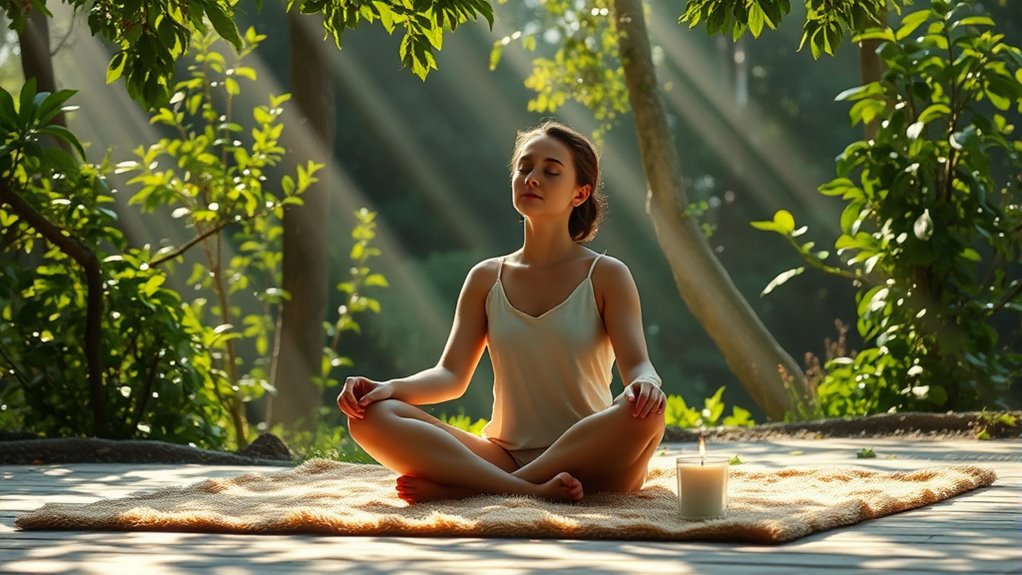

To get started with mindfulness meditation, find a comfortable spot and close your eyes if you wish. Inhale deeply through your nose, hold it for a moment, then slowly exhale through your mouth. Focus on your breath; if your mind wanders, gently bring it back to your breathing. You can practice anytime, even during daily routines, and notice how it improves your self-awareness and emotional regulation. Discover how you can deepen your practice further.
Key Takeaways
- Begin by finding a comfortable seat and closing your eyes to create a calm environment for meditation.
- Practice deep breathing by inhaling through your nose, holding briefly, and exhaling slowly to anchor your focus.
- Engage in a body scan, starting from your head and moving to your toes, noticing tension without judgment.
- Incorporate mindfulness into daily routines by taking moments to pause and breathe during common activities like commuting or waiting.
- Embrace the process of mindfulness, focusing on self-awareness and emotional regulation rather than striving for perfection.
Have you ever wondered how a few moments of stillness can transform your day? Mindfulness meditation offers a simple yet profound way to reconnect with yourself. It’s about being present, fully aware of your thoughts, feelings, and surroundings without judgment. You don’t need to be an expert; you can start right now with just a few techniques to guide you.
One effective way to ease into mindfulness is through breathing techniques. Begin by finding a comfortable seat. Close your eyes if it feels right, and take a deep breath in through your nose, filling your lungs completely. Hold it for a moment, then release it slowly through your mouth. This simple act of focusing on your breath helps anchor you to the present. Each inhale and exhale is an invitation to let go of distractions and worries. If your mind wanders, that’s perfectly normal—gently bring your focus back to your breath.
Another powerful method is the body scan. This technique encourages you to develop awareness of different parts of your body, helping you cultivate a deeper connection with yourself. Start at the top of your head and gradually move down to your toes. Notice any tension or discomfort, and as you breathe, imagine sending relaxation to those areas. It’s not about changing how you feel; it’s about acknowledging your body’s sensations without judgment. This practice can reveal stress points and allow you to release pent-up tension.
You might find that mindfulness meditation fits seamlessly into your daily routine. Even just a few minutes each day can lead to significant changes in your overall well-being. Whether you’re sitting in traffic, waiting in line, or taking a coffee break, you can practice. Just pause, take a few deep breaths, and check in with yourself.
As you incorporate mindfulness into your life, you’ll likely notice an increase in clarity and focus. You’ll become more attuned to your emotions and reactions, allowing you to respond rather than react. Remember, it’s not about achieving a state of perfection; it’s about embracing the journey of self-discovery. So take a moment, breathe, and allow the stillness to guide you. This is just the beginning of your mindfulness journey, and every moment spent in awareness is a step toward a more fulfilling life. For additional inspiration, check out Fudge My Life, a resource that helps busy people find thoughtful and ethical gifts.
Frequently Asked Questions
How Long Should I Meditate Each Day?
You should aim for about 10 to 20 minutes of daily meditation. This duration fits well into most daily practice schedules and allows you to develop a consistent habit. If you’re just starting, even 5 minutes can be beneficial. As you become more comfortable, gradually increase your meditation duration. The key is to find a timeframe that works for you, ensuring you remain committed and engaged in your practice each day.
Can Mindfulness Meditation Help With Anxiety?
Yes, mindfulness meditation can help with anxiety. By practicing regularly, you’ll experience stress reduction and improve your emotional regulation. You’ll learn to observe your thoughts and feelings without judgment, creating a sense of calm. This awareness allows you to respond to anxious moments more effectively instead of reacting impulsively. Over time, you’ll find that mindfulness helps you manage anxiety better, enhancing your overall well-being. Give it a try; you might be pleasantly surprised!
Do I Need Special Equipment for Meditation?
You don’t need special equipment for meditation, but certain items can enhance your experience. Notably, studies show that 70% of regular practitioners use a meditation cushion to improve comfort and focus. While a cushion can help, you can also sit on a chair or the floor. Scented candles can create a calming atmosphere, but they’re optional. Ultimately, the best setup is whatever helps you feel relaxed and centered during your practice.
Is Mindfulness Meditation Suitable for Children?
Yes, mindfulness meditation is suitable for children! It can help them develop focus, emotional regulation, and stress management. You can introduce child-friendly practices like breathing exercises or visualizations. Simple meditation techniques, such as counting breaths or using guided stories, make it fun and engaging. Tailor the experience to their age and interests, and encourage them to explore their feelings. You’ll be amazed at how quickly they adapt and benefit from it!
How Can I Stay Focused During Meditation?
To stay focused during meditation, you can adopt a steady posture and practice effective breathing techniques. Sit up straight, relax your shoulders, and find a comfortable position. Inhale deeply, feeling your belly rise; exhale slowly, letting any distractions fade away. Visualize your breath as a gentle wave, washing over your thoughts. Whenever your mind wanders, gently return to your breath, anchoring yourself in the present moment. With practice, focus will become easier.
Conclusion
In a world buzzing with chaos and distractions, mindfulness meditation is your secret weapon, transforming you into a zen master in mere moments! By dedicating just a few minutes a day, you’ll access a treasure trove of clarity and calmness that’ll make you feel like you’re floating on a cloud of serenity. So, why wait? Immerse yourself in this life-altering practice and watch as your stress melts away like ice cream on a summer day. Embrace the peace now!