
A magnification of 1000x means your microscope makes the image appear 1000 times larger than what your naked eye sees, but it doesn’t guarantee you’ll see more detail or clarity. Factors like optical quality, lighting, and resolution limit what’s actually visible, regardless of the magnification number. Higher magnification alone doesn’t improve image sharpness; poor optics or lighting can make details blurry. To understand the true limits and get better images, keep exploring these important aspects.

Get business pricing on monitors, keyboards and dev gear
- Business-only prices and quantity discounts
- Tax-exempt purchasing
- Multiple users, one account, clear invoices
Key Takeaways
- 1000x magnification indicates image size is 1,000 times larger than the naked eye, not necessarily more detail.
- Magnification alone doesn’t guarantee clarity; resolution and optical quality are crucial for detail.
- Optical limits, like diffraction and aberrations, prevent true 1000x magnification from showing more information.
- Excessive magnification can lead to image blurring or noise, making details harder to interpret.
- Understanding the difference between magnification and resolution prevents overestimating what 1000x truly reveals.
As an affiliate, we earn on qualifying purchases.
What Does 1000x Magnification Actually Mean?
When you see a microscope labeled as having 1000x magnification, it might sound impressive, but it doesn’t mean you’ll see objects a thousand times larger in detail. Many magnification myths circulate, suggesting higher numbers mean better images. In reality, optical limitations prevent you from truly enlarging an object that much while maintaining clarity. Magnification is simply how much larger the image appears compared to the naked eye, not how much detail you can see. Even at 1000x, the quality of the image depends on the microscope’s lenses and lighting. Optical limitations set fundamental boundaries on the clarity and usefulness of magnified images. Additionally, factors like lens quality and lighting conditions significantly influence the actual detail visible at high magnifications. So, don’t be fooled into thinking higher magnification guarantees better detail. Instead, focus on the limitations of optics, which cap the useful magnification and influence what you actually observe.
As an affiliate, we earn on qualifying purchases.
How Does Magnification Differ From Resolution?

Magnification and resolution are often confused, but they serve different purposes in microscopy. Magnification enlarges the image, making tiny details appear bigger, but it doesn’t improve clarity. Resolution determines how clearly you can distinguish two close points, which depends on optical design and sample preparation. If magnification is high but resolution is poor, the image looks bigger but blurry. Understanding this difference helps you avoid false expectations about image quality. When selecting a microscope, focus on resolution to see meaningful details, not just high magnification. Proper sample preparation and advanced optical design enhance resolution, revealing true clarity. Remember: bigger isn’t always better. Additionally, optical quality plays a crucial role in achieving sharp, detailed images, emphasizing the importance of choosing the right equipment for your microscopy needs. Recognizing the difference between magnification and resolution limits ensures more accurate interpretation of microscopic images. To maximize image clarity, selecting the appropriate filtering and pump protection can help maintain consistent performance of your equipment. Furthermore, understanding lens quality can significantly impact your ability to achieve optimal resolution.
As an affiliate, we earn on qualifying purchases.
What Are the Limits of 1000x Magnification?

At 1000x magnification, your microscope faces fundamental optical limits that affect image resolution and clarity. Practical magnification often falls short of the theoretical maximum, meaning you might not see more detail than expected. Understanding these limits helps you recognize when increasing magnification no longer improves image quality. Additionally, the quality and design of the microscope optics play a crucial role in achieving the best possible image at high magnifications. Factors such as lens quality and light source can significantly impact the image resolution. Moreover, the optical limitations inherent in microscopic systems set hard boundaries on the detail perceivable at such high magnifications. Recognizing these inherent optical constraints can save you time and help set realistic expectations for your microscopy observations. Being aware of resolution limits can also guide you in choosing appropriate magnification levels for different specimens.
Optical Limitations and Resolution
While a 1000x magnification can reveal detailed images of small objects, optical limitations prevent it from providing unlimited clarity. You’re limited by factors like chromatic aberration, which causes color fringes and blurs details, and the need for precise optical alignment, essential for sharp images. These issues mean that even at high magnification, your view remains imperfect.
- Your microscope might produce blurry, distorted images, hiding crucial details.
- Chromatic aberration can create distracting color fringes, reducing accuracy.
- Slight misalignment of lenses can throw off focus, limiting clarity.
- Light diffraction at high magnifications blurs fine structures, making them indistinct.
Understanding these limits helps set realistic expectations, reminding you that no matter how powerful, optical imperfections keep magnification from revealing absolute detail.
Additionally, resolution plays a crucial role in determining the true level of detail visible, highlighting that magnification alone does not guarantee sharper images.
Practical vs. Theoretical Magnification
Although a microscope can be labeled with a maximum magnification of 1000x, the practical limits often fall short of this theoretical boundary. You might see images that appear highly detailed, but optical illusions often trick your eyes into perceiving more clarity than exists. This discrepancy fuels magnification myths, making you believe you’re seeing everything at its finest. In reality, increasing magnification beyond a certain point doesn’t improve image quality; it simply enlarges imperfections, noise, and blurriness. Your microscope’s capacity is constrained by factors like lens quality and resolution, not just the numbered magnification. So, while 1000x sounds impressive, it’s essential to understand that actual detail depends on more than just magnification—it’s about what your optics can reliably reveal.
Image Clarity and Detail
Understanding the limits of 1000x magnification helps clarify what your microscope can truly reveal. At this level, image clarity and detail depend heavily on proper sample preparation and light contrast. Poor sample prep can obscure fine structures, making details blurry or lost. Even with high magnification, inadequate lighting can flatten depth and reduce visibility of important features. Remember, the quality of your image isn’t just about magnification; it’s about how well you optimize contrast and detail. When these elements are lacking, even the tiniest features may remain hidden. Additionally, the environmental impact of tissue paper reminds us of the importance of using sustainable materials in our crafting and scientific pursuits. Recognizing these limits keeps your expectations realistic and encourages you to improve sample prep techniques and lighting setups for sharper, more detailed observations. Proper lighting techniques are essential to maximize the clarity of your microscopic images and truly benefit from high magnification. Furthermore, understanding the resolution limits of your equipment can help prevent overestimating what 1000x magnification can achieve. Being aware of optical limitations ensures you interpret your images accurately and avoid false assumptions about what magnification reveals. Additionally, researching lens quality can help you select better optics that enhance image sharpness at high magnifications.
microscope lighting and lens accessories
As an affiliate, we earn on qualifying purchases.
As an affiliate, we earn on qualifying purchases.
Why Image Quality Depends on Optical Quality and Lighting
The quality of the optics and lighting in your microscope directly affects the clarity and detail of your images. Good optical precision ensures that light is transmitted and focused accurately, revealing finer details without distortion. Lighting considerations, such as brightness, angle, and contrast, play a vital role in highlighting features and reducing glare or shadows. If the optics are subpar, even the most powerful magnification won’t produce sharp images. Similarly, poor lighting can obscure details or create false impressions of clarity. Investing in high-quality lenses and optimizing your lighting setup enhances image quality markedly. Additionally, optical quality standards ensure that your equipment performs at its best, providing consistent and reliable results. Remember, excellent optical precision and proper lighting work together to provide the clearest, most detailed images possible. To maximize your microscope’s performance, always verify that your equipment meets industry benchmarks for optical quality.
Do High Magnification Levels Always Show More Detail?
Just because you increase magnification doesn’t mean you’ll see more detail. Image quality depends on optics and lighting, not size alone. Higher magnification can actually limit your view if the image isn’t clear enough. To truly observe finer details, focus on proper illumination techniques that enhance clarity without over-relying on magnification. Additionally, understanding the limitations of magnification helps prevent misinterpretation of what you’re observing.
Magnification Isn’t Clarity
Many assume that higher magnification automatically reveals more detail, but that’s a misconception. Just because your microscope is set to 1000x doesn’t mean you’ll see clearer images. In fact, excessive magnification can create optical illusions, making objects appear distorted or fuzzy. It’s a common magnification myth that bigger is better; reality depends on image quality, lighting, and resolution. When you rely solely on magnification, you risk missing the true clarity of your specimen. Instead, focus on proper technique and understanding what your equipment can genuinely deliver. Remember, more magnification doesn’t equal more detail—it often just amplifies flaws and illusions. Don’t fall for the optical illusions that magnification myths promote; clarity comes from proper optics, not numbers.
Image Quality Depends Elsewhere
Relying solely on high magnification levels doesn’t guarantee you’ll see more detail. Optical distortions can occur at higher magnifications, reducing image clarity instead of enhancing it. Magnification myths suggest that bigger is always better, but increasing magnification without proper quality control often amplifies imperfections, making the image less sharp. Factors like lens quality, illumination, and sample preparation play vital roles in image quality. Even at lower magnifications, you can achieve highly detailed views if these elements are optimized. Remember, magnification is just one piece of the puzzle. True image quality depends on the entire optical system working harmoniously. So, don’t assume that more magnification automatically means better detail—other essential factors influence what you actually see.
Higher Magnification Limits
While increasing magnification can make objects appear larger, it doesn’t always reveal more detail. In fact, pushing beyond typical magnification limits can lead to optical illusions, where images seem clearer but aren’t truly sharper. Higher magnification levels may create a false sense of clarity, deceiving you into believing you see more. But, in reality, you might be hitting a point where detail plateaus or even deteriorates. Remember, there’s a limit to how much your microscope can reveal—a point where more magnification just enlarges flaws or noise.
Be cautious of these pitfalls:
- Optical illusions masking true quality
- Losing image clarity at excessive magnification
- Misinterpreting detail that isn’t real
- Believing higher magnification always equals better insight
Common Myths About Using 1000x Magnification Debunked
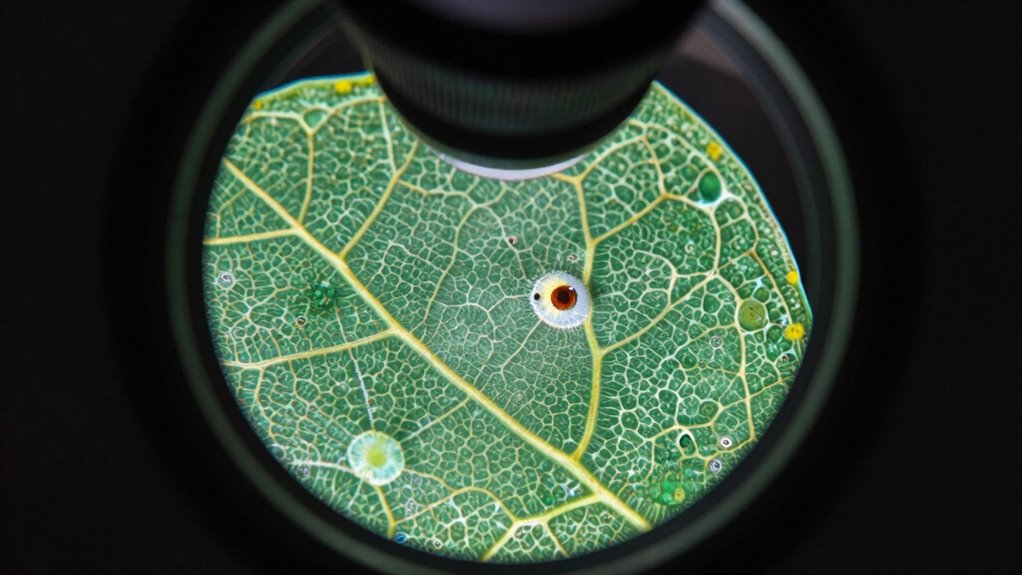
A common misconception is that using 1000x magnification guarantees clear, detailed images of tiny structures. Many believe that higher magnifications automatically mean better clarity, but that’s a sample misconception. In reality, the quality of your image depends on factors like resolution, lighting, and the quality of your lenses, not just magnification. Common misunderstandings include thinking that more magnification equals more detail, which isn’t true if your optics can’t resolve the tiny features. Simply cranking up the magnification doesn’t overcome limitations in resolution or sample quality. Instead, it can lead to blurred or fuzzy images. Recognizing these misconceptions helps you understand that effective microscopy depends on a balance of magnification, resolution, and proper technique.
What’s the Right Magnification for Your Microscopy Needs?
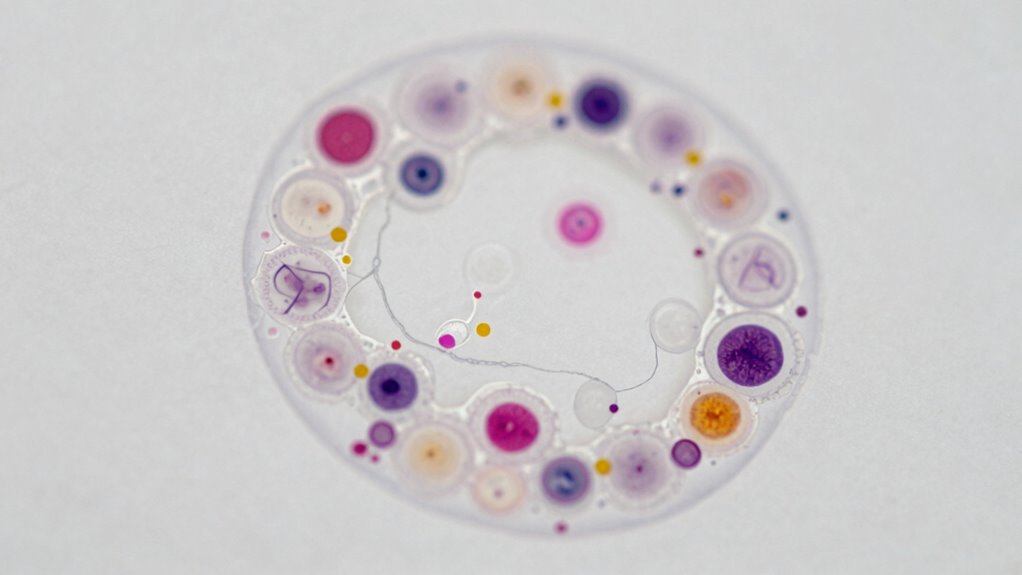
Choosing the right magnification depends on what you want to see and the quality of your equipment. Many sample misconceptions and common misunderstandings lead beginners to believe higher magnification always means better detail. But that’s not true. You need enough magnification to reveal your sample’s features without losing clarity or brightness. If you focus on the purpose—whether identifying microorganisms or examining tissue structures—you’ll select the appropriate level. Remember, higher magnification isn’t always necessary or advantageous. It’s about balance and precision. Don’t fall for the myth that more is better; instead, aim for what gives you clear, detailed images. Your ideal magnification enhances your experience and understanding, not just increases numbers on a dial. Keep these points in mind for smarter microscopy choices.
How to Read and Interpret Microscope Specs Beyond the Magnification Number
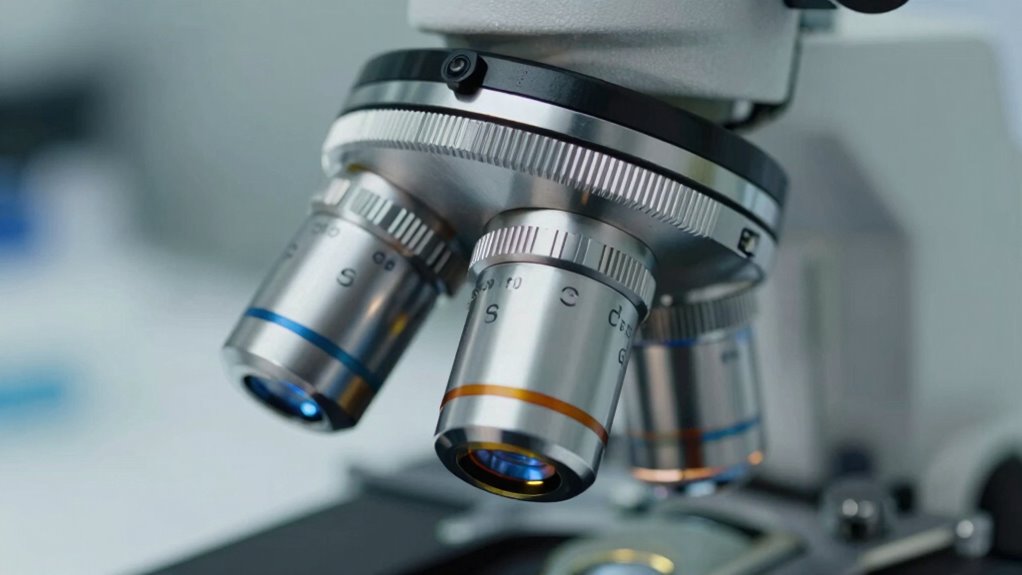
Understanding a microscope’s specifications goes far beyond just its magnification number. When you review a microscope’s specs, look past the hype of magnification myths and focus on features like resolution, numerical aperture, and optical quality. These factors determine how clearly you see details, not just how big they appear. Beware of optical illusions created by high magnification that can mislead you into thinking you’re seeing more than you actually are. Specs such as lens quality, light source, and working distance give you a more accurate picture of performance. By interpreting these details correctly, you avoid common misconceptions about magnification and make smarter choices for your microscopy needs. Remember, a higher magnification number doesn’t automatically mean better clarity or detail.
Tips for Getting Clearer, More Detailed Views With Your Microscope
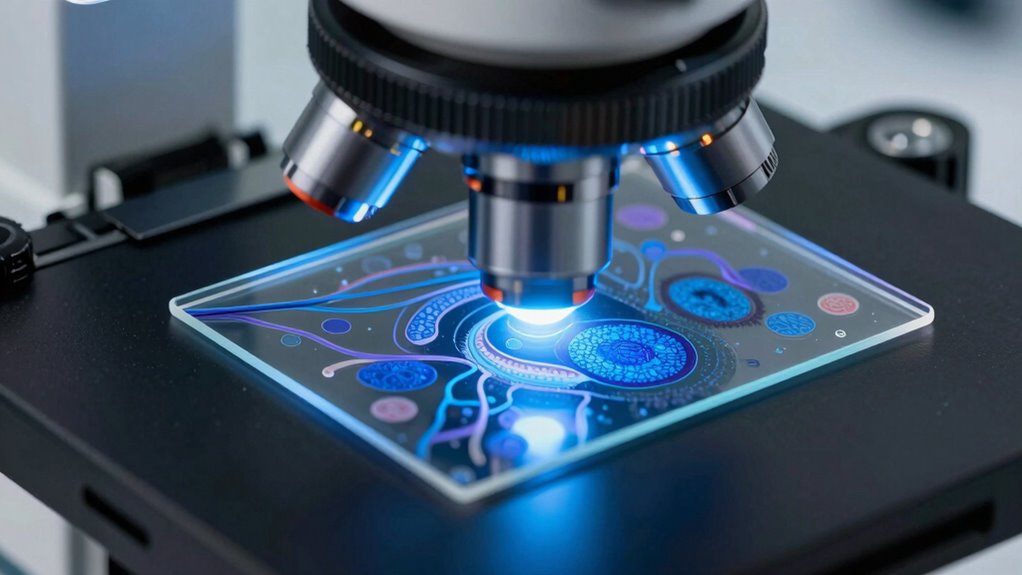
To achieve sharper, more detailed images through your microscope, focus on optimizing both your technique and the device’s settings. Proper lighting, steady hands, and correct focusing are key to avoiding optical illusions that can distort what you see. Remember, magnification misconceptions often lead to disappointment, so aim for clarity rather than just high numbers. Use these tips to improve your view:
- Adjust your light source for even, bright illumination
- Use fine focus slowly for crisp detail
- Clean your lenses regularly to prevent distortion
- Experiment with different focusing techniques to avoid optical illusions
Frequently Asked Questions
Does Higher Magnification Always Mean Better Image Detail?
Higher magnification doesn’t always mean better image detail. Your microscope’s resolution limits and optical quality play vital roles. If the optics aren’t sharp or the resolution isn’t sufficient, increasing magnification just enlarges a blurry image. To see fine details clearly, focus on improving optical quality and understanding the resolution limits of your microscope, rather than simply aiming for higher magnification.
How Does Numerical Aperture Influence Effective Magnification?
Think of numerical aperture like the size of your camera lens opening. It directly influences light gathering and resolution enhancement, which means a higher NA improves image clarity even at the same magnification. For example, with a high NA, you can see finer details in a stained cell sample. So, a high numerical aperture boosts effective magnification by making images brighter and sharper, not just larger.
Can Digital Zoom Replace Optical Magnification in Microscopes?
Digital zoom can’t replace optical magnification in microscopes because it simply enlarges the image digitally, which often reduces image quality. When you rely on digital zoom, you may see pixelation and less detail, making it harder to analyze specimens accurately. Optical magnification, on the other hand, uses lenses to enlarge images without losing quality. For clear, sharp images, opt for microscopes with high-quality optics rather than digital zoom.
What Role Does Sample Preparation Play at High Magnifications?
Sample preparation is vital at high magnifications because it guarantees sample integrity and clear visibility. You need to use proper staining techniques to enhance contrast, making structures more distinguishable. If the sample isn’t well-prepared, you risk misinterpretation or damaging the sample. Carefully fixing, staining, and mounting your specimen helps maintain its integrity, allowing you to observe fine details accurately without artifacts or distortions that could compromise your results.
Are There Safety Considerations When Using High Magnification Microscopes?
When using high magnification microscopes, you should follow safety precautions like handling the device carefully to avoid damage and strain. Always use proper handling tips, such as adjusting focus gently and avoiding sudden movements. Keep the microscope on a stable surface, avoid direct eye exposure to intense light sources, and make certain your workspace is well-lit and clutter-free. These steps help protect both you and your equipment during detailed observations.
Conclusion
Understanding what 1000x really means helps you see your microscope as more than just a number—it’s like peeling back the layers of an onion, revealing new depths. Remember, high magnification isn’t a magic wand for perfect images; quality optics and good lighting matter just as much. By knowing the limits and myths, you can confidently explore tiny worlds, turning your microscope into a powerful tool rather than just a shiny gadget.
Halloween Picks
halloween
As an affiliate, we earn on qualifying purchases.