📊 Full opportunity report: Managing Restaurant Food Costs Through Supplier Invoice Reviews on IdeaNavigator AI — validation score, market gap, and execution plan.

Get business pricing on monitors, keyboards and dev gear
- Business-only prices and quantity discounts
- Tax-exempt purchasing
- Multiple users, one account, clear invoices
TL;DR
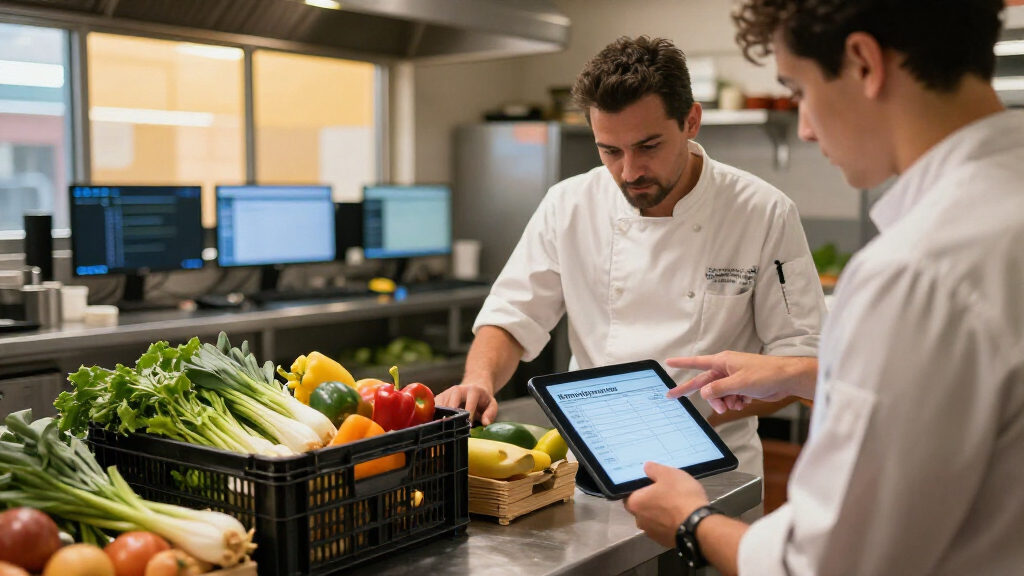
A proposal from IdeaNavigator AI recommends testing invoice reviews as a focused food-cost control workflow for independent restaurant groups with multiple locations. The approach would compare billed prices and quantities with contracts, orders and deliveries, then track requests for credits; its financial benefit has not yet been demonstrated.
IdeaNavigator AI has proposed a 90-day test of a supplier invoice-review workflow for independent restaurant groups operating multiple locations, aiming to catch discrepancies between supplier bills, agreed prices, orders and deliveries. The proposal describes a business opportunity, not a deployed product or proven savings program; no results from restaurant-group trials are reported.
The recommended first users are a restaurant group’s purchasing director or controller, particularly at businesses ordering from broadline and specialty food and beverage suppliers. These groups may handle hundreds of supplier invoices a week, according to the proposal. It identifies possible errors including contract prices not appearing on bills, cases charged in full despite being short-shipped, substitutions billed at higher prices and price increases between orders.
The proposed minimum product would accept invoices through electronic data interchange, PDF or photo-based text recognition, then compare invoice lines with supplier contracts or quote sheets and the restaurant group’s order guide. It would also try to match what was ordered, received and billed. When it detects a discrepancy, the system could flag it, prepare a credit request for the supplier and track whether the credit appears on a later invoice.
To test the case for the product, the proposal recommends reviewing 90 days of paid invoices alongside contracts or quote sheets from three restaurant groups. The test would total billed amounts above agreed prices, full charges for short-shipped cases and price increases over time. The suggested go/no-go measure is whether documented credits per location clearly exceed the planned subscription fee. The material supplies no audit findings, recovery totals or customer commitments.
Managing Restaurant Food Costs Through Invoice Reviews
IdeaNavigator AI proposes testing invoice reviews for independent restaurant groups with multiple locations. The potential savings remain unproven.
What the workflow would check
Compare billed items with the records a restaurant group already uses to buy and receive supplies.
Contract differences
Flag bills that do not reflect agreed contract or quote prices.
Short shipments
Check for full charges when a delivery included fewer cases than ordered.
Higher billed prices
Identify substitutions billed at a higher price and increases between orders.
From invoice to credit
The proposed tool would connect billing records with orders, agreed prices and delivery information.
Accept invoices through electronic data interchange, PDF or photo-based text recognition.
Match billed prices and quantities against contracts, order guides and delivery records.
Flag possible discrepancies, prepare credit requests and check later invoices for posted credits.
How to judge the business case
A flagged discrepancy is not the same as a credit received.
- Review paid invoices alongside contracts or quote sheets.
- Record price differences and full charges for short-shipped cases.
- Separate flagged issues from supplier-accepted claims and credits posted.
- Compare documented credits per location with the planned subscription fee.
- Account for disputed claims and missing delivery records.
- Expand only if the proposed test supports the economics.
How Invoice Errors Affect Margins
Supplier invoice discrepancies matter because food purchases are a direct operating cost: an incorrect price or quantity can flow into a restaurant’s expenses if it is paid without being checked. A systematic comparison could help purchasing and finance teams identify recurring differences across locations and suppliers. This is a potential benefit described by the proposal, not a measured outcome.
The proposal cites a USDA Economic Research Service Food Price Outlook dated September 25, 2026, which forecasts 2026 retail beef and veal prices rising 9.4% and wholesale beef prices rising 8.5%. It gives a separate forecast of 3.5% growth for food-away-from-home prices. These are forecasts, not confirmed price changes or evidence that invoice reviews would offset them. The figures provide context for the proposal’s focus on supplier costs.
Assessing the proposed workflow would require comparing the value of documented discrepancies and credits actually received with the cost of reviewing invoices. A discrepancy flagged by software is not necessarily a recovered dollar: suppliers may dispute a claim, and a submitted credit request may not appear on a future bill. The proposed trial would need to distinguish identified discrepancies from collected credits.
Products Worth Considering

Bose TV Speaker (2nd Gen) Compact Soundbar

Bose QuietComfort Wireless Noise Cancelling Headphones, Black

Samsung Galaxy Tab A11 Wi‑Fi (International Version), 8.7, 64GB + 4GB, Gray
As an affiliate, we earn on qualifying purchases.
The Proposed Three-Group Test
The idea is framed as a narrow starting point for a potential product, rather than a broad overhaul of restaurant purchasing. Its proposed customer is an independent multi-unit group already buying from several kinds of food and beverage suppliers. The workflow concentrates on checking invoices against information the buyer may already hold: agreed prices, purchasing guides and delivery or order records.
The proposal’s operating scenario is that delivery checks and invoice payments may be handled by different people. A kitchen manager might sign for a delivery without comparing it line by line with the order, while an office team processes the supplier’s bill. When those records are not reconciled, the proposal says, price and quantity differences can pass through into food costs. Whether this is common among the intended customers has not been established with survey or trial data.
Two payment models are suggested: a monthly fee per location or a subscription paired with a contingency fee tied to credits recovered. The proposal does not specify pricing, the share of recoverable errors, software integrations or how the product would handle incomplete delivery records. Its 90-day review across three groups is intended to test the underlying economics before proceeding.
Savings and Product Readiness
No pilot results are provided. It is not clear how many discrepancies a 90-day review would find, how much suppliers would credit, or whether those recovered amounts would consistently exceed software fees. The proposal also does not identify participating restaurant groups, a product vendor, a launch schedule or a completed system.
The accuracy of the workflow would depend on matching invoices with reliable contract, order and receiving records. The material does not explain how the proposed tool would resolve mismatched product descriptions, missing delivery confirmations, supplier-specific billing formats or disputed substitutions. It also does not say how frequently a human would need to verify flagged items before a claim is sent.
The cited USDA figures are forecasts for 2026, not observed results. The proposal gives no underlying test data for invoice errors and does not quantify the share of restaurant food costs attributable to the listed problems. The business case therefore remains a hypothesis to validate, rather than evidence that a particular group can reduce food costs by a stated amount.
Results Needed Before Expansion
The next step proposed is a 90-day lookback involving paid invoices and contracts or quote sheets from three restaurant groups. The review would record the value of price differences, short-shipped cases billed in full and price creep, then assess documented credits against the proposed per-location subscription cost.
No participating groups or start date have been announced. If the review proceeds, useful results would separate flagged discrepancies from supplier-accepted claims and credits actually posted to later invoices. The proposal also leaves open whether a future service would charge only a subscription, offer a recovery-based fee or provide both options.
Key Questions
Is an invoice-auditing product already available?
The proposal describes an opportunity and minimum product concept. It does not identify a launched product or report that a trial has been completed.
What would the proposed system check?
It would compare billed items and prices with supplier contracts or quote sheets, order guides, purchase orders and delivery information. It would flag possible overcharges, short shipments billed in full, higher-priced substitutions and price increases.
How would a restaurant group test whether it is worthwhile?
The suggested test is to review 90 days of paid invoices for three groups and compare documented credits per location with the planned subscription fee. The proposal reports no test results or confirmed savings.
Would every flagged discrepancy lead to a credit?
No outcome is guaranteed. A flag would identify a possible mismatch; the proposal suggests drafting a supplier request and tracking it, but does not say how many requests suppliers would approve or pay.
Source: IdeaNavigator AI