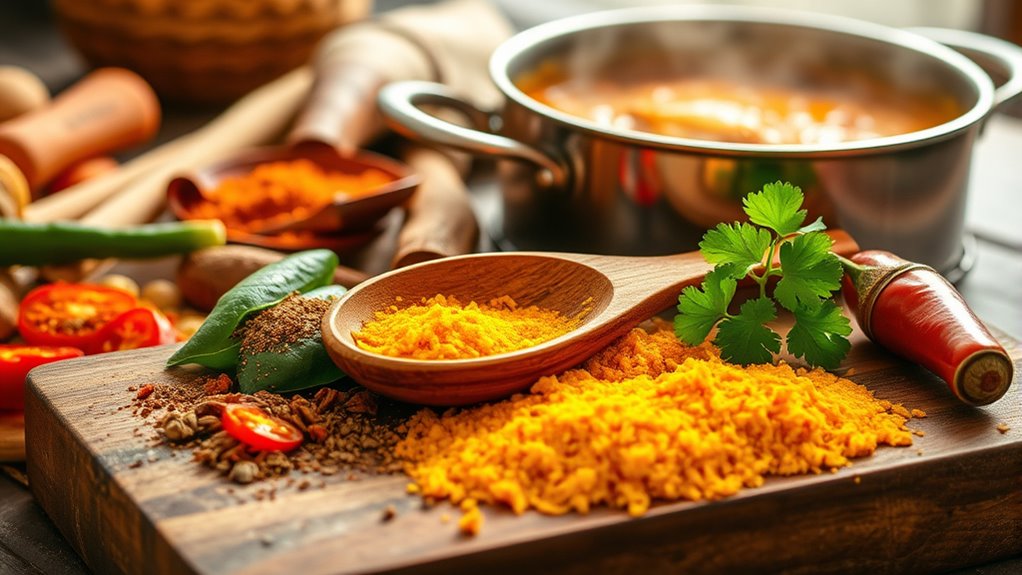

Indian spices form the heart of irresistible curries and flavorful dishes. Start with essential spices like cumin, coriander, turmeric, and mustard seeds. Each one adds depth and warmth to your meals. Don’t forget regional blends like garam masala or sambar powder for authentic tastes. Experiment with spice combinations to create your own unique flavors. Mastering these basics opens the door to a world of culinary delights, and there’s so much more to uncover in your spice journey!
Key Takeaways
- Familiarize yourself with essential spices like cumin, coriander, turmeric, and mustard seeds for authentic Indian cooking.
- Explore regional spice blends, such as sambar powder and garam masala, to enhance flavor diversity in your dishes.
- Experiment with making custom spice blends to tailor flavors according to your preferences and enhance culinary creativity.
- Practice patience and precision in balancing spices, as mastering this technique is key to delicious Indian curries.
- Use vibrant ingredients and regional variations to create a rich tapestry of flavors that reflect India’s culinary heritage.
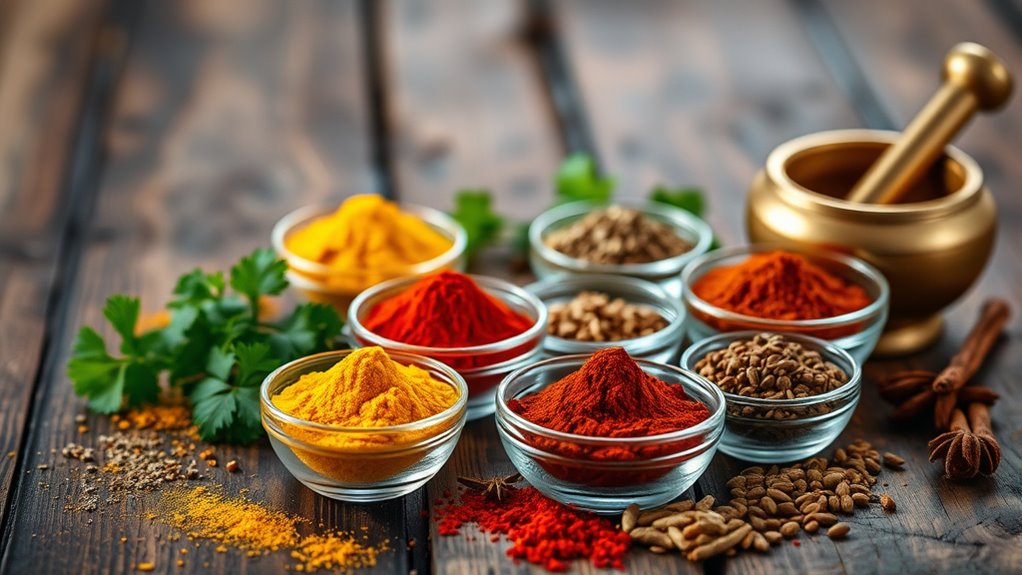
Have you ever wondered what makes Indian cuisine so vibrant and flavorful? The secret lies in the rich array of spices and the unique spice blends that define its dishes. Indian cooking isn’t just about throwing ingredients into a pot; it’s an art that involves balancing flavors, aromas, and textures. Each spice plays a vital role, and when combined in specific ways, they create the magic that makes Indian food irresistible.
The vibrant flavors of Indian cuisine come alive through its rich spices and artful blends, creating an irresistible culinary experience.
One of the first things you’ll notice about Indian spices is their diversity. Different regions of India boast their own regional varieties, each offering distinct flavors and culinary traditions. For instance, if you’re in the south, you might encounter a blend called sambar powder, essential for making the popular sambar dish. Meanwhile, in the north, garam masala takes center stage, a warm and aromatic blend typically used in curries and stews. Understanding these regional varieties will not only enhance your cooking but also give you a deeper appreciation for Indian culture.
When you begin your spice journey, you’ll want to stock your pantry with a few essential spices. Cumin, coriander, turmeric, and mustard seeds are foundational. Each of these spices has its own character, contributing depth and complexity to your dishes. For example, turmeric’s earthy flavor and vibrant yellow color make it a staple in many recipes, while cumin adds a warm, nutty taste that’s hard to resist.
Once you’ve got your spices sorted, it’s time to explore spice blends. These blends often include a mix of several spices, creating a harmonious flavor profile. You can either buy pre-made blends or make your own. Experimenting with your custom blends will allow you to tailor the flavors to your preference. Don’t hesitate to adjust proportions and try new combinations; that’s where the fun begins!
As you dive deeper into the world of Indian spices and curry cooking, remember that patience is key. Mastering the art of balancing spices takes time, but the rewards are worth it. Your dishes will not only taste fantastic but will also become a reflection of your culinary journey. So, roll up your sleeves, gather your spices, and get ready to set out on an adventure that’ll change how you think about cooking forever. With each dish, you’ll discover the rich tapestry of flavors that Indian cuisine has to offer.
Frequently Asked Questions
Can I Substitute Fresh Spices for Dried Ones in Recipes?
Yes, you can substitute fresh spices for dried ones in recipes, but keep in mind that the flavor enhancement might differ. Fresh spices often bring a vibrant taste, while dried ones provide a more concentrated flavor. A good rule of thumb is to use three times the amount of fresh spices to match the potency of dried. Experimenting with these spice substitutions can lead to delicious results in your dishes!
How Do I Properly Store Indian Spices for Longevity?
To properly store Indian spices for longevity, use airtight containers in a cool, dark place. Avoid exposure to light, moisture, and heat, as these can diminish their flavor quality. Opt for glass or metal containers over plastic, which can absorb odors. Regularly check your spices for freshness; ground spices typically last 6 months, while whole spices can last up to 2 years. Following these spice storage techniques guarantees you’re maintaining the flavor quality of your spices.
Are There Gluten-Free Indian Curry Options Available?
Yes, there are plenty of gluten-free Indian curry options available! You can use gluten-free grains like rice or quinoa as a base. For thickening your curries, consider alternative thickeners such as coconut milk or ground nuts, which add flavor and richness. Just make sure to check your spice blends for any hidden gluten. Enjoy experimenting with these ingredients to create delicious, satisfying gluten-free curries that everyone can enjoy!
What Are the Best Cooking Oils for Indian Cuisine?
When you’re in the kitchen, think of cooking oils as the canvas for your culinary masterpiece. For Indian cuisine, consider oil varieties like ghee, mustard oil, and coconut oil. Ghee brings a rich flavor, while mustard oil has a high smoking point, perfect for frying. Coconut oil adds a tropical twist, too. Always pay attention to oil smoking points; they’ll help you prevent burnt flavors and ensure your dishes shine with authenticity.
How Can I Adjust Spice Levels for Children?
To adjust spice levels for children, focus on mild flavor adjustments. Start by using kid-friendly spice blends that include flavors like cumin, coriander, and turmeric, which are aromatic but not too spicy. You can also reduce the quantity of hotter spices like chili powder or garam masala. Always taste as you go, and consider adding a touch of yogurt or coconut milk to mellow out the heat for a smoother, more appealing dish.
Conclusion
As you set out on your culinary journey through Indian spices, think of each ingredient as a vibrant character in a grand story. Together, they dance in harmony, creating a symphony of flavors that tell tales of tradition and culture. Embrace the chaos of your kitchen, like a bustling marketplace, and let your creativity flourish. With every pinch and stir, you’re not just cooking; you’re weaving a delicious narrative that invites all to gather and share in the experience.