📊 Full opportunity report: How Shared Parts Could Support Lower Costs Across Three Automakers on IdeaNavigator AI — validation score, market gap, and execution plan.

Get business pricing on monitors, keyboards and dev gear
- Business-only prices and quantity discounts
- Tax-exempt purchasing
- Multiple users, one account, clear invoices
TL;DR
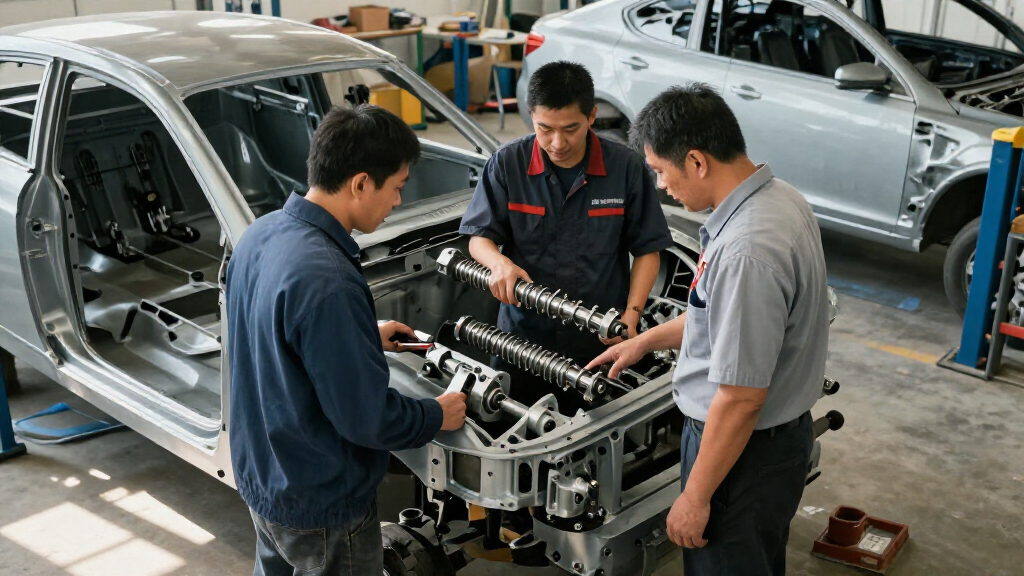
An IdeaNavigator AI brief identifies a reported possibility that Toyota, Nissan and Honda could standardize parts to lower costs. It provides no announcement, sourcing, timeline or details about which parts may be shared, so the proposal and its potential effects remain unverified.
Toyota, Nissan and Honda are identified in an IdeaNavigator AI automotive-retail brief as potentially standardizing parts to reduce costs, but the brief does not document a confirmed agreement or describe the parts involved. The lack of specifics means dealerships and repair shops cannot yet determine whether the idea would change purchasing, servicing or inventory decisions.
According to the IdeaNavigator AI brief, the item appears in a proposal for an automotive retail signal monitor aimed at owners and sales leads at independent dealerships and auto shops. It is used as an example of the kind of industry development such a service would watch for and turn into a short explanation of what changed, why it matters and what a business might do.
The IdeaNavigator AI brief does not cite statements from the three automakers, provide a date for a parts-sharing announcement, identify participating models or components, or explain how any common parts would be sourced. It also does not report projected savings or describe an implementation schedule. The claim should therefore be treated as an unverified development signal, not as an established company plan.
IdeaNavigator AI says Hacker News surfaced the item with an 88/100 signal. That score is presented as a signal-monitoring result, not as independent confirmation of the automakers’ intentions or a measure of expected savings. The brief gives no explanation of the score’s methodology or comparison basis.
Shared Parts, Lower Costs?The Claim Remains Unconfirmed
An IdeaNavigator AI brief flags possible parts standardization by Toyota, Nissan and Honda. It provides no automaker confirmation or details to support a business decision.
What the brief says
The item is presented as a possible industry development, not a reported automaker announcement.
What shared parts could mean
If adopted, common parts could potentially spread design, tooling or purchasing costs across more vehicles.
- Simpler inventory decisions
- Potentially lower costs
- Parts and models involved
- Availability, pricing and savings
What businesses can do
The brief does not support changing orders or service procedures yet.
Wait for a statement or documentation from an automaker.
Review parts, models, markets, timing and service guidance.
Use confirmed information to decide whether inventory or procedures need to change.
Read the signal carefully
The 88/100 score is a monitoring result. The brief gives no scoring method, and the score does not confirm an agreement or expected savings.
- No direct automaker statements are cited.
- No parts, timeline or savings estimate is provided.
If the automakers do adopt common parts, the business case could involve spreading design, tooling or purchasing costs across more vehicles. That is a general possibility, not a confirmed outcome here: the IdeaNavigator AI brief supplies no cost estimate and does not say whether any savings would reach dealers, repair businesses or vehicle buyers.
For independent shops and dealerships, the practical effect would depend on which parts were standardized and whether the change affected availability, compatibility, service procedures or pricing. Common components could potentially simplify some inventory decisions, while model-specific applications and supply arrangements could limit any benefit. Without a parts list or implementation details, those consequences cannot be assessed.
The development is also a test of how quickly industry news can be translated into useful action for smaller automotive businesses. A timely alert may help a shop watch for changes, but a score or headline alone does not establish that a change is confirmed or relevant to its customers.
Products Worth Considering

LG 27GS60QC-B Ultragear 27-inch Curved Gaming Monitor (QHD, 180Hz, 1ms, 1000R)

Logitech MX Mechanical Wireless Illuminated Keyboard, Tactile Quiet, Graphite

Sony WH-1000XM4 Wireless Noise Cancelling Headphones (Silver)
As an affiliate, we earn on qualifying purchases.
The Retail Monitoring Proposal
The IdeaNavigator AI brief is primarily a product opportunity proposal, rather than a report documenting a completed automaker announcement. It suggests building a service that tracks feeds such as Hacker News for vehicle launches, recalls and regulation, then filters developments for independent dealership and auto-shop owners or sales leads.
Its proposed workflow would turn relevant items into concise briefs covering what changed, why it matters and what action might be appropriate. The business model proposed is a subscription. To test demand, IdeaNavigator AI recommends hand-delivering this parts-standardization item and two other automotive developments to five people matching the intended customer profile, then checking whether anyone changes a decision or forwards a brief.
That test is a suggested validation step, not evidence that the service has launched, that the automakers have agreed to share parts, or that businesses have responded. The brief contains no direct automaker statements or named industry sources supporting the underlying claim.
Details Still Missing
The central uncertainty is whether Toyota, Nissan and Honda have actually agreed to standardize any parts. The IdeaNavigator AI brief provides no announcement, document or attributable company comment. It also does not identify whether the idea concerns new vehicles, existing models, specific markets or a particular category of component.
It is also unclear what “standardize” would mean in practice: the companies might use identical parts, compatible designs, common specifications or some other arrangement. Those possibilities are not interchangeable, and none is specified. There is no information on timing, production volumes, supplier participation, warranties, repair guidance or estimated savings.
The 88/100 score is likewise difficult to interpret without a description of how it was calculated and what it measures. Until additional evidence is available, the claim and its expected effects remain unconfirmed.
Evidence Needed From Automakers
The next meaningful development would be a statement or other documentation from Toyota, Nissan or Honda that confirms whether a parts-standardization effort exists. Details on participating models, component categories, markets and timing would be needed to assess the plan’s scope.
If an agreement is confirmed, information about supplier arrangements and the intended cost reductions would help establish whether savings are expected and who might benefit. Dealerships and repair shops would need practical guidance on compatibility, parts ordering and service procedures before changing inventory or work practices.
Separately, IdeaNavigator AI’s proposed customer test would gauge whether independent automotive businesses find role-filtered alerts useful. That would evaluate demand for the monitoring service; it would not verify the automakers’ plans. For now, the parts claim remains a lead to check rather than a basis for an operational decision.
Source: IdeaNavigator AI
Key Questions
Have Toyota, Nissan and Honda confirmed a parts-sharing agreement?
No confirmation is provided in the IdeaNavigator AI brief. It identifies the possibility but includes no company announcement or attributable comment.
Which parts would the automakers standardize?
The brief does not name any parts, vehicle models or component categories. The scope of the proposed standardization is unknown.
How much money could shared parts save?
No savings estimate is given. Any cost reduction is presented as the stated purpose of the idea, not a quantified or confirmed result.
What is the 88/100 signal score?
IdeaNavigator AI says Hacker News surfaced the item with an 88/100 signal. The brief does not explain the scoring method, so the number should not be read as proof of an agreement or savings.
What should independent shops do now?
Because no parts, timeline or agreement are confirmed, the brief does not support changing orders or service procedures. Businesses can wait for direct automaker details before making operational decisions.
Source: IdeaNavigator AI