
Choosing among these AI code review tools depends on whether you want a repeatable process, solo-developer guidance, or a broader collection of engineering workflows. My strongest starting points are The AI Code Review Protocol for its clearly stated four-round approach, Code Review for AI-Generated Code for its coverage of security, architecture, tests, and dependencies, and CodeRabbit AI Code Review Guidebook if you specifically want a guide centered on CodeRabbit. These are books and guidebooks, not software platforms, so none should be mistaken for an automated reviewer that connects directly to a repository.

Get business pricing on monitors, keyboards and dev gear
- Business-only prices and quantity discounts
- Tax-exempt purchasing
- Multiple users, one account, clear invoices
The main tradeoff is specificity versus breadth. A focused review system may be easier to apply consistently, while the 50-workflow collection spans code review alongside debugging, system design, and engineering automation. The product descriptions provide limited detail about format and methods, so I distinguish what each title explicitly promises from what remains unknown. My ranking favors clear relevance to reviewing AI-generated code, useful scope, and the ability to identify a distinct audience—not unverified claims about effectiveness.
Key Takeaways
- Best process-led pick: The AI Code Review Protocol is the only title that explicitly names a four-round review method, making it the clearest fit for readers who want a staged routine.
- Broadest stated coverage: Code Review for AI-Generated Code covers bugs, security, architecture, tests, dependencies, and engineering control, while the 50-workflow book reaches beyond review into other engineering tasks.
- Best solo-developer fit: The Solo Developer’s AI Code Review Guide directly addresses bugs, security issues, and technical debt for developers working alone.
- Tool-specific choice: CodeRabbit AI Code Review Guidebook is the focused option for readers who want material about CodeRabbit; the supplied details do not establish its exact instructions or feature coverage.
- Important limitation: All five listings describe books or guides rather than review software, and several provide little information about format, examples, or the actual review methods inside.
| The AI Code Review Protocol: How to Review AI-Generated Code in 4 Rounds Without Losing Your Mind |  | Best for a staged review process | ASIN: B0H84XDQDW | Type: Book; exact format not specified in the supplied details | Primary focus: Reviewing AI-generated code | VIEW LATEST PRICE | See Our Full Breakdown |
| Code Review for AI-Generated Code: A Practical Review System |  | Best for broad review coverage | ASIN: B0H879F473 | Format: Book | Primary focus: Reviewing AI-generated code | VIEW LATEST PRICE | See Our Full Breakdown |
| The Solo Developer’s AI Code Review Guide: Catch Bugs, Security Issues, and Technical Debt |  | Best for solo developers | ASIN: B0HGYNFQLC | Series: The Autonomous AI Builder Series | Type: Guide; exact format not specified in the supplied details | VIEW LATEST PRICE | See Our Full Breakdown |
| CodeRabbit AI Code Review Guidebook | 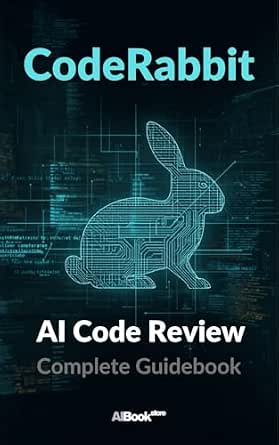 | Best for CodeRabbit-focused readers | ASIN: B0GX33W78C | Type: Guidebook | Named tool: CodeRabbit | VIEW LATEST PRICE | See Our Full Breakdown |
| 50 AI Workflows for Engineers: From Debugging to System Design, Code Review, and Engineering Automation |  | Best for broad engineering workflows | ASIN: B0GZHP3X8L | Workflow count: 50 | Type: Workflow collection; exact format not specified | VIEW LATEST PRICE | See Our Full Breakdown |
| AI code review tool | ASIN | Type |
|---|---|---|
| The AI Code Review Protocol: H | B0H84XDQDW | Book; exact format not specified in the supplied details |
| Code Review for AI-Generated C | B0H879F473 | — |
| The Solo Developer’s AI Code R | B0HGYNFQLC | Guide; exact format not specified in the supplied details |
| CodeRabbit AI Code Review Guid | B0GX33W78C | Guidebook |
| 50 AI Workflows for Engineers: | B0GZHP3X8L | Workflow collection; exact format not specified |
More Details on Our Top Picks
The AI Code Review Protocol: How to Review AI-Generated Code in 4 Rounds Without Losing Your Mind
This is my top pick for readers who want a defined sequence rather than a wide survey of engineering topics. Its strongest differentiator is explicit in the title: a four-round process for reviewing AI-generated code. That gives prospective readers a clearer idea of the intended organizing principle than the general-purpose 50-workflow collection or the CodeRabbit guidebook, whose supplied descriptions do not state a review sequence.
A staged approach can be a useful fit when AI-assisted changes feel difficult to review all at once: a team or individual can break review into passes instead of relying on one broad inspection. Still, the listing does not explain what happens in each round, how security or tests are handled, or whether the book provides examples. I would not assume the protocol covers every issue named by Code Review for AI-Generated Code, which explicitly mentions architecture, dependencies, security, and tests.
That gap keeps this recommendation focused. Choose it when the promise of a repeatable process matters more than broad topic coverage. Skip it if you need documented CodeRabbit instructions, a solo-developer-specific guide, or an exhaustive account of review topics before deciding. Compared with the other entries, it has the strongest stated process signal but also one of the thinnest descriptions beyond its title.
Pros:- Explicitly centers on reviewing AI-generated code.
- Names a four-round process, giving the guide a distinct process-led identity.
- More directly focused on review than the broader engineering workflow collection.
- Could suit readers who prefer dividing review into stages rather than treating it as one undifferentiated task.
Cons:- The supplied description does not explain what the four rounds involve.
- No details are provided about examples, exercises, format, or depth.
- The listing does not specify coverage of security, tests, architecture, or dependencies.
Best for: Developers or small teams who want to explore a staged routine for reviewing code generated by AI assistants.
Not ideal for: Readers who need confirmed detail on each review round, a specific software integration, or broad coverage of security, architecture, testing, and dependencies.
- ASIN:B0H84XDQDW
- Type:Book; exact format not specified in the supplied details
- Primary focus:Reviewing AI-generated code
- Stated method:Four-round process
- Named audience:Not specified
- Security coverage:Not specified
- Testing coverage:Not specified
- Examples or exercises:Not specified
Our verdict“I rank this first for its clearly stated four-round review concept, while recommending a listing check if you need to know exactly what each round teaches.”
Code Review for AI-Generated Code: A Practical Review System
If I wanted a guide whose stated topics span several dimensions of code quality, this would be my strongest alternative to the four-round protocol. Its description names bugs, security, architecture, tests, dependencies, and engineering control. That breadth makes it the most clearly specified choice for readers who want to think beyond whether generated code merely runs.
The comparison with the protocol is useful: the protocol offers a named sequence, while this book gives a wider topic map but no stated number of steps or detailed method. Compared with the solo-developer guide, it also appears less narrowly aimed at an individual workflow. The description calls it a practical review system, but the available listing does not explain the system’s structure, examples, or how it prioritizes findings.
I place it second because its subject coverage is unusually clear, though its process is not described as specifically as the first-ranked title. It makes the most sense for a reader who wants to preserve human oversight while checking multiple aspects of AI-generated work. Skip it if you need a concise, named protocol, a tool-specific walkthrough, or proof that the book includes practical exercises; those details are not present in the supplied information.
Pros:- Explicitly covers bugs and security issues.
- Includes architecture, tests, and dependency management in its stated scope.
- Addresses maintaining engineering control over AI-generated changes.
- More clearly describes topical breadth than several other listings.
Cons:- The supplied details do not explain how the review system is organized.
- No specific review sequence, examples, or exercises are confirmed.
- The intended reader and level of technical depth are not specified.
Best for: Developers who want a broad checklist of review concerns spanning correctness, security, system design, tests, and dependencies.
Not ideal for: Readers who need a clearly described step-by-step process, a CodeRabbit-specific manual, or confirmed examples and exercises.
- ASIN:B0H879F473
- Format:Book
- Primary focus:Reviewing AI-generated code
- Architecture and tests:Included in stated focus
- Dependency management:Included in stated focus
- Engineering control:Included in stated focus
Our verdict“I recommend it for readers who value broad review coverage over a named sequence, with the caveat that the listed topics do not reveal how the system works in practice.”
The Solo Developer’s AI Code Review Guide: Catch Bugs, Security Issues, and Technical Debt
This guide earns its place by identifying a specific reader: the solo developer reviewing AI-assisted work. Its stated concerns—bugs, security issues, and technical debt—are a practical trio for an individual who may be responsible for both producing and checking a change without a separate review partner. That audience focus distinguishes it from the broader systems coverage in Code Review for AI-Generated Code.
Compared with The AI Code Review Protocol, this title signals a reader profile and review targets rather than a named sequence. That may be a better match if you work independently and want the advice framed around that setting. The limitation is that the description does not explain what methods it recommends, how it treats technical debt, or whether it covers tests, architecture, or dependency risk. The word “guide” alone does not establish the level of detail.
I rank it third because the audience and core review concerns are clear, but the available information gives less evidence of a repeatable method than the protocol and less topic breadth than the practical review system. Choose it for its solo-developer orientation; do not choose it simply because you need a comprehensive manual or a software tool that reviews changes automatically.
Pros:- Directly addresses solo developers.
- Focuses on reviewing code produced by AI coding assistants.
- Names bugs, security issues, and technical debt as review concerns.
- Offers a more audience-specific framing than the broad engineering workflow book.
Cons:- The supplied description gives no details about review methods.
- The format and presence of examples are not specified.
- Coverage of architecture, tests, and dependencies is not confirmed.
Best for: Independent developers who use AI coding assistants and want guidance focused on bugs, security, and technical debt.
Not ideal for: Teams seeking a shared review protocol, readers needing confirmed architecture or testing guidance, or buyers looking for an installed code-review service.
- ASIN:B0HGYNFQLC
- Series:The Autonomous AI Builder Series
- Type:Guide; exact format not specified in the supplied details
- Intended audience:Solo developers
- Code source:AI coding assistant output
- Technical debt:Included in stated focus
Our verdict“I would choose this for its solo-developer focus, but not as a substitute for a clearly explained review protocol or a broader topic reference.”
CodeRabbit AI Code Review Guidebook
This is the lineup’s most clearly tool-specific guide: its title centers on CodeRabbit rather than presenting a general method for reviewing AI-generated code. That distinction matters for readers who already want to learn about this named product. The other entries describe review principles, an audience, a staged process, or a wider set of engineering workflows; this one signals a narrower subject.
However, the supplied description only says it is a guidebook about using CodeRabbit for AI-assisted code review. It does not identify which capabilities it explains, whether it includes setup instructions, or how current its guidance is for the software. I would not infer feature coverage or compatibility details from the title alone. By comparison, the practical review system names more review topics, and the four-round protocol states a process more explicitly.
I place it fourth because its apparent specialization is useful to a particular buyer, but the source information is too limited to judge the depth of its instructions. It can make sense if CodeRabbit is already your tool of interest and you want a focused companion. If you are still selecting a review method or comparing software products, a general guide may be more relevant—and none of these books should be treated as the CodeRabbit service itself.
Pros:- Clearly centers on CodeRabbit.
- Connects the named product to AI-assisted code review.
- More targeted to a specific tool than the general review guides.
- May fit readers who have already chosen CodeRabbit and want related guidance.
Cons:- No details are provided about the guide’s contents or methods.
- Setup instructions, examples, and feature coverage are not confirmed.
- Its usefulness may be limited for readers who do not use CodeRabbit.
Best for: Readers who specifically want a guidebook about using CodeRabbit for AI-assisted code review.
Not ideal for: Buyers seeking a vendor-neutral review method, a confirmed feature-by-feature manual, or a software product rather than a book.
- ASIN:B0GX33W78C
- Type:Guidebook
- Named tool:CodeRabbit
- Subject:AI-assisted code review
- Setup coverage:Not specified
- Feature coverage:Not specified
- Examples:Not specified
- Software access included:Not specified; listing describes a guidebook
Our verdict“I would select this only when CodeRabbit is already the focus; its narrow scope is a strength, but the available description does not establish the guide’s depth.”
50 AI Workflows for Engineers: From Debugging to System Design, Code Review, and Engineering Automation
This collection stands apart from the more focused review guides by covering 50 AI workflows across debugging, system design, code review, and engineering automation. It is the broadest option by stated scope, which may suit engineers who want ideas for using AI throughout their work rather than concentrating only on reviewing generated changes.
That breadth is also its tradeoff. The title includes code review, but the supplied description does not say how many workflows address it or how detailed those workflows are. Readers whose immediate goal is to check AI-generated code may get a clearer subject match from The AI Code Review Protocol or the practical review system, both of which center on review itself. This book’s distinctive advantage is cross-task range, not a confirmed review methodology.
I rank it fifth for a code-review-specific roundup because its review coverage is difficult to judge from the available information. It could be a good fit for engineers exploring AI-assisted work across several stages, including design and automation. Skip it if you want a compact, tightly scoped guide to reviewing pull requests, a solo-developer method, or a CodeRabbit walkthrough. The listing also omits details about the workflow format and contents, so the count should not be mistaken for a guarantee of depth.
Pros:- States a collection of 50 AI workflows.
- Includes code review alongside debugging, system design, and engineering automation.
- Offers broader engineering scope than the review-only titles.
- May serve readers who want to explore multiple AI-assisted tasks in one resource.
Cons:- The number of workflows specifically devoted to code review is not stated.
- The workflow format and contents are not described.
- Its broad scope may be less useful than a focused review guide for an immediate code-review need.
Best for: Engineers who want a broad collection of AI workflows spanning review and other software engineering tasks.
Not ideal for: Readers seeking a dedicated, clearly explained process for reviewing AI-generated code or confirmed detail on review-specific examples.
- ASIN:B0GZHP3X8L
- Workflow count:50
- Type:Workflow collection; exact format not specified
- Debugging:Included among the stated topics
- System design:Included among the stated topics
- Engineering automation:Included among the stated topics
Our verdict“I recommend it for engineers seeking broad AI workflow ideas, but its unspecified review depth makes it the least targeted choice for code review alone.”

How We Picked
I ranked these options as learning resources for AI code review, not as working software. The supplied descriptions identify books and guidebooks, so I did not treat any of them as a GitHub app, code-scanning service, or automated agent. That distinction matters: a reader seeking an installed tool that comments on pull requests should look for a software product, while this roundup serves readers seeking a method or reference for reviewing AI-generated code.
My first ranking factor was direct relevance. Titles explicitly focused on reviewing AI-generated code rank ahead of broader engineering material unless that broader scope serves a clear buyer need. Next, I considered the specificity of the stated approach: a named four-round process gives buyers a clearer expectation than a title whose description only says it is a guide. I also compared audience and topic coverage, including solo development, security, architecture, tests, dependency management, and CodeRabbit-specific guidance.
I gave credit only for information present in the supplied descriptions and specifications. When a listing does not say how its guide is organized, whether it includes examples, or what methods it teaches, I call that out rather than inventing details. The resulting order reflects the strength and clarity of the stated fit, not a claim that one book has been independently validated. I would check the full listing before buying, especially if you need a particular format, level of detail, or hands-on exercises.
| AI code review tool | ASIN | Type |
|---|---|---|
| The AI Code Review Protocol: H | B0H84XDQDW | Book; exact format not specified in the supplied details |
| Code Review for AI-Generated C | B0H879F473 | — |
| The Solo Developer’s AI Code R | B0HGYNFQLC | Guide; exact format not specified in the supplied details |
| CodeRabbit AI Code Review Guid | B0GX33W78C | Guidebook |
| 50 AI Workflows for Engineers: | B0GZHP3X8L | Workflow collection; exact format not specified |
Factors to Consider When Choosing AI Code Review Tools
These listings are guides, not functioning AI code-review services. I would choose among them by matching the stated scope to the review problem I need to solve, then checking the full product listing for the format and detail the short descriptions leave unanswered.Start by separating guides from software
The phrase AI code review tools often refers to software that connects to a repository, analyzes a change, and may leave comments on a pull request. These five products are described as books or guidebooks. They can inform how a person reviews AI-generated code, but the supplied information does not say that any one of them runs scans, integrates with a development platform, or automatically flags defects.
If your need is automated review, look for a software listing that clearly identifies supported repositories, pull-request behavior, permissions, data handling, and how findings are produced. If your need is to improve human review practice, these guides are more relevant. Keeping those two categories separate avoids buying a learning resource when you expect a working integration.
Choose process or topic breadth
A named review process is useful when you want an order of operations. The AI Code Review Protocol is the clearest example here because its title specifies four rounds, even though the supplied description does not define those rounds. That makes it the strongest process-led choice on the available information, but not a guarantee that its method covers every review concern you have.
A broader topic map may be a better fit when you want to examine several kinds of risk. Code Review for AI-Generated Code explicitly names bugs, security, architecture, tests, dependencies, and engineering control. The solo-developer guide names a narrower set of concerns and a specific audience. The 50-workflow collection expands beyond review into engineering tasks, so I would select it for breadth rather than for a documented review sequence.
Match the guide to how you work
Individual developers may value guidance framed around working alone, where the same person generates and checks a change. The Solo Developer’s AI Code Review Guide directly addresses this audience and calls out bugs, security issues, and technical debt. A team looking for a common routine may prefer to investigate the four-round protocol or the wider practical review system, then confirm whether either guide offers a process suitable for shared use.
If you already use CodeRabbit, the CodeRabbit guidebook has the narrowest named-tool focus. That focus is useful only if its contents match what you need; the supplied description does not confirm setup guidance, feature walkthroughs, or examples. If you have not selected a platform, I would begin with vendor-neutral review principles rather than assume a tool-specific book will help compare software.
Check what the listing does not say
Several descriptions omit the details that can make a book useful in practice: whether it includes annotated code, checklists, exercises, sample prompts, a stepwise workflow, or guidance for a particular programming language. I would inspect the complete listing for those points before deciding. A title can identify a subject, but it cannot confirm how much instruction or usable material is inside.
Pay particular attention to format and scope. The practical review system is identified as a book, while the other supplied descriptions do not consistently state their formats. The four-round title names a process without describing it; the CodeRabbit title names a product without outlining its instructions. When a detail matters to your purchase, treat “not specified” as unknown rather than filling in the gap from the title.
Use review guides to support—not replace—engineering judgment
AI-generated code still needs review in light of the surrounding system, expected behavior, and acceptable risk. A guide can help structure that work, but a book description is not evidence that its method catches every defect. The listed topics suggest different areas of attention: security and technical debt for the solo-developer guide; architecture, tests, and dependencies for the practical system; and multiple engineering tasks for the workflow collection.
I would treat any method as a starting framework, then adapt it to the codebase and the team’s standards. Reviewers still need to verify behavior, look for unintended changes, and decide whether the implementation fits the system. For high-risk changes, rely on appropriate tests and security practices alongside human review, rather than assuming an AI-related guide or automated service removes the need for engineering oversight.
Frequently Asked Questions
Are these AI code review software tools?
No. The five products supplied for this roundup are described as books, guides, or workflow collections. They address approaches to AI-assisted or AI-generated code review, but the available details do not identify an installed service, repository integration, or automated pull-request reviewer. If you need software that analyzes changes directly, shop for a product listing that explicitly describes those capabilities.
Which guide has the clearest stated review process?
The AI Code Review Protocol has the clearest process signal because its title explicitly describes a four-round method. The supplied description does not explain the rounds, so it is the best match for readers drawn to a staged approach, not a confirmed choice for any particular security or testing procedure. Code Review for AI-Generated Code names more review topics, but its description does not state a sequence.
Which option is most suitable for a solo developer?
The Solo Developer’s AI Code Review Guide is the most directly matched because its stated audience is solo developers and its description names bugs, security issues, and technical debt. The available information does not confirm how it structures its advice or whether it includes architecture and testing material. A solo developer who wants broader stated topic coverage could compare it with Code Review for AI-Generated Code.
Which book covers the widest range of review concerns?
Code Review for AI-Generated Code has the widest explicitly stated review-topic coverage: bugs, security, architecture, tests, dependencies, and maintaining engineering control. The 50-workflow collection covers more engineering activities overall, including debugging, system design, code review, and automation, but its description does not say how many workflows focus on review. For review topics specifically, the practical review system is the more clearly documented choice.
What should I check before buying one of these guides?
Check the full listing for the format, examples, exercises, workflow steps, intended technical level, and any language or platform focus that matters to you. The supplied descriptions leave many of those details unknown, including the contents of the four rounds and the specific CodeRabbit features covered. Also confirm that you want a learning resource rather than software that reviews code directly; these listings describe guides, not a confirmed automated service.
Conclusion
My recommendation depends on the kind of help you want. Choose The AI Code Review Protocol if a clearly signaled, staged method is your priority. Pick Code Review for AI-Generated Code when you want the broadest explicitly listed coverage of bugs, security, architecture, tests, dependencies, and engineering control. For independent work, the Solo Developer’s AI Code Review Guide is the most audience-specific option; for a CodeRabbit-centered resource, look at its dedicated guidebook. Choose 50 AI Workflows for Engineers when your interest extends beyond code review to other engineering tasks.
Before you buy, check the full product details for content structure and examples—the short descriptions leave meaningful questions unanswered. And if you are looking for a service that automatically reviews pull requests, these five books are not that product category. They are resources for shaping human practice, with different strengths in process, coverage, audience, and tool focus.