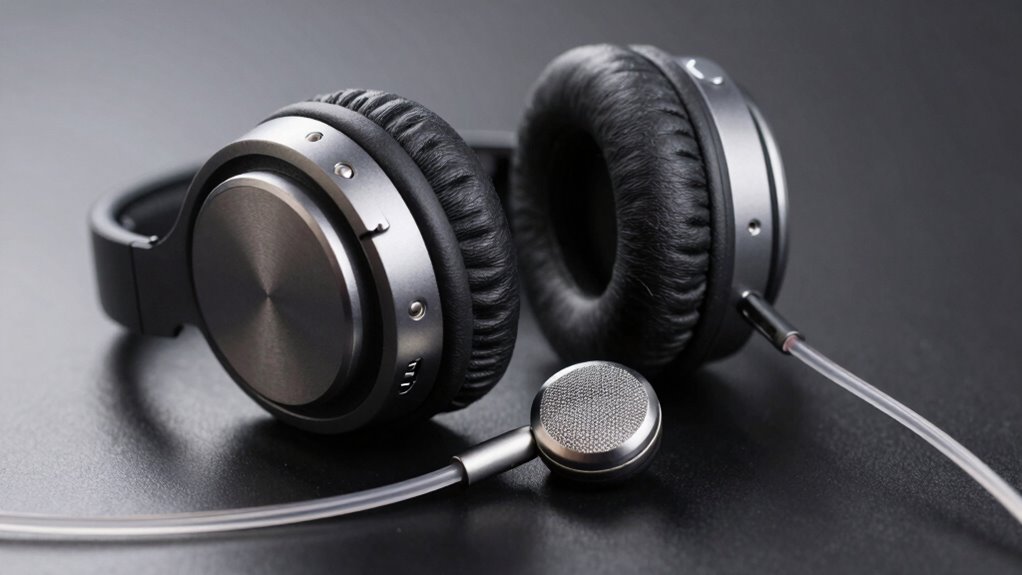
Headphone impedance refers to how much resistance your headphones offer to electrical signals, affecting sound quality. Low-impedance models work well with smartphones and portable devices, providing louder, punchier sound. High-impedance phones need more power and are better suited for dedicated amplifiers. If your music sounds flat or dull, it might be because of impedance mismatches or insufficient power. Keep exploring to discover how matching headphones to your devices can improve your listening experience.
Key Takeaways
- High impedance headphones require more power; insufficient power can cause flat, dull sound quality.
- Mismatched impedance between headphones and audio source reduces volume and audio clarity.
- Low-impedance headphones are easier to drive, but may distort or sound flat if not powered properly.
- Proper impedance matching ensures optimal sound depth, bass response, and prevents distortion.
- Using the right amplifier or device with suitable output power improves overall audio richness and avoids flat sound.
What Is Headphone Impedance: and Why Does It Matter?
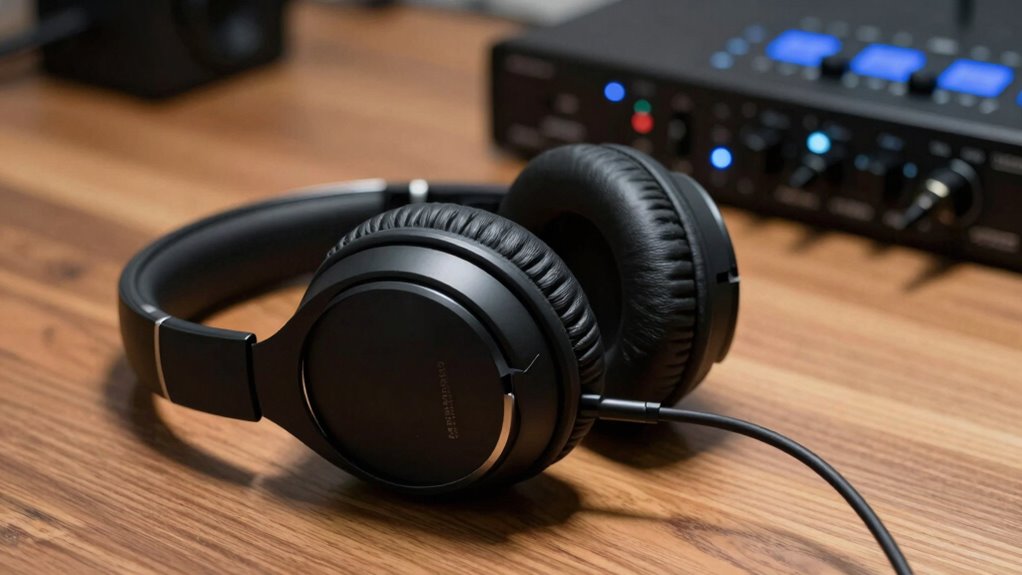
Headphone impedance refers to how much electrical resistance your headphones present to the audio source. This resistance affects how the audio signal is transferred from your device to your headphones. When impedance is low, your headphones draw more current, delivering louder sound with less effort. High-impedance headphones, on the other hand, resist the audio signal more, requiring more power for proper volume and clarity. Proper impedance matching between your headphones and audio source ensures you get clear, balanced sound without distortion or insufficient volume. If impedance doesn’t match, the audio signal may be weak or distorted, making your listening experience less enjoyable. Understanding impedance helps you choose the right headphones for your device and guarantees you experience the best possible audio quality. Additionally, Proper impedance matching can prevent potential damage to your audio equipment by ensuring compatibility. Recognizing the contrast ratio in projectors can help you select the best device for your home theater setup. Moreover, knowing about audio equipment compatibility can enhance your overall listening experience and protect your gear from damage. A deeper understanding of headphone impedance can also assist in troubleshooting audio issues and optimizing your setup for different devices. Being aware of electric power and how it relates to headphone performance can further improve your listening quality.
Why Do High-Impedance Headphones Need More Power?
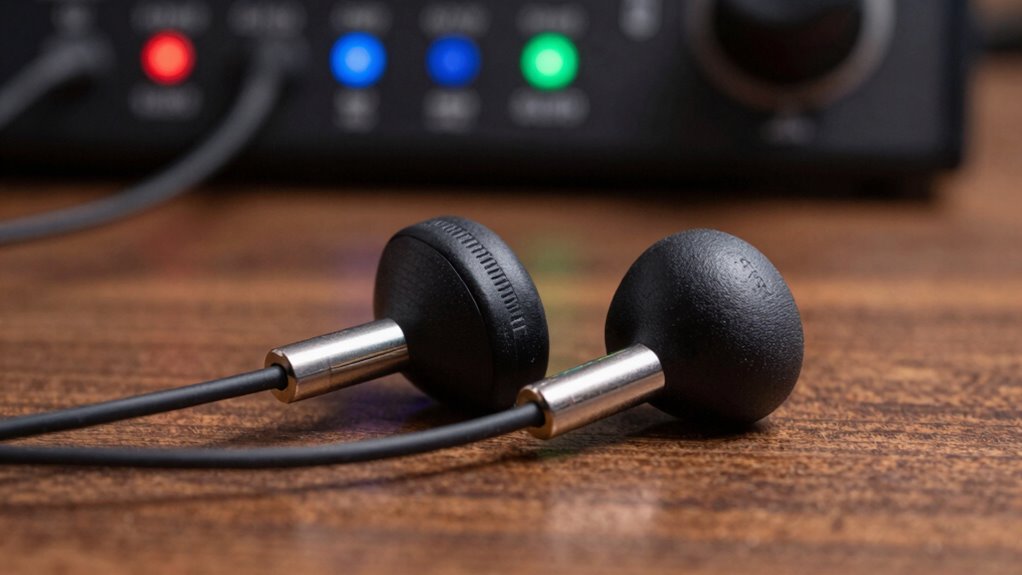
Because high-impedance headphones resist more electrical current, they require additional power from your audio source to reach the desired volume levels. This is due to their higher impedance, which affects power requirements. To deliver enough current, your device must provide proper impedance matching; otherwise, the headphones won’t perform ideally. If the impedance mismatch is too great, you might notice lower volume or less dynamic sound. High-impedance headphones draw less current at a given voltage, so they need a more powerful amplifier or audio source capable of supplying that extra power. Without sufficient power, your headphones can sound flat or dull. Recognizing the importance of **impedance matching** can help optimize your listening experience and prevent audio issues. Proper audio equipment setup can significantly improve sound quality when using high-impedance headphones. Additionally, understanding audio output quality can help you select the right device for optimal performance.
How Do Low-Impedance Headphones Sound on Different Devices?

Low-impedance headphones typically sound more responsive and easier to drive across a wide range of devices. On smartphones and portable players, they often deliver louder volume and better bass response due to less power demand. With wireless connectivity, low-impedance models tend to perform well, but you might notice slight signal compression or minor audio quality loss if the wireless signal weakens. Since they generally have lighter construction, their durability can vary, but many are built to withstand daily use. Keep in mind, on high-powered devices like desktop amps, low-impedance headphones may become too loud or distort at high volumes. Proper impedance matching is essential to optimize sound quality and prevent potential damage. Additionally, understanding how to match headphones with different devices can significantly impact your listening experience and audio performance. Overall, their versatility makes them suitable for various devices, but their sound quality can depend on the specific equipment and connection type.
How to Choose Headphone Impedance Based on Your Devices
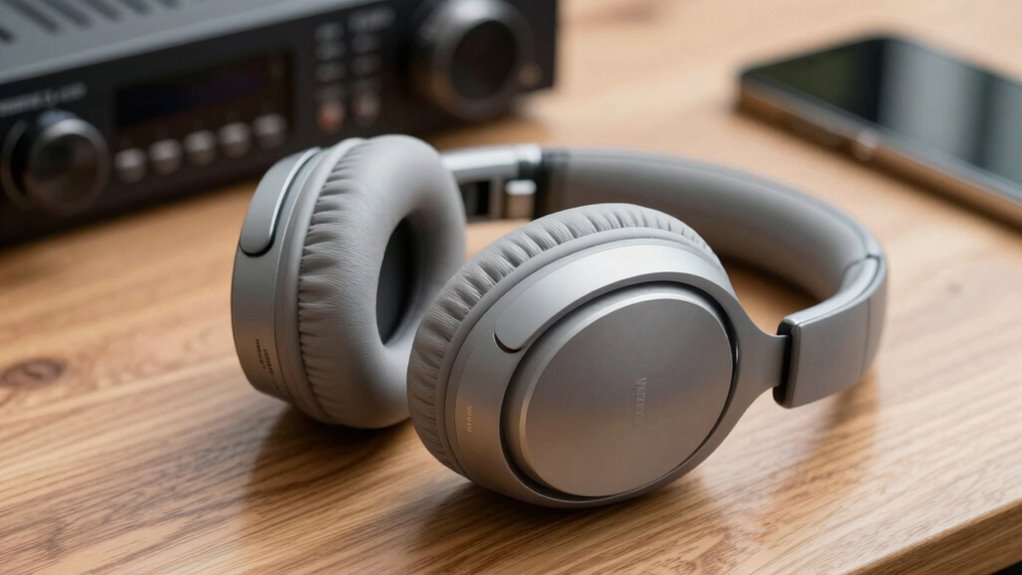
Choosing the right headphone impedance depends largely on the devices you plan to use. If your device has a standard audio jack, low-impedance headphones (below 50 ohms) are ideal because they draw less power and will sound loud and clear. These are perfect for smartphones, tablets, and laptops, which often have weaker headphone jacks. High-impedance headphones (above 100 ohms) need more power, so they’re better suited for dedicated headphone amplifiers or audio interfaces with stronger outputs. If your device has a built-in headphone jack, consider the impedance to match its output capacity. Using high-impedance headphones on devices with weak audio jacks may result in low volume or flat sound. Always check your device’s specifications to choose the impedance that guarantees ideal audio quality. Additionally, understanding the audio output capabilities can help you find a memorable and meaningful choice for your audio gear or other personal items. To ensure optimal performance, it’s important to consider impedance matching between your headphones and device to avoid undesirable sound issues.
Why Is My Music Sounding Flat? Could Impedance Be the Cause?
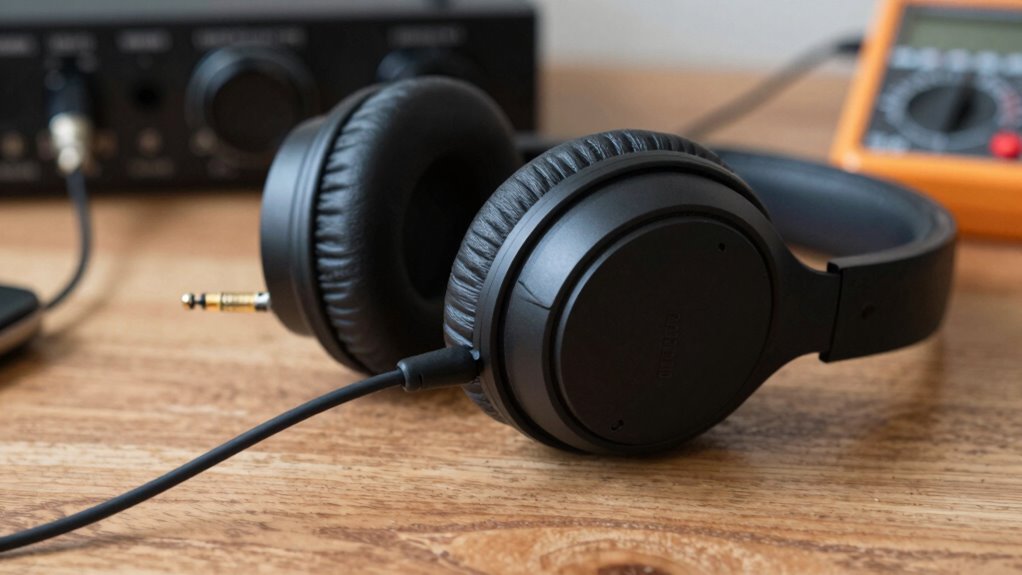
If your music sounds flat or lacks depth, impedance might be the reason. Low-quality cables can weaken the signal, making the sound less vibrant and more dull. Additionally, high impedance headphones require more power, which can lead to insufficient volume and a flat listening experience if your device isn’t powerful enough. Ambient noise can also interfere, forcing you to turn up the volume, which may not compensate for poor impedance matching. This mismatch prevents your headphones from delivering the full range of audio frequencies, reducing clarity and bass response. To fix this, consider using cables with better shielding and quality connections. Ensuring your device can supply adequate power and minimizing ambient noise can help restore the richness and depth in your music. Proper safety precautions when handling audio equipment can also prevent damage and ensure optimal performance.
Frequently Asked Questions
Can Impedance Affect Headphone Durability?
Impedance doesn’t directly affect headphone durability, but durability factors like material quality and build design do. Higher-quality materials, such as sturdy plastics or metals, make headphones more resistant to wear and tear. If your headphones have low-quality components, they’re more prone to damage over time. So, while impedance impacts sound quality, focusing on material quality and construction guarantees your headphones last longer and stay in good condition.
Is Impedance the Same Across All Headphone Brands?
Don’t judge a book by its cover, and don’t assume all headphone impedance is the same across brands. You’ll find impedance variations, so it’s key to check brand compatibility before buying. Different brands may design headphones with varying impedance levels, which can affect how well they work with your devices. Always verify the impedance specs to confirm your headphones match your audio gear for the best sound experience.
How Does Impedance Impact Noise Cancellation?
Impedance impacts noise cancellation by affecting how well your headphones can block out external sounds. Higher impedance headphones often require more power, which can improve noise reduction if powered properly, leading to better audio clarity. Lower impedance models might not provide as much noise isolation, making outside noise more noticeable. To get the best noise cancellation, choose headphones with impedance suited to your device and verify they’re powered correctly.
Are There Specific Genres Better Suited for Certain Impedances?
Yes, certain genres benefit from specific impedance compatibility. For example, high-impedance headphones excel with genres like classical or jazz, where detailed sound quality matters most, as they respond well to powerful amplifiers. Meanwhile, low-impedance headphones are perfect for genres like pop or electronic music, providing easier drive and better portability. Matching impedance to your genre preferences guarantees ideal sound clarity and overall listening experience.
Does Impedance Influence Wireless Headphone Performance?
If you’re using wireless headphones, impedance can impact performance. For example, higher impedance models might struggle with wireless compatibility, causing weaker signals or audio dropouts. This can also affect battery life, as more power is needed to drive high-impedance headphones. To get the best experience, choose headphones with impedance suited for wireless use, balancing sound quality and battery efficiency, so you enjoy seamless listening without frequent recharging or connectivity issues.
Conclusion
Think of headphone impedance as the bridge between your device and your sound. If the bridge is too narrow, your music feels flat and strained, like a whisper lost in a canyon. Choosing the right impedance is like building a smooth, sturdy bridge that lets your audio flow freely and richly. When you match impedance properly, your soundscape becomes a vibrant garden, bursting with colors and details, instead of a dull, faded painting.