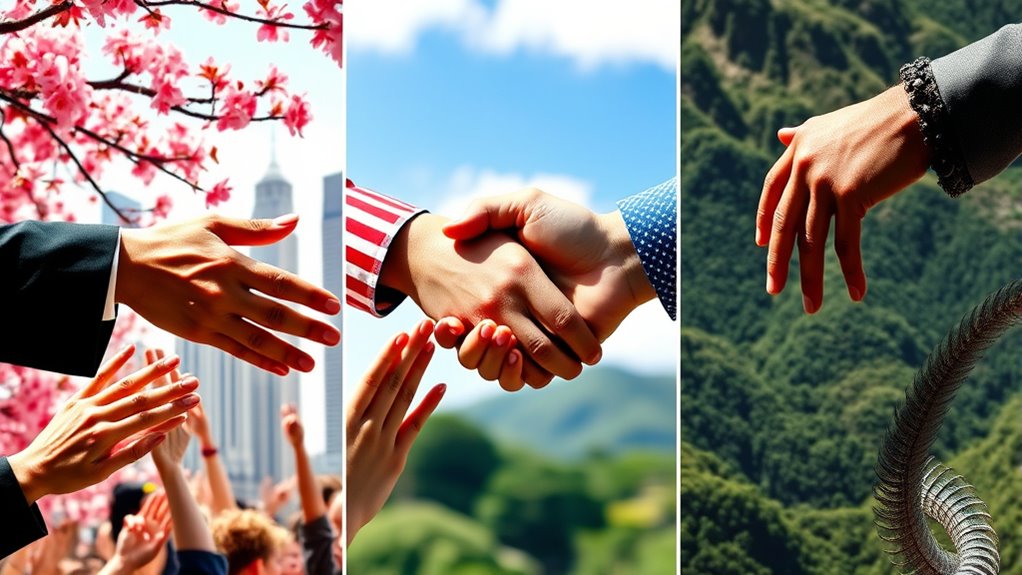

Cultural etiquette is key to respectful interactions worldwide. Always be mindful of local greetings, as a firm handshake or a bow can convey respect. Personal space varies by culture—some prefer distance while others are more touchy-feely. When addressing others, using proper titles demonstrates respect. Remember, each culture has its own nuances, so observe and adapt accordingly. There’s so much more to learn about building meaningful relationships across cultures, so keep going!
Key Takeaways
- Always observe local greeting customs, adjusting your approach to align with cultural norms for respect and sensitivity.
- Use appropriate titles and names based on cultural context to foster respectful communication and avoid appearing overly familiar.
- Be mindful of personal space preferences; some cultures favor close contact while others require more distance during interactions.
- Recognize that the timing of greetings varies; multiple greetings may be customary in some cultures, while others may reserve them for formal occasions.
- Learn and adapt to cultural etiquette to enhance relationships, demonstrating respect for local traditions and preventing misunderstandings.

Understanding cultural etiquette is essential, especially when you’re traveling or interacting with people from diverse backgrounds. One of the first things you’ll notice is how greetings can vary dramatically across cultures. In some places, a firm handshake is a sign of confidence, while in others, a gentle bow or a casual nod is more appropriate. Learning these cultural norms can help you avoid misunderstandings and foster better connections with those you meet.
When you greet someone, pay attention to their body language and the context. In many Western countries, maintaining eye contact is seen as a sign of honesty and engagement. However, in certain Asian cultures, prolonged eye contact can be interpreted as disrespectful or confrontational. Adjusting your greeting style to match local social customs can demonstrate respect and sensitivity to the other person’s culture.
Another aspect to contemplate is the timing and context of your greetings. In some cultures, it’s common to greet people multiple times throughout the day, while in others, casual greetings may be reserved for close friends and family. If you’re in a formal setting, it’s usually best to stick with a polite greeting, whereas a casual environment may allow for more relaxed interactions. Being aware of these nuances can help you make a positive impression.
Furthermore, different cultures have varying expectations regarding personal space during greetings. In some regions, a friendly hug or a pat on the back is perfectly acceptable, while in others, standing a few feet apart is the norm. If you’re uncertain about what’s appropriate, it’s wise to observe how locals interact with each other. This way, you’ll get a clearer picture of what’s acceptable and what isn’t.
Also, remember that the use of titles and names can differ considerably. In many cultures, addressing someone by their first name is seen as overly familiar unless you’ve been invited to do so. Using titles such as Mr., Ms., or Dr. can show respect and acknowledge the other person’s position or achievements. Always be prepared to adjust your approach based on the cultural context.
Ultimately, taking the time to learn about greetings and other social customs before your travels can enhance your experiences and help you build meaningful relationships. You’ll find that a little effort in understanding cultural etiquette goes a long way in making your interactions more enjoyable and respectful. Additionally, leveraging AI tools can significantly boost productivity in your content creation efforts related to cultural awareness.
Frequently Asked Questions
What Are the Consequences of Cultural Misunderstandings in Travel?
Cultural misunderstandings in travel can lead to awkward situations, strained relationships, and even conflict. If you lack cultural sensitivity, you might offend locals or miss out on meaningful experiences. Diplomatic communication becomes essential; it helps bridge gaps and fosters respect. You might find that a small gesture or a simple “thank you” in the local language can transform your interactions. Ultimately, understanding different cultures enriches your journey and creates lasting connections.
How Can I Learn Local Customs Before Visiting a New Country?
You wouldn’t plunge into a pool without checking the water first, right? To learn local customs before visiting a new country, start with cultural research online—blogs and travel forums are goldmines. Don’t forget about language learning; even basic phrases can show respect. Connect with locals through social media or join cultural workshops. These steps will not only enhance your experience, but they’ll also help you avoid any awkward misunderstandings.
Are There Universal Gestures to Avoid in Any Culture?
Yes, there are universal gestures you should avoid in any culture. For instance, showing the middle finger is widely regarded as offensive. Similarly, the “OK” hand sign can be a cultural taboo in some countries, meaning something quite vulgar. You’ll want to be cautious with gestures like pointing, which can be disrespectful in certain places. Always research local customs to make certain you don’t unintentionally offend anyone during your travels.
How Do I Handle Cultural Etiquette Mistakes Gracefully?
When you make a cultural etiquette mistake, apologize sincerely and acknowledge your error. People appreciate honesty, and a heartfelt apology can go a long way. After that, observe quietly to learn more about the customs in that culture. This shows respect and a desire to understand. Remember, everyone makes mistakes; it’s how you handle them that matters. Stay open-minded, and you’ll likely end up building better connections in the process.
What Resources Can Help Me Understand Global Cultural Practices?
To understand global cultural practices, you can explore various resources. Start with cultural training programs that offer insights into specific regions. They’ll help you grasp nuances and avoid common pitfalls. Additionally, etiquette guides provide practical tips and scenarios, making it easier to navigate different customs. Online platforms, blogs, and documentaries can also enhance your knowledge. Engaging with locals during your travels will further deepen your understanding of their unique cultural practices.
Conclusion
In the vibrant tapestry of global cultures, weaving respect and understanding into your interactions can transform a simple encounter into a beautiful exchange. By embracing the do’s and don’ts of cultural etiquette, you’ll navigate the world with grace, like a dancer gliding effortlessly across a stage. So, as you set out on your journeys, remember that a smile and a little knowledge can open doors, allowing you to connect and create memories that last a lifetime.