When choosing cooking oils, you’ll find olive oil and coconut oil have distinct benefits. Olive oil’s rich in monounsaturated fats and antioxidants, making it great for heart health and cold dishes. Coconut oil, with its medium-chain triglycerides, offers quick energy and is perfect for high-heat cooking. Each oil has unique flavors and uses, so incorporating both can enhance your meals. Stick around to explore more about how these versatile oils can elevate your cooking.
Key Takeaways
- Olive oil is rich in monounsaturated fats and antioxidants, promoting heart health and reducing inflammation.
- Coconut oil contains medium-chain triglycerides, providing quick energy and is stable for high-temperature cooking.
- Extra virgin olive oil offers superior flavor and health benefits, ideal for salads and low-heat dishes.
- Coconut oil adds a tropical flavor, perfect for baking and high-heat applications like frying.
- Incorporating both oils into your cooking enhances flavor profiles, nutritional intake, and culinary versatility.
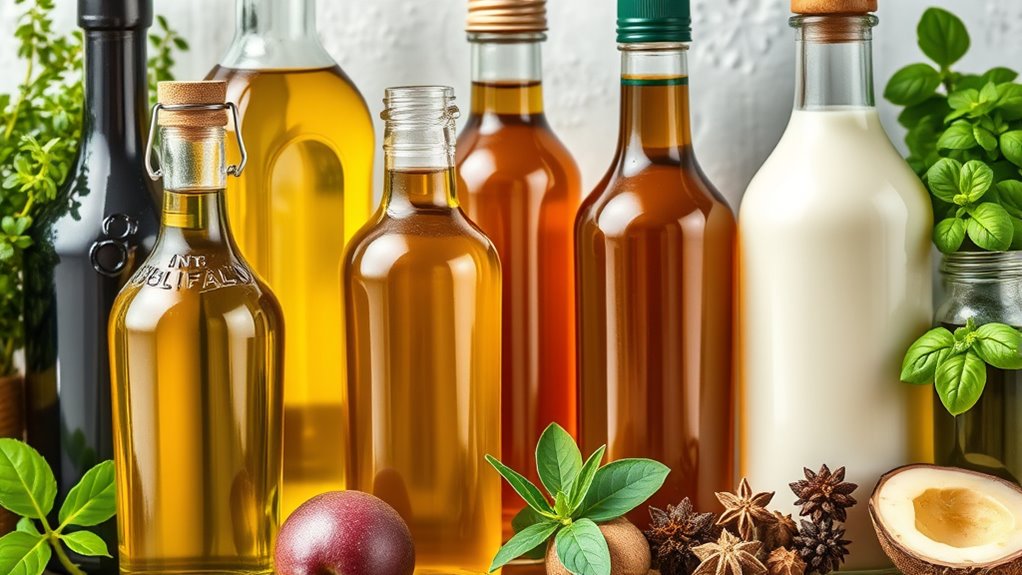
When it comes to cooking, choosing the right oil can make all the difference in flavor and health benefits. Among the myriad of options available, olive oil and coconut oil stand out for their unique properties and versatility in the kitchen. Understanding their benefits and uses can elevate your cooking game and promote better health.
Olive oil benefits are well-documented; it’s rich in monounsaturated fats and antioxidants. When you drizzle olive oil over salads or use it as a base for sautéing, you’re not just enhancing flavor; you’re also infusing your dishes with heart-healthy nutrients. It’s known to support cardiovascular health and can even help reduce inflammation. By opting for extra virgin olive oil, you’re getting the highest quality, packed with flavor and beneficial compounds. So, next time you’re whipping up a Mediterranean dish or a simple vegetable stir-fry, reach for that bottle of olive oil to amplify both taste and health.
Rich in monounsaturated fats and antioxidants, olive oil enhances flavor while promoting heart health and reducing inflammation.
Coconut oil uses, on the other hand, offer a different flavor profile and health benefits. It’s a saturated fat, but don’t let that scare you off. The medium-chain triglycerides in coconut oil can be metabolized differently than other fats, potentially providing a quick energy boost. You can use it for baking, frying, or even as a dairy substitute in recipes like creamy soups. Its tropical flavor can elevate your dishes, making them feel exotic and delightful. If you’re making a Thai curry or a coconut-infused rice dish, coconut oil can be a game changer.
Incorporating both olive and coconut oils into your cooking repertoire allows you to benefit from their unique properties. While olive oil is ideal for cold dishes and low-heat cooking, coconut oil shines in high-heat applications, thanks to its stable fat composition. This versatility means you can experiment with various cuisines and flavors, all while promoting your health. Additionally, using different materials for cooking oils can enhance both flavor and presentation in your culinary creations.
Ultimately, the choice between olive oil and coconut oil may come down to personal preference and the specific dish you’re preparing. Embrace the benefits of both, and you’ll find that your cooking not only tastes better but is also more nourishing. So, stock your pantry with these oils, and let your creativity flow in the kitchen. You won’t regret it!
Frequently Asked Questions
Can Cooking Oils Expire or Go Rancid?
Yes, cooking oils can expire or go rancid. The oxidation process affects their shelf life, causing oils to develop off-flavors and odors. If you notice a strange smell or taste, it’s likely gone bad. Generally, most oils last about a year when stored properly. Keep them in a cool, dark place to extend their shelf life. Always check the expiration date, and when in doubt, trust your senses!
What Is the Best Oil for Frying?
The best oil for frying is one with a high smoke point, like canola or peanut oil. These oils can withstand higher temperatures without burning, making them ideal for frying. You’ll also want to contemplate the flavor profile; neutral oils won’t overpower your dish, while oils with distinct flavors might enhance it. For crispy, delicious results, stick to oils that suit both your cooking method and the flavors you’re aiming for.
Are There Any Oils That Should Never Be Heated?
Yes, some oils shouldn’t be heated due to their low smoke points and poor stability. Oils like flaxseed, walnut, and pumpkin seed are best kept unheated, as they can break down and produce harmful compounds when exposed to high temperatures. Stick to oils with higher smoke points, like avocado or refined olive oil, for frying. Always check the oil’s stability before using it in cooking to guarantee safety and flavor.
How Can I Store Cooking Oils Properly?
To store cooking oils properly, keep them in dark, airtight storage containers to protect them from light exposure. Did you know that light can degrade oils, reducing their shelf life by up to 50%? Choose glass or metal containers, avoiding clear plastic. Store them in a cool, dark place like a pantry or cupboard. This way, you’ll preserve their flavor and nutritional value, ensuring your oils stay fresh for cooking.
What Are the Health Benefits of Using Different Oils?
Using different oils can offer various health benefits. Olive oil benefits include heart health, thanks to its monounsaturated fats and antioxidants that reduce inflammation. On the other hand, coconut oil advantages lie in its medium-chain triglycerides, which can boost energy and support weight management. By incorporating both oils into your diet, you get a range of nutrients that can enhance overall wellness and support healthy cooking choices.
Conclusion
In your kitchen, choose oils that nourish your body, enhance your meals, and inspire your creativity. Olive oil brings heart-healthy benefits, coconut oil adds a tropical twist, and other oils offer unique flavors to elevate your dishes. By understanding these differences, you empower yourself to make informed choices. So, embrace the richness of each oil, savor the diversity they bring, and let your culinary adventures flourish with every drop. Your taste buds—and your health—will thank you!