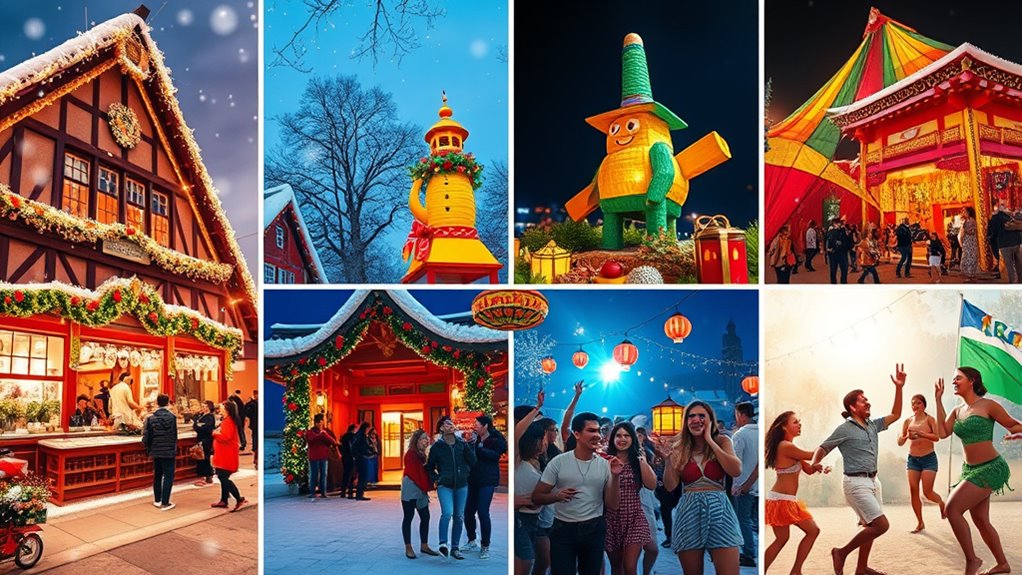

Christmas traditions around the world reflect each culture’s unique heritage. In Germany, kids look forward to St. Nicholas on December 6th, while Italians celebrate with La Befana on January 5th. Mexico’s Las Posadas is a lively reenactment of Mary and Joseph’s journey, and in Japan, people enjoy romantic celebrations, often featuring KFC. From cozy gatherings to festive markets filled with traditional foods, these customs create a sense of unity and joy during the holiday season. Explore to uncover even more fascinating traditions!
Key Takeaways
- Different cultures celebrate Christmas with unique figures like St. Nicholas in Germany and La Befana in Italy, each symbolizing local traditions.
- Christmas markets around the world showcase local crafts, food, and festive atmospheres, enhancing community spirit during the holiday season.
- In Mexico, Las Posadas reenacts Mary and Joseph’s journey, featuring music, piñatas, and communal feasts leading to Christmas Eve.
- Japanese Christmas is celebrated more as a romantic occasion with KFC meals and illuminations, rather than a religious holiday.
- The Philippines hosts Simbang Gabi, early morning masses that strengthen family bonds and reflect deep religious devotion during the Christmas season.
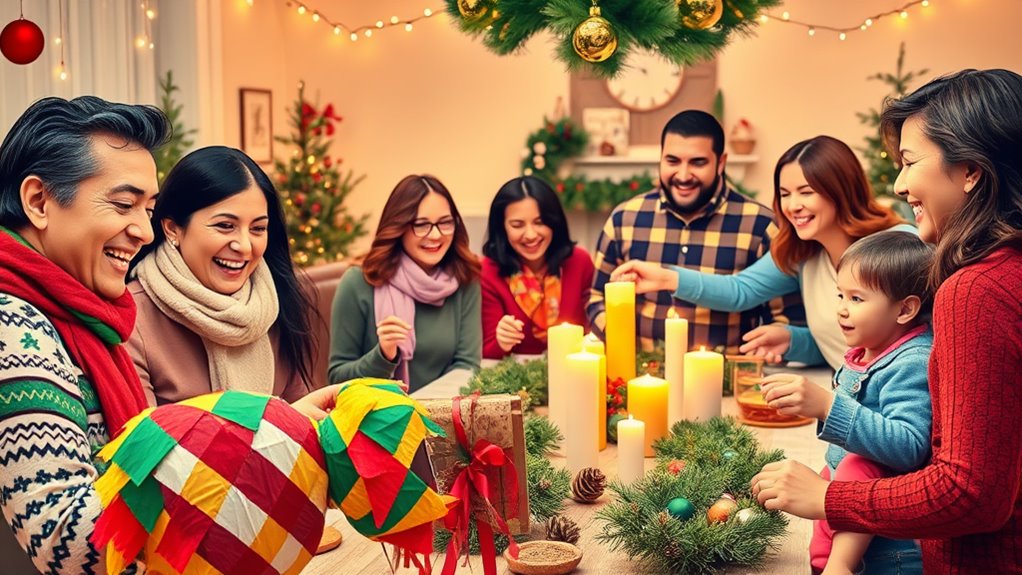
Have you ever wondered how different cultures celebrate Christmas? While you might be familiar with the classic image of Santa Claus sliding down chimneys and leaving gifts under the tree, other countries have their own unique Santa Claus customs that add flavor to the holiday spirit. For example, in Germany, children enthusiastically await the arrival of St. Nicholas on December 6th, who brings small gifts and treats if they’ve been good. In contrast, in Italy, you’ll find La Befana, a kindly witch who delivers gifts on the night of January 5th, making for a fascinating twist on the traditional Santa figure.
Discover how different cultures celebrate Christmas with unique figures like St. Nicholas in Germany and La Befana in Italy.
As you explore these diverse traditions, you can’t overlook the charm of Christmas markets. These festive hubs pop up in towns and cities around the world, offering a delightful mix of local crafts, delicious food, and holiday cheer. If you stroll through a market in Austria, you might be tempted by the scent of roasted chestnuts, while sipping on warming mulled wine. In Sweden, Christmas markets often feature beautiful handmade ornaments and traditional delicacies like gingerbread cookies, providing a perfect backdrop for holiday shopping.
In countries like Mexico, Christmas celebrations kick off with Las Posadas, a reenactment of Mary and Joseph’s search for lodging. This nine-day event leads up to Christmas Eve, culminating in lively gatherings filled with music, piñatas, and delicious dishes like tamales. The festive atmosphere is infectious, and you can’t help but feel the warmth of community and family during this time. Meanwhile, in Japan, Christmas isn’t a national holiday, but couples celebrate it as a romantic occasion, often indulging in a feast of KFC and enjoying elaborate illuminations.
In the Philippines, you’ll encounter a unique tradition called the “Simbang Gabi,” a series of early morning masses leading up to Christmas Day. This practice fills the air with the scent of freshly baked goods and the sound of joyful carols. After church, families gather to share traditional meals, creating a sense of unity and celebration. Additionally, many cultures embrace cozy textiles during their holiday celebrations, enhancing the warmth and comfort of family gatherings.
Frequently Asked Questions
What Are Some Unique Christmas Foods From Different Countries?
You’ll find unique Christmas foods around the globe that reflect each culture’s culinary customs. In Italy, you might enjoy the Feast of the Seven Fishes, while in Germany, stollen offers a sweet holiday treat. In Mexico, tamales add a festive flair to holiday feasts. Each dish tells a story, showcasing the diverse flavors and traditions that make the Christmas season so special. Enjoy exploring these delicious holiday delights!
How Do Different Cultures Decorate for Christmas?
Different cultures decorate for Christmas in unique ways. You might find vibrant Christmas tree ornaments in one home, while another family showcases elaborate Nativity scenes. In some places, people hang colorful lights or paper lanterns, creating a festive atmosphere. In others, natural elements like pinecones and holly add a rustic charm. Each decoration reflects cultural significance and personal traditions, making the holiday feel special and unique in every household you visit.
Are There Any Christmas Traditions Specific to Indigenous Peoples?
Yes, many indigenous peoples have unique Christmas traditions that often blend traditional rituals with the holiday spirit. You might find them sharing indigenous storytelling during gatherings, passing down tales that celebrate their culture. Some may incorporate traditional songs, dances, or ceremonies, emphasizing community and connection. These practices not only honor their heritage but also create a sense of unity during the festive season, showcasing the rich tapestry of their cultural identity.
What Are Popular Christmas Songs in Various Cultures?
You’ll find that popular Christmas songs vary greatly across cultures, showcasing unique festive carol traditions. In the U.S., “Jingle Bells” and “Silent Night” are favorites. Meanwhile, in Italy, “Tu scendi dalle stelle” enchants listeners, and in Germany, “O Tannenbaum” resonates with many. Each region boasts its own holiday melodies, reflecting local customs and languages. Embracing these diverse songs can enrich your festive experience and connect you with different cultural celebrations.
How Do Christmas Gift-Giving Customs Vary Worldwide?
Did you know that over 80% of people worldwide participate in gift exchange customs during the holiday season? You’ll find Santa traditions vary greatly; in Spain, kids receive gifts on Epiphany, while in Japan, it’s not typical to give gifts at all. In many cultures, gifts symbolize appreciation and love, emphasizing the spirit of the season. So, whether it’s secret Santa or festive feasts, each custom adds a unique twist to celebrating.
Conclusion
As you’ve journeyed through the diverse Christmas traditions around the globe, you’ve likely discovered that the spirit of the season transcends borders and cultures. Isn’t it fascinating how a simple celebration can weave together joy, family, and unique rituals? Whether you’re lighting candles in a church or sharing a festive meal, each tradition paints a vibrant tapestry of love and connection. So, this holiday season, embrace the differences and let the warmth of these traditions fill your heart.