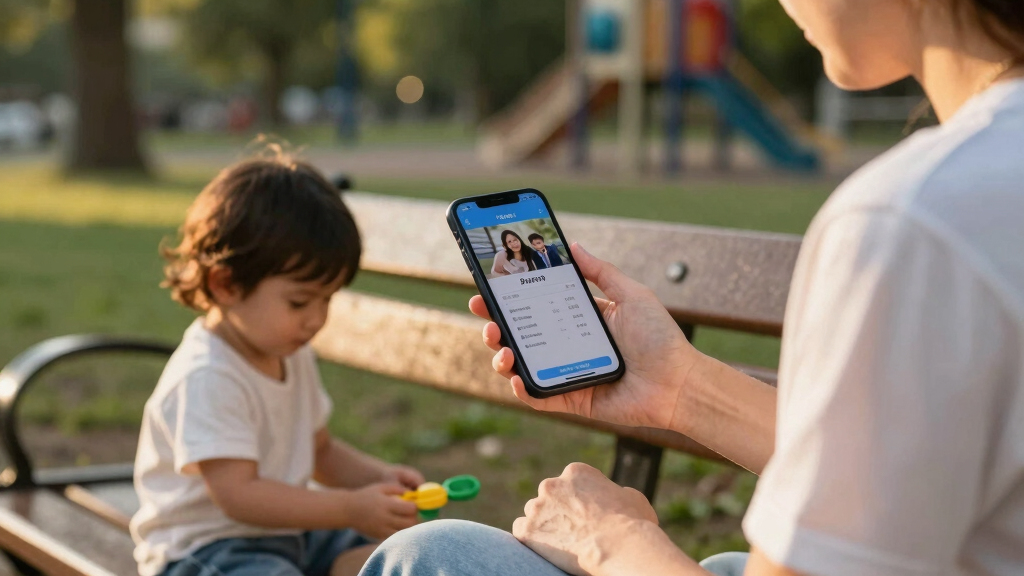

📊 Full opportunity report: Brazil: Pay the Family, Mind the Child on ThorstenMeyerAI.com — validation score, market gap, and execution plan.

Get business pricing on monitors, keyboards and dev gear
- Business-only prices and quantity discounts
- Tax-exempt purchasing
- Multiple users, one account, clear invoices
TL;DR
Brazil’s Bolsa Família program, a pioneering conditional cash transfer scheme, remains central to social policy. Recent developments reinforce its role in reducing poverty and investing in children, though challenges persist.
Brazil’s government has reaffirmed its commitment to the Bolsa Família program, continuing to deliver targeted cash transfers conditioned on children’s school attendance and health checkups, impacting approximately 46 million people nationwide.
Since its consolidation in 2003 under President Lula, Bolsa Família has become a cornerstone of Brazil’s social policy, aimed at reducing intergenerational poverty by incentivizing investments in children’s education and health. The program now reaches roughly a quarter of the population, with payments delivered through the country’s instant-payment system, Pix.
Research indicates that Bolsa Família significantly contributed to declining inequality and poverty levels over its first decade, with estimates suggesting it prevented a substantial rise in extreme poverty. Its targeted, conditional approach has been widely emulated across Latin America and beyond, establishing Brazil as a leader in social policy innovation.
Pay the Family, Mind the Child
The conditional-cash-transfer pioneer: cash in exchange for human-capital investment. Relieve poverty now, break the cycle for the next generation — the model Brazil gave the world.
- a monthly cash transfer
- targeted via the CadÚnico registry
- delivered via Pix (instant, free)
- children enrolled & attending school
- vaccinations kept current
- regular health checkups
Independent commentary, produced with AI assistance under human editorial oversight. The views are the author’s own and may change. This is analysis, not policy, economic, investment, or legal advice. Descriptions of Bolsa Família and its conditionalities, the Cadastro Único, the BPC benefit, and Pix reflect publicly reported information as of mid-2026 and may change; figures are indicative and several are official or institutional estimates. This phase maps differing approaches and endorses none; characterizations of contested arrangements present competing views, not a verdict. Country, program, and company names are referenced for analysis and imply no affiliation.
Impact of Bolsa Família on Poverty and Inequality
Brazil’s continued investment in Bolsa Família underscores its role in alleviating poverty and fostering human capital development. Despite ongoing inequality, the program’s targeted approach has demonstrated measurable success in improving children’s access to education and healthcare, which are critical for breaking the cycle of poverty.
Its model influences global social policy, especially in developing democracies seeking scalable solutions to inequality. However, challenges remain in addressing the program’s limitations and ensuring inclusivity for the most vulnerable families.
child health and education cash transfer program
As an affiliate, we earn on qualifying purchases.
As an affiliate, we earn on qualifying purchases.
Launched in 2003, Bolsa Família was built on earlier social assistance schemes, evolving into a comprehensive conditional cash transfer program. It became a model for targeted social welfare, combining modest cash payments with conditions tied to children’s school attendance and health visits. The program’s design aimed to simultaneously provide immediate relief and invest in future human capital.
Brazil’s social policy landscape includes the Cadastro Único registry for targeting beneficiaries and the Pix payment system, which has modernized delivery. Over two decades, Bolsa Família has faced challenges, including persistent inequality and debates over conditionality’s inclusiveness, but remains a key pillar of the country’s social safety net.
“We are committed to continuing Bolsa Família as a vital tool for fighting poverty and investing in our children’s future.”
— Brazilian government official
As an affiliate, we earn on qualifying purchases.
Unresolved Challenges and Limitations of the Program
It remains unclear how Brazil will address the program’s limitations, such as potential exclusion of the most vulnerable families unable to meet conditionalities or adapt to administrative changes. The long-term impact on structural inequality is also still being evaluated, and debates continue over whether conditionality is the most effective approach.
conditional cash transfer program for families
As an affiliate, we earn on qualifying purchases.
As an affiliate, we earn on qualifying purchases.
Future Policy Directions and Potential Reforms
Brazil’s government is expected to review and potentially refine Bolsa Família’s conditionalities and targeting mechanisms in the coming months. There may also be discussions on expanding or complementing the program with other social initiatives aimed at addressing deeper structural inequalities. Monitoring and evaluation of the program’s impact will likely influence future reforms.
As an affiliate, we earn on qualifying purchases.
Key Questions
How does Bolsa Família work?
It provides monthly cash transfers to low-income families conditioned on children’s school attendance and health checkups, aiming to reduce poverty and invest in human capital.
Has Bolsa Família been effective?
Yes, research shows it has contributed to reducing inequality and poverty, and improved access to education and healthcare for millions of children.
What are the main challenges facing the program?
Challenges include potential exclusion of the most vulnerable families unable to meet conditions, persistent inequality, and debates over conditionality’s fairness and effectiveness.
Will the program change in the future?
The government is expected to review and possibly reform Bolsa Família, with focus on refining conditions and expanding social support measures.
Source: ThorstenMeyerAI.com
Halloween Picks
halloween
As an affiliate, we earn on qualifying purchases.