Choosing the right audio interface for podcasting can significantly impact your sound quality and workflow. The Focusrite Scarlett Solo 4th Gen stands out as the best overall due to its reliable performance and user-friendly design. For those seeking more features, the Zoom AMS-24 offers versatile inputs for multi-mic setups, while the Universal Audio Apollo Twin X provides premium sound quality with professional-grade preamps. The main tradeoffs involve balancing budget with features, ease of use versus expandability, and portability against studio-quality sound. Keep reading for a detailed comparison to help you find the perfect fit for your podcasting needs.

Get business pricing on monitors, keyboards and dev gear
- Business-only prices and quantity discounts
- Tax-exempt purchasing
- Multiple users, one account, clear invoices
Complete the kit


Key Takeaways
- The top performers balance sound quality with user-friendly features, making them suitable for both beginners and pros.
- Budget options like the M-Audio M-Track Duo provide good value but often lack advanced features and build quality.
- Premium interfaces such as the Universal Audio Apollo Twin X deliver superior audio but come at a significantly higher price.
- Portability varies widely; compact interfaces are ideal for on-the-go recording, while larger units offer more inputs and expansion options.
- Build quality and included accessories can vary, affecting long-term durability and ease of setup.
| Focusrite Scarlett Solo 4th Gen USB-C Audio Interface Bundle with Microphone, Headphones, and Accessories |  | Best Overall for Solo Podcasters and Beginners | Power: Bus/External Power | Compatibility: Mac, Windows, iPadOS | Inputs: XLR Mic, 1/4″ Line/Hi-Z | VIEW ON AMAZON | See Our Full Breakdown |
| Focusrite Vocaster Two Studio |  | Best for Broadcast-Quality Podcasting and Quick Setup | Microphone Inputs: 2 | Headphone Outputs: 2 | Gain: Over 70dB | VIEW ON AMAZON | See Our Full Breakdown |
| Zoom AMS-24 USB Audio Interface for Musicians & Podcasters |  | Best for Versatile Streaming and Recording with Multiple Device Compatibility | Inputs: 2 XLR/TRS | Outputs: 4 (2 headphone, 2 main TRS) | Compatibility: PC, Mac, iOS, Android | VIEW ON AMAZON | See Our Full Breakdown |
| MAONO E2 Gen2 Podcast Equipment Bundle Audio Interface Mixer |  | Best All-in-One Bundle with Custom Sound Effects and Bluetooth | Inputs: 2 XLR combo | Preamp Gain: 60dB | Connectivity: USB-C, 3.5mm, Bluetooth | VIEW ON AMAZON | See Our Full Breakdown |
| Focusrite Scarlett Solo 4th Gen USB-C Audio Interface |  | Best Compact Studio-Quality Interface for Musicians | Connectivity: USB-C | Dynamic Range: 120dB | Included Software: Pro Tools Intro+, Ableton Live Lite, Cubase LE, Hitmaker Expansion | VIEW ON AMAZON | See Our Full Breakdown |
| Zoom U-24 Handy Audio Interface, 2-Channel Portable USB Audio Interface, 2 XLR/TRS Combo Inputs, MIDI I/O, RCA Outputs |  | Best for Portability and On-the-Go Recording | Number of Channels: 2 | Supported Software: Pro Tools | First, Ableton Live 9 Lite | Connectivity Technology: USB | VIEW ON AMAZON | See Our Full Breakdown |
| Universal Audio Apollo Twin X DUO Gen 2 with UAD Analog Classics Thunderbolt 3 Audio Interface |  | Best for Professional Studio-Quality Sound | Supported Software: DAW supporting UAD plug-ins | Connectivity Technology: Thunderbolt 3 | Number of Channels: 32 | VIEW ON AMAZON | See Our Full Breakdown |
| Focusrite Scarlett 2i2 Studio (4th Generation) USB-C Audio Interface Bundle with Microphone and Headphones |  | Best for Beginners and All-in-One Setup | Number of Channels: 2 | Supported Software: Ableton, Pro Tools, Hitmaker | Connectivity Technology: USB | VIEW ON AMAZON | See Our Full Breakdown |
| Focusrite Vocaster One | 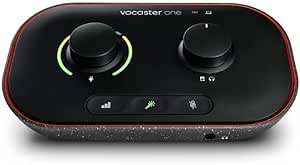 | Best for Solo Podcasters and Vloggers | Supported Software: All audio recording software | Connectivity Technology: USB | Maximum Sample Rate: 48 KHz | VIEW ON AMAZON | See Our Full Breakdown |
| Zoom AMS-44 USB Audio Interface for Musicians & Podcasters, 4 In / 4 Out |  | Best for Multi-Channel Streaming and Recording | Inputs: 4 XLR/TRS combo inputs | Outputs: 4 | Supported Software: Pro Tools, Cubase, GarageBand, YouTube, Twitch | VIEW ON AMAZON | See Our Full Breakdown |
| M-AUDIO M-Track Duo USB Audio Interface |  | Best for Portable Dual-Input Podcasting on a Budget | Audio Resolution: 48kHz | Inputs: 2 combo XLR/Line/Instrument with phantom power | Outputs: 1/4″ headphone and stereo 1/4″ outputs | VIEW ON AMAZON | See Our Full Breakdown |
| audio interface for podcasting | Inputs |
|---|---|
| Focusrite Scarlett Solo 4th Ge | XLR Mic, 1/4" Line/Hi-Z |
| Focusrite Vocaster Two Studio | — |
| Zoom AMS-24 USB Audio Interfac | 2 XLR/TRS |
| MAONO E2 Gen2 Podcast Equipmen | 2 XLR combo |
| Focusrite Scarlett Solo 4th Ge | 1 XLR, 1 Line |
| Zoom U-24 Handy Audio Interfac | — |
| Universal Audio Apollo Twin X | — |
| Focusrite Scarlett 2i2 Studio | — |
| Focusrite Vocaster One | — |
| Zoom AMS-44 USB Audio Interfac | 4 XLR/TRS combo inputs |
| M-AUDIO M-Track Duo USB Audio | 2 combo XLR/Line/Instrument with phantom power |
More Details on Our Top Picks
Focusrite Scarlett Solo 4th Gen USB-C Audio Interface Bundle with Microphone, Headphones, and Accessories
This bundle stands out for its combination of high-quality sound and all-in-one convenience, making it ideal for solo podcasters or singer-songwriters starting out. Compared with the Focusrite Scarlett Solo 4th Gen, it offers a complete package with a microphone and headphones, streamlining the setup process. While it provides excellent 24-bit/192 kHz conversion and a compact design, its limited input count may restrict more complex recording setups, and the bundled accessories might be unnecessary for experienced users. The Solo’s simplicity makes it perfect for newcomers, though those needing multiple microphones or advanced routing may find it limiting.Pros:- High-quality 24-bit/192 kHz audio conversion ensures clear recordings
- Includes microphone, headphones, and accessories for quick setup
- Compact, portable design for recording on the go
Cons:- Limited to one microphone input, restricting multi-mic setups
- Requires external power for some features, reducing portability
Best for: Beginners or solo podcasters seeking a portable, all-in-one starter kit
Not ideal for: Producers or multi-host podcasts requiring more inputs and advanced routing
- Power:Bus/External Power
- Compatibility:Mac, Windows, iPadOS
- Inputs:XLR Mic, 1/4″ Line/Hi-Z
- Outputs:Headphone Out, 2 Monitor Outs
- Conversion:24-Bit / 192 kHz AD/DA
- Phantom Power:48V
Our verdict“This is a solid choice for solo content creators or beginners who want an easy, all-in-one recording solution.”
Focusrite Vocaster Two Studio
The Vocaster Two Studio makes a compelling case for podcasters who prioritize broadcast-quality sound with minimal fuss. Its auto gain and preset modes simplify setup, making it ideal for broadcasters or newcomers who want professional results without complex adjustments. Compared to the Focusrite Scarlett Solo, it offers two microphone inputs and Bluetooth connectivity, which enhances flexibility for mobile use. However, its focus on podcasting and broadcasting means it’s less suitable for musicians or multi-instrument recordings, and its price may be steep for casual users. This model suits those who want a straightforward, high-quality broadcast sound with easy operation.Pros:- Broadcast-quality sound with included microphone and headphones
- Auto gain feature simplifies setup for beginners
- Dual microphone and headphone outputs support multiple hosts
Cons:- Limited to podcasting and broadcasting applications
- Requires external power, reducing portability
Best for: Podcasters and broadcasters seeking professional sound with simple controls
Not ideal for: Musicians or multi-instrument recording setups needing more inputs
- Microphone Inputs:2
- Headphone Outputs:2
- Gain:Over 70dB
- Preset Modes:4
- Included Microphone:Vocaster DM14v
- Connectivity:Bluetooth and TRRS cable
Our verdict“Ideal for podcasters or broadcasters who want professional sound with fast, easy setup.”
Zoom AMS-24 USB Audio Interface for Musicians & Podcasters
The Zoom AMS-24 appeals to users who need flexibility across different platforms, supporting PC, Mac, iOS, and Android. It offers independent headphone mixes and hardware controls, which make it suitable for multi-person podcasts or live streaming. Compared with the Focusrite Vocaster Two, it accommodates more device types and provides multiple output options, though its two-input limitation can restrict more complex recording sessions. The hardware switches and manual controls may pose a learning curve for beginners, but this versatility makes it a strong choice for those integrating various devices and setups.Pros:- Supports a wide range of devices including PC, Mac, iOS, Android
- Provides independent headphone mixes for versatile monitoring
- Multiple outputs support complex routing and streaming
Cons:- Limited to 2 inputs, which may constrain multi-mic recordings
- Hardware switches require manual operation, potentially less intuitive for some
Best for: Content creators requiring multi-device compatibility and independent monitoring
Not ideal for: Casual podcasters or solo streamers with minimal setup needs
- Inputs:2 XLR/TRS
- Outputs:4 (2 headphone, 2 main TRS)
- Compatibility:PC, Mac, iOS, Android
- Features:Loopback, Direct Monitoring
- Hardware controls:Switches for modes
Our verdict“This interface suits multi-device users and streamers who need flexible routing and monitoring options.”
MAONO E2 Gen2 Podcast Equipment Bundle Audio Interface Mixer
The MAONO E2 Gen2 stands out for its combination of recording capabilities and creative sound effects, making it suitable for content creators who want to add flair to their podcasts or streams. Its 2 XLR combo inputs and high-gain preamps support clear voice capture, while Bluetooth and USB-C connectivity add convenience. Compared to the Focusrite Scarlett Solo, it offers customizable sound effects and a longer battery life, though it lacks support for phone charging or power delivery, which might limit portability for mobile use. This model is best for those wanting an all-in-one device with voice modulation and easy connectivity, but less ideal for those seeking studio-grade, multi-mic setups.Pros:- High-quality preamps with up to 60dB gain for clear voice recording
- Versatile connectivity including Bluetooth, USB-C, and 3.5mm ports
- Customizable sound effects and voice modulation features
Cons:- Does not support phone charging or power delivery, limiting mobile use
- No video features included, focused solely on audio
Best for: Podcasters and streamers who want creative sound options and portable recording
Not ideal for: Professional musicians or multi-mic recording environments requiring high fidelity and multiple inputs
- Inputs:2 XLR combo
- Preamp Gain:60dB
- Connectivity:USB-C, 3.5mm, Bluetooth
- Battery Life:Up to 8 hours
- Sound Effects:8 customizable buttons
- Loopback Function:Yes
Our verdict“This bundle works best for content creators seeking creative flexibility and portability in a single device.”
Focusrite Scarlett Solo 4th Gen USB-C Audio Interface
The Focusrite Scarlett Solo 4th Gen excels at providing premium sound in a highly portable form, ideal for musicians or songwriters who want professional-quality recordings without complexity. Its 120dB dynamic range and Air mode enhance vocals and guitar tones, rivaling larger, more expensive interfaces like the Zoom AMS-24. However, with only one XLR and one line input, it falls short for multi-instrument or multi-mic recording needs. Its reliance on a USB-C port makes it straightforward for users with compatible devices, but overkill for casual users who only need basic playback and recording. This interface is best suited for musicians who prioritize sound fidelity and portability.Pros:- High-quality sound with 120dB dynamic range
- Enhanced Air mode for richer vocals and guitar tones
- Includes professional recording software and plugins
Cons:- Limited input options for multi-instrument setups
- Requires a USB-C port, restricting compatibility with older devices
Best for: Musicians and songwriters needing studio-quality sound in a compact package
Not ideal for: Podcasters or streamers requiring multiple microphones and complex routing
- Connectivity:USB-C
- Dynamic Range:120dB
- Included Software:Pro Tools Intro+, Ableton Live Lite, Cubase LE, Hitmaker Expansion
- Inputs:1 XLR, 1 Line
- Features:Air mode, direct monitoring
Our verdict“This compact interface is perfect for musicians who need high-fidelity recordings in a portable form factor.”
Zoom U-24 Handy Audio Interface, 2-Channel Portable USB Audio Interface, 2 XLR/TRS Combo Inputs, MIDI I/O, RCA Outputs
The Zoom U-24 stands out for its compact design and high-resolution 24-bit/96 kHz recording, making it an excellent choice for podcasters who need quality sound without sacrificing mobility. Compared to the Focusrite Scarlett 2i2, it offers similar audio quality but with fewer inputs, which might limit multi-mic setups. Its compatibility with PC, Mac, and iPad adds versatility, though it requires extra adapters for some devices and runs on batteries or external power, which could be inconvenient for continuous use. The inclusion of professional recording software adds value for beginners and mobile creators. However, it’s limited to 2 inputs and lacks built-in power supply, making it less suitable for larger or more complex setups.
Pros:- High-quality 24-bit/96 kHz audio resolution
- Compact and highly portable design
- Compatible with PC, Mac, and iPad
Cons:- Limited to 2 inputs, restricting multi-mic recordings
- Requires batteries or external power, which may be less convenient
Best for: Podcasters who prioritize portability and simple, high-quality recording on multiple devices
Not ideal for: Podcasters needing multi-mic setups or extensive I/O options—this device is too limited for larger productions
- Number of Channels:2
- Supported Software:Pro Tools | First, Ableton Live 9 Lite
- Connectivity Technology:USB
- Maximum Sample Rate:96 KHz
- Item Weight:10.08 ounces
- Supported Devices:PC, Mac, iPad
Our verdict“This interface is perfect for podcasters who need a portable, high-quality option for solo or duo recordings on the go.”
Universal Audio Apollo Twin X DUO Gen 2 with UAD Analog Classics Thunderbolt 3 Audio Interface
The Universal Audio Apollo Twin X DUO Gen 2 is tailored for serious podcasters or home studio owners who demand top-tier sound and real-time processing. Its dual Unison preamps emulate classic analog gear, providing a warmth that surpasses many competitors like Focusrite’s Scarlett series, which focuses more on straightforward usability. Supporting up to 192 KHz, it caters to those who need pristine audio fidelity, though its cost positions it as a premium investment. Its Thunderbolt 3 connectivity limits compatibility mainly to high-end computers, unlike the Zoom AMS-44, which offers broader platform support and more channels. The device’s compact size belies its professional-grade features, but the price and limited input count may deter hobbyists or those with multi-mic needs.
Pros:- Exceptional analog emulation with Unison preamps
- Supports high-resolution audio up to 192 KHz
- Real-time UAD plugin processing for mixing flexibility
- Dual mic preamps for versatile recording
Cons:- Premium price limits accessibility for hobbyists
- Limited input count (only 2 channels), restricting multi-mic recordings
Best for: Professional podcasters or home studio owners who prioritize studio-quality sound and real-time UAD plugin processing
Not ideal for: Beginners or podcasters on a budget who need more inputs or platform flexibility—this is a high-end, high-cost option
- Supported Software:DAW supporting UAD plug-ins
- Connectivity Technology:Thunderbolt 3
- Number of Channels:32
- Maximum Sample Rate:192 KHz
- Item Weight:16 ounces
- Compatible Devices:Personal Computer
Our verdict“Ideal for experienced podcasters seeking studio-grade, professional sound with real-time processing, despite higher costs.”
Focusrite Scarlett 2i2 Studio (4th Generation) USB-C Audio Interface Bundle with Microphone and Headphones
The Focusrite Scarlett 2i2 Studio (4th Gen) bundle delivers a straightforward, high-quality recording solution ideal for newcomers or those wanting a complete kit. Its 24-bit/192 kHz conversion ensures professional-sounding audio, comparable to the more advanced Focusrite Vocaster One but with additional accessories that make setup easier. Unlike the Vocaster One’s single mic input, the Scarlett 2i2 provides two inputs, making it more versatile for multi-mic podcasts. The included microphone and headphones add value, though some users may find the bundled accessories basic for more advanced recording environments. Its USB-C connectivity supports modern computers, but its limited input channels restrict use for complex multi-mic recordings.
Pros:- High-quality 24-bit/192 kHz audio
- Includes microphone, headphones, and accessories
- User-friendly with auto gain and clip safe controls
Cons:- Limited to 2 inputs, restricting multi-mic configurations
- Accessories may be too basic for more advanced needs
Best for: Beginners, small-scale podcasters, or streamers seeking an all-in-one starter pack with high-quality audio
Not ideal for: Advanced users or multi-mic setups needing more inputs—this device suits simple, solo or duo podcasts better
- Number of Channels:2
- Supported Software:Ableton, Pro Tools, Hitmaker
- Connectivity Technology:USB
- Maximum Sample Rate:192 KHz
- Operating System:Windows, macOS
- Item Weight:1.2 pounds
Our verdict“This bundle offers a solid, easy-to-use platform for beginners or small podcasts seeking quality and convenience.”
Focusrite Vocaster One
The Focusrite Vocaster One is designed specifically for solo podcasters and content creators, offering over 70dB of gain and automatic level adjustment that simplifies setup. Its multiple connectivity options accommodate microphones, smartphones, and cameras, making it highly adaptable for on-the-go recording or live streaming. Compared to the Zoom AMS-44, which is more suited for multi-channel recording, the Vocaster One’s single mic input makes it a better choice for individual creators who want professional sound with minimal fuss. Its limited to one channel, so it’s not suitable for multi-mic setups or larger podcasts. It also lacks bundled accessories, relying on compatible devices and software.
Pros:- High gain over 70dB for clear voice capture
- Auto level adjustment simplifies recording
- Multiple connectivity options for versatile setup
Cons:- Limited to a single microphone channel
- No bundled accessories, may require additional equipment
Best for: Solo podcasters, vloggers, or streamers who need a compact, all-in-one solution for high-quality voice recording
Not ideal for: Podcasters with multi-mic or multi-guest needs—this device is optimized for single-channel use only
- Supported Software:All audio recording software
- Connectivity Technology:USB
- Maximum Sample Rate:48 KHz
- Supported Devices:Microphone, PC, Tablet, Smartphone, Camera
- Item Dimensions:4.45″D x 7.66″W x 1.99″H
- Item Weight:349 g
Our verdict“Best suited for solo creators needing a straightforward, high-quality interface with automatic level control.”
Zoom AMS-44 USB Audio Interface for Musicians & Podcasters, 4 In / 4 Out
The Zoom AMS-44 offers four inputs and four outputs, making it a versatile choice for podcasters who need more channels than typical 2-in interfaces like the Focusrite Scarlett 2i2. Its support for multiple modes, real-time zero-latency monitoring, and compatibility with major streaming platforms such as YouTube and Twitch, make it ideal for multi-mic setups or complex live streams. Unlike the Apollo Twin X, which emphasizes studio-grade recording, the AMS-44 prioritizes flexibility and ease of use across various platforms. Its USB-C or battery power options enhance portability, but the device’s 4-channel limitation could be restrictive for larger multi-mic productions and requires a stable power source for full mobility.
Pros:- Four inputs and four outputs for multi-mic and multi-device setups
- Zero-latency real-time monitoring and loopback features
- Portable with USB-C or battery power options
Cons:- Limited to 4 channels, not suitable for large multi-mic productions
- Requires USB-C or batteries, adding some setup considerations
Best for: Podcasters or streamers needing multiple inputs for multi-mic setups or multi-source streaming
Not ideal for: Solo podcasters or those with simple setups who won’t utilize all 4 inputs and outputs—this might be overkill
- Inputs:4 XLR/TRS combo inputs
- Outputs:4
- Supported Software:Pro Tools, Cubase, GarageBand, YouTube, Twitch
- Maximum Sample Rate:192 KHz
- Frequency Response:96 KHz
- Power Source:USB-C or 2 AA batteries
- Item Weight:320 g
Our verdict“This interface is perfect for podcasters and streamers who need multiple sources without sacrificing portability.”
M-AUDIO M-Track Duo USB Audio Interface
The M-AUDIO M-Track Duo stands out as a compact and versatile option for podcasters who need a reliable interface without complex features. Compared with the Focusrite Scarlett Solo 4th Gen, it offers two combo inputs, which is ideal for recording two microphones simultaneously—perfect for interviews or co-hosted shows. Its 48kHz audio resolution ensures clear sound, and the inclusion of MPC Beats makes it a good entry point for content creators who also want to experiment with music. However, its limitation to only two inputs makes it less suitable for multi-mic setups or expanding future recording needs. The absence of bundled microphones or additional accessories means you’ll need to purchase those separately, adding to overall cost. The zero-latency monitoring and versatile phantom-powered inputs give it a professional edge despite its compact size.
Pros:- High-quality 48kHz audio resolution for clear podcast recordings
- Versatile combo XLR/Line/Instrument inputs with phantom power
- Zero latency monitoring with USB/Direct switch for real-time audio control
Cons:- Limited to only two inputs, which may restrict multi-mic or multi-instrument setups
- No bundled microphones or accessories, requiring additional purchases
Best for: Podcasters who prioritize portability and require a straightforward, dual-mic setup for interviews or solo recordings.
Not ideal for: Content creators planning to grow into multi-mic or multi-instrument recordings, as the interface’s two-input limit restricts expansion.
- Audio Resolution:48kHz
- Inputs:2 combo XLR/Line/Instrument with phantom power
- Outputs:1/4″ headphone and stereo 1/4″ outputs
- Software:Includes MPC Beats
- Monitoring:Zero latency monitoring
- Connectivity:USB
- Form Factor:Portable
- Power:Bus-powered via USB
Our verdict“This interface is ideal for solo podcasters or interviewers seeking portability and quality without complexity.”

How We Picked
Products were selected based on their performance, usability, build quality, and value for podcast creators. We prioritized interfaces with reliable preamps, low latency, and ease of connection to popular recording setups. Compatibility with both Windows and Mac was essential, along with features like multiple inputs and headphone outputs. We also considered price points across different budgets to recommend options suitable for beginners and professionals alike. The ranking reflects a balance of these factors, highlighting options that excel in specific areas such as value, portability, and overall performance.Factors to Consider When Choosing Audio Interface For Podcasting
When choosing an audio interface for podcasting, it’s important to consider several key factors that influence your recording quality, workflow, and long-term satisfaction. Not all interfaces are created equal, and understanding these aspects can prevent costly mistakes and ensure you pick a device that truly meets your needs.Number and Type of Inputs
Consider how many microphones or instruments you’ll need to connect simultaneously. Most podcast setups require at least two inputs for hosts and guests, but larger interviews or multi-mic recordings may need more. Look for interfaces with XLR inputs for microphones and TRS/Line inputs if you plan to connect external gear. Opting for more inputs than you currently need can provide future flexibility, but avoid overly complex setups if you only record solo podcasts—the added cost and complexity may not be justified.
Sound Quality and Preamps
High-quality preamps are essential for capturing clear, warm audio, especially if you plan to record in less-than-ideal environments. Cheaper interfaces often have basic preamps that can introduce noise or distortions, which can be detrimental to your podcast’s professionalism. Investing in a model with reputable preamps, like those from Focusrite or Universal Audio, can make a noticeable difference in your final sound, especially when recording multiple guests or using dynamic microphones.
Connectivity and Compatibility
Ensure the interface connects easily to your computer via USB, Thunderbolt, or USB-C, depending on your setup. Compatibility with your operating system (Windows or Mac) is crucial to avoid driver issues. Some interfaces also include MIDI I/O, useful if you plan to incorporate external synths or controllers. Consider whether the device supports your preferred recording software and whether it offers features like direct monitoring, which can help you track your audio in real time without latency.
Portability and Size
If you record on the move or in multiple locations, a compact, bus-powered interface is beneficial. Larger desktop units typically offer more inputs and advanced features but are less portable. Think about your typical recording environment and whether a lightweight, portable device can suffice or if a larger, more feature-rich unit is worth the extra space and weight. Remember, portability often means a tradeoff in expandability and sometimes in build quality.
Budget and Long-term Value
While budget options can serve entry-level needs, they may lack durability or advanced features that become important as your setup grows. Conversely, spending more on a premium interface can provide better sound, longevity, and future-proofing, but it might be unnecessary if you’re just starting. Balance your current needs with potential future upgrades, and consider investing in a slightly higher-quality device if you anticipate expanding your podcasting setup or requiring professional-grade audio.
Frequently Asked Questions
Do I need an audio interface if I only record one microphone?
While it’s possible to record directly into a computer without an interface using a built-in mic, an audio interface greatly improves sound quality and provides better preamps for clearer, more natural recordings. Even with a single microphone, an interface offers direct monitoring options to prevent latency issues, making your recording process smoother. For serious podcasting, investing in an interface ensures higher fidelity and more professional results, especially as your setup grows.
Can I use a USB microphone instead of an audio interface?
Yes, USB microphones are a convenient alternative and are often sufficient for beginners or simple setups. However, they generally don’t match the sound quality, flexibility, and expandability of traditional audio interfaces paired with XLR microphones. Using an interface allows access to better preamps and a wider range of microphone choices, which can significantly improve your podcast’s audio quality as you progress.
Is it better to get a small portable interface or a larger studio model?
This depends on your recording environment and future plans. Portable interfaces are ideal if you record on the go, travel frequently, or have limited space. Larger studio models usually provide more inputs, better preamps, and additional features suited for multi-mic setups or complex productions. Consider whether portability or expandability is more important for your current and future podcasting needs.
How important are preamp quality and input types for podcasting?
Preamps significantly influence your audio clarity and warmth. High-quality preamps reduce noise and distortion, ensuring your voice sounds professional. Input types matter too—XLR inputs are standard for microphones, offering better sound quality and durability. If you plan to record with dynamic or condenser mics, choosing an interface with suitable inputs and preamps can make a tangible difference in your final recordings.
Should I prioritize features like MIDI I/O or multiple outputs?
Features like MIDI I/O and multiple outputs are more relevant if you work with external instruments or require advanced routing options. For typical podcasting setups, these features are unnecessary and may add cost and complexity. Focus on core features such as microphone inputs, preamp quality, and direct monitoring, which directly impact your recording quality and workflow.
Conclusion
For those starting out or recording solo podcasts, the Focusrite Scarlett Solo 4th Gen offers a reliable balance of quality and simplicity. If you need a versatile setup with multiple inputs or plan to record guests simultaneously, the Zoom AMS-24 provides excellent flexibility. Podcast creators seeking the best sound quality and professional features should consider the Universal Audio Apollo Twin X. Budget-conscious beginners will find the M-AUDIO M-Track Duo a solid choice, while more advanced users aiming for portability might prefer compact options like the Zoom U-24. Your ideal pick depends on your recording environment, future needs, and budget constraints.
As an affiliate, we earn on qualifying purchases.Halloween Picks
halloween