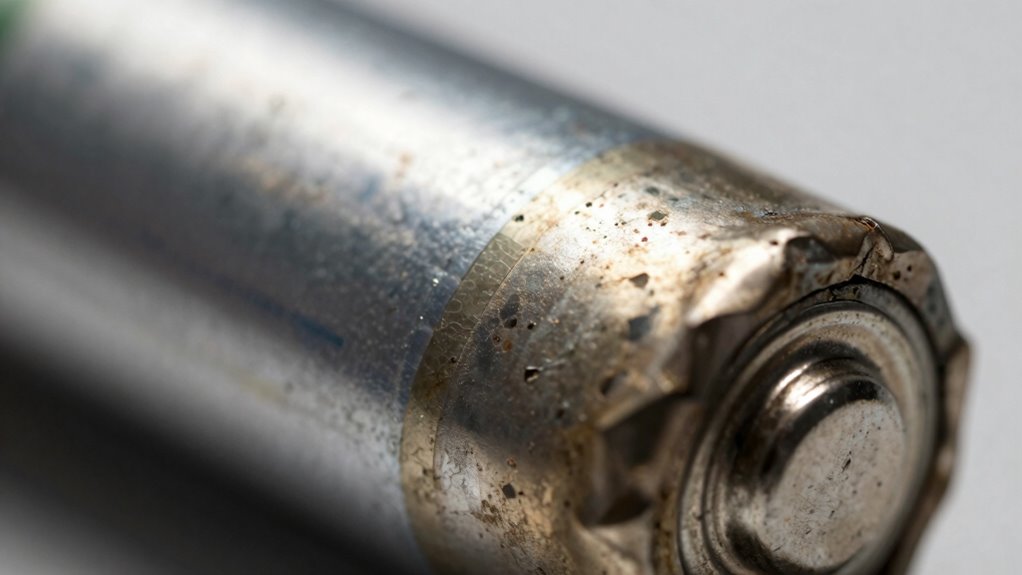
Batteries die over time because chemical reactions inside them slowly degrade their components, creating unwanted byproducts and damaging the electrodes. Repeated charging and discharging cause structural wear, while high temperatures speed up these processes. Signs include shorter battery life, swelling, or charging issues. Different chemistries impact lifespan, but managing charge levels and keeping batteries cool can help. To discover how future tech might make batteries last longer, keep exploring more about their science and advancements.
Key Takeaways
- Chemical reactions inside batteries create unwanted materials that block ion flow, reducing capacity over time.
- Temperature fluctuations accelerate chemical reactions and electrolyte breakdown, speeding up battery degradation.
- Repeated charge cycles cause structural wear in electrodes, leading to capacity loss and dead zones.
- Active materials break down during use, decreasing energy storage ability and shortening battery lifespan.
- Proper charging, cooling, and recycling help slow capacity fade and extend battery life.
What Causes Batteries to Lose Capacity Over Time
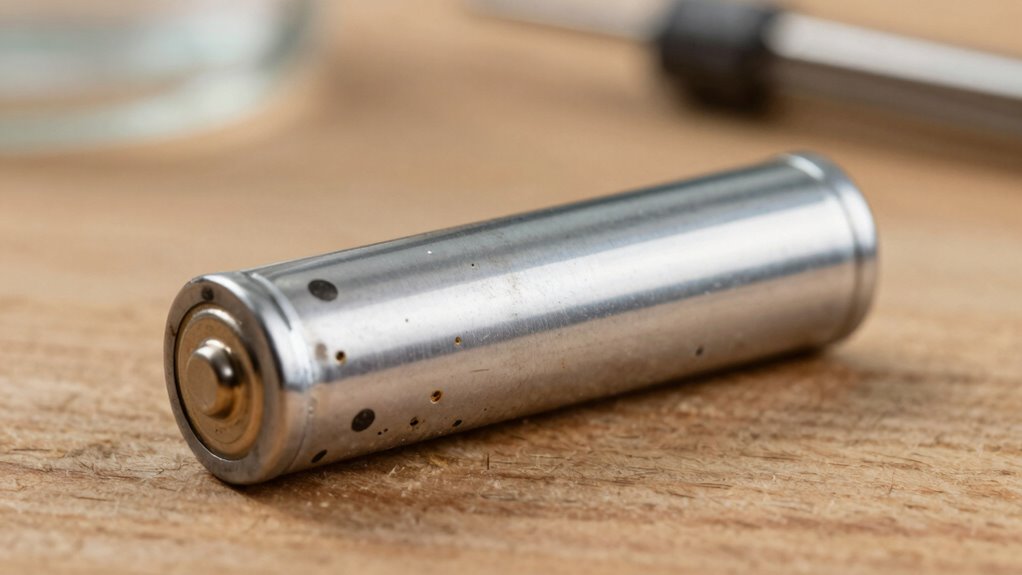
Batteries naturally lose capacity over time because their internal chemical reactions gradually degrade. This affects their battery lifespan and capacity retention, meaning they hold less charge as they age. When you use a battery, the chemical processes inside cause tiny changes that add up over many cycles. These changes reduce the battery’s ability to store and release energy efficiently. As a result, your device doesn’t last as long on a single charge, and the battery’s overall health declines. While normal use causes some capacity loss, extreme conditions like high temperatures or frequent charging can speed up this process. Understanding these fundamental factors helps you realize why batteries weaken over time and why their capacity retention diminishes with age. Battery chemistry plays a key role in how quickly these changes occur. Additionally, internal degradation is influenced by factors such as charge cycles and environmental conditions, which accelerate capacity fade over time. Proper management of charge cycles can help extend the lifespan of your batteries and slow down capacity loss. Recognizing these chemical reactions can help in choosing better battery storage and usage practices to prolong battery life. To further minimize capacity fade, maintaining optimal charger settings and avoiding extreme temperatures are essential practices.
How Chemical Reactions Inside Batteries Lead to Capacity Fade
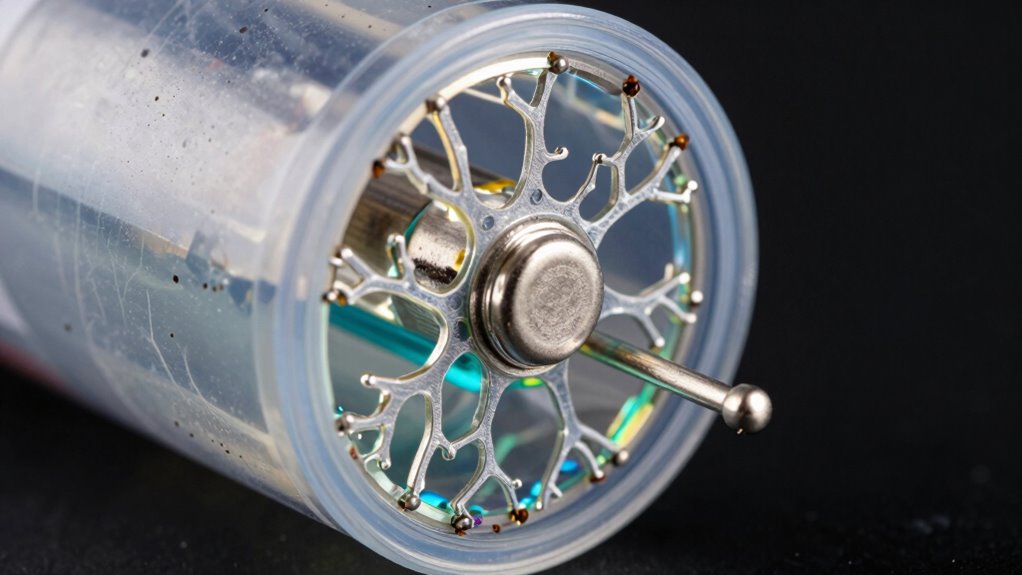
Inside your battery, electrochemical reactions convert chemical energy into electrical energy, but over time, these reactions cause issues. Solid electrolyte formation and other side reactions lead to the buildup of unwanted materials that block current flow. As a result, you lose active material, and your battery’s capacity gradually diminishes. Capacity fade occurs because these chemical changes reduce the amount of usable energy stored in the battery. These processes are influenced by chemical stability, which determines how long the battery can maintain its performance before degrading. Furthermore, material degradation can cause structural changes within the battery, accelerating capacity loss. Additionally, temperature fluctuations can accelerate these reactions, further impacting battery longevity. Proper management of thermal conditions can help slow down these detrimental effects and extend the battery’s useful life.
Electrochemical Reactions Explained
Electrochemical reactions are at the heart of how batteries store and release energy. These processes involve the movement of ions between the battery’s electrodes through the electrolyte. When you charge or use a battery, ions transfer from one electrode to another, creating a flow of electrons that powers your device. During discharge, chemical reactions convert stored energy into electrical energy; during charging, the reactions reverse. Over time, these electrochemical processes cause changes in the electrodes, such as the buildup of unwanted compounds or structural damage. This degradation reduces the battery’s ability to transfer ions efficiently, leading to capacity fade. Practically, each cycle slightly alters the internal chemistry, making it harder for the battery to perform like new. Electrochemical reactions are also influenced by temperature and the quality of materials used, which can accelerate or slow down capacity loss over time. Additionally, impurities or material degradation within the electrodes can further impair the battery’s performance. Factors like chemical stability also play a significant role in how well a battery maintains its capacity over repeated cycles.
Formation of Solid Electrolyte
As chemical reactions repeatedly occur during charging and discharging, they can produce unwanted byproducts that gradually accumulate on the electrodes. One such byproduct is the solid electrolyte, which forms through a process called solid electrolyte formation. This buildup creates an extra layer between the electrode and electrolyte, making it harder for ions to flow and reducing capacity over time. To prevent dangerous issues like dendrite growth—tiny, needle-like structures that can cause short circuits—battery designers incorporate dendrite suppression strategies. These measures help control how the solid electrolyte forms, minimizing damage and maintaining safety. However, even with these protections, continuous solid electrolyte formation contributes to capacity fade, slowly diminishing your battery’s ability to hold a charge. Understanding capacity fade is crucial for designing longer-lasting batteries and ensuring safe operation over time. Additionally, advancements in battery technology aim to develop materials that resist solid electrolyte buildup, thereby improving overall longevity. Researchers are actively exploring new materials that can better manage chemical reactions and reduce unwanted byproduct formation, leading to more durable batteries.
Loss of Active Material
Over time, chemical reactions within the battery cause some of the active material on the electrodes to break down or become unusable. As this happens, the electrode degradation reduces the amount of active material available for energy storage. When the active material diminishes, your battery can’t hold as much charge, leading to capacity fade. This process is influenced by wall art trends, which incorporate innovative materials and designs that can also undergo degradation over time. The breakdown of active material also creates dead zones on the electrodes, interrupting the flow of ions. electrode degradation is a gradual process that worsens with repeated charge and discharge cycles, limiting your battery’s ability to deliver power and decreasing its overall lifespan. Understanding electrode degradation mechanisms can help in developing better battery materials that resist capacity fade. Keeping an eye on electrode degradation helps explain why batteries gradually lose their capacity.
How Charging and Discharging Cycles Wear Out Batteries
Every time you charge and discharge a battery, you’re gradually wearing it out. This process causes tiny changes inside the battery that affect its capacity and battery longevity. Think of it like this:
Charging and discharging slowly wears out your battery over time.
- The repeated movement of ions weakens the internal structure.
- The formation of tiny cracks on electrodes reduces efficiency.
- Loss of active material diminishes the battery’s ability to store energy.
- Electrolyte breakdown hinders ion flow, speeding up capacity decline.
- Proper maintenance and avoiding extreme charge levels can help maximize battery life.
- Understanding capacity fade helps in choosing better batteries and managing their lifespan.
- Managing heat buildup during charging can reduce stress on internal components and extend battery life.
- Using high-quality components can also help minimize the effects of internal degradation.
Over many cycles, these effects accumulate, making your battery less able to hold a full charge. That’s why batteries have a limited lifespan—they slowly lose capacity after each cycle. To maximize battery life, it’s best to avoid deep discharges and excessive charging cycles that speed up wear and tear.
How High Temperatures Speed Up Battery Deterioration

High temperatures accelerate the chemical reactions inside your battery, causing it to deteriorate faster. This thermal effect speeds up the breakdown of active materials, reduces capacity, and shortens lifespan. Effective heat management is essential to prevent overheating and slow capacity fade. When batteries run hot, the increased thermal effects can lead to electrolyte evaporation and electrode degradation. To help you understand, here’s a quick overview:
| Temperature Impact | Key Effect | Recommended Action |
|---|---|---|
| 40°C (104°F) | Accelerates chemical reactions | Use cooling systems |
| 50°C (122°F) | Causes electrolyte loss | Avoid prolonged exposure |
| 60°C (140°F) | Deteriorates electrode material | Improve ventilation |
| 70°C (158°F) | Rapid capacity fade | Turn off device quickly |
| 80°C (176°F) | Severe damage, battery failure | Seek professional repair |
Signs That Your Battery Is Deteriorating and When to Replace
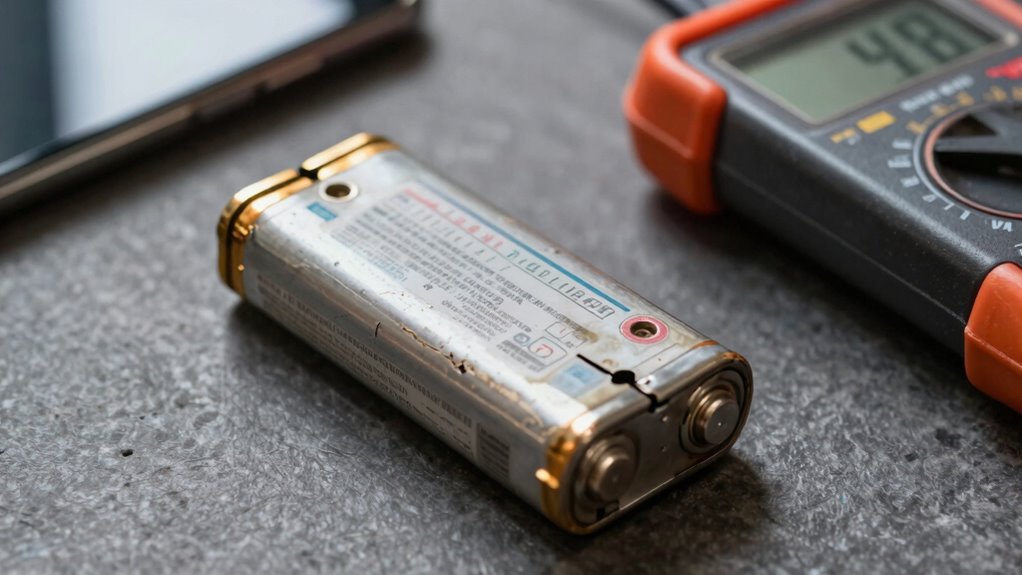
As your battery ages, you’ll notice several signs indicating it’s no longer performing at its best. First, your device might take longer to charge or unexpectedly shut down. Second, battery life becomes noticeably shorter, forcing you to recharge more often. Third, you might see the battery percentage fluctuate or drain quickly. Fourth, physical signs like swelling or leakage could appear. When you notice these signs, it’s time to contemplate replacing your battery to avoid further damage. Proper disposal is essential; recycling batteries reduces environmental impact and supports sustainable practices. Ignoring signs of deterioration can lead to hazardous waste and increased pollution. Recognizing these indicators helps you act responsibly and promotes efficient battery recycling. Don’t delay—your device and the environment will thank you.
How Battery Chemistry Affects Longevity and Capacity Loss

Battery chemistry plays a significant role in how long your device’s battery lasts and how quickly it loses capacity over time. Electrode stability is vital because unstable electrodes can degrade faster, reducing overall battery life. Different chemistries, like lithium-ion or nickel-metal hydride, have varying levels of stability, affecting how well they hold charge over numerous cycles. Electrolyte composition also impacts longevity; a stable electrolyte minimizes side reactions that cause capacity fade. For example, certain electrolytes resist decomposition, preserving the battery’s ability to store energy. In contrast, unstable electrolytes accelerate capacity loss by forming solid deposits or damaging electrodes. By understanding how electrode stability and electrolyte composition influence these processes, you get a clearer picture of why some batteries last longer and maintain capacity better than others.
Tips to Minimize Capacity Fade and Extend Battery Life
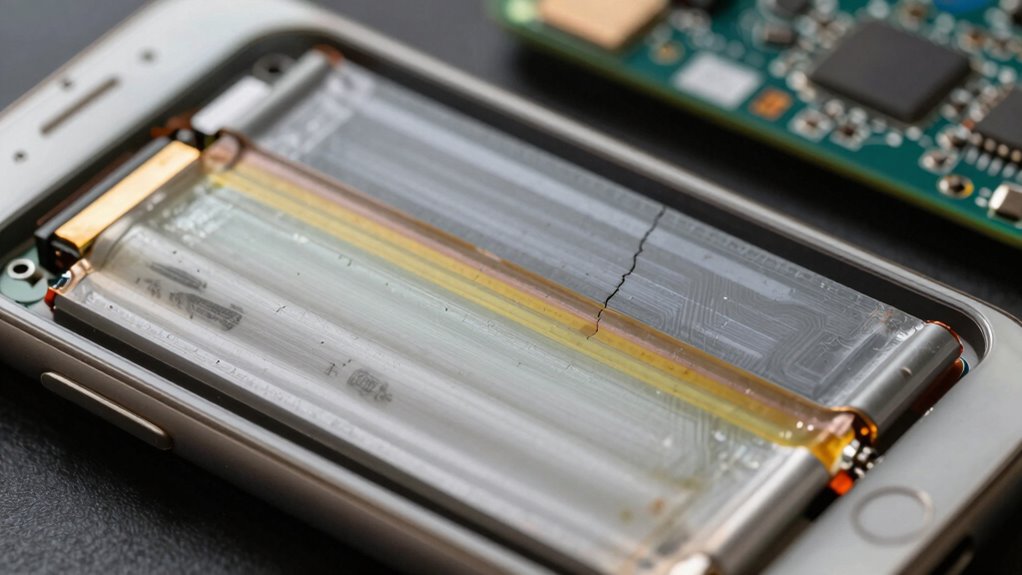
To minimize capacity fade and extend your battery’s lifespan, adopting good charging habits is essential. First, avoid letting your battery drain completely; keep it between 20% and 80% charge. Second, use chargers designed for your device to prevent overcharging, which accelerates capacity loss. Third, keep your device in a cool environment, as heat speeds up battery degradation. Fourth, consider recycling old batteries responsibly—this supports sustainable practices and renewable energy initiatives. By following these tips, you help reduce unnecessary capacity fade. Additionally, participating in battery recycling programs lessens environmental impact. Proper care not only prolongs your battery life but also contributes to a healthier planet by promoting renewable energy use and responsible disposal.
Can Battery Technology Improve to Reduce Capacity Loss?
Advances in electrode materials can make batteries more durable and better at holding a charge. Improved battery management systems help prevent overcharging and overheating, extending lifespan. Innovative manufacturing techniques also reduce defects, leading to longer-lasting batteries with less capacity loss.
Advanced Electrode Materials
Enhancing electrode materials offers a promising path to reducing capacity loss in batteries. Through advanced electrode engineering, researchers are developing materials with improved stability and longevity. Imagine:
- Using stronger, more resilient compounds that resist breaking down during charge cycles.
- Incorporating nanostructures that allow faster electron flow and reduce wear.
- Applying coatings that prevent degradation caused by side reactions.
- Designing flexible, durable electrodes that maintain their shape over many cycles.
These innovations focus on material stability, making electrodes more resistant to the damage that causes capacity fade. By improving electrode materials, you can extend battery life and enhance performance. This approach paves the way for batteries that last longer and perform better in your devices.
Improved Battery Management
Improved battery management systems can substantially reduce capacity loss by optimizing how batteries are charged and discharged. Proper management minimizes electrode degradation, which is a major cause of capacity fade. For example, smart charging algorithms prevent overcharging, extending battery life. Additionally, they help coordinate battery recycling efforts, ensuring materials are reused efficiently and reducing waste. Better management also involves balancing cells to avoid uneven aging, which accelerates capacity loss. By monitoring temperature, voltage, and current closely, you can preserve battery health longer. Here’s a quick overview:
| Benefit | Action | Result |
|---|---|---|
| Reduces electrode degradation | Smart charging algorithms | Longer-lasting batteries |
| Promotes battery recycling | Proper disposal & reuse | Less environmental waste |
| Prevents capacity fade | Cell balancing & monitoring | Sustained performance |
Innovative Manufacturing Techniques
Innovative manufacturing techniques are opening new possibilities for minimizing capacity loss in batteries. These advances focus on creating better materials and structures to combat issues like electrode degradation. For example, manufacturers are:
- Using solid electrolytes that reduce internal resistance and prevent dendrite formation.
- Employing precision layering to ensure uniform electrode coatings, minimizing hotspots.
- Incorporating nanostructured materials to enhance electrode stability over charge cycles.
- Applying advanced sealing methods to prevent moisture and impurities from accelerating degradation.
These techniques help keep the electrodes intact longer and reduce capacity fade. By improving solid electrolyte interfaces and reducing electrode degradation, batteries can last longer and perform better. These innovations hold promise for more durable, reliable energy storage solutions in the future.
Future Advances That Could Help Batteries Last Longer
Researchers are exploring new materials and designs that could extend battery life considerably in the future. Advances like solid-state batteries promise longer lifespan and improved safety. These innovations reduce capacity fade and help batteries hold charge longer over time. Additionally, better battery recycling techniques can recover valuable materials, making batteries more sustainable and less prone to degradation from contaminated components. As renewable energy sources become more prevalent, longer-lasting batteries will store energy more efficiently, reducing waste and environmental impact. These developments could lower the frequency of replacements, saving you money and reducing electronic waste. By focusing on innovative materials and sustainable practices, scientists aim to create batteries that are not only more durable but also environmentally friendly, supporting a cleaner, more resilient energy future.
Frequently Asked Questions
Can Environmental Factors Affect Battery Lifespan Besides Temperature?
Environmental factors like humidity effects and sunlight exposure can definitely impact your battery’s lifespan. High humidity can cause corrosion and damage internal components, leading to capacity fade. Sunlight exposure, especially heat from direct sunlight, accelerates chemical reactions inside the battery, shortening its life. To extend your battery’s life, keep it in a cool, dry place and avoid exposing it to excessive sunlight. Proper care helps maintain best battery performance over time.
How Do Different Battery Types Compare in Capacity Fade?
Imagine your battery’s capacity retention is a race, and different chemistries run at different speeds. Lithium-ion batteries excel, barely losing a whisper of power over time, while nickel-cadmium ones fade like a dying star, rapidly shrinking in capacity. Your choice of battery chemistry determines how long it keeps its punch, with some fading faster than others, so pick wisely to keep your device alive and thriving longer.
Are There Ways to Repair or Rejuvenate Aging Batteries?
You can sometimes repair or rejuvenate aging batteries through chemical rejuvenation, which involves restoring the chemical balance inside the cell. Recycling old batteries also helps recover valuable materials and reduce waste. While DIY methods exist, professional services often perform safe, effective rejuvenation processes. Keep in mind, though, that these methods may not fully restore capacity, but they can extend your battery’s life and improve performance.
What Role Do Manufacturing Quality and Standards Play in Battery Longevity?
Manufacturing quality directly impacts your battery’s lifespan, unlike poorly made ones that fade quickly. When manufacturers prioritize manufacturing consistency and quality assurance, they ensure each cell performs reliably and endures longer. Conversely, subpar standards introduce defects and inconsistencies that accelerate capacity fade. So, if you want your battery to last, choose products from brands committed to strict quality assurance and manufacturing standards—your device’s longevity depends on it.
How Does Storage Condition Impact Battery Capacity Over Time?
Poor storage conditions can markedly reduce your battery’s capacity over time. If you expose it to extreme temperatures or high humidity, it compromises storage stability, leading to faster capacity fade. Keep batteries in a cool, dry place and avoid environmental exposure to heat or moisture. Proper storage helps maintain their health, extending lifespan and ensuring better performance when you need it most.
Conclusion
Now that you understand what causes your battery’s energy to fade, you hold the power to protect it. Treat it gently—avoid extremes, don’t overcharge, and keep it cool. Think of your battery as a delicate garden that needs care to bloom longer. With a little attention, you can keep your device humming and your power lasting, turning your battery’s quiet decline into a resilient, enduring spark of life.