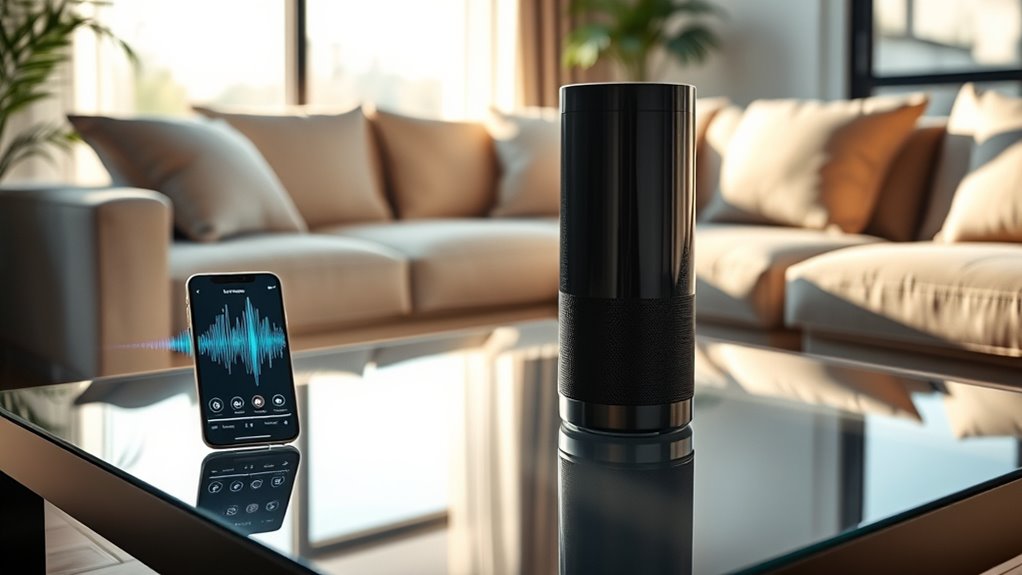

AI assistants like Siri and Alexa understand you through advanced voice recognition technology. They listen closely to your spoken commands, analyzing words, context, and even your tone. This helps them adapt to your unique voice and preferences over time. Whether it’s adjusting to noisy environments or recognizing your habits, these assistants personalize your experience. They’re designed to make interactions feel natural and intuitive. Discovering how they learn and evolve can enhance your connection with these digital companions.
Key Takeaways
- AI assistants use advanced voice recognition technology to accurately interpret spoken commands and user intentions.
- They analyze speech patterns, including accents and emotional nuances, to enhance understanding.
- Learning from user interactions over time helps them recognize preferences and improve response accuracy.
- Contextual adaptability allows assistants to adjust responses based on environmental factors like noise levels.
- These technologies work together to create a seamless, intuitive communication experience for users.

Have you ever wondered how AI assistants like Siri and Alexa have transformed the way we interact with technology? These digital helpers have made daily tasks easier, but their capabilities extend far beyond basic commands. At the heart of their functionality lies sophisticated voice recognition technology, which allows them to understand and respond to your voice in real-time. This isn’t just about recognizing words; it’s about grasping context and intent, which makes your interactions feel more natural and intuitive.
AI assistants like Siri and Alexa transform our tech interactions, utilizing advanced voice recognition to understand context and intent seamlessly.
When you ask your assistant to set a reminder or play your favorite song, it’s not just a simple command. The voice recognition system analyzes your speech patterns, accents, and even the emotional nuances in your tone. This means that even if you have a unique way of speaking, Siri and Alexa can still comprehend your requests effectively. As you continue to use these assistants, they adapt and learn from your voice, gradually improving their accuracy. This dynamic learning process is what makes your experience increasingly seamless.
Moreover, user personalization plays a *vital* role in enhancing your interaction with these AI assistants. The more you use them, the better they get at understanding your preferences. For instance, if you frequently ask for weather updates, Alexa might start offering forecasts without you even needing to ask. It learns your patterns and anticipates your needs, making it feel like a personalized service tailored just for you. This level of customization not only saves time but contributes to a stronger bond between you and your digital assistant.
AI assistants also take into account the different contexts in which you use them. If you’re in a quiet environment, they might respond softly, while in a bustling space, they’ll adjust their volume accordingly. This adaptability enhances the user experience, allowing you to interact with technology in a way that feels more human and less mechanical.
In essence, the combination of advanced voice recognition and user personalization makes AI assistants like Siri and Alexa more than just tools; they’re companions that understand you. As you continue to engage with them, you’ll find that they not only simplify your life but also evolve alongside you, creating a more connected and efficient way to manage your day-to-day activities. So, the next time you ask a question, remember that there’s a lot more happening behind the scenes than you might realize. Additionally, the importance of voice recognition technology cannot be understated, as it is crucial for ensuring seamless interactions with these digital assistants.
Frequently Asked Questions
How Do AI Assistants Recognize Different Accents and Dialects?
AI assistants recognize different accents and dialects through advanced speech training and accent adaptation techniques. They analyze vast amounts of spoken data, learning how various accents sound and the unique pronunciations involved. When you speak, they compare your voice to their extensive database, adapting to your specific accent over time. This continuous learning process helps improve accuracy, making it easier for you to communicate naturally with the assistant, no matter your dialect.
Can AI Assistants Understand Multiple Languages Simultaneously?
Oh sure, your AI assistant can juggle languages like a circus performer, but don’t expect it to understand your grandma’s dialect while switching to Shakespearean English! Yes, they’ve got some multilingual capabilities, allowing them to handle various languages, but language switching can trip them up. They’ll often need a moment to catch their breath. So, while they try their best, don’t be surprised if your assistant gets a little confused!
How Do AI Assistants Handle Background Noise During Voice Recognition?
AI assistants handle background noise during voice recognition using advanced noise suppression techniques and acoustic modeling. They filter out unwanted sounds, focusing on your voice instead. When you speak, the assistant analyzes the acoustic patterns, distinguishing your speech from the noise around you. This allows you to interact seamlessly, even in noisy environments. So, whether you’re in a bustling café or a crowded room, your assistant can still understand you clearly.
Are AI Assistants Capable of Learning User Preferences Over Time?
Absolutely, AI assistants can learn your preferences over time! Isn’t it great when they start suggesting things you actually like? They use personalization algorithms to analyze your user behavior, adapting their responses and recommendations accordingly. As you interact more, they refine their understanding of your likes and dislikes. This continuous learning process creates a more tailored experience, making your interactions smoother and more enjoyable. You’ll appreciate how well they get to know you!
What Privacy Measures Are in Place for Voice Recordings?
Voice recordings are protected by various privacy measures. Companies use voice data encryption to secure your recordings, ensuring that only authorized parties can access them. Plus, user consent policies play a vital role; you usually need to agree to data collection before any recordings occur. This transparency helps you understand how your data is used and gives you control over your privacy. Always check settings to manage your preferences effectively!
Conclusion
Just like a skilled translator at a bustling market, AI assistants like Siri and Alexa bridge the gap between your words and their understanding. They listen, decipher, and respond, turning your thoughts into actions with remarkable ease. Imagine a friendly guide steering through a vast city of information, leading you to the answers you seek. As technology evolves, these digital companions will continue to enhance their skills, ensuring that your voice is always heard and understood in this busy marketplace of ideas.