

Automated API testing platforms can mean a visual API client, a code-based test framework, or a guide that teaches you to build repeatable checks with one. From this lineup, I’d choose The Complete API Testing Handbook as the best overall starting point because its stated scope spans REST validation, automation, and security testing. API Testing and Development with Postman: A Practical Guide stands out for readers who want a Postman-centered workflow, while the Python and Robot Framework guide suits teams looking for keyword-driven automation. The main tradeoff is between accessible, tool-led workflows and the flexibility of coding tests in a language your team already uses. Read on for how the eight guides differ and which one best matches your skills and testing needs.

Get business pricing on monitors, keyboards and dev gear
- Business-only prices and quantity discounts
- Tax-exempt purchasing
- Multiple users, one account, clear invoices
Key Takeaways
The Complete API Testing Handbook has the broadest stated remit in this group, bringing REST validation, automation, and security testing together; that breadth makes it the leading general-purpose learning pick.
The two Postman-focused guides are the clearest options for readers who want to build and manage API workflows around a dedicated client rather than start with a programming framework.
The framework-specific titles are better matches when your team has already chosen its stack: Robot Framework for keyword-driven tests, Playwright and TypeScript for a JavaScript-oriented approach, and Pytest and HTTPX for FastAPI testing.
API Testing for Beginners stands apart by pairing Postman with REST Assured, giving newcomers exposure to both a client-led tool and a code-based testing approach.
Testing Web APIs has the broadest-sounding title but provides fewer tool and language cues in its title, so buyers should check its contents against their specific framework and skill requirements before choosing it.
| API Testing with Python and Robot Framework |  | Best for Robot Framework Teams | Product type: Book (title) | Subject: API testing (title) | Programming language: Python (title) | VIEW LATEST PRICE | See Our Full Breakdown |
| API Testing and Development with Postman: A Practical Guide to Creating, Testing, and Managing APIs |  | Best for Postman-Centered API Work | Product type: Practical guide (title and description) | Primary tool: Postman (title and description) | Subject: API testing and development (title) | VIEW LATEST PRICE | See Our Full Breakdown |
| The Complete API Testing Handbook: A Practical Guide to REST API Validation, Automation, and Security Testing with Python |  | Best for Python REST API Coverage | Product type: Book | Series: Hands-On Tech Professional Series | Series number: 4 | VIEW LATEST PRICE | See Our Full Breakdown |
| API Testing for Beginners: Postman and REST Assured |  | Best for Beginners Comparing Two Tools | Product type: Beginner-focused resource (title and description) | Subject: API testing | Tools: Postman and REST Assured | VIEW LATEST PRICE | See Our Full Breakdown |
| API Testing with Playwright & TypeScript: A Practical Guide from Zero to Expert | 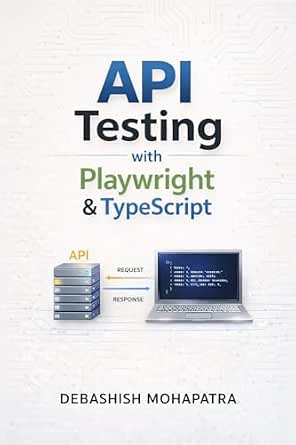 | Best for Playwright and TypeScript Learners | Product type: Practical guide (title) | Subject: API testing | Framework: Playwright | VIEW LATEST PRICE | See Our Full Breakdown |
| FastAPI Testing with Pytest and HTTPX: A Practical Guide |  | Best for FastAPI Developers Needing Comprehensive Testing Strategies | Topics: Unit testing, API testing, database testing, authentication testing, mocking | Tools: Pytest, HTTPX | Format: Practical guide | VIEW LATEST PRICE | See Our Full Breakdown |
| API Testing and Development with Postman |  | Best for API Teams Looking for Visual and User-Friendly Testing | Subject: API development and testing | Software: Postman | VIEW LATEST PRICE | See Our Full Breakdown | |
| Testing Web APIs |  | Best for Beginners and Those Seeking a General API Testing Overview | Topic: Testing Web APIs | VIEW LATEST PRICE | See Our Full Breakdown |
| automated API testing platform | Subject | Product type |
|---|---|---|
| API Testing with Python and Ro | API testing (title) | Book (title) |
| API Testing and Development wi | API testing and development (title) | Practical guide (title and description) |
| The Complete API Testing Handb | REST API testing | Book |
| API Testing for Beginners: Pos | API testing | Beginner-focused resource (title and description) |
| API Testing with Playwright & | API testing | Practical guide (title) |
| FastAPI Testing with Pytest an | — | — |
| API Testing and Development wi | API development and testing | — |
| Testing Web APIs | — | — |
More Details on Our Top Picks
API Testing with Python and Robot Framework
Python and Robot Framework give this book a distinct angle in a roundup otherwise centered on tools such as Postman and Playwright. The title points toward a code-based approach to API testing, which may suit teams already using Robot Framework for broader test automation. Compared with API Testing with Playwright & TypeScript, this option centers Python and Robot Framework instead of a TypeScript testing stack. That distinction can help buyers choose material closer to their existing language and framework. The supplied product data gives no description, sample contents, or coverage details, so I can’t confirm how deeply it addresses API workflows or automation. It is a book, not an automated API testing platform; buyers seeking a ready-to-run service should look at software tools instead.
Pros:- Names both Python and Robot Framework, giving framework-oriented readers a clear focus
- Centers API testing rather than general software testing
- May fit teams already working in a Python-based test environment
Cons:- Supplied data does not describe its lessons, examples, or level of detail
- A book requires readers to build and maintain their own testing setup
- Does not provide a hosted platform or managed test execution
Best for: Python teams considering Robot Framework for API test automation
Not ideal for: Buyers seeking a hosted testing platform, or readers who need confirmed chapter details before choosing a guide
- Product type:Book (title)
- Subject:API testing (title)
- Programming language:Python (title)
- Framework:Robot Framework (title)
- API testing focus:API testing (title)
- Description provided:No
Our verdict“Choose it if your team wants a Python and Robot Framework learning resource and can verify the book’s contents before buying.”
API Testing and Development with Postman: A Practical Guide to Creating, Testing, and Managing APIs
Postman-centered development and testing make this the clearest fit for readers who want one guide spanning API creation, tests, and management. Compared with API Testing for Beginners: Postman and REST Assured, this book’s supplied description emphasizes the API lifecycle rather than naming two testing tools or interview preparation. That broader scope may help developers connect test work with the APIs they build and maintain. The tradeoff is that its focus is tied to Postman; readers seeking a Python-first workflow may prefer The Complete API Testing Handbook. The supplied data does not specify chapters, supported Postman features, or the depth of automation examples. This is instructional material, not a testing platform, so readers will still need to work with the software themselves.
Pros:- Connects API development with testing and management
- Uses Postman as its central tool
- Addresses automated software testing
Cons:- The supplied description does not specify the depth or type of automation examples
- A Postman-centered guide may not match readers seeking Python or Playwright instruction
- Does not provide a testing platform or managed execution
Best for: Developers who want a Postman-focused guide covering API creation, testing, and management
Not ideal for: Readers who need a platform that runs and manages tests for them, or who prefer a Python-first guide
- Product type:Practical guide (title and description)
- Primary tool:Postman (title and description)
- Subject:API testing and development (title)
- API creation:Covered (description)
- API testing:Covered (description)
- API management:Covered (description)
- Automation:Addresses automated software testing (description)
Our verdict“Pick this guide if Postman is your chosen tool and you want learning material that spans API creation, testing, and management.”
The Complete API Testing Handbook: A Practical Guide to REST API Validation, Automation, and Security Testing with Python
Validation, automation, and security testing give this Python handbook the broadest stated REST API scope among the books in this batch. Compared with API Testing with Python and Robot Framework, it explicitly names REST API validation and security testing, while the Robot Framework title offers a more specific framework pairing. That makes this a stronger match for readers seeking several testing concerns in one guide, provided the described coverage matches their needs. Its step-by-step format may also suit readers who want a guided path into the subject. The supplied data does not identify specific Python libraries, security techniques, or example APIs, so buyers can’t judge those details from this listing. Like the other books here, it teaches rather than supplies an automated testing platform.
Pros:- Covers REST API validation, automation, and security testing
- Uses Python as its programming language
- Described as a practical, step-by-step guide
- Its stated scope spans more testing areas than the Postman development guide
Cons:- The supplied data does not name Python libraries or specific security methods
- The actual examples and depth of coverage are not described
- A handbook cannot replace a platform for running and managing tests
Best for: Python developers learning to validate, automate, and security-test REST APIs
Not ideal for: Readers who need confirmed library choices, detailed chapter contents, or a ready-made hosted testing service
- Product type:Book
- Series:Hands-On Tech Professional Series
- Series number:4
- Subject:REST API testing
- Programming language:Python
- Validation:Covered
- Automation:Covered
- Security testing:Covered
Our verdict“Choose this handbook if you want a Python guide that explicitly spans REST API validation, automation, and security testing.”
API Testing for Beginners: Postman and REST Assured
Postman and REST Assured make this the beginner-oriented pick for readers weighing a guided tool against a code-based framework. The supplied description also mentions API automation, framework development, practice questions, and interview preparation, giving it a learning and career angle that API Testing and Development with Postman does not explicitly claim. That range may suit newcomers building foundational knowledge while preparing to discuss testing concepts. The tradeoff is breadth: the listing does not explain how much room each topic receives or how the two tools are compared. Buyers focused on Python-based REST validation may get a closer match from The Complete API Testing Handbook. This is a learning resource, not an automated API testing platform.
Pros:- Explicitly targets beginners
- Covers both Postman and REST Assured
- Includes API automation and framework development topics
- Mentions practice questions and interview preparation
Cons:- The supplied details do not show how deeply each topic is covered
- The listing does not specify which languages or versions its examples use
- Does not provide software for automated test execution
Best for: New API testers who want introductory material on Postman, REST Assured, automation, and interview preparation
Not ideal for: Experienced testers seeking verified advanced examples or teams looking for a platform to execute tests
- Product type:Beginner-focused resource (title and description)
- Subject:API testing
- Tools:Postman and REST Assured
- Automation:Mentioned in title and description
- Framework development:Mentioned in description
- Practice questions:Mentioned in description
- Interview preparation:Mentioned in description
Our verdict“This guide suits newcomers who want tool coverage and interview preparation in one learning resource, with topic depth to confirm before choosing.”
API Testing with Playwright & TypeScript: A Practical Guide from Zero to Expert
Playwright and TypeScript give this guide a clear niche for readers who want API testing instruction within that tool and language pairing. The title promises a path from beginner to advanced material, while API Testing with Python and Robot Framework suits readers whose teams use a Python-centered stack. Compared with the Postman books, this option may better match developers who want to connect API testing with their Playwright work. The supplied description does not say which topics or examples support the stated range, and the listing gives no detailed feature or chapter information. That leaves buyers with less evidence about how the guide handles advanced testing. It is a book for learning a workflow, not a platform that runs tests as a service.
Pros:- Focuses specifically on API testing
- Names both Playwright and TypeScript
- Describes a range from beginner to advanced levels
Cons:- The supplied description does not detail the advanced topics or examples
- Its tool and language focus may not fit Python or Postman teams
- Does not provide a platform for managed test execution
Best for: Developers learning API testing with Playwright and TypeScript, from introductory through advanced material
Not ideal for: Teams standardized on Python, Postman, or REST Assured, and buyers seeking a managed testing platform
- Product type:Practical guide (title)
- Subject:API testing
- Framework:Playwright
- Programming language:TypeScript
- Stated experience range:Zero to expert (title)
- Guide format:Practical guide (title)
Our verdict“Choose this guide if Playwright and TypeScript are your target API testing stack and you want material pitched across experience levels.”
FastAPI Testing with Pytest and HTTPX: A Practical Guide
This guide stands out for offering a detailed approach to testing FastAPI applications, integrating unit, API, database, and authentication testing with Pytest and HTTPX. It is especially useful for teams that want to embed testing directly into their FastAPI workflows. Compared with more general API testing books like Testing Web APIs, this resource provides specific techniques tailored to FastAPI, including mocking and production-ready test suites. However, it’s less suitable for those seeking a broad overview of API testing tools beyond Python-based environments. Its focus on detailed, practical test implementations makes it invaluable for developers working within the FastAPI ecosystem.
Pros:- Covers critical testing areas for FastAPI, including authentication and database interactions
- Includes mock testing and production-ready test suites for real-world applications
- Uses Pytest and HTTPX, popular and well-supported testing libraries in Python
Cons:- Limited to FastAPI, so not suitable for testing other API frameworks
- Requires familiarity with Pytest and HTTPX, which may be a learning curve for beginners
Best for: FastAPI developers who want to implement robust, production-ready tests with Python tools
Not ideal for: Teams looking for language-agnostic or GUI-based API testing solutions, or broader API testing coverage beyond FastAPI
- Topics:Unit testing, API testing, database testing, authentication testing, mocking
- Tools:Pytest, HTTPX
- Format:Practical guide
Our verdict“This book is ideal for FastAPI developers seeking an in-depth, Python-centric testing guide tailored to their framework.”
API Testing and Development with Postman
Compared with the more technical Testing Web APIs, this book offers a more accessible approach to API creation and testing using Postman, which is known for its user-friendly interface. It excels in guiding users through API debugging, management, and testing workflows without requiring deep programming knowledge. However, because the details are limited, it may lack the depth needed for teams looking to automate complex test suites or integrate testing into CI/CD pipelines. This resource makes the most sense for teams or individuals new to API testing who prefer a visual, manual approach to understanding API workflows.
Pros:- Focuses on API creation, debugging, and management with Postman’s intuitive interface
- Suitable for beginners or those transitioning from manual testing to automation
- Covers essential aspects of API development beyond testing
Cons:- Lacks detailed information on automation or integration with CI/CD pipelines
- Limited to Postman, which may not suit teams requiring language-agnostic or scripting-based solutions
Best for: API testers and developers seeking an accessible, GUI-based tool for creating and debugging APIs
Not ideal for: Teams requiring automated, code-driven testing workflows or advanced security testing capabilities
- Subject:API development and testing
- Software:Postman
Our verdict“This book is a strong choice for API developers and testers who want to leverage Postman’s visual tools for straightforward API creation and debugging.”
Testing Web APIs
This book offers a broad introduction to testing web APIs, making it a good entry point for newcomers. Unlike the more specialized FastAPI Testing with Pytest, it does not focus on specific tools or frameworks, which can be advantageous for readers wanting a foundational understanding. However, its vague description suggests it may lack depth in practical automation or modern testing techniques, making it less suitable for experienced teams or those needing detailed, actionable guidance. Its value lies in providing a general overview rather than a hands-on, tool-specific manual.
Pros:- Accessible for readers new to API testing, providing foundational concepts
- Broad overview suitable for educational purposes
- No prerequisite knowledge of specific tools required
Cons:- Lacks detailed guidance on automation or modern testing frameworks
- Limited practical examples or tool integrations
Best for: Beginners or teams new to API testing seeking a high-level understanding of testing concepts
Not ideal for: Experienced developers or teams needing detailed automation strategies with specific tools or frameworks
- Topic:Testing Web APIs
Our verdict“This book is well-suited for those starting out with API testing who need a general conceptual grounding rather than detailed, tool-specific guidance.”

How We Picked
I compared these eight titles as learning and implementation options for automated API testing, not as a feature-for-feature software platform benchmark. I prioritized how clearly each title identifies its tool or framework, the testing scope signaled by its title, and how well it appears to match a particular buyer: a beginner, a Postman user, or a developer working in an established language stack. I also weighed whether a guide’s stated focus could help readers build repeatable API checks rather than only make ad hoc requests.
The ranking favors the broadest useful scope first, then more focused guides whose tool choice or audience is clear. The Postman guides rank well for accessible, tool-led workflows, while the Python, Playwright, and FastAPI titles serve buyers who want instruction tied to a particular stack. Titles alone cannot confirm depth, edition details, or coverage of a reader’s exact API needs, so I treat specialization and clarity as advantages—not proof that a guide covers every workflow. I place less specific options lower when buyers have fewer clues for matching them to a tool or skill level.
| automated API testing platform | Product type | Subject |
|---|---|---|
| API Testing with Python and Ro | Book (title) | API testing (title) |
| API Testing and Development wi | Practical guide (title and description) | API testing and development (title) |
| The Complete API Testing Handb | Book | REST API testing |
| API Testing for Beginners: Pos | Beginner-focused resource (title and description) | API testing |
| API Testing with Playwright & | Practical guide (title) | API testing |
| FastAPI Testing with Pytest an | — | — |
| API Testing and Development wi | — | API development and testing |
| Testing Web APIs | — | — |
Factors to Consider When Choosing Automated API Testing Platforms
Before choosing among these guides, pin down what you mean by an automated API testing platform. You may want a ready-to-use API client, instruction for writing tests in code, or a structured route into a framework your team already uses. The right choice depends less on the broad label and more on how you need to create, run, maintain, and share checks.
Choose a workflow before choosing a tool
Start by deciding whether tests should live primarily in a graphical client or alongside application code. A client-led workflow can make requests and test setup easier to explore, while code-based tests can fit more naturally into a repository and development pipeline. A common mistake is selecting a tool because its first test looks simple, then discovering the team cannot maintain its collections or scripts together. Ask who will author tests, who will review changes, and where the test suite needs to run. For an individual learning API behavior, a client-focused guide may be a sensible start. For a development team, prioritize an approach that fits its existing review and release habits.
Match the language to the people maintaining tests
A framework is only useful if the people responsible for keeping tests current can work comfortably in it. Python, TypeScript, and keyword-driven approaches each bring different conventions and maintenance needs. Choosing a fashionable stack your team does not know can create a lasting bottleneck, even if the examples are easy to follow. Check whether the guide teaches the language and testing concepts you need, or assumes you already have them. When your application team has a settled language, a matching test stack can reduce handoffs. When skills vary, a beginner-oriented or visual workflow may help more people contribute, though it may not suit every complex test.
Check the scope of testing, not just the number of tools
API testing can include response validation, authentication, error handling, data setup, security checks, and behavior across related endpoints. A guide that names several tools may still leave gaps in the specific test types you need. Make a short list of important scenarios before choosing: for example, whether you need to validate schemas, handle tokens, or check permission boundaries. Then look for clear coverage of those tasks in the guide’s contents. Teams often overvalue broad coverage and overlook whether examples map to their own APIs. A narrower resource can be the better purchase when it addresses a real stack and a clear testing need.
Plan for repeatability and ongoing maintenance
A test that works once is not yet a dependable automated test. Consider how the approach handles reusable setup, changing test data, environment settings, and failures that need diagnosis. If tests depend on fixed IDs or a particular order of execution, they may become fragile as an API evolves. Look for instruction that helps you separate configuration from test logic and keep checks understandable to the next maintainer. The fastest way to begin is not always the simplest way to support a growing suite. Before committing, decide how the test workflow will fit into everyday development and who will own updates when endpoints change.
Decide how much structure a beginner needs
Newcomers may benefit from a guided sequence that explains HTTP and API behavior alongside tool use. Experienced developers may prefer a focused reference for a framework they already use. One frequent misstep is choosing a title that promises advanced breadth when the reader still needs the basics of requests, responses, and assertions. Another is starting with a beginner resource that spends too much time on concepts the team already understands. Compare the stated audience and coverage with your current skills, not just the title’s ambition. If you are uncertain, a guide that pairs introductory access with a clear path to practical automation is often a safer starting point.
Treat platform claims and guide claims separately
These options are books or practical guides, not necessarily the automated testing software itself. A guide can teach a workflow, but it does not by itself provide hosted runs, team permissions, reporting, or integrations. Buyers sometimes confuse instruction about a tool with the capabilities of a software subscription. Verify what the tool supports independently if your needs include scheduled runs, collaboration, or pipeline integration. Also check that examples align with the tool and framework versions your team expects to use. Choose the learning resource for its fit, then evaluate the actual platform separately.
Frequently Asked Questions
Are these titles automated API testing platforms or guides about using them?
They are titles presented as books or practical guides, so they should be treated as learning resources rather than assumed to be software platforms. Several focus on tools or frameworks such as Postman, Robot Framework, Playwright, Pytest, and HTTPX. That can help you learn a testing workflow, but it does not establish that the title includes a hosted service, reporting dashboard, or team features. Check the contents and format before buying if you expect software access. Evaluate any platform’s operational features separately from the guide that teaches it.
Which guide makes sense if I have never automated an API test?
API Testing for Beginners: Postman and REST Assured is the most explicit beginner-focused choice in the lineup, while its two-tool scope gives readers a look at both client-led and code-based testing. If you want a broader view of REST validation, automation, and security, compare it with The Complete API Testing Handbook. Your best starting point depends on whether you need step-by-step fundamentals or a wider survey of testing tasks. Check the table of contents for assumed knowledge, sample progression, and language prerequisites. A beginner title may still expect basic HTTP familiarity.
Should my team choose a Postman guide or a programming-framework guide?
Choose based on where your team wants tests to live and who will maintain them. A Postman-centered guide is a natural fit when the team prefers a client-led workflow for creating and managing API checks. A framework guide may fit better when developers want tests expressed in a language and repository they already use. Neither route is automatically better for every organization, and switching approaches later can add maintenance work. Map your choice to team skills, collaboration habits, and how tests need to run in your delivery process.
Which option fits a team that already uses Python?
The Python-based titles are the most direct matches, but they address different needs. API Testing with Python and Robot Framework points toward a keyword-driven style, while FastAPI Testing with Pytest and HTTPX is specifically framed around FastAPI and its testing stack. The general Python handbook also signals REST validation, automation, and security coverage. If your service does not use FastAPI, the FastAPI-specific title may be less applicable than a broader resource. Compare the examples and prerequisites with your API architecture before choosing.
Do I need a security-focused guide if I mainly want regression tests?
Not always, but regression checks alone can miss access-control and input-handling problems that matter to API consumers. A broad resource such as The Complete API Testing Handbook signals security testing alongside automation, which may help teams seeking a wider testing foundation. If your immediate need is a narrow set of repeatable behavior checks, a stack-specific guide may be a closer fit. Avoid assuming that a title mentioning security covers every threat or replaces a dedicated security review. Match the learning resource to your current risks, then plan separate security work where needed.
Conclusion
For a single starting recommendation, I’d pick The Complete API Testing Handbook as the best overall because its stated scope connects REST validation, automation, and security testing. The best value in practical coverage is API Testing for Beginners: Postman and REST Assured for readers who want a clearly beginner-oriented route across two approaches; check its contents against your level before deciding. I’d call the Postman practical guide the best premium-style focused choice for readers prioritizing a dedicated tool-led workflow, though these titles alone do not establish software features or pricing. For beginners, start with the guide that explicitly names them. For specific needs, choose Robot Framework for keyword-driven Python work, Playwright and TypeScript for a TypeScript-oriented stack, or Pytest and HTTPX for FastAPI. If none of those match your team, compare the broader handbook and Testing Web APIs by their contents and prerequisites before committing.
Columbus Day / Indigenous Peoples' Day Picks
long weekend sales
As an affiliate, we earn on qualifying purchases.