

Code review has quietly become the most AI-shaped part of the software development lifecycle, and the tools that teach it have split into two camps: books that help you review code written by AI, and books that help you review code written by people. That split is the single biggest decision you’ll make before buying anything in this space. My top pick overall is Looks Good To Me: Constructive Code Reviews, because it teaches the human skill that survives every tool change: how to give feedback that actually improves code. For engineers who want to rebuild their entire review process around AI, 50 AI Workflows for Engineers offers the broadest coverage, from debugging through automated review. Solo developers get a dedicated champion in The Solo Developer’s AI Code Review Guide, which attacks the specific blind spots AI coding assistants create. And for teams betting heavily on agentic AI, Pair Programming with GPT-6 Astra is the most forward-looking of the group, though it demands the most from its reader.

Get business pricing on monitors, keyboards and dev gear
- Business-only prices and quantity discounts
- Tax-exempt purchasing
- Multiple users, one account, clear invoices
The main tradeoffs across this lineup are breadth versus depth, AI-native versus human-centric philosophy, and assumed experience level. None of these four does everything well, which is exactly why I’ve ordered them the way I have — read the ranking logic and you’ll know within a minute which one fits your desk.
Key Takeaways
- Looks Good To Me wins Best Overall because human review skills apply to every codebase and every tool, including AI-generated code.
- 50 AI Workflows for Engineers is the broadest pick, covering review alongside debugging, system design, and automation in one workflow library.
- Solo developers reviewing their own AI-assisted code have a purpose-built option in The Solo Developer’s AI Code Review Guide.
- Pair Programming with GPT-6 Astra is the most advanced pick and assumes you already understand both AI agents and solid coding fundamentals.
- The core buying decision is philosophical: do you want to review AI’s output, or have AI review yours? Each book answers that question differently.
| Looks Good To Me: Constructive Code Reviews |  | Best Overall | Format: Print / digital book | Primary focus: Constructive code review and feedback | Audience level: Beginner to senior developers | VIEW LATEST PRICE | See Our Full Breakdown |
| 50 AI Workflows for Engineers: From Debugging to System Design, Code Review & Engineering Automation |  | Best for AI-Driven Workflows | Format: Digital book | Workflow count: 50 | Topics covered: Debugging, system design, code review, automation | VIEW LATEST PRICE | See Our Full Breakdown |
| The Solo Developer’s AI Code Review Guide: Catch What AI Coding Assistants Miss — Bugs, Security Issues, and Technical Debt |  | Best for Solo Developers | Format: Digital book | Primary focus: Self-review of AI-assisted code | Key topics: Bugs, security vulnerabilities, technical debt | VIEW LATEST PRICE | See Our Full Breakdown |
| Pair Programming with GPT-6 Astra: Using an AI Coding Agent for Planning, Implementation, Code Review, and Refactoring | 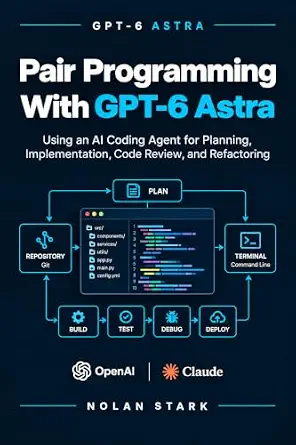 | Best for Agentic AI Workflows | Format: Digital book | Primary focus: Agentic pair programming with GPT-6 Astra | Topics covered: Planning, implementation, code review, refactoring | VIEW LATEST PRICE | See Our Full Breakdown |
| code review tool | Format | Audience level | Practical elements | Shelf life |
|---|---|---|---|---|
| Looks Good To Me: Constructive | Print / digital book | Beginner to senior developers | Tips and techniques for real reviews | Long — culture and communication focused |
| 50 AI Workflows for Engineers: | Digital book | Intermediate to advanced engineers | Repeatable, pipeline-ready workflows | Medium — patterns outlast specific tools |
| The Solo Developer’s AI Code R | Digital book | Intermediate solo developers | Review strategies and checklists | Medium — tied to current assistant behavior |
| Pair Programming with GPT-6 As | Digital book | Advanced developers | Strategies for integrating AI into development | Short — advances with each model generation |
More Details on Our Top Picks
Looks Good To Me: Constructive Code Reviews
Of the four, this is the one I’d hand to almost any working developer, and that breadth is exactly why it earns the top slot. Looks Good To Me tackles code review as a communication discipline rather than a mechanical checklist, and that framing gives it a durability the AI-focused entries can’t match. Where 50 AI Workflows for Engineers treats review as one stage in an automated pipeline, this book treats review as a conversation between people — and even in 2026, when a model opens the pull request, a human still has to explain what needs to change and why. The book’s focus on constructive feedback addresses the failure mode most teams know painfully well: reviews that devolve into nitpicking, silence, or rubber-stamping.
Compared with The Solo Developer’s AI Code Review Guide, this option is clearly built for team environments. The solo-focused book assumes you’re the only reviewer in the room; this one assumes you’re one of several, and its guidance on tone, framing, and escalation pays off in ways a bug-hunting manual never will. The tradeoff is real, though: if your day-to-day problem is catching security vulnerabilities in AI-generated code, this book won’t teach you that. It improves the review process, not necessarily the reviewer’s technical depth. Its other limitation is assumed context — it presumes you already work somewhere with an existing review culture, however imperfect. Readers hoping for strict technical standards or language-specific guidance will find it lighter on those specifics.
What secures the number-one position is the transferability of its lessons. Every principle here survives a toolchain migration, a new AI model, or a job change. That’s a claim none of the other three can make, and it’s why this pick makes the most sense for buyers who want one resource to grow with over years rather than months.
Pros:- Teaches durable communication and feedback skills that outlast any tool or AI model
- Directly improves collaboration on teams with existing review culture
- Practical tips that can be applied to the very next pull request
- Philosophy works for human-written and AI-generated code alike
Cons:- Light on language-specific technical standards and security specifics
- Assumes a team environment, offering less to solo developers
- Content scope is narrow compared with multi-workflow alternatives
Best for: Developers on teams who want to improve review quality, collaboration, and feedback culture
Not ideal for: Solo developers with no team feedback loop, or readers hunting for a technical bug-catching checklist
- Format:Print / digital book
- Primary focus:Constructive code review and feedback
- Audience level:Beginner to senior developers
- Environment:Team-based development
- AI coverage:Tool-agnostic; principles apply broadly
- Practical elements:Tips and techniques for real reviews
- Shelf life:Long — culture and communication focused
- Language specificity:None; language-agnostic guidance
Our verdict“If you buy only one book on this list, this is the one whose lessons will still be useful in five years.”
50 AI Workflows for Engineers: From Debugging to System Design, Code Review & Engineering Automation
This is the breadth champion of the lineup. Where Looks Good To Me goes deep on a single skill, this book spreads across fifty workflows, with code review sitting inside a much larger system that spans debugging, system design, and automation. That structure makes it the right second pick for a specific reason: most engineers don’t have a code review problem in isolation — they have an end-to-end productivity problem, and review is one bottleneck among several. If your debugging workflow is manual and your review workflow is manual, fixing only one of them yields limited gains, and this book is the only entry here that connects those dots.
The review-specific workflows are best understood as automation recipes: repeatable AI-assisted processes you can slot into a pipeline. Compared with Pair Programming with GPT-6 Astra, which builds everything around one model as a coding agent, this book is model-agnostic in spirit — the workflows are patterns you can adapt as tools change. That gives it a longer practical life than the GPT-6 book, though not the timeless quality of Looks Good To Me. The honest tradeoff is depth. Fifty workflows across that many engineering domains means no single topic, review included, gets the focused attention a dedicated guide provides. A reader who wants to master constructive feedback should buy the top pick; a reader who wants to rebuild their whole engineering process around AI should buy this one.
There’s also an entry-barrier issue: the book assumes some prior familiarity with AI tooling, so complete newcomers to AI-assisted development may spend early chapters playing catch-up. For engineers already comfortable prompting and already using an assistant in their editor, though, this is the most immediately actionable volume on the list.
Pros:- Fifty practical workflows spanning debugging, system design, review, and automation
- Code review is treated as part of a connected productivity system
- Workflows are adaptable patterns rather than single-tool instructions
- Strong fit for engineers already using AI assistants daily
Cons:- Breadth comes at the cost of depth on any single topic, including review
- Assumes prior AI knowledge, which slows down newcomers
- Strictly engineering-focused, with nothing for managers or process owners
Best for: Engineers who want to integrate AI across their entire workflow, not just code review
Not ideal for: Readers seeking deep, dedicated coverage of review technique alone, or AI beginners
- Format:Digital book
- Workflow count:50
- Topics covered:Debugging, system design, code review, automation
- Audience level:Intermediate to advanced engineers
- Prerequisites:Prior AI tooling familiarity recommended
- Model dependency:Mostly tool-agnostic workflow patterns
- Practical elements:Repeatable, pipeline-ready workflows
- Shelf life:Medium — patterns outlast specific tools
Our verdict“The best choice for engineers who see code review as one stage in a fully AI-assisted pipeline rather than a standalone skill.”
The Solo Developer’s AI Code Review Guide: Catch What AI Coding Assistants Miss — Bugs, Security Issues, and Technical Debt
Every other book on this list assumes, at least implicitly, that someone else will eventually read the code. This one doesn’t, and that makes it irreplaceable for a large, underserved audience. Solo developers now lean heavily on AI coding assistants, and the uncomfortable truth the title names directly is that those assistants generate plausible code with real bugs, real security holes, and real technical debt — and there’s no second pair of eyes to catch any of it. This guide is built around that exact gap, teaching a self-review discipline designed to surface what the assistant quietly missed.
Its security focus is the clearest differentiator in the whole lineup. Looks Good To Me will make you a better communicator; 50 AI Workflows will make you faster; this book aims to keep you from shipping vulnerabilities. For a freelancer or indie founder who is legally and financially on the hook for a breach, that emphasis justifies the purchase on its own. Compared with the workflow-driven approach of the number-two pick, this guide is narrower and more defensive — it’s less about building things with AI and more about auditing what AI built. That’s a complementary role, not a competing one, and some readers will reasonably own both.
The drawbacks are worth stating plainly. The guide assumes prior coding experience, because you can’t evaluate whether generated code is wrong unless you understand what right looks like — beginners will struggle here. It’s also tied to the current generation of AI assistants, so its specific blind-spot catalog will age as models improve, unlike the top pick’s timeless communication principles. And by design it has little to say to team-based engineers, since its entire premise is the absence of teammates. Within its lane, though, nothing else on this list competes.
Pros:- Purpose-built for the exact situation solo developers face in 2026
- Strong focus on security issues and bugs that AI assistants overlook
- Teaches a repeatable self-review discipline, not one-off tips
- Addresses technical debt before it compounds in solo-maintained projects
Cons:- Requires solid prior coding experience to be useful
- Assistant-specific blind spots will age as AI models improve
- Little relevance for developers on teams with existing reviewers
Best for: Freelancers, indie hackers, and solo developers shipping AI-assisted code without a team
Not ideal for: Beginners without solid coding fundamentals, or engineers with established team review processes
- Format:Digital book
- Primary focus:Self-review of AI-assisted code
- Key topics:Bugs, security vulnerabilities, technical debt
- Audience level:Intermediate solo developers
- Prerequisites:Prior coding experience assumed
- Team relevance:Low — designed for single-developer workflows
- Practical elements:Review strategies and checklists
- Shelf life:Medium — tied to current assistant behavior
Our verdict“The only book here that takes the solo reviewer’s predicament seriously, and the clear pick if you ship code alone.”
Pair Programming with GPT-6 Astra: Using an AI Coding Agent for Planning, Implementation, Code Review, and Refactoring
This is the most specialized and most demanding entry in the lineup, and I’ve placed it last not because it’s weak but because its audience is the narrowest. The book’s premise is that a single AI coding agent — GPT-6 Astra — can act as a genuine pair programming partner across the full development cycle: planning, implementation, review, and refactoring. Where 50 AI Workflows spreads its attention across many tools and patterns, this book goes all-in on one agentic relationship, treating the model as a collaborator whose output you review and whose reviews of your code you learn to trust and question.
That bidirectional framing is genuinely novel. The other three books position AI either as the thing you review (the solo guide) or as an ambient tool you orchestrate (the workflow book); this one explores the reviewer-reviewed dynamic in both directions, which mirrors how agentic development actually feels in practice. For engineers at companies already deploying coding agents into their pipelines, this is the most forward-looking material on the list, and its coverage of planning and refactoring gives context the review-only books lack.
The tradeoffs, however, are the sharpest here. Being tied to a specific model means the book ages with that model — when GPT-7 arrives, sections of it become historical documents, while Looks Good To Me stays evergreen. It also demands prior knowledge of both AI concepts and strong coding fundamentals; unlike the workflow book, which at least catalogues patterns you can copy, this one asks you to internalize a collaborative methodology. Readers who want concrete technical examples may find it more conceptual than expected, and its lack of detailed worked examples is a fair criticism. This pick makes the most sense for early-adopter engineers who enjoy living at the frontier and accept that frontier resources have a short half-life. Everyone else gets better value higher up this list.
Pros:- Explores the full development cycle with an AI agent, not just review
- Unique bidirectional take: reviewing the agent’s code and evaluating its reviews of yours
- Most forward-looking coverage of agentic pair programming available here
- Planning and refactoring context enriches the review discussion
Cons:- Tied to a single model, so it ages faster than any other pick
- Conceptual rather than example-driven, which may disappoint hands-on readers
- Steepest prerequisites of the lineup — AI knowledge and strong coding fundamentals required
Best for: Experienced developers experimenting with AI coding agents and agentic development pipelines
Not ideal for: Readers who want evergreen guidance, concrete worked examples, or an introduction to code review basics
- Format:Digital book
- Primary focus:Agentic pair programming with GPT-6 Astra
- Topics covered:Planning, implementation, code review, refactoring
- Audience level:Advanced developers
- Prerequisites:AI concepts plus solid coding background
- Model dependency:High — centered on one specific agent
- Practical elements:Strategies for integrating AI into development
- Shelf life:Short — advances with each model generation
Our verdict“A frontier guide for engineers already working with AI coding agents, best bought with the understanding that its model-specific advice has an expiration date.”

How We Picked
Since all four of these are books rather than software platforms, I judged them on the criteria that actually matter when you’re buying knowledge instead of a subscription. First, I looked at audience fit: a solo contractor, a staff engineer at a large company, and a junior developer need completely different things from a code review resource, and a book that serves one will frustrate the others. Second, I weighed alignment with the 2026 landscape — code review now happens against a backdrop of AI-generated pull requests, and resources that ignore that reality age fast. Third, I considered practicality: does the book give you workflows, checklists, and repeatable methods you can apply the same day, or does it stay at the level of philosophy? Fourth, I factored in durability, because a book about one specific AI model has a shorter shelf life than one about feedback culture. Finally, I compared the four against each other directly rather than in isolation — ranking forced me to decide where each one genuinely leads the pack and where it merely competes.
| code review tool | Format | Primary focus | Audience level | Practical elements |
|---|---|---|---|---|
| Looks Good To Me: Constructive | Print / digital book | Constructive code review and feedback | Beginner to senior developers | Tips and techniques for real reviews |
| 50 AI Workflows for Engineers: | Digital book | — | Intermediate to advanced engineers | Repeatable, pipeline-ready workflows |
| The Solo Developer’s AI Code R | Digital book | Self-review of AI-assisted code | Intermediate solo developers | Review strategies and checklists |
| Pair Programming with GPT-6 As | Digital book | Agentic pair programming with GPT-6 Astra | Advanced developers | Strategies for integrating AI into development |
Factors to Consider When Choosing Code Review Tools
Before choosing among these four, it helps to understand the fault lines that separate them. These books aren’t interchangeable — they represent four different answers to the question of what code review even is in 2026.Human-Centric or AI-Centric?
The first and biggest fork: do you want to get better at reviewing code yourself, or at managing AI that reviews code? Looks Good To Me belongs firmly to the first camp — its lessons about tone, clarity, and constructive feedback apply no matter who or what wrote the code. The other three sit somewhere on the AI spectrum, from auditing AI output (the solo guide) to collaborating with an agent as a partner (the GPT-6 book). Neither philosophy is wrong, but buying the wrong one for your situation wastes money. Ask yourself where your actual pain is: bad feedback culture points you to the human-centric pick; buggy AI-generated code points you elsewhere.
Breadth Versus Depth
Two books, two strategies. 50 AI Workflows for Engineers covers review as one topic among fifty, which suits engineers optimizing their whole process. The Solo Developer’s AI Code Review Guide covers one topic deeply, which suits readers with a specific, urgent problem. The general rule: if you can name your problem precisely, buy the deep book; if your problem is ‘my whole workflow feels dated,’ buy the broad one. Buyers who try to get both from a single title will be disappointed by whichever dimension comes up short.
Shelf Life and Model Dependency
Books tied to specific AI tools have a built-in expiration date. Pair Programming with GPT-6 Astra is the clearest case — useful today, progressively outdated with each new model release. The solo guide sits in the middle, since assistant blind spots evolve. Looks Good To Me is the most durable because communication principles barely change. If you’re buying one book on a budget and want maximum long-term value, weight durability heavily. If you’re buying for immediate tactical needs this quarter, model-specificity matters far less.
Your Experience Level
Two of these books quietly assume a capable reader. The solo guide needs you to already know what correct code looks like before you can judge generated code, and the GPT-6 book expects fluency in both AI concepts and software fundamentals. Looks Good To Me is the most forgiving entry point, welcoming everyone from juniors to staff engineers. Be honest about your starting point — a book slightly below your level gets skimmed, but a book above your level gets abandoned.
Team Context
Your employment situation shapes the right pick more than any feature list. On a team? The feedback-culture focus of the top pick pays dividends daily. Freelancing or building a product alone? The solo guide addresses a problem your teammates would otherwise catch. Working somewhere deploying coding agents into production? The agentic book mirrors your reality. The workflow book straddles contexts and is the safest gift-or-recommendation choice when you don’t know the reader’s exact situation.
Frequently Asked Questions
Are books still useful for code review when AI tools can review code automatically?
Yes, and the reason is that automatic review tools are only as good as the human directing them. AI reviewers catch surface-level issues efficiently, but they miss architectural problems, silently accept flawed assumptions, and can’t navigate the interpersonal side of telling a colleague their approach needs rework. Three of the four books here exist precisely because AI-generated and AI-reviewed code still needs human judgment applied at the right points. A book doesn’t replace the tool — it makes you the person who knows when the tool is wrong.
Which of these four should a beginner start with?
Looks Good To Me is the clear starting point. It assumes the least technical depth, its lessons about constructive feedback apply from your first team pull request onward, and nothing in it expires when a new AI model ships. The other three all carry real prerequisites: the solo guide needs solid coding fundamentals, the workflow book expects AI tooling familiarity, and the GPT-6 book demands both. A beginner who starts with the top pick can graduate to an AI-focused title later with a much stronger foundation.
Is it worth buying more than one of these books?
It can be, because the strongest pairings are complementary rather than overlapping. The most natural combination is Looks Good To Me plus one AI-focused title — you get durable human skills plus current AI tactics, and they cover different failure modes entirely. Pairing 50 AI Workflows with the solo guide also works well for a freelancer who wants both pipeline breadth and security depth. What I’d avoid is buying two books that answer the same question, such as the workflow book and the GPT-6 book together, unless you’re specifically comparing automation philosophies.
How quickly will the AI-focused books become outdated?
Faster than any other category here, and you should buy accordingly. Pair Programming with GPT-6 Astra is anchored to one model and will age fastest — its methodology may still translate, but its specifics won’t. The solo guide’s catalog of assistant blind spots will shift as models improve, likely over one to two years. The workflow book holds up better because patterns transfer across tools. If a long shelf life matters to you, weight your purchase toward the human-skills end of the lineup and treat the AI titles as timely, consumable resources rather than permanent references.
Can these books help if my team already has a code review process?
Almost certainly, because most established review processes are exactly where bad habits settle in. If your team’s reviews are slow, hostile, or rubber-stamped, Looks Good To Me diagnoses and fixes the cultural mechanics behind those symptoms. If your team has adopted AI assistants but kept the old manual review process, 50 AI Workflows shows how to redesign review as part of an automated pipeline. An existing process is usually a sign that a targeted book can help, not that none is needed — the question is whether your pain is cultural or technical, and the picks above split cleanly along that line.
Conclusion
Match the book to your situation and the choice makes itself. Team-based developers should buy Looks Good To Me — its communication and feedback guidance improves every pull request you’ll ever touch, on any stack, with any toolchain. Engineers modernizing their whole workflow get the most from 50 AI Workflows for Engineers, which treats code review as one connected stage in an AI-assisted pipeline. Solo developers and freelancers have a purpose-built answer in The Solo Developer’s AI Code Review Guide, the only pick that takes seriously the job of auditing AI-generated code with no second pair of eyes. And early adopters working with coding agents will find Pair Programming with GPT-6 Astra the most aligned with where development is heading, provided they accept its shorter shelf life.
If I had to compress the entire comparison into one rule: buy for durability when you’re investing in yourself, and buy for timeliness when you’re solving this quarter’s problem. The top pick serves the first goal; the other three serve the second. Either way, you’ll be reviewing code more deliberately than most of the industry — and that alone changes what ships.
Fall Picks
fall essentials
As an affiliate, we earn on qualifying purchases.