
📊 Full opportunity report: The SSD Squeeze: Why Storage Joined the Party on ThorstenMeyerAI.com — validation score, market gap, and execution plan.
TL;DR
The global NAND flash market faces a significant shortage driven by AI’s rising storage needs and competition for manufacturing capacity. Prices are soaring, affecting consumers and enterprise users, with new supply expected years away.
Global NAND flash prices have surged by up to 58% in a single quarter in early 2026, driven by supply shortages caused by increased AI storage demands and wafer competition among major manufacturers. This shortage is affecting consumer drives, enterprise SSDs, and even long-term storage markets, with prices expected to remain high for years.
Industry leaders such as Samsung, SK Hynix, and Micron have reduced their NAND wafer targets, citing strategic prioritization and profitability, which has led to a record 53-58% jump in enterprise SSD contract prices at the start of 2026. The overall NAND market revenue is forecasted to grow over 100% in 2026, reflecting the intense demand.
AI applications are directly consuming enormous amounts of NAND storage, with high-end AI GPUs requiring up to 16TB of flash, and data centers demanding over 1,000TB per rack. This shift from passive storage to active AI infrastructure has significantly increased demand, further tightening supply.
Despite the soaring prices, new fabs are not expected to come online for two to three years, and many manufacturers have deliberately scaled back wafer production, citing high margins from scarcity as a strategic choice. This has resulted in a market where supply is tightly controlled, and prices remain elevated.
The SSD squeeze: storage joined the party
Storage was the last cheap thing in computing. Not anymore — a 2TB NVMe that was $120–150 in 2024 now lists at $300–480. And this time flash isn’t only collateral damage: AI eats storage directly.
both ways
Flash got hit twice — once as collateral sharing fabs with HBM, once directly as AI inference turned fast storage into something it consumes by the petabyte. That second force won’t fade; it grows with every model, every RAG pipeline, every cache that must live somewhere fast. Buy what you need now; favor TLC with DRAM cache, don’t overpay for Gen 5, watch for counterfeits. Relief isn’t forecast before late 2027. When the cheapest component in computing has a two-year waitlist, “commodity” no longer fits. Next: The High-End PC & Workstation Tax.
Why the NAND Shortage Matters for Tech Markets
The surge in NAND flash prices impacts a broad range of sectors, from consumer electronics to enterprise data centers, potentially slowing innovation and increasing costs for AI development. The scarcity also raises questions about market manipulation and the long-term sustainability of current supply strategies, as a few firms dominate production and control pricing.
For consumers, this means higher costs for SSDs and storage upgrades; for data centers and AI firms, it translates into increased operational expenses and longer procurement lead times. The shortage underscores how AI’s rapid growth is reshaping hardware markets, emphasizing the need for diversified supply chains and new manufacturing capacity.

Samsung 990 PRO SSD 2TB NVMe M.2 PCIe Gen4, M.2 2280 Internal Solid State Hard Drive, Seq. Read Speeds Up to 7,450 MB/s for High End Computing, Gaming, and Heavy Duty Workstations, MZ-V9P2T0B/AM
MEET THE NEXT GEN: Consider this a cheat code; Our Samsung 990 PRO Gen4 SSD helps you reach…
As an affiliate, we earn on qualifying purchases.
As an affiliate, we earn on qualifying purchases.
NAND Market Dynamics and Historical Trends
Over the past decade, NAND flash was considered a commodity with steadily declining prices, leading to widespread adoption in consumer devices. However, the industry has faced recent disruptions, including wafer capacity constraints and shifting priorities among major manufacturers. The current shortage echoes previous supply crunches in DRAM, but is intensified by AI’s specific storage demands.
Historically, NAND production has been tightly coupled with DRAM and other memory types, competing for the same fabs and capital. The current scenario is unique because AI applications are not only increasing demand but also actively consuming storage, transforming NAND from passive to active infrastructure.
“We are prioritizing high-margin enterprise and AI-related products, which has led to reduced wafer targets for consumer and lower-margin segments.”
— Samsung memory division executive

Micron 7450 PRO 3840GB NVME M.2 (22X110) Non-SED Enterprise SSD
Storage Capacity: 3.84 TB
As an affiliate, we earn on qualifying purchases.
As an affiliate, we earn on qualifying purchases.
Uncertainties Over Future Supply and Market Impact
It remains unclear how long manufacturers will maintain reduced wafer targets and whether new fabs will accelerate capacity. Market behavior could also shift if demand from AI stabilizes or if new supply sources emerge, but current trends suggest scarcity will persist for the foreseeable future.
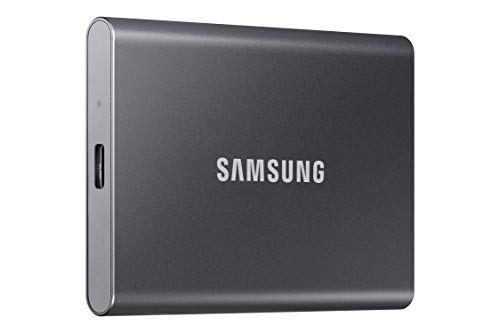
Samsung T7 Portable SSD, 1TB External Solid State Drive, Speeds Up to 1,050MB/s, USB 3.2 Gen 2, Reliable Storage for Gaming, Students, Professionals, MU-PC1T0T/AM, Gray
MADE FOR THE MAKERS: Create; Explore; Store; The T7 Portable SSD delivers fast speeds and durable features to…
As an affiliate, we earn on qualifying purchases.
As an affiliate, we earn on qualifying purchases.
Next Steps in NAND Supply and Market Response
Manufacturers are expected to continue prioritizing high-margin AI and enterprise products, with new fabs taking years to develop. Buyers should plan for sustained high prices and potential shortages, while industry insiders anticipate further price increases and supply chain adjustments in 2026 and beyond.

SANDISK 2TB Extreme Portable SSD (Old Model) – Up to 1050MB/s, USB-C, USB 3.2 Gen 2, IP65 Water and Dust Resistance, Updated Firmware – External Solid State Drive – SDSSDE61-2T00-G25
Get NVMe solid state performance with up to 1050MB/s read and 1000MB/s write speeds in a portable, high-capacity…
As an affiliate, we earn on qualifying purchases.
As an affiliate, we earn on qualifying purchases.
Key Questions
Why are NAND flash prices rising so rapidly in 2026?
Prices are rising due to a combination of supply shortages caused by wafer capacity constraints, increased demand from AI applications, and strategic production cuts by major manufacturers prioritizing high-margin products.
How long will the NAND shortage last?
Industry experts estimate that the shortage could persist for two to three years, as new manufacturing capacity takes time to develop and current supply remains tightly controlled.
What sectors are most affected by the NAND shortage?
Enterprise data centers, AI infrastructure, and high-end consumer SSD markets are feeling the most immediate impact, with long-term storage and automotive sectors also experiencing delays and cost increases.
Will the NAND shortage impact other memory types like DRAM?
While DRAM and NAND share manufacturing resources, current shortages are primarily driven by NAND-specific demand from AI. However, supply constraints in one memory type can influence overall market dynamics.
Are there alternative storage solutions to mitigate this shortage?
Currently, options are limited; buyers are advised to purchase only the storage they need and consider high-quality TLC drives with caches. Diversification and strategic stockpiling may help mitigate some impacts.
Source: ThorstenMeyerAI.com