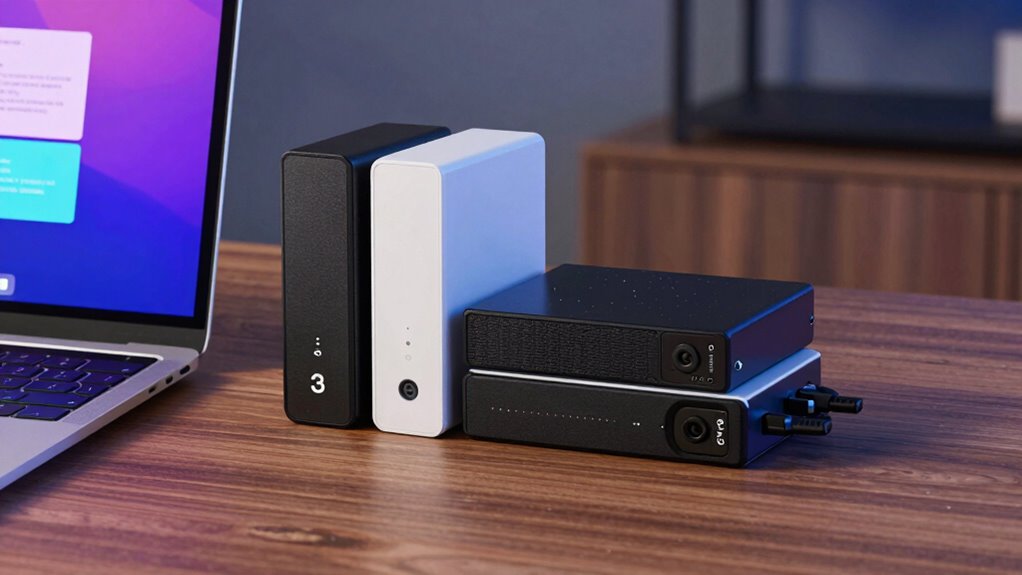

The 3-2-1 backup rule is a simple way to protect your business data. It means keeping three copies of your important files: the original and two backups. Store these copies on two different types of media and keep at least one in a separate, offsite location like cloud storage. This approach minimizes risks of data loss due to hardware failures, theft, or disasters. If you’re curious about implementing this strategy effectively, there’s more to explore below.

Get monitors, keyboards and dev gear delivered free — and shop member deals
- Fast, free delivery on millions of items
- Access to Prime Big Deal Days deals on October 6–7
- Prime Video, Amazon Music and more included
Key Takeaways
- Keep three copies of your critical data: one original and two backups.
- Store backups on two different local devices and one offsite location, such as cloud storage.
- Use different types of storage media for each backup to reduce the risk of simultaneous failure.
- Automate regular backups and test them frequently to ensure data can be restored quickly.
- Update your backup plan whenever your systems change to maintain data security and recovery readiness.
As an affiliate, we earn on qualifying purchases.
Why Data Backup Is Critical for Your Business

Data loss can happen unexpectedly due to hardware failures, cyberattacks, or human error, and when it does, it can cripple your business operations. That’s why data backup is essential—you need a reliable way to recover vital information quickly. Cloud security plays a crucial role here, offering a safe environment for storing backups off-site. Using data encryption ensures your data remains protected from unauthorized access during transmission and storage. Regular backups safeguard your business against costly downtime, reputation damage, and lost revenue. Without a solid backup strategy, you risk losing critical files forever. Implementing encryption and secure cloud storage makes recovery smoother and keeps sensitive data protected, giving you peace of mind knowing your business can bounce back from any data loss incident. Additionally, understanding the 1st Home Theatre Projector concept helps emphasize the importance of reliable equipment in safeguarding your digital assets. Recognizing the 3-2-1 backup rule can further strengthen your data protection plan by ensuring multiple copies are stored securely in different locations.
cloud backup service subscription
As an affiliate, we earn on qualifying purchases.
As an affiliate, we earn on qualifying purchases.
What the 3-2-1 Backup Rule Is and Why It Matters

Implementing a solid backup strategy isn’t just about making copies of your files; it’s about following proven best practices that guarantee your data stays protected. The 3-2-1 backup rule is a simple yet powerful guideline: keep three copies of your data, store two locally (on different devices), and have one offsite, like in cloud storage. This reduces risks from hardware failure, theft, or natural disasters. Using encryption techniques guarantees your backups remain secure, especially when stored remotely or in the cloud. Cloud storage provides reliable offsite backup options, giving you quick access and peace of mind. Following this rule helps ensure your business data is resilient, protected from threats, and recoverable, no matter what happens. Proper feature buddies planning can further strengthen your backup strategy by ensuring all critical components are adequately protected. Additionally, understanding storage redundancy can help you tailor your backup setup to better suit your specific needs, optimizing backup efficiency and resilience, which is especially important when managing multiple electric bikes or other equipment.
As an affiliate, we earn on qualifying purchases.
How to Choose the Best Storage Devices for Backups

When choosing storage devices for backups, you need to consider the different types available and how reliable and durable they are. Cost and accessibility also play a big role in making the right choice for your business. By evaluating these points, you can select the best option to keep your data safe and easily retrievable. For example, optical drives are often used for their longevity and offline storage capabilities. Additionally, understanding regional flavors and how they influence the flavor profile can be helpful when considering the durability and suitability of certain storage media for specific environments. Considering the reliability of storage media is essential, especially in environments with varying conditions, to ensure your backups remain intact over time. Moreover, assessing the storage environment can help determine which media will perform best under specific conditions, ultimately safeguarding your data effectively. Having a clear understanding of storage media lifespan can further assist in planning for long-term data preservation and disaster recovery.
Storage Device Types
Choosing the right storage device for backups depends on your specific needs and budget. Cloud storage offers flexibility, easy access, and scalability, making it ideal for many businesses. It allows you to store data remotely and recover files quickly from any location with an internet connection. Physical media, like external hard drives, USB drives, or tapes, provides tangible, offline backup options. They are often cost-effective and useful for quick restores or off-site storage. Some businesses prefer physical media for security reasons or to avoid ongoing subscription costs associated with cloud services. When selecting, consider factors like data volume, recovery speed, security, and budget constraints. Combining both types—using cloud storage for accessibility and physical media for offline backups—aligns well with the 3-2-1 backup strategy. Additionally, understanding indoor air quality and humidity tips can help create a safer environment for storing your backup media, ensuring data integrity over time. Implementing proper storage environment conditions can significantly prolong the lifespan of physical backup media and prevent data loss. Ensuring optimal climate control in storage areas can also help preserve the integrity of sensitive backup data over the long term.
Reliability and Durability
How can you guarantee your backup storage devices will stand the test of time? Focus on choosing reliable and durable options that support data resilience. Look for devices with built-in redundancy features, ensuring your data remains accessible even if one component fails. Select storage with a proven track record of longevity, such as enterprise-grade drives or solid-state options. Prioritize devices designed for continuous operation and resistance to physical damage. Additionally, consider cycling safety features that help prevent overheating and physical wear, extending the lifespan of your backup devices. To further enhance durability, opt for devices with long-term data preservation capabilities that safeguard your information over years of use. Incorporating water resistance can also provide extra protection against accidental spills or environmental hazards, further extending device longevity. Evaluating manufacturer reputation can help ensure you select products known for quality and durability, especially as some brands specialize in security features that protect against data breaches.
Cost and Accessibility
Ensuring your backup storage devices are both cost-effective and accessible is key to maintaining reliable data protection. When evaluating options, consider cost considerations to stay within your budget without sacrificing quality. Affordable devices like external hard drives or cloud services can be effective if they meet your needs. Accessibility challenges can hinder quick data recovery during emergencies, so choose devices that are easy to access and use regularly. Prioritize solutions that offer straightforward retrieval and minimal setup time. Balancing cost considerations with accessibility ensures you can efficiently restore data when needed without overspending. Remember, the most expensive device isn’t always the best; focus on finding a solution that fits your budget and offers reliable, hassle-free access. Easy retrieval is crucial for minimizing downtime in urgent situations. Additionally, selecting storage options that align with your business backup needs can make a significant difference in response times during critical moments. Incorporating cost-effective storage options is essential to ensure your backup strategy remains sustainable over time. Furthermore, evaluating the accessibility features of your storage devices can significantly impact your recovery speed and overall data security.
As an affiliate, we earn on qualifying purchases.
Storing Your Backups in Multiple Locations for Safety
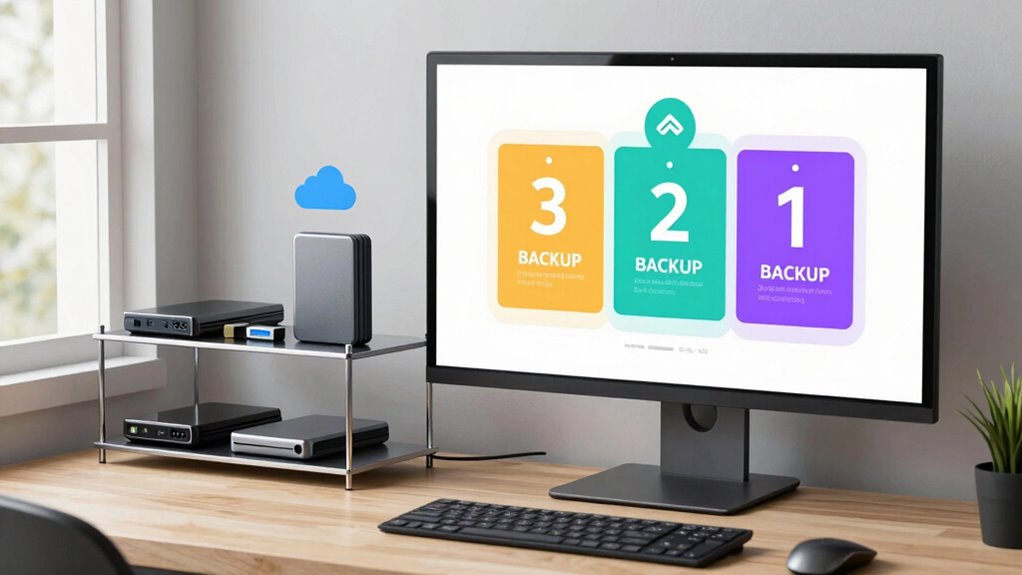
Storing your backups in multiple locations is essential to protect your data from physical damage, theft, or technical failures. By keeping offsite storage and redundant copies, you guarantee your data remains safe even if your primary site experiences issues. This approach minimizes the risk of losing everything due to a disaster or theft. You should store one backup locally for quick recovery and another offsite to safeguard against physical threats. Having backups in different locations adds an extra layer of security and peace of mind. Remember, the goal is to diversify your storage options to avoid a single point of failure. Implementing this strategy ensures that your critical business data stays protected and accessible when needed most.
- Offsite storage protects against local disasters
- Redundant copies prevent data loss
- Multiple locations ensure continuous access
Automating Your Backup Process: Tips and Tools

Automating your backup process can save you time and reduce the risk of human error by ensuring your data is consistently protected without manual intervention. Using automation tools and scheduling software, you can set backups to run automatically at regular intervals, freeing you from manual tasks. Envision this setup as a table of backup schedules:
| Backup Frequency | Storage Location | Automation Tool |
|---|---|---|
| Daily | Cloud and local drive | Backup scheduling app |
| Weekly | External hard drive | Automation software |
| Monthly | Offsite server | Cloud backup service |
These tools streamline your backup routine, ensuring your data is always protected, and reduce the chance of forgetting or neglecting essential backups. Automate today for peace of mind tomorrow.
Common Mistakes to Avoid When Following the 3-2-1 Backup Rule

While following the 3-2-1 backup rule is a smart strategy, many people make common mistakes that compromise their data security. One major pitfall is misconfiguration mistakes, such as incorrectly setting up backup software or failing to verify backup integrity. These errors can make backups unusable when needed. Another mistake is relying on a single type of storage, which defeats the purpose of the 3-2-1 rule. Lastly, neglecting regular testing of backups can lead to surprises during data recovery. To avoid these issues, confirm your backup settings are correct, diversify your storage media, and periodically verify that your backups are complete and accessible. Staying vigilant against these common pitfalls keeps your data protected and recovery-ready.
How Often Should You Back Up Your Business Data?
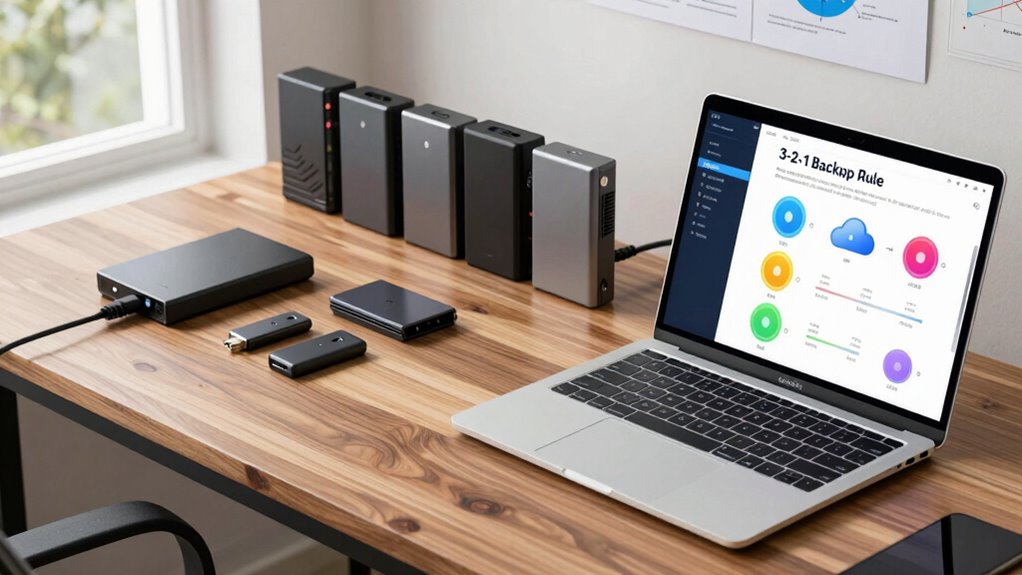
Determining how often to back up your business data is essential for maintaining data security and minimizing downtime. The frequency depends on how quickly your data changes and how critical it is to your operations. For frequently updated data, consider daily or even real-time backups using cloud storage solutions, which automatically sync your files. Less dynamic data can be backed up weekly or monthly. Always guarantee your backups are protected with data encryption to prevent unauthorized access. Automating backups helps maintain consistency and reduces the risk of human error. Remember, the goal is to have recent copies of your data readily available, so choose a backup schedule that balances operational needs with security best practices.
Essential Backup Tools and Services for Small Businesses

To protect your small business data effectively, you need the right backup tools and services that suit your specific needs. Cloud storage solutions are popular for their scalability and accessibility, allowing you to back up data securely off-site. Look for services that use strong encryption methods to safeguard your information both during transfer and at rest. Automation features can save you time and reduce errors, ensuring backups happen regularly. Additionally, consider backup services that offer versioning, so you can restore previous versions if needed. Key tools include:
- Cloud storage providers like Dropbox, Google Drive, or OneDrive
- Backup software with built-in encryption options
- Managed backup services tailored for small businesses
Choosing the right combination guarantees your data stays protected, compliant, and easy to recover when necessary.
How to Test Your Backups to Ensure Data Recovery

To guarantee your backups will work when needed, you should verify their data integrity and perform test restores regularly. This helps spot issues early and confirms that your recovery process is effective. Don’t forget to document your procedures so you can follow a clear plan during an actual data recovery.
Verify Backup Data Integrity
Ever wondered if your backups are truly reliable? To guarantee your data is safe, you need to perform regular backup validation and integrity verification. This process confirms that your backup copies are complete, uncorrupted, and usable when needed. Start by checking that all files are accessible and match their original versions. Use tools and scripts that automatically verify checksums or hashes to detect any data corruption. Additionally, periodically test the backup files in a controlled environment to confirm they can be restored without issues. Remember, verifying your backups isn’t a one-time task; it’s an ongoing part of maintaining a resilient backup strategy.
- Check file accessibility and consistency
- Use checksum or hash verification tools
- Conduct periodic test restores
Perform Test Restores
Have you ever wondered if your backups can actually restore your data when needed? Performing test restores is essential to verify your disaster recovery plan’s effectiveness. Regularly testing your backups ensures that your data archiving methods work correctly and that you can recover critical files swiftly. By simulating restore scenarios, you uncover potential issues before an actual disaster strikes. This process helps identify corrupted backups or incomplete data, preventing costly downtime. Keep in mind, testing restores should be a routine part of your backup strategy, not a one-time event. It confirms that your backup system is reliable and ready to support your business continuity efforts. Consistent testing helps you stay confident that your disaster recovery plan will hold when it matters most.
Document Recovery Procedures
Establishing clear recovery procedures is essential to guarantee your backups are effective when you need them most. Regularly testing your backups verifies that data can be recovered quickly and reliably, especially during disaster recovery scenarios. To do this effectively, document step-by-step instructions for restoring data, including verifying data integrity and encryption. Make sure your recovery procedures cover all critical systems and data. It’s also important to test the process periodically to identify potential issues before a real disaster strikes. Keep your recovery plan updated as your infrastructure evolves. Use data encryption to protect sensitive information during backup and recovery. This way, you assure your procedures are reliable, secure, and ready when needed.
- Create detailed, written recovery steps
- Test backups regularly, including encrypted data
- Update procedures after system changes
Simplify Your Backup Strategy Using the 3-2-1 Rule

To guarantee your data is reliably protected, adopting the 3-2-1 backup rule simplifies your strategy and reduces risks. This approach means keeping three copies of your data: one primary and two backups. Use different storage media, such as external drives and cloud backups, to diversify your protection. Cloud backups make it easier to access your data from anywhere, while encryption methods ensure your backups stay secure from unauthorized access. By following this rule, you avoid relying solely on one backup location, which can be risky. It also streamlines your backup process, making it easier to manage and verify your data’s safety. Implementing the 3-2-1 rule creates a straightforward, effective strategy that minimizes data loss and enhances overall security.
Frequently Asked Questions
How Does the 3-2-1 Rule Protect Against Ransomware Attacks?
The 3-2-1 rule protects you against ransomware by ensuring you keep multiple backups on different storage types, making it harder for malware to compromise all copies. By practicing cybersecurity awareness and encrypting your backups, you prevent hackers from accessing or tampering with your data. If an attack occurs, you can restore clean copies from offline backups, minimizing downtime and data loss.
Can Cloud Backups Replace Physical Storage Devices Entirely?
Cloud backups can substitute physical storage devices entirely, but it’s not always recommended. Studies show that 94% of enterprises use cloud storage for data redundancy and disaster recovery. Cloud storage offers scalable, off-site protection and easy access, reducing the need for physical devices. However, combining cloud backups with physical storage ensures maximum security, especially if network issues or cyberattacks target cloud services. So, consider a hybrid approach for complete data protection.
What Are the Cost Implications of Implementing the 3-2-1 Backup Strategy?
Implementing the 3-2-1 backup strategy can increase your storage costs and hardware expenses. You’ll need additional storage devices for onsite backups and cloud storage for offsite copies, which might lead to higher ongoing costs. However, this approach diminishes the risk of data loss, potentially saving you money in the long run. Budgeting for these expenses ensures you’re prepared for reliable backups without compromising your data security.
How Do You Securely Dispose of Outdated Backup Media?
To securely dispose of outdated backup media, you should perform media destruction and data sanitization. Physically destroy the media, like shredding or crushing disks, to prevent data recovery. For electronic files, use certified data sanitization tools to overwrite or erase the data completely. Always follow industry standards and regulations to guarantee that sensitive information can’t be recovered, safeguarding your business and client privacy.
What Legal Considerations Exist for Storing Backups in Different Regions?
You need to ensure legal compliance and data sovereignty when storing backups in different regions. Laws vary by country, so consider your backup practices meet regional regulations, like GDPR in Europe or HIPAA in the US. You’re responsible for safeguarding sensitive data and respecting local data sovereignty laws, which might restrict where data can be stored or transferred. Regularly review legal requirements and adjust your backup locations accordingly to avoid penalties.
Conclusion
Think of your data as a precious treasure chest. The 3-2-1 rule is your sturdy lock, hidden compartments, and backup keys—protecting your valuables from storms and thieves. By following this simple yet powerful strategy, you guarantee your business’s future remains safe and sound, no matter what challenges arise. Keep your treasure guarded with smart backups, and you’ll always have a safe harbor to return to when storms threaten.
Fall Picks
fall essentials
As an affiliate, we earn on qualifying purchases.