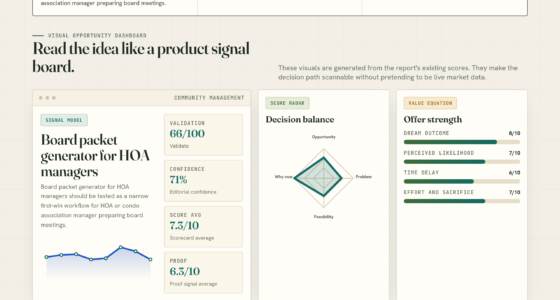

📊 Full opportunity report: The Evolution Of AI: Insights From Tech Giants on ThorstenMeyerAI.com — validation score, market gap, and execution plan.

Get business pricing on monitors, keyboards and dev gear
- Business-only prices and quantity discounts
- Tax-exempt purchasing
- Multiple users, one account, clear invoices
TL;DR
Major tech giants are facing potential risks from platform shifts in AI, similar to past industry disruptors. Companies like Intel and Kodak illustrate how incumbents can be displaced by paradigm changes. Understanding these patterns is crucial for predicting AI industry evolution.
Major technology companies, including Nvidia, Microsoft, and Google, are navigating evolving AI platforms that could reshape their dominance, according to industry analysts. These shifts pose risks similar to historic platform changes that toppled once-invincible giants, highlighting the importance of strategic adaptation in the AI era.
Thorsten Meyer, an industry observer, notes that despite current dominance, AI incumbents face a pattern where platform shifts, not direct competition, threaten their leadership. Historical examples like IBM, Kodak, Nokia, and Intel demonstrate that companies often fail when they ignore or misjudge disruptive paradigm changes. For instance, Intel’s missed opportunities in mobile and GPU markets led to its decline, while Nvidia’s rise underscores the importance of recognizing emerging platforms early.
Current AI leaders, including Nvidia, Microsoft, and Google, are heavily investing in model development, but experts warn that this focus on model supremacy may be akin to past incumbents’ fixation on core products before a shift renders them obsolete. The risk lies in underestimating new modalities such as AI agents, distribution channels, or data integration, which could become the new dominant platform.
Additionally, history shows that disruption often comes from lower-tier competitors offering “good enough” solutions at lower costs, which incumbents dismiss until it’s too late. Open-weight models exemplify this pattern, initially dismissed as inferior but eventually becoming the standard. The lesson for today’s giants is that winning the race for the best model does not guarantee long-term success if they fail to adapt to changing platform dynamics.
They die when the platform shifts underneath them — and their greatest strength becomes the anchor that drowns them. Christensen named it decades ago.
The killer is never a better version of the existing product. It’s a redefinition of the product itself the incumbent can’t embrace — because embracing it means destroying what made them rich.
Implications of Platform Shifts for AI Industry Leaders
This analysis underscores that the current AI landscape is vulnerable to shifts similar to past technological revolutions. Incumbent companies risk losing their dominance if they do not recognize and adapt to emerging platforms, such as AI orchestration, distribution strategies, or integrated workflows. The history of tech giants shows that failure to anticipate these shifts can lead to slow decline or rapid displacement, making strategic foresight essential for sustained leadership in AI.
AI development model training tools
As an affiliate, we earn on qualifying purchases.
As an affiliate, we earn on qualifying purchases.
Historical Patterns of Tech Displacement and Platform Shifts
Historically, dominant tech companies rarely fall due to direct competition; instead, they are displaced when new platform paradigms emerge. Examples include IBM’s mainframe era, Kodak’s film business, Nokia and BlackBerry’s mobile dominance, and Intel’s missed opportunities in mobile and GPU markets. These cases reveal that incumbents often struggle to embrace disruptive changes that redefine product categories, leading to eventual obsolescence.
In the current AI era, companies like Intel serve as cautionary tales. Despite decades of dominance, Intel’s refusal to pivot towards GPU and mobile markets allowed Nvidia to surpass it, culminating in Intel’s removal from the Dow Jones in 2024. Meanwhile, Nvidia’s valuation has soared, illustrating how platform shifts can redefine industry leaders.
"Giants don’t die from competition. They die from platform shifts. Recognizing and adapting to these shifts is key to long-term survival."
— Thorsten Meyer
As an affiliate, we earn on qualifying purchases.
Unclear Risks and Unfolding Industry Dynamics
It remains uncertain how quickly and in what form the next platform shift in AI will occur. While experts warn of potential shifts toward AI agents, distribution dominance, or integrated workflows, the exact trajectory and timing are still developing. Additionally, how current giants will respond and whether they can pivot effectively remains unknown.
As an affiliate, we earn on qualifying purchases.
Future Developments and Strategic Responses in AI
Industry leaders are likely to continue investing heavily in model innovation, distribution channels, and platform integration. Monitoring how these companies adapt to emerging shifts, especially in AI orchestration and user engagement, will be crucial. Further market movements, regulatory responses, and technological breakthroughs could accelerate or delay these platform transitions.
disruptive technology simulation kits
As an affiliate, we earn on qualifying purchases.
As an affiliate, we earn on qualifying purchases.
Key Questions
Could current AI leaders lose their dominance?
Yes, history suggests that if they fail to recognize and adapt to emerging platform shifts, even the most dominant companies could be displaced.
What are the signs of an impending platform shift?
Emerging technologies that offer "good enough" solutions at lower costs, changes in distribution channels, or new modalities like AI agents often signal upcoming shifts.
How can companies prepare for these shifts?
By diversifying focus beyond core products, investing in new platforms early, and remaining flexible to change, companies can better navigate disruptive transitions.
Is there a risk of a sudden collapse for current giants?
While a sudden collapse is unlikely, a slow eviction from the future is more probable if they ignore signs of impending platform shifts.
Source: ThorstenMeyerAI.com
Fall Picks
fall essentials
As an affiliate, we earn on qualifying purchases.