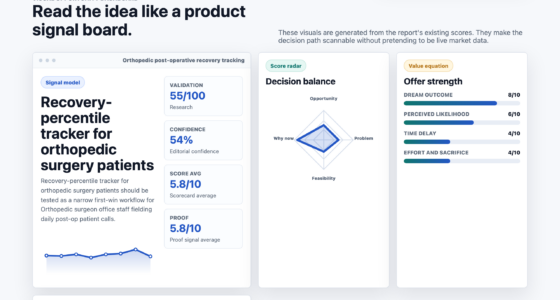

📊 Full opportunity report: Women’s Health Radar on IdeaNavigator AI — validation score, market gap, and execution plan.

Get business pricing on monitors, keyboards and dev gear
- Business-only prices and quantity discounts
- Tax-exempt purchasing
- Multiple users, one account, clear invoices
TL;DR
A digital health startup is developing a mobile app to help women aged 40-58 identify early perimenopause symptoms. The tool uses symptom logging and AI to flag potential transitions, aiming to improve diagnosis and care access.
A new digital health tool called the women’s health radar is in development to help women aged 40-58 identify early signs of perimenopause. The app uses symptom tracking and AI pattern detection to flag potential transitions, aiming to improve diagnosis and access to care. This development comes amid growing interest in menopause health and expanding coverage for virtual menopause services.
The women’s health radar is designed as a mobile app where women log daily symptoms such as sleep quality, mood, menstrual cycle irregularities, hot flashes, and energy levels. Optional wearable device data can also be integrated. The app employs rules-based and machine learning algorithms to compare logged data against validated perimenopause symptom scales, flagging early signals of transition.
Confirmed plans include creating a shareable, clinician-ready symptom summary that can facilitate referrals to covered telehealth or local menopause specialists. The app will position its outputs as educational tools rather than diagnostic devices. The initial validation involves a 4-6 week landing page test targeting women aged 40-55, measuring engagement through symptom logging, ongoing tracking, and referral requests.
Potential Impact on Perimenopause Diagnosis and Care
This initiative could address a significant gap in women’s health by enabling earlier detection of perimenopause, which is often misdiagnosed or overlooked. With most primary-care clinicians receiving limited menopause training, women frequently go undiagnosed for years, impacting their health and productivity. The app’s ability to flag early signals could lead to timely interventions, improving quality of life and reducing healthcare costs.
Furthermore, the integration with employer and health plan benefits signals a shift toward proactive, digital-first menopause management, potentially reducing attrition and absenteeism among women navigating this transition. As menopause becomes a growing category in femtech, this tool could set a new standard for accessible, data-driven symptom monitoring.
women's symptom tracking app for perimenopause
As an affiliate, we earn on qualifying purchases.
As an affiliate, we earn on qualifying purchases.
Rise of Menopause-Focused Digital Health Solutions
Menopause has shifted from a taboo topic to a rapidly expanding sector within femtech, with category leader Midi Health reaching a $1 billion valuation in February 2026. Most major PPO insurers now cover virtual menopause consultations, reflecting increased recognition of menopause as a key health issue. Advances in affordable wearables, validated symptom scales, and AI pattern detection have made early detection of perimenopause more feasible than ever.
Historically, many women experience symptoms like hot flashes, sleep disruption, and mood changes for years without a documented diagnosis, often due to lack of clinician training and awareness. The development of digital tools aims to bridge this gap by providing accessible, scalable solutions for symptom monitoring and early identification.
“The women’s health radar could transform how we detect and manage perimenopause, shifting from reactive to proactive care.”
— an anonymous researcher
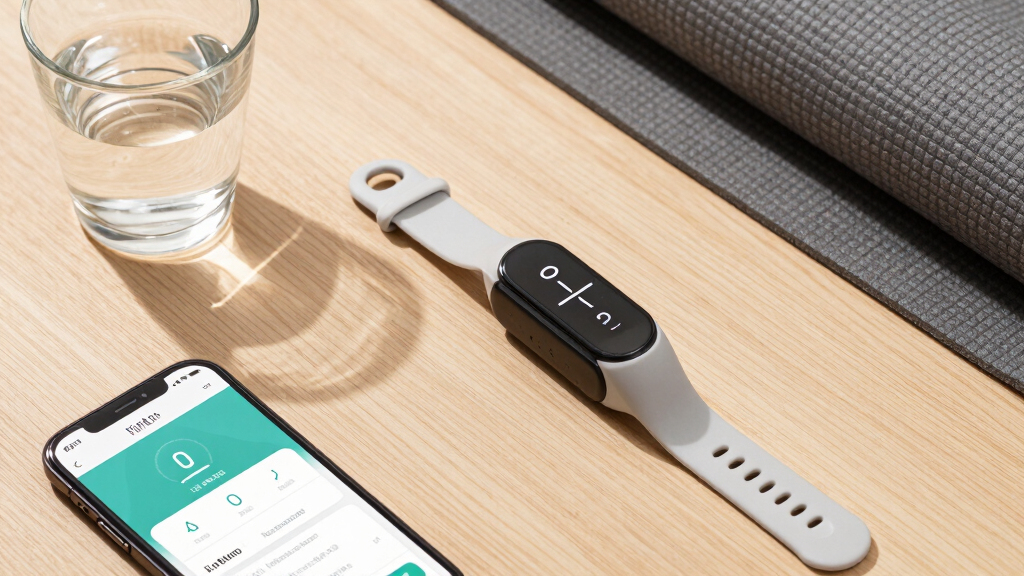
wearable device for menopause symptoms
As an affiliate, we earn on qualifying purchases.
As an affiliate, we earn on qualifying purchases.
Uncertainties Around Validation and Adoption
It is not yet clear how accurately the app will detect early perimenopause signals or how women will respond to the symptom summaries and referral prompts. The validation process is still in initial stages, and clinical efficacy remains to be demonstrated through ongoing testing.
Additionally, questions remain about user engagement, privacy concerns, and integration with existing healthcare systems, which will influence adoption and impact.
As an affiliate, we earn on qualifying purchases.
Next Steps for Testing and Market Entry
The development team plans to run a 4-6 week landing page test targeting women aged 40-55, measuring engagement metrics such as symptom logging, ongoing tracking, and referral requests. Positive results could lead to further clinical validation and eventual app launch. Partnerships with insurers and employers are also being explored to facilitate coverage and benefit integration.
virtual menopause consultation service
As an affiliate, we earn on qualifying purchases.
As an affiliate, we earn on qualifying purchases.
Key Questions
How will the women’s health radar app help women identify perimenopause?
The app allows women to log daily symptoms and uses AI to detect patterns indicative of early perimenopause, providing educational summaries and referral suggestions.
Is this tool a diagnostic device?
No, the app is positioned as an educational pattern detection tool, not a diagnostic device, and aims to facilitate early awareness and care routing.
When will the app be available for wider use?
The app is currently in development with initial testing planned for 4-6 weeks; broader availability depends on validation results and regulatory considerations.
Will insurance cover the app’s services?
Coverage plans are under discussion; initial focus is on integrating with employer and health plan benefits, with potential for covered telehealth referrals.
What is the significance of this development for women’s health?
It could enable earlier detection and intervention for perimenopause, improving health outcomes and reducing healthcare costs by addressing a long-standing diagnostic gap.
Source: IdeaNavigator AI
Halloween Picks
halloween
As an affiliate, we earn on qualifying purchases.