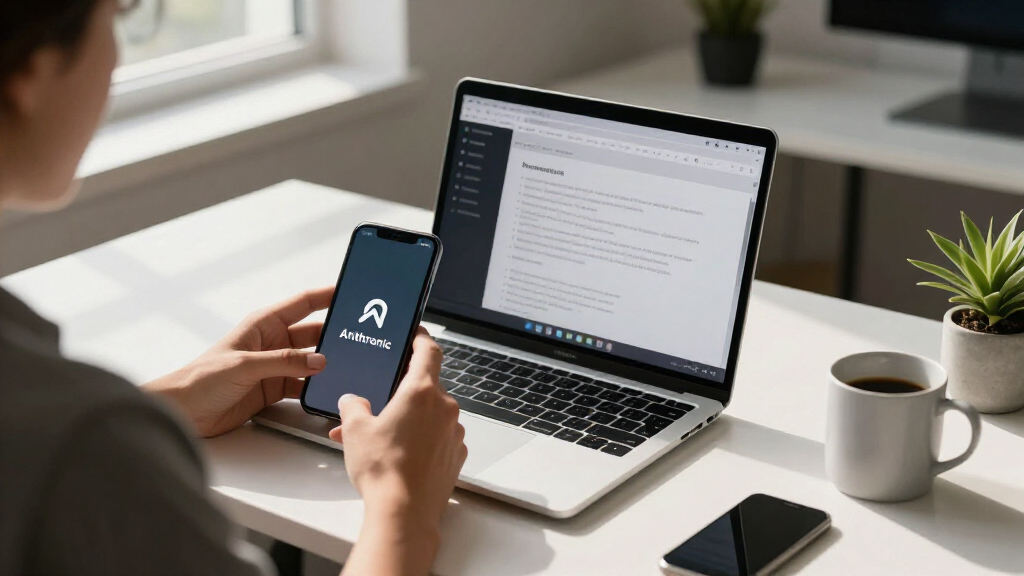

📊 Full opportunity report: What You Need To Know About Anthropic’s Invisible Watermark For AI Content on ThorstenMeyerAI.com — validation score, market gap, and execution plan.

Get monitors, keyboards and dev gear delivered free — and shop member deals
- Fast, free delivery on millions of items
- Access to Prime Big Deal Days deals on October 6–7
- Prime Video, Amazon Music and more included
TL;DR
Anthropic has launched an invisible watermark for outputs from its Claude AI chatbot. Details about how it works, its scope, and detection methods are not yet disclosed, raising questions about its effectiveness and application.
Anthropic has introduced an invisible watermark for content generated by its Claude AI chatbot, aiming to help identify AI-produced material without altering the appearance of the output. The company has not disclosed how the watermark functions, which outputs carry it, or how detection will work, raising questions about its practical use and scope.
The company, Anthropic, confirmed the addition of an invisible marker in Claude-generated outputs, but has not provided technical documentation or specifics about the method used. It is unclear whether the watermark applies to all formats, such as text, images, or files, or if it is limited to certain outputs.
There is no information on whether the feature is active for all users or being rolled out gradually. Additionally, the reporting does not specify if outside platforms or third-party tools can detect the watermark, or if only Anthropic can read it. The absence of detection procedures or error rate data leaves the effectiveness of the watermark uncertain.
Potential Impact on Content Verification and AI Transparency
The introduction of an invisible watermark could enhance efforts to verify AI-generated content, supporting moderation, authorship attribution, and disclosure policies. If effective and durable, it might help distinguish human from AI-produced material, which is increasingly important as AI-generated content proliferates across media, education, and online platforms.
However, without details on detection reliability and robustness to editing, the actual utility remains uncertain. The feature’s success depends on whether it survives common modifications like copying, translation, or reformatting, and whether third-party detection tools can reliably identify it.
As an affiliate, we earn on qualifying purchases.
Background on AI Watermarking and Content Identification Efforts
As AI-generated content becomes more widespread, companies and regulators face pressure to develop reliable methods for identification. Visible labels are easy to spot but can be removed or altered, while hidden watermarks or metadata aim to provide covert identification. Prior efforts have struggled with robustness, especially for text, which can be easily copied and edited without metadata preservation.
Anthropic’s announcement follows a broader industry trend toward embedding invisible markers in AI outputs, but technical approaches and standards remain varied and often proprietary. The lack of publicly available technical details about Anthropic’s watermark limits external evaluation and comparison with other solutions.
“The lack of technical details makes it difficult to assess how reliable or durable Anthropic’s watermark might be in real-world scenarios.”
— Thorsten Meyer, AI researcher
As an affiliate, we earn on qualifying purchases.
Unresolved Questions About Watermark Detection and Scope
It is not yet known which specific outputs or formats carry the watermark, whether the feature is active for all users or only select groups, or if it applies to API responses and edited content. The technical method used, its resistance to copying or editing, and the availability of detection tools are all undisclosed, leaving the reliability and utility of the watermark uncertain.
AI-generated content authentication devices
As an affiliate, we earn on qualifying purchases.
As an affiliate, we earn on qualifying purchases.
Next Steps for Transparency and Technical Disclosure
Anthropic is expected to release technical documentation detailing the watermark’s format, detection procedures, and scope of application. The company may also develop or partner with detection tools to verify the presence of the watermark. Further testing and independent evaluations will be necessary to assess its durability and accuracy, especially under common content modifications.
Monitoring how the feature is rolled out and whether third-party detection becomes available will be key to understanding its broader impact on AI content verification.
As an affiliate, we earn on qualifying purchases.
Key Questions
What exactly is Anthropic’s invisible watermark?
It is an embedded, hidden marker in Claude-generated content designed to identify AI-produced material, though technical details have not been disclosed.
Can I see the watermark in the content?
No, the watermark is described as invisible, meaning it cannot be detected visually and requires software or verification tools.
Does the watermark work on all types of outputs?
It is not yet clear which formats or outputs carry the watermark, or if it applies to edited or translated content.
Will the watermark survive copying or editing?
There is no information on whether the watermark persists after common modifications, which affects its practical usefulness.
How will this impact content moderation and verification?
If reliable, the watermark could support efforts to verify AI-generated content, but its actual effectiveness remains to be demonstrated.
Source: ThorstenMeyerAI.com
Halloween Picks
halloween
As an affiliate, we earn on qualifying purchases.