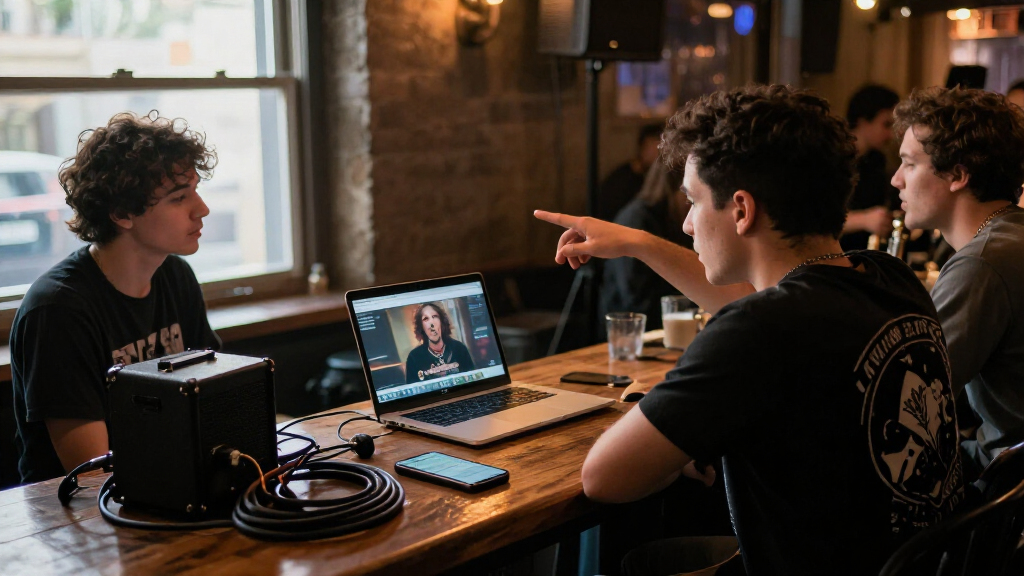

🔍 Read the full analysis: What The Digital Ozzy Debate Reveals About Fan Attitudes To AI on ThorstenMeyerAI.com

Get business pricing on monitors, keyboards and dev gear
- Business-only prices and quantity discounts
- Tax-exempt purchasing
- Multiple users, one account, clear invoices
TL;DR
Jack Osbourne said the backlash to plans for a commercial digital Ozzy Osbourne avatar was “my own fault,” even though the family had authorized the project. The episode, alongside criticism of an AI-made Odyssey and an unresolved video-credit allegation, suggests that fan reactions turn on how AI is used, presented and credited—not simply whether AI is involved.
Jack Osbourne says he mishandled the announcement of a planned interactive AI avatar of his late father, Ozzy Osbourne, after fans objected to the possibility of using it in advertising. His admission, alongside criticism of an AI-made Odyssey and an unconfirmed allegation that AI was used to adapt a creator’s footage, highlights a growing distinction in entertainment: audiences may accept AI, but are sensitive to consent, credit and the quality and purpose of the work.
Speaking on the Great Company podcast in an episode posted October 21, Jack Osbourne said, “The backlash, it was my own fault.” He said he had not been properly prepared to explain the project and that people assumed it would mean “Ozzy Osbourne selling cell phones.” The avatar, announced by Sharon and Jack Osbourne in May, was described as an interactive recreation using Ozzy’s voice, image and movement. Its planned summer debut in Proto Luma units in the United Kingdom and United States had not happened by the time of the source report.
Other entertainment disputes that week involved different concerns. On October 23, xAI’s Grok Imagine account posted a roughly seven-minute “Episode 1” of an Odyssey series, after Elon Musk had promised a full-length version before the end of 2026. TechCrunch’s Anthony Ha described moments that looked like real actors at sea but said the clip felt “completely airless.” Separately, a visual-effects artist known as Cache Bunny alleged that a shot in A$AP Rocky’s “Shroom Clouds” video used his 2019 footage with Rocky inserted through AI. The allegation had not received a public response from Rocky’s side in the report.
The examples do not establish a single public view of AI. They show different responses to different projects: the Odyssey clip was openly labeled AI-made, while the Rocky dispute concerns alleged use of another creator’s work and credit. The Ozzy project had family authorization, but Jack’s commercial-template remark helped prompt fears that the avatar would be used to sell products. Disclosure or permission alone did not settle audience concerns.
Why Fans Draw Lines Around AI
The cases matter to artists, rights holders and entertainment companies because audience acceptance depends on more than whether a tool is new. Consent from a subject or family, credit for source material and a clear account of commercial use can affect whether fans regard a project as respectful or exploitative. Those standards are not interchangeable: family approval for a digital likeness does not answer questions about how it will be used, and an AI label does not resolve a separate allegation about copied footage.
Craft also shapes the response. The Grok Imagine clip was identified as AI, yet Ha’s review focused on how it felt to watch. That is a reviewer’s assessment, not a measurement of audience opinion, but it illustrates that transparency cannot make viewers like a work. For companies, the practical issue is trust: unclear permissions, missing credit or a commercial purpose that surprises fans can become part of the story just as much as the technology itself.
Products Worth Considering

Apple iPad Air (4th Generation, 10.9-inch, Wi-Fi, 256GB) – Space Gray

Amazon Kindle Paperwhite (12th Generation, 2024), 16 GB, 7-inch Display, Jade

Amazon Kindle Paperwhite Signature Edition (12th Generation, 2024), 32 GB, Metallic Black
As an affiliate, we earn on qualifying purchases.
Three Disputes, Different Fault Lines
The Digital Ozzy plan was announced at Licensing Expo in Las Vegas on May 20, 2026. Jack described a “digital DNA” made from Ozzy’s voice, image and movement; Sharon said fans would be able to ask the avatar questions and hear answers in his voice. Hyperreal’s chief executive said the material was “curated, consented, and controlled” by the family. The backlash followed discussion of dropping the avatar into commercial templates. Jack later said fans had interpreted that as Ozzy endorsing products. The family’s consent was stated by project representatives; it did not prevent criticism of the proposed commercial application.
The Grok project followed Musk’s July pledge to make a full-length, “historically accurate” Odyssey before year’s end. The October 23 post was an episode, not the promised feature. Meanwhile, the October 19 “Shroom Clouds” release credited AI artists, according to the source, but Cache Bunny’s later allegation concerns the origin and adaptation of a particular shot. These are separate facts and claims, and the allegation is not established by the published account.
There are also examples of AI-assisted music presented with artist or family involvement. The source points to the Beatles’ “Now and Then,” which used machine learning to clean up a John Lennon demo, and Randy Travis’s AI-assisted comeback song, made with his and his family’s involvement. Those examples provide a contrast, not proof that all audiences approved. The source also notes that, since August 2, 2026, the EU AI Act requires deployers to disclose deepfakes, with a lighter, non-intrusive duty for evidently artistic work.
““The backlash, it was my own fault.””
— Jack Osbourne, on the Great Company podcast
What the Disputes Cannot Settle
The source report does not establish how representative these examples are of fan opinion overall. It gives no polling or comparable audience data, so the cases cannot support a claim that fans broadly accept or reject AI in entertainment. Responses may differ by project, audience and use.
It also remains unclear when, or in what form, the Digital Ozzy avatar will launch; the announced late-summer timing had passed without the planned debut. The source does not describe any final decision on its commercial use. Cache Bunny’s account of the “Shroom Clouds” footage remains an allegation, and no response from A$AP Rocky’s representatives had been published at the time covered. The Grok post, meanwhile, does not establish when a full-length Odyssey might appear or whether it will meet Musk’s stated description.
Launch Plans and Responses Ahead
The next concrete developments to watch are whether the Osbourne family or project partners set a new date for the avatar and clarify how it can be used in advertising. That could address one concern Jack said he failed to explain, but no revised launch details are provided in the source. A response from A$AP Rocky’s side, or further information from the artist alleging footage reuse, could clarify the video dispute; until then, the copying claim should be treated as unresolved.
For Grok Imagine, the remaining milestone is whether xAI delivers the promised full-length Odyssey before the end of 2026. The October episode is a published installment, not confirmation that the feature is complete. More broadly, future releases will show whether creators and rights holders can make permissions, attribution and commercial uses clear to audiences before controversy arises. For now, these cases offer examples of competing concerns, not a definitive verdict on fan attitudes.
Key Questions
What did Jack Osbourne say about the Digital Ozzy backlash?
On the Great Company podcast, he said the backlash was “my own fault” and that he had not been properly prepared to explain the project. He said people feared the avatar would be used to sell products.
Was the Digital Ozzy avatar released?
Not according to the source report. It had been planned for Proto Luma units in the UK and US from late summer 2026, but that debut had not occurred by October 26. No revised release date was given.
What is alleged about A$AP Rocky’s “Shroom Clouds” video?
Visual-effects artist Cache Bunny alleged that a shot used his 2019 footage, altered with AI to insert Rocky. This remains an allegation; the report said no response from Rocky’s side had been published.
Did Grok Imagine release the full Odyssey film Musk promised?
No. On October 23, the Grok Imagine account posted a roughly seven-minute item called “Episode 1.” Musk’s July pledge described a full-length film before the end of 2026, so the post was not confirmation that the feature was complete.
Source: ThorstenMeyerAI.com