📊 Full opportunity report: Using Phone Photos To Modernize Facility Gauge Monitoring Systems on IdeaNavigator AI — validation score, market gap, and execution plan.

Get business pricing on monitors, keyboards and dev gear
- Business-only prices and quantity discounts
- Tax-exempt purchasing
- Multiple users, one account, clear invoices
TL;DR
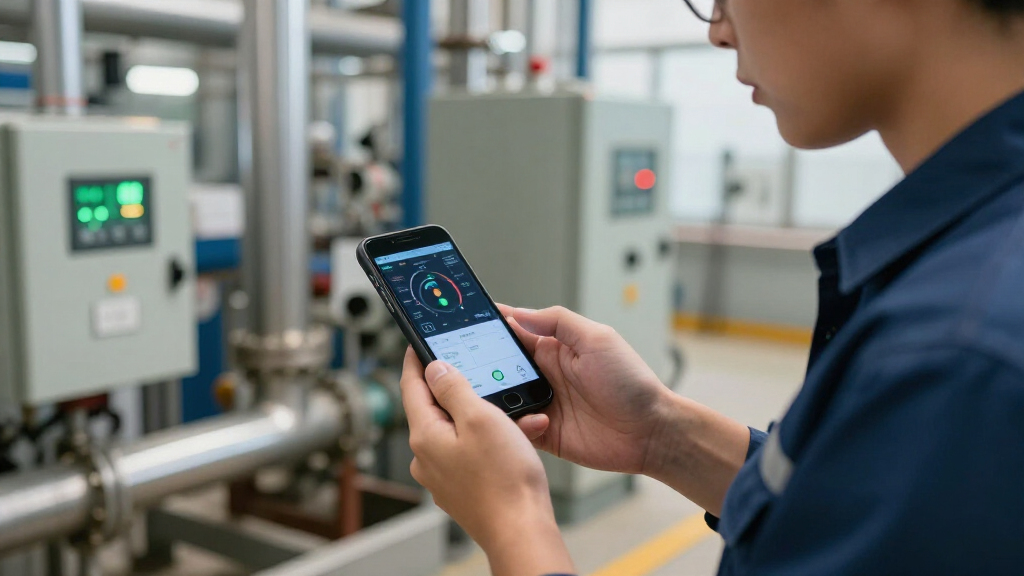
Facility managers are piloting a system where technicians photograph gauges during rounds. AI reads and logs the data, aiming to replace error-prone manual transcription and enable better failure detection.
Potential Impact of Phone Photo Gauge Monitoring
This development could significantly enhance operational efficiency and safety in industrial facilities by reducing transcription errors and enabling proactive maintenance. The approach offers a low-cost alternative to sensor installation, making modern data-driven maintenance accessible for legacy equipment. Improved trend analysis and early failure detection could lower downtime and maintenance costs, benefiting facility operators and asset owners. If validated, widespread adoption could transform traditional manual rounds into continuous, automated monitoring, aligning with broader Industry 4.0 initiatives.As an affiliate, we earn on qualifying purchases.
Legacy Equipment and the Need for Modern Monitoring
Many industrial facilities rely on analog gauges and sight glasses that require manual readings during routine rounds. These manual processes are prone to errors, often leading to missed early signs of equipment failure. Retrofitting legacy systems with IoT sensors is costly and complex, creating a barrier to digital transformation. Recent advances in sight-based AI models, capable of accurately reading analog dials and counters from phone images, present an opportunity to bridge this gap without hardware upgrades. Pilot programs exploring phone photo-based logging are emerging as a practical, low-cost solution that leverages existing workforce tools and infrastructure, promising to modernize facility management processes.AI gauge reader for industrial equipment
As an affiliate, we earn on qualifying purchases.
As an affiliate, we earn on qualifying purchases.
Uncertainties and Challenges in Phone Photo Gauge Monitoring
It is not yet clear how well the AI models will perform across diverse gauge types and lighting conditions in real-world settings. The pilot’s duration is limited, and longer-term reliability, integration with existing maintenance systems, and user acceptance remain to be evaluated. Additionally, there are questions about the scalability of the approach across different industries and facility sizes, and how effective anomaly detection will be in complex operational environments.As an affiliate, we earn on qualifying purchases.
Next Steps for Validation and Broader Adoption
The pilot program will run at three facilities over the next month, with results comparing error rates and early failure detection capabilities against traditional clipboard rounds. If the results are favorable, plans include expanding testing to additional sites, refining the AI models for broader gauge types, and developing integration pathways with existing maintenance management systems. Industry stakeholders are watching to see if this low-cost, scalable solution can become a standard part of digital transformation efforts in industrial operations.As an affiliate, we earn on qualifying purchases.
Key Questions
How does the phone photo system improve gauge reading accuracy?
The AI-powered app extracts gauge readings from photos, reducing transcription errors common with manual recording and enabling immediate anomaly detection.
Will this replace all manual rounds in facilities?
It is currently a pilot project aimed at validating the approach. Broader adoption will depend on pilot outcomes, scalability, and integration with existing maintenance workflows.
What are the costs involved in implementing this system?
The system primarily requires smartphones and a subscription-based app, making it a low-cost alternative to installing IoT sensors on legacy equipment.
Can this system work in all lighting and environmental conditions?
The pilot is testing the AI’s robustness across different conditions, but performance in challenging environments remains an area of ongoing evaluation.
What benefits does this approach offer over traditional sensor retrofitting?
It avoids the high costs and complexity of hardware upgrades, uses existing workforce tools, and provides trend data for predictive maintenance.
Source: IdeaNavigator AI
Fall Picks
fall essentials
As an affiliate, we earn on qualifying purchases.