
When evaluating treadmill motors, the number that predicts how long it lasts isn’t just horsepower—it’s about motor efficiency, build quality, and proper maintenance. A motor with high efficiency and good build quality can perform better and last longer, even if its horsepower is moderate. Factors like cooling, lubrication, and bearing quality also play vital roles. To find out more about what truly influences treadmill motor durability, keep exploring the details that go beyond just the numbers.
Key Takeaways
- Horsepower alone doesn’t predict motor longevity; efficiency and build quality are more critical factors.
- Motor efficiency ratings indicate how well the motor converts electrical energy, impacting durability.
- High-quality components and proper maintenance extend the lifespan regardless of motor size.
- Proper cooling, lubrication, and regular checks prevent overheating and premature failure.
- The overall build quality and suitability for your workout intensity influence motor lifespan more than just horsepower.
What Is a Treadmill Motor and How Does It Work?
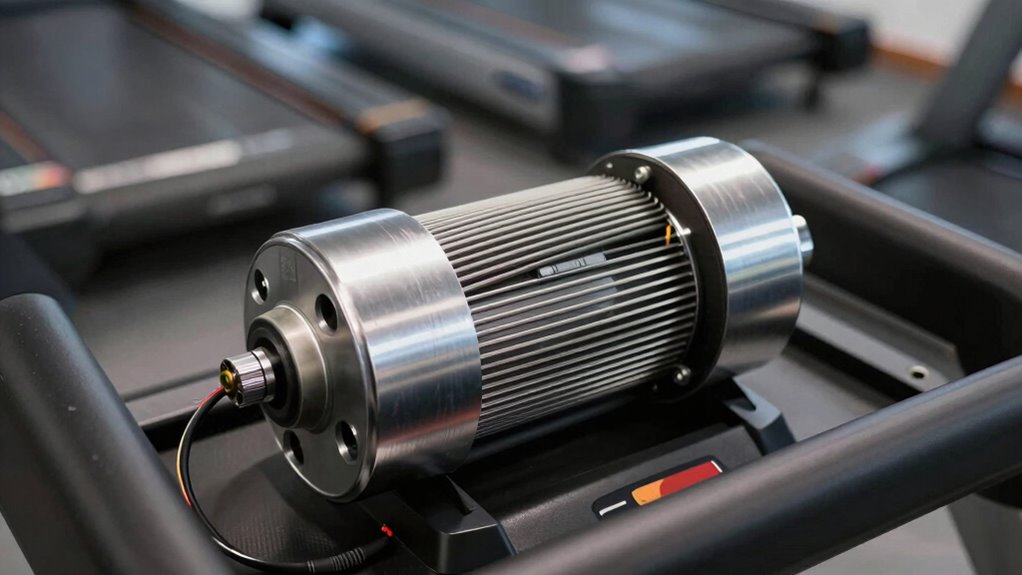
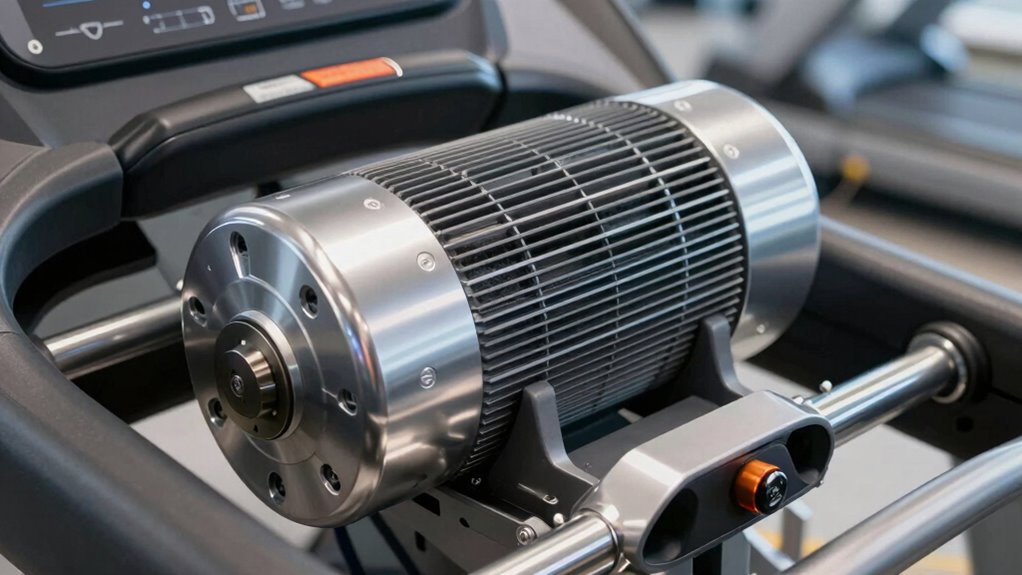
Have you ever wondered what powers a treadmill’s smooth, consistent movement? It’s the motor, the core component that drives the belt. The motor’s efficiency determines how well it converts electrical energy into mechanical power, affecting performance and energy consumption. A high-efficiency motor uses less electricity and generates less heat, ensuring longer-lasting operation. Voltage compatibility is also critical; your treadmill’s motor must match your power supply’s voltage to operate safely and effectively. If the motor isn’t compatible, it might not run properly or could suffer damage. Understanding these factors helps you choose a motor that provides reliable performance and longevity. Additionally, the role of contrast ratio influences how well the motor performs under various load conditions, impacting overall durability and performance. Being aware of motor lifespan factors can help you assess the durability and maintenance needs of your treadmill motor over time. Proper motor cooling mechanisms are essential to prevent overheating and extend the life of the motor. For example, effective cooling can significantly reduce the risk of overheating during intensive use. Moreover, paying attention to motor quality and build can make a notable difference in the motor’s durability and efficiency. Fundamentally, the motor transforms electrical energy into the mechanical action that keeps your workout steady, making it an essential part of your treadmill’s functionality.
Does Horsepower Really Tell You How Long a Treadmill Will Last?

While horsepower is often highlighted in treadmill specifications, it doesn’t necessarily determine how long your treadmill will last. Motor efficiency plays a vital role in power longevity, which directly impacts durability. A motor with higher horsepower may seem stronger, but if it’s less efficient, it could wear out sooner due to excessive heat and strain. Conversely, a motor with moderate horsepower but high efficiency can deliver longer-lasting performance because it optimizes power use and minimizes unnecessary stress. Additionally, gear care tips can help maintain motor performance and extend the lifespan of your treadmill. Proper maintenance routines are essential to prevent motor wear and keep the treadmill running smoothly over time. Regularly monitoring motor temperature and ensuring proper lubrication can further enhance efficiency. Furthermore, understanding motor lifespan factors can help you make informed decisions about your treadmill’s durability. Recognizing the importance of energy efficiency can lead to better maintenance practices and improved longevity. Consequently, focusing solely on horsepower can be misleading. Instead, consider how motor efficiency influences the treadmill’s ability to sustain performance over time. This efficiency ultimately affects how long your treadmill will last, making it a more reliable indicator of durability than horsepower alone.
Key Motor Specs Beyond Horsepower That Affect Durability

Beyond horsepower, several key motor specifications notably influence a treadmill’s durability. One vital factor is bearing lifespan; high-quality bearings reduce friction and wear, extending the motor’s operational life. Poor bearings can cause increased heat and noise, leading to premature failure. Another essential aspect is motor efficiency, which indicates how well the motor converts electrical energy into mechanical work. A more efficient motor generates less heat and consumes less power, reducing strain on components and enhancing longevity. Proper battery maintenance, including correct charger settings and low-voltage cutoff, can also help prevent motor strain caused by inconsistent power supply. Additionally, understanding motor efficiency ratings can guide users toward more durable models. Regular lubrication of moving parts can further decrease friction and prolong motor life. Maintaining proper cooling systems can also significantly extend the lifespan of your motor by preventing overheating. Incorporating predictive maintenance practices can help identify potential issues early and prevent unexpected motor failures. These specifications directly impact how long your treadmill motor lasts, often more so than horsepower alone. By paying attention to bearing quality and efficiency ratings, you guarantee your treadmill operates smoothly and lasts longer, saving you money and frustration over time.
How to Pick the Right Treadmill Motor for Your Fitness Goals
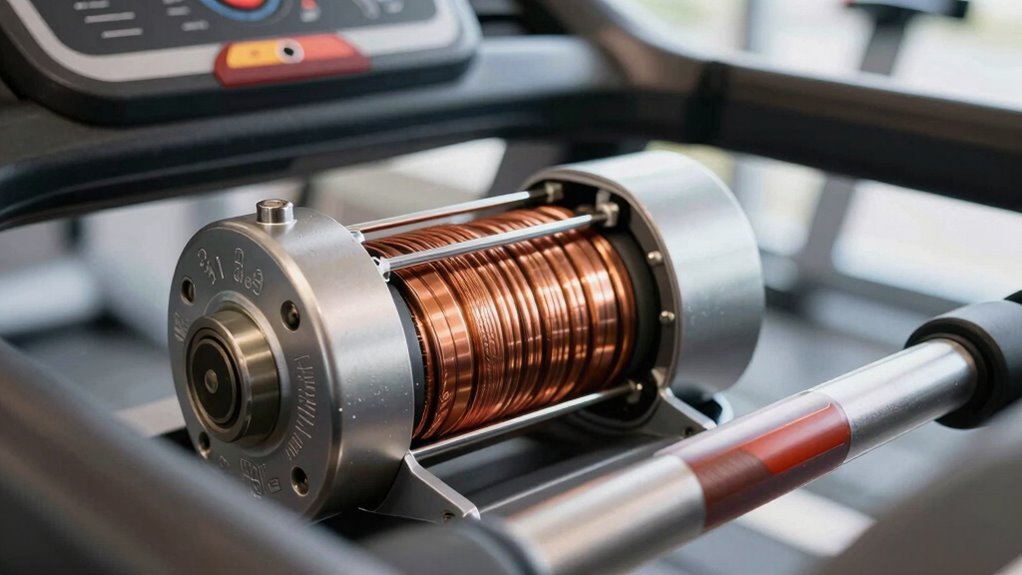
Choosing the right treadmill motor depends heavily on your fitness goals, as different motors are designed to handle varying levels of use and intensity. If you’re aiming for light walking or occasional workouts, a motor with high motor efficiency and lower energy consumption will suffice, saving you money and reducing wear. For intense running sessions or frequent use, opt for a more powerful motor with higher horsepower and durable components. Consider energy consumption to keep operating costs down, especially if you’ll use the treadmill regularly. A motor with good efficiency ensures your machine runs smoothly without wasting power. Matching motor strength and efficiency to your workout intensity helps extend the lifespan of your treadmill and keeps you motivated to stay active. Additionally, understanding motor durability can help you choose a model that will withstand regular use and last longer over time. Recognizing the impact of workload on motor wear can guide you toward selecting a motor that balances performance and longevity. Being aware of professional recommendations can further assist in making an informed decision about your treadmill motor. Moreover, considering motor efficiency can lead to better overall energy savings and reduced environmental impact. To maximize your investment, it’s also beneficial to evaluate maintenance needs and how they might affect the longevity of your treadmill motor over time.
Myths About Treadmill Motor Power You Should Know?

Many people believe that a more powerful treadmill motor always means better performance, but this isn’t necessarily true. Motor size isn’t the only factor that determines a treadmill’s quality or longevity. Some branding myths suggest that higher horsepower guarantees durability, but that’s not accurate. A larger motor might handle more weight or speed, but if it’s poorly built or lacks quality components, it won’t last longer. Instead, focus on the motor’s actual specifications and how it’s designed, not just the branding. Cheaper or lesser-known brands can sometimes offer reliable motors, while well-known brands might cut corners. Always consider the motor’s construction, maintenance needs, and user reviews before assuming that horsepower alone predicts how long your treadmill will last. Additionally, understanding basic car repair tips can help you better assess product quality and maintenance needs in other machinery. Being aware of proper maintenance practices can extend the life of your treadmill motor and prevent costly repairs. Moreover, recognizing machine build quality and how it influences durability can help you make smarter purchase decisions and ensure your equipment remains reliable over time.
Frequently Asked Questions
How Does Motor Maintenance Influence Treadmill Lifespan?
Motor maintenance profoundly impacts your treadmill’s lifespan. Regularly lubricate the motor to prevent overheating and wear, ensuring smooth operation. Keep the belt tension properly adjusted to reduce strain on the motor and avoid premature failure. When you stay consistent with these maintenance tasks, you help the motor run efficiently, extending the treadmill’s overall life. Proper care minimizes repairs and keeps your workout equipment performing at its best longer.
Are Brushless Motors More Durable Than Brushed Ones?
You might think brushless motors are more durable, and in many cases, they are. Their motor design reduces wear and tear because they have no brushes that can wear out over time. Manufacturing quality also plays a significant role. If a brushless motor is well-made, it’ll last longer and perform better than a brushed one. So, choosing high-quality, brushless motors generally means more durability and less maintenance.
What Is the Typical Lifespan of a Treadmill Motor?
A treadmill motor typically lasts between 8 to 12 years, depending on motor efficiency and maintenance. When you use a high-quality motor with good electrical components, it runs more efficiently and wears out slower. Regularly cleaning and lubricating the motor and ensuring proper voltage can extend its lifespan. Keep in mind, brushed motors may wear out sooner than brushless ones due to their electrical components’ durability.
How Do Ambient Temperature and Humidity Affect Motor Longevity?
Think of your treadmill motor like a delicate plant; extreme temperature impact and humidity effects can stunt its growth. High temperatures accelerate wear, while humidity causes corrosion and electrical issues. I once saw a gym with a rusted treadmill because of poor ventilation. Keeping your workout space cool and dry helps the motor last longer, ensuring your investment stays strong and reliable, just like a healthy plant thriving in ideal conditions.
Can Upgrading a Treadmill’s Motor Extend Its Overall Life?
Upgrading your treadmill’s motor can extend its overall life by improving power efficiency and reducing motor noise. A more efficient motor uses less energy and generates less heat, helping it last longer. Plus, quieter operation indicates better condition and fewer wear issues. Keep in mind, choosing a high-quality replacement guarantees you get the benefits of increased durability, making your treadmill perform smoothly for years to come.
Conclusion
Understanding treadmill motors helps you make smarter choices. Did you know that a higher horsepower doesn’t always mean a longer-lasting motor? In fact, some models with less power last just as long if built well. So, focus on key specs and your fitness needs rather than horsepower alone. With the right knowledge, you can find a treadmill motor that lasts up to 10 years, keeping your workouts smooth and reliable.