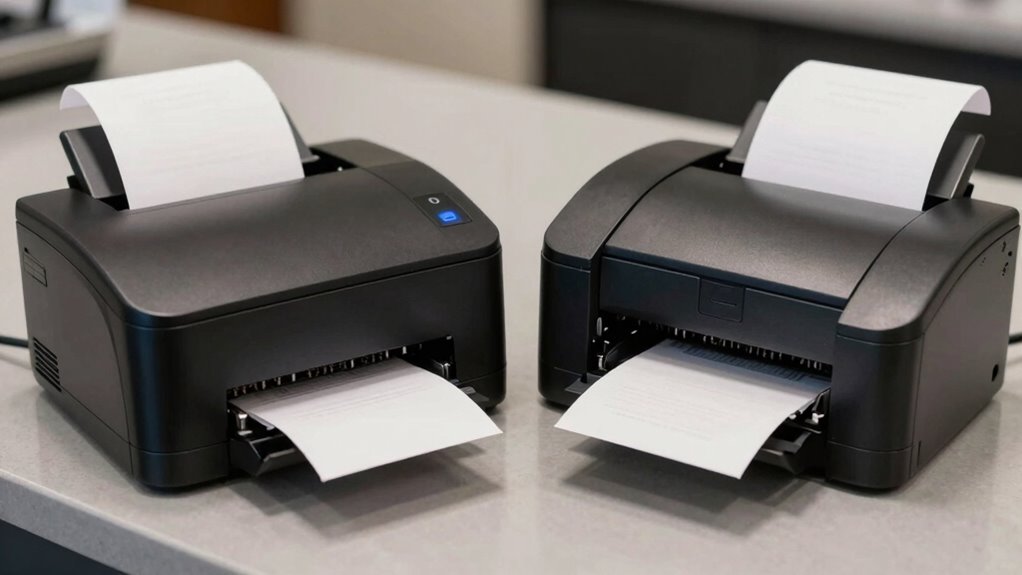
Choosing between thermal and impact receipt printers depends on your business needs. Thermal printers offer fast, high-quality prints with minimal maintenance, making them ideal for busy retail or hospitality setups. Impact printers produce durable, moisture-resistant receipts, perfect for environments requiring long-term records or multipart forms. Your choice affects costs, durability, and workflow. To make the best decision, consider your environment and specific needs—more details can help you find the right fit.
Key Takeaways
- Thermal printers offer faster, higher-quality prints suitable for customer-facing receipts, while impact printers produce durable, moisture-resistant multipart forms.
- Impact printers are noisier and slower but excel in environments needing long-lasting, damage-resistant receipts.
- Thermal printers have lower ongoing maintenance costs and energy consumption, making them more cost-effective over time.
- Impact printers are generally cheaper initially but incur higher costs for ribbons and larger paper rolls.
- Choosing the right printer depends on environment durability needs, print longevity, operational speed, and budget considerations.
What Are Thermal and Impact Receipt Printers? An Overview of Technologies
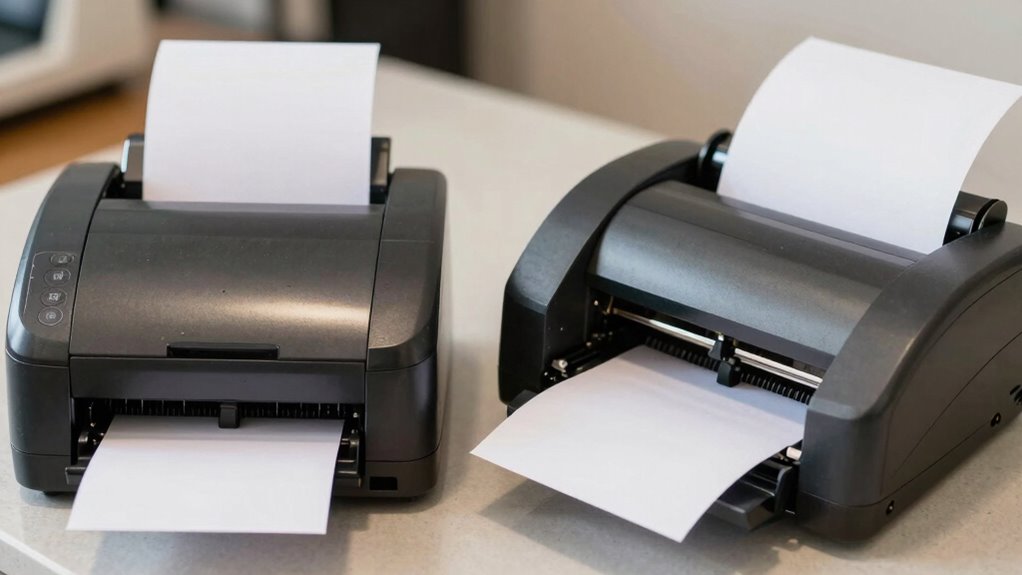
Understanding the differences between thermal and impact receipt printers is essential when choosing the right printing solution for your business. Thermal printers use heat-sensitive paper, which offers moderate paper durability but can fade over time if exposed to heat or sunlight. They eliminate the need for ink, toner, or ribbons, making them low maintenance and cost-effective. Impact printers, on the other hand, strike an inked ribbon or use ink alternatives to produce receipts. This results in highly durable prints that resist smudging and fading, ideal for long-term records. Impact printers tend to be noisier and slower but excel in environments where paper durability matters most. Your choice depends on whether you prioritize print longevity or cost and ease of use.
How Do Thermal and Impact Printers Differ in Print Quality and Speed?
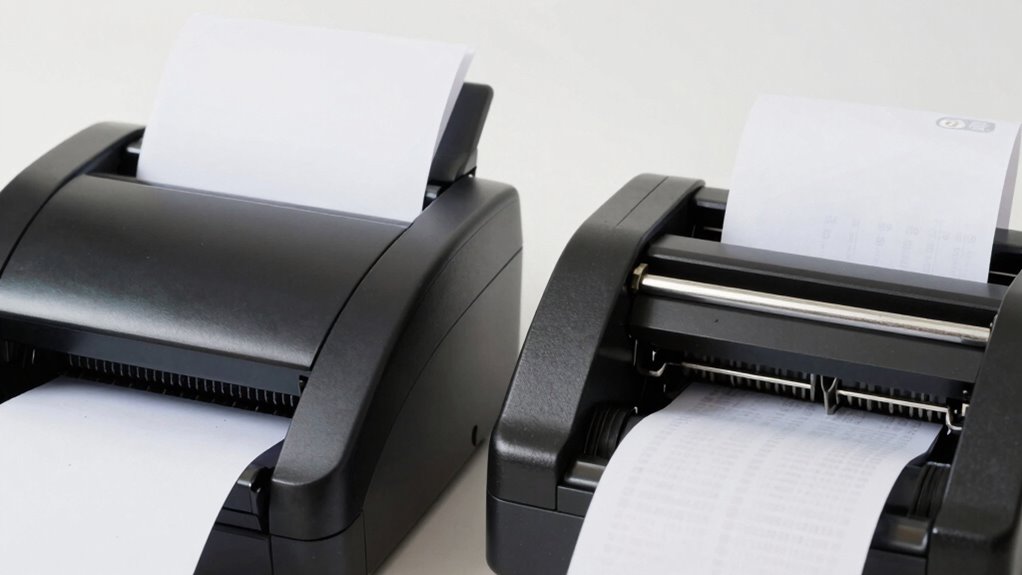
Thermal and impact printers differ markedly in both print quality and speed, affecting their suitability for various business needs. Thermal printers produce sharp images with higher print resolution, ensuring clear receipts ideal for customer-facing uses. Impact printers, on the other hand, generally offer lower resolution, resulting in less crisp text and graphics. When it comes to speed:
- Thermal printers typically print faster due to fewer moving parts.
- Impact printers are slower because of the mechanical strike process.
- Noise levels are considerably higher in impact printers, which can be disruptive in quiet environments.
- Print technology and research topics play a crucial role in determining the most suitable printing technology for specific applications.
- Additionally, maintenance requirements vary, with thermal printers often needing careful handling of thermal printheads to maintain print quality.
- The cost of operation can also differ significantly, impacting long-term affordability and choosing the right printer for your business needs.
Your choice depends on your priorities: thermal printers excel in speed and clarity but may require more careful maintenance. Impact printers may lag in quality but offer durability and versatility for certain printing needs.
Which Printer Type Is More Cost-Effective to Maintain and Operate?
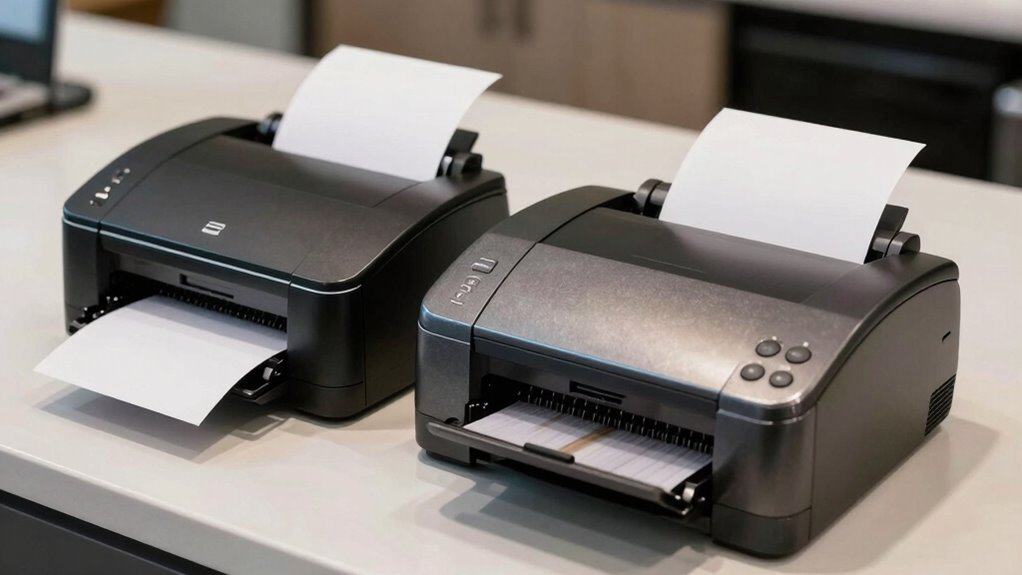
When comparing printers, you’ll want to consider maintenance costs and how efficiently they run daily. Some models may save you money over time, while others require more frequent repairs or supplies. Understanding these factors helps you choose the most cost-effective option for your needs. Additionally, evaluating the durability and longevity of the printer can impact overall cost savings, and assessing the performance consistency can further reduce downtime and repair expenses over the printer’s lifespan. Incorporating measurement accuracy into your evaluation ensures reliable printing results that can prevent costly reprints or errors. Furthermore, considering the environmental impact of the printer can contribute to long-term sustainability and cost efficiency.
Maintenance Costs Comparison
Choosing the most cost-effective receipt printer depends on several factors, including maintenance costs. Impact printers generally have lower ongoing expenses because they don’t require ink cartridges, but they need frequent paper roll replacements. Thermal printers tend to have higher initial costs but lower maintenance since they lack ink cartridges and tend to require less cleaning. To compare:
- Ink cartridges in impact printers need regular replacement, increasing costs over time.
- Paper rolls are a common expense for both types, but impact printers often use larger rolls.
- Thermal printers have minimal maintenance, mainly occasional head cleaning, reducing long-term costs.
- The environmental impact of each printer type can influence ongoing costs and sustainability considerations.
Ultimately, impact printers may be cheaper to maintain if you need frequent printing, but thermal printers save money through lower upkeep and fewer consumables.
Operational Efficiency Factors
Evaluating operational efficiency involves comparing how easily and quickly each printer type can be used and maintained during daily operations. Thermal printers generally have higher print durability, especially with receipts that are exposed to handling or heat, reducing the need for frequent replacements. Impact printers, on the other hand, often require more maintenance due to their moving parts and ink ribbons, which can increase downtime. When considering energy consumption, thermal printers typically use less power, making them more cost-effective over time. Impact printers tend to consume more energy due to their mechanical printing process. Overall, thermal printers offer better operational efficiency because they’re faster, more reliable, and cheaper to operate, especially in environments where quick turnaround and low maintenance are priorities. Additionally, ease of maintenance is a key factor that influences overall operational efficiency, as it affects the time and resources needed for upkeep. Incorporating maintenance-friendly design can further enhance the cost-effectiveness of thermal printers by simplifying repairs and routine tasks, and innovations in technology continue to improve these features, making thermal printers a preferable choice for many businesses. Moreover, understanding long-term costs helps in making informed decisions about printer investments, as initial costs are just one part of the overall operational expenses. To maximize efficiency, selecting printers with user-friendly interfaces can also reduce training time and errors during operation.
What Are the Best Use Cases for Thermal vs Impact Receipt Printers?
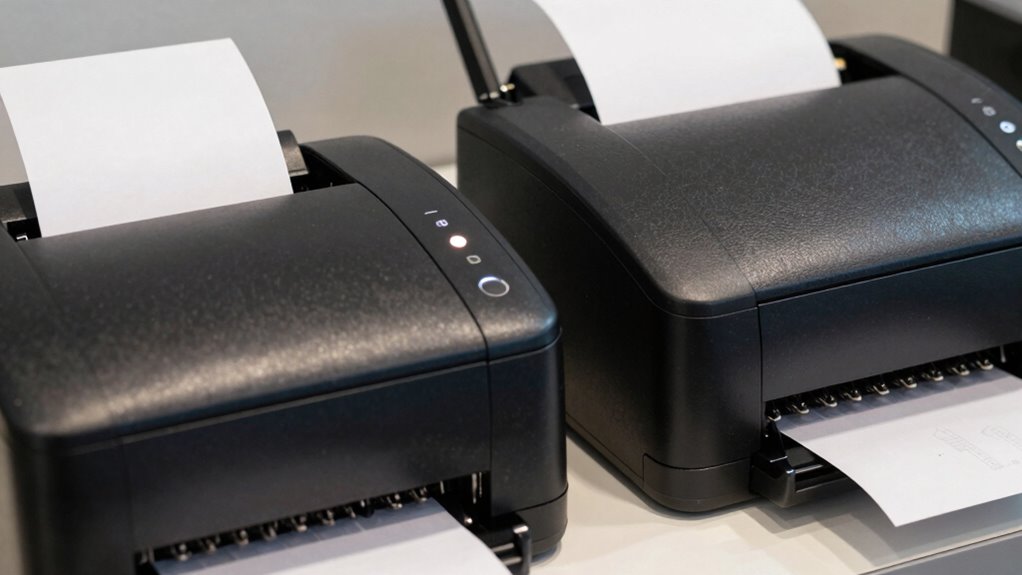
Thermal and impact receipt printers each excel in different environments based on their strengths. If you’re handling retail checkout or hospitality receipts, choosing the right printer depends on your needs. Consider these key use cases:
- Retail checkout: Thermal printers are ideal for fast-paced environments due to their speed and quiet operation, making checkout lines smoother. Their printing technology allows for rapid transaction processing, which is essential during busy hours. Additionally, thermal printers typically require less maintenance, reducing downtime and operational costs.
- Hospitality receipts: Impact printers are better for producing durable receipts that can withstand moisture and handling, common in restaurants and bars.
- Long-term records: Impact printers can print on multipart forms or carbon copies, useful for backup copies or detailed transaction records.
- Environmental conditions: Understanding print durability and how each printer type performs in various conditions can help optimize operational efficiency. Additionally, factors like maintenance requirements should influence your choice to ensure consistent performance.
- Moreover, assessing print quality can help determine which printer best meets your customer service standards. Understanding these use cases helps guarantee you select the right printer for your specific environment and customer experience.
How Do Compatibility and Environmental Factors Influence Your Choice?
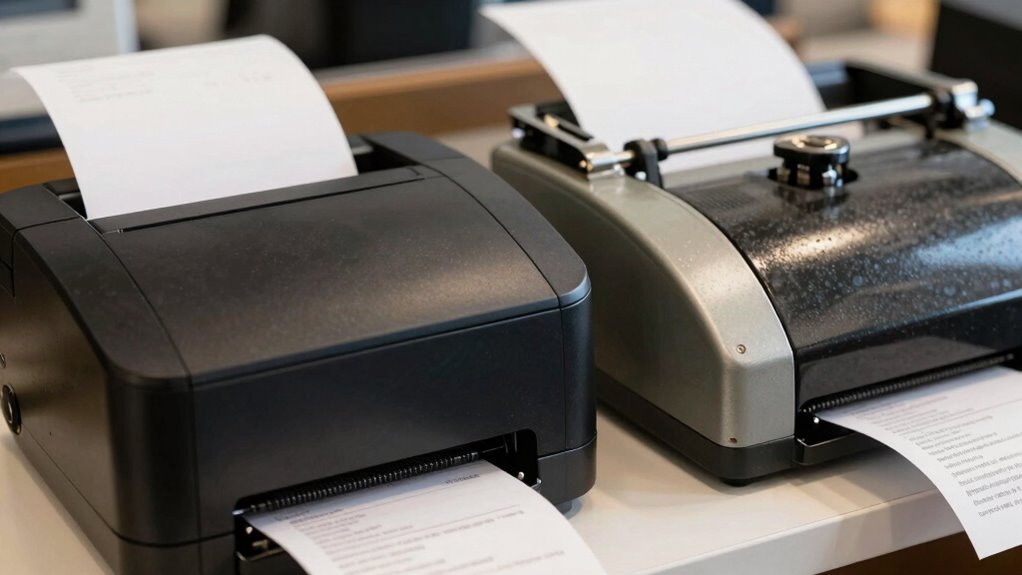
When selecting a receipt printer, it’s important to contemplate how compatibility and environmental factors can impact performance and longevity. Device compatibility ensures the printer works seamlessly with your existing systems, avoiding costly upgrades or integrations. Environmental durability matters if your location faces dust, moisture, or high temperatures, as these factors can shorten the printer’s lifespan. To help, consider this table:
| Compatibility Factors | Environmental Considerations |
|---|---|
| Connection interfaces | Dust and moisture resistance |
| Software integration | Temperature tolerance |
| Power requirements | Vibration and shock resilience |
Choosing a printer with strong environmental durability and device compatibility ensures reliable operation, reduces maintenance costs, and extends the device’s lifespan. Assess your environment and existing systems carefully before making a decision. Additionally, evaluating installation requirements can prevent future issues and ensure smooth integration with your setup. Being aware of compatibility standards can further streamline your selection process and avoid unforeseen complications. Understanding industry standards for receipt printers can help you select a device that meets both your operational needs and compliance requirements. Moreover, reviewing manufacturer specifications can provide additional insights into the printer’s suitability for your specific environment.
Which Receipt Printer Should You Choose for Your Business? Key Factors to Consider
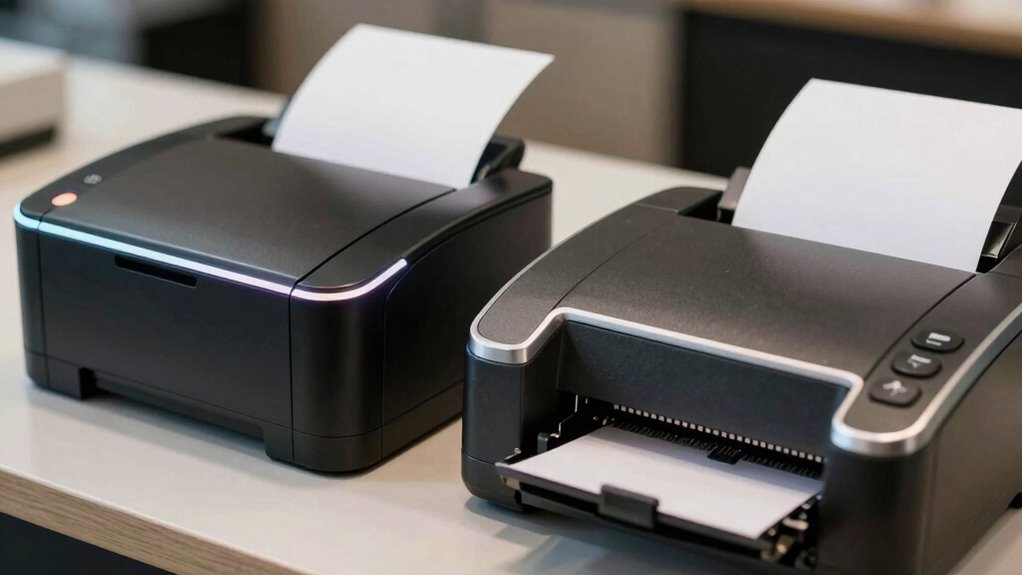
When choosing a receipt printer, you need to consider your budget and what you’re willing to spend. Think about the print speed and quality to ensure your receipts look professional and are produced efficiently. Also, factor in space and installation needs to find a solution that fits seamlessly into your business environment.
Cost and Budget
Choosing the right receipt printer for your business often hinges on your budget, so it’s vital to balance features with affordability. Your budget planning should consider:
- Initial cost of the printer, whether thermal or impact
- Ongoing expenses like paper, ink, and maintenance
- Long-term value based on durability and operational costs
Understanding your pricing strategies helps you make smarter choices, guaranteeing you get the best return on investment. Impact printers might have a lower upfront cost but higher consumable expenses, while thermal printers often require a bigger initial investment but lower ongoing costs. Carefully evaluating these factors will help you select a printer that fits your financial plan without sacrificing essential features. Being strategic about cost ensures you choose a reliable device that aligns with your business’s financial health.
Print Speed and Quality
Selecting a receipt printer that delivers the right balance of speed and quality is essential for maintaining efficient checkout processes and ensuring customer satisfaction. Fast print speed helps reduce wait times, while high print quality guarantees clear, professional receipts. Your choice impacts customer perception and operational flow. Consider how quickly your printer can produce receipts without sacrificing clarity.
| Printer Type | Print Speed | Print Quality |
|---|---|---|
| Thermal | Fast (up to 300mm/sec) | Sharp and clear |
| Impact | Moderate (around 2-4 lines/sec) | Less crisp |
| High-end Thermal | Very fast | Excellent for detailed receipts |
| Basic Impact | Slower | Quality varies |
| Commercial Thermal | Consistently fast | Consistent high quality |
Prioritize your business needs to select a printer that balances print speed and quality effectively.
Space and Installation
Considering the space available in your business environment is essential when choosing a receipt printer, as installation ease and footprint can considerably impact workflow. Proper hardware placement ensures your setup remains efficient and accessible. To optimize space, consider these factors:
- Size and footprint of the printer to fit your counter or storage area
- Ease of installation, including connectivity options and setup complexity
- Accessibility for maintenance and paper replacement without disrupting operations
Selecting a compact printer helps with space optimization, especially in tight areas. Also, think about how the printer’s placement affects your workflow—placing it too far or in an awkward spot can slow down service. Whether you opt for thermal or impact, your choice should prioritize seamless hardware placement and efficient use of space.
Frequently Asked Questions
What Are the Typical Lifespan Differences Between Thermal and Impact Printers?
You’ll find thermal printers usually last around 2 to 5 years with proper maintenance, while impact printers can last 5 to 10 years or more. Impact printers tend to be more durable but require more maintenance, which can affect your overall costs. Considering lifespan helps you balance maintenance needs and cost considerations, ensuring you pick a printer that fits your business’s needs and budget.
How Does Print Durability Compare Between Thermal and Impact Receipts?
They say “you get what you pay for,” and when it comes to print durability, impact receipts often last longer because of better material resilience. Thermal receipts tend to fade over time due to print fade, especially when exposed to heat, light, or moisture. Impact receipts, using ink or ribbon, resist wear better, making them more reliable for long-term records. If durability matters, impact printing is your best bet.
Can Impact Printers Print in Color or Graphics Effectively?
Impact printers can print in color and produce graphics, but their graphic quality isn’t as sharp as thermal printers. You’ll find that impact printers struggle with detailed images and vibrant colors, making them less ideal for high-quality visual needs. If clear, colorful graphics are important for your receipts, a thermal printer is a better choice. Impact printers are better suited for simple, monochrome text and basic receipts.
Are Thermal Printers More Environmentally Friendly Than Impact Printers?
Yes, thermal printers are generally more eco-friendly than impact printers. They use eco-friendly materials in their design, reducing harmful waste, and consume less energy during operation. You’ll notice fewer consumables like ink or ribbons, which cuts down on waste and environmental impact. By choosing thermal printers, you support sustainability, reduce your carbon footprint, and promote greener practices in your business or personal use.
How Do Noise Levels Impact the Choice of Printer in Different Settings?
You should consider noise impact because it directly affects the operational environment. In busy retail or restaurant settings, quieter printers reduce disturbances and improve customer experience. Impact printers tend to be noisier, which might be disruptive, whereas thermal printers operate more quietly. Choosing a lower noise level enhances workflow, minimizes distractions, and creates a more comfortable atmosphere for staff and customers alike.
Conclusion
Choosing between thermal and impact receipt printers is like picking the right tool for a job—you need the one that fits your needs perfectly. Consider your print quality, speed, maintenance costs, and environment. By understanding these differences, you’ll make a confident choice that keeps your business running smoothly. Remember, the right printer isn’t just a device; it’s the backbone of your customer experience, like the steady beat of a well-tuned drum.