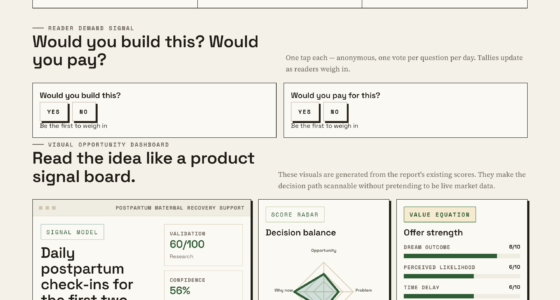
📊 Full opportunity report: Therapist Directory Helps Navigate Screen Addiction Support on IdeaNavigator AI — validation score, market gap, and execution plan.

Get business pricing on monitors, keyboards and dev gear
- Business-only prices and quantity discounts
- Tax-exempt purchasing
- Multiple users, one account, clear invoices
TL;DR

IdeaNavigator AI has outlined a proposed therapist directory for people seeking care for compulsive gaming, pornography use or social-media use. The concept would verify providers’ screen-specific training and experience, then test demand by recruiting 50 specialists across three metropolitan areas. It is a proposal, not a launched service or a reported clinical finding.
IdeaNavigator AI has proposed a therapist directory focused on compulsive screen use, designed to help people and parents find providers with documented experience treating concerns such as gaming, pornography use and social-media compulsion. The concept remains a business proposal: no operating directory, recruited therapists or patient outcomes are reported.
The proposed service would ask listed therapists to document screen-specific training, treatment approaches and case experience, with the platform checking those details before publication. Patients could filter providers by the type of concern, the client’s age group and whether telehealth is available. The proposal does not specify what evidence would satisfy verification or how often credentials and experience would be reviewed.
IdeaNavigator AI identifies a problem with general therapist directories: providers may select a broad “technology addiction” category without having a defined approach to gaming, pornography or social-media concerns. In the proposal’s account, patients can spend money on intake appointments before learning whether a therapist has relevant experience. That description is a stated market problem, not a measured finding; no survey, patient interviews or directory audit is provided.
The suggested initial test would recruit 50 verified specialists in three metropolitan areas, publish patient-acquisition content and track booked consultations per listing each month. The proposed revenue model combines therapist listing subscriptions with fees tied to bookings. No cities, pricing, acquisition budget, booking target or validation results are given.
Making Specialist Care Easier to Find
If implemented, the directory would be intended to help patients identify providers who treat specific screen-related concerns, rather than providers who have selected only a broad category. Listings could show a therapist’s approach, relevant experience and age groups served before a first appointment.
The proposal centers on verification and search design. Its potential usefulness would depend on the checks being meaningful, current and clearly explained. The proposal provides no evidence that the directory would improve access, reduce unsuitable consultations or affect treatment outcomes.
The proposed commercial test would measure booked consultations per listing per month as an indicator of whether patients find and use the directory. That measure would not establish whether care was appropriate or effective. The proposal does not identify how it would assess patient experience, clinical fit, affordability or outcomes.
therapist directory for screen addiction
As an affiliate, we earn on qualifying purchases.
As an affiliate, we earn on qualifying purchases.
The Proposed Three-City Pilot
The concept is framed as a directory for people, or parents, seeking therapists who treat compulsive screen use. Its proposed scope separates listings by concern—gaming, pornography and social media—and adds filters for age group and telehealth. This is a product outline, not evidence that screen-related concerns are increasing or that specialist supply is scarce.
IdeaNavigator AI says screen-related cases are reaching practices while training lags, leaving specialization difficult to find. The proposal provides no figures, dates, clinical research or independent evidence to quantify that claim. It also does not define “compulsive screen use” as a clinical category or explain how the directory would handle differences among behaviors and individual cases.
The proposed test would begin with 50 specialists in three metro areas, then use patient-acquisition content to measure monthly bookings per listing. The plan does not name the metropolitan areas or explain how therapists would be recruited and screened. It also does not say whether the three-city test has been funded or scheduled.
telehealth therapy for gaming addiction
As an affiliate, we earn on qualifying purchases.
As an affiliate, we earn on qualifying purchases.
Verification and Demand Remain Untested
The proposal does not establish that a directory has been built, that any therapists have agreed to participate, or that a three-city pilot is underway. It gives no launch date, named locations, prices or projected costs. The proposed 50-provider recruitment goal is a test plan, not a confirmed roster.
Key operating details are also unresolved. The concept does not specify who checks therapists’ qualifications, what training or case experience counts, how listings are updated, or how the platform would handle complaints and inaccurate profiles. It does not describe privacy practices for people searching for sensitive care, nor how booking fees would be disclosed.
There is no reported evidence that patients want this service, that specialist providers are hard to locate at the scale described, or that the proposed subscription-and-booking model is financially viable. The stated claims about demand and training gaps remain unquantified; no clinical effectiveness claim or patient outcome is presented.
specialized therapy for social media addiction
As an affiliate, we earn on qualifying purchases.
As an affiliate, we earn on qualifying purchases.
Pilot Recruitment Would Be the Test
The next stated step is to recruit 50 verified specialists across three metropolitan areas, publish patient-acquisition content and monitor bookings per provider listing each month. No timing or progress update accompanies the plan. Whether the project proceeds, and which cities it would cover, remain unknown.
To assess more than traffic or booking activity, the team would need to explain its verification standard and report how it measures the quality of matches, patient experience and follow-up. The available information describes a proposed directory and a plan to test initial demand; it does not confirm that either has happened.
Source: IdeaNavigator AI
professional counseling for pornography use
As an affiliate, we earn on qualifying purchases.
As an affiliate, we earn on qualifying purchases.
Key Questions
Has the therapist directory launched?
No launch is reported. IdeaNavigator AI has outlined the directory as a proposal, with no live service or launch date specified.
What kinds of concerns would the directory cover?
The proposed filters cover gaming, pornography and social-media use, along with age group and telehealth availability.
How would therapists be verified?
The concept says providers would document screen-specific training, treatment approach and case experience, which the platform would verify. It does not define the verification standard or review process.
What is the proposed pilot?
The plan calls for recruiting 50 verified specialists in three metropolitan areas and measuring booked consultations per listing each month. No locations, schedule or results have been provided.
Does the proposal show that the directory improves treatment?
No. The proposal describes a directory and a demand test, but reports no patient outcomes or clinical evidence about whether the service improves treatment or care matches.
Source: IdeaNavigator AI
Halloween Picks
halloween
As an affiliate, we earn on qualifying purchases.