TL;DR

Get business pricing on monitors, keyboards and dev gear
- Business-only prices and quantity discounts
- Tax-exempt purchasing
- Multiple users, one account, clear invoices
Diraq says an eight-qubit silicon spin quantum computer is now installed and operating at Equinix’s Sydney data center. The company targets upgrading the deployed system to as many as 256 qubits within a year, but has not detailed a customer workload or independently verified performance results.
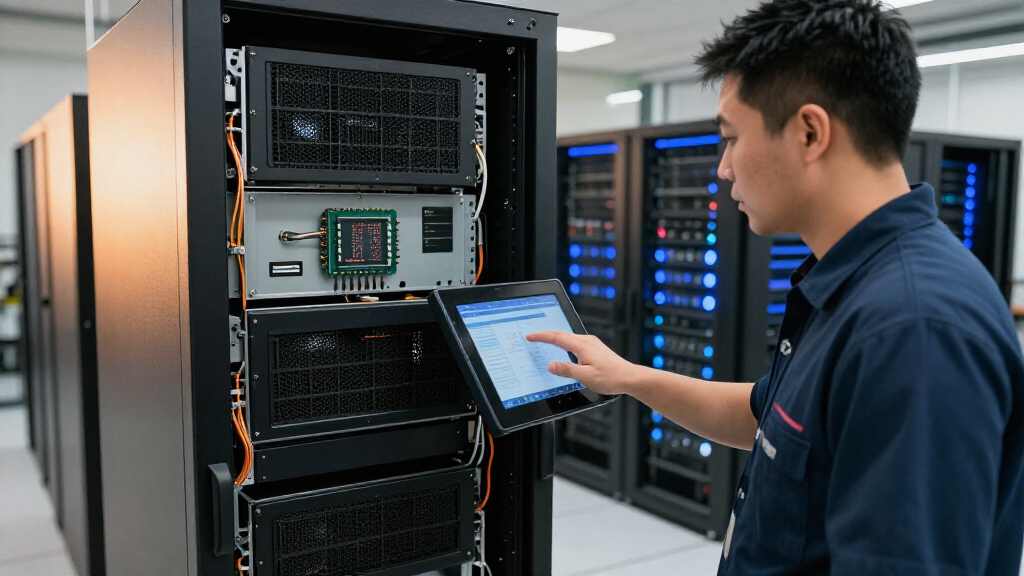
Diraq says it has installed and brought online an eight-qubit silicon spin quantum computer at an Equinix data center in Sydney, Australia, placing the system inside commercial digital infrastructure rather than a dedicated research laboratory. The company describes the deployment as the first of its kind for silicon spin technology; that characterization is Diraq’s, and the immediate significance is a test of whether a quantum system can operate alongside conventional data-center equipment.
The deployed system currently has eight qubits, the basic units used to represent and process quantum information. Diraq reports that it occupies 170 square feet and draws less than 20 kilowatts. The company is targeting an upgrade to as many as 256 qubits within a year. That is a stated goal, not a completed expansion or a guarantee that the target will be met.
Diraq says its silicon spin processors are made using semiconductor manufacturing processes and designed to fit into existing data-center environments. It argues that customers could add quantum capacity by upgrading the processor without rebuilding surrounding infrastructure. The company estimates that a future utility-scale system could draw about 300 kilowatts and potentially occupy as little as 50 square feet; those figures describe projected systems, not the unit now installed.
The installation was announced alongside Quantum at Work, a Diraq report about potential applications in areas including medicine, energy, materials, climate and transport. Its analysis says a 10-percentage-point improvement in clinical-trial success rates could save about US$600 million per medicine and allow up to 25 additional medicines to reach patients annually in a market the size of the United States. These are modeled estimates, not results from the Sydney machine or demonstrated clinical outcomes.
Testing Quantum Hardware in Live Data Centers
Putting a quantum computer inside a commercial data center tests an important practical question: whether the equipment can be housed and operated alongside the infrastructure businesses already use. If Diraq’s approach scales as intended, the company says organizations could add quantum processors without constructing a separate facility for them. That could affect the cost and complexity of access, though the deployment alone does not establish commercial usefulness or a financial return.
The modest current footprint and power draw offer concrete details about this installation, but they should not be confused with evidence of useful performance on business problems. The system has eight qubits, and Diraq has not announced a customer application or a result showing it outperforming conventional computing. The medical and economic figures in the accompanying report are projections based on modeling, not findings produced by the deployed computer.
Products Worth Considering

LG UltraGear 27-inch QHD OLED Gaming Monitor, 240Hz

Samsung 49-Inch Odyssey OLED G9 (G91SD) Dual QHD Curved Gaming Monitor

LG UltraGear 32GX850A-B 32-inch 4K UHD OLED Gaming Monitor
As an affiliate, we earn on qualifying purchases.
From Chip Manufacturing to Quantum Scale
Diraq’s approach uses silicon spin qubits, which encode quantum information in the spin of electrons in silicon devices. The company’s scaling argument rests on using manufacturing techniques associated with conventional semiconductor chips. Diraq says that industrial manufacturing base could make it easier to increase processor capacity than approaches that require more extensive supporting equipment. Whether that advantage holds at much larger scales remains to be tested.
The announcement follows Diraq’s reported advancement to Stage C of DARPA’s Quantum Benchmarking Initiative, a program evaluating routes to utility-scale quantum computing. The source report says six companies reached that stage and that potential funding could be as high as US$300 million; this is a possible program amount, not a statement that Diraq has received that sum. Diraq also reported signing a US$38 million letter of intent with the US Department of Commerce under the CHIPS and Science Act. A letter of intent is not, by itself, confirmation that the full amount has been paid.
“We are now at a point where quantum computing can start to reach industries and the people they serve.”
— Andrew Dzurak, Diraq chief executive and founder
Performance and Commercial Use Still Unclear
The announcement does not disclose what workloads the eight-qubit system is running, whether customers can access it, or whether it has completed a benchmark demonstrating an advantage over conventional computers. It also does not provide independent verification of the system’s operating specifications or the company’s “first” description. Those claims should be read as Diraq’s account of the deployment.
The proposed 256-qubit upgrade, future power and space estimates, and potential economic gains all remain prospective. The announcement does not specify technical milestones for the upgrade, a deployment schedule beyond the one-year target, or the conditions under which Diraq’s projected medicine-related savings might be realized. It is also unclear whether the letter of intent with the Department of Commerce has become a finalized funding award.
A One-Year Upgrade Target to Watch
The next stated milestone is Diraq’s plan to expand the Sydney system to as many as 256 qubits within a year. Updates will need to show whether that capacity is installed and operating, and what performance the enlarged system achieves. Details about applications, customer access and independent benchmarks would help clarify whether the deployment is moving beyond an infrastructure demonstration.
Separately, Diraq’s Quantum at Work report sets out possible economic applications, but the announcement provides no timetable for validating those estimates through the installed machine. The company’s progress in DARPA’s program and the status of its Commerce Department letter of intent are also developments to track; neither should be treated as completed funding without confirmation.
Key Questions
Where is Diraq’s quantum computer installed?
Diraq says its eight-qubit system is operating at an Equinix data center in Sydney, Australia.
How large and power-intensive is the current system?
Diraq reports a footprint of 170 square feet and power use below 20 kilowatts. The company’s figures have not been independently verified in the announcement.
How many qubits will the system have next?
Diraq is targeting as many as 256 qubits within a year. That is a future goal; the deployed system currently has eight.
Has the computer shown it can improve drug development?
No such result was reported. The estimate of about US$600 million saved per medicine comes from Diraq’s modeling in its Quantum at Work report, not from a clinical or computational result produced by this installation.
Source: thequantuminsider.com