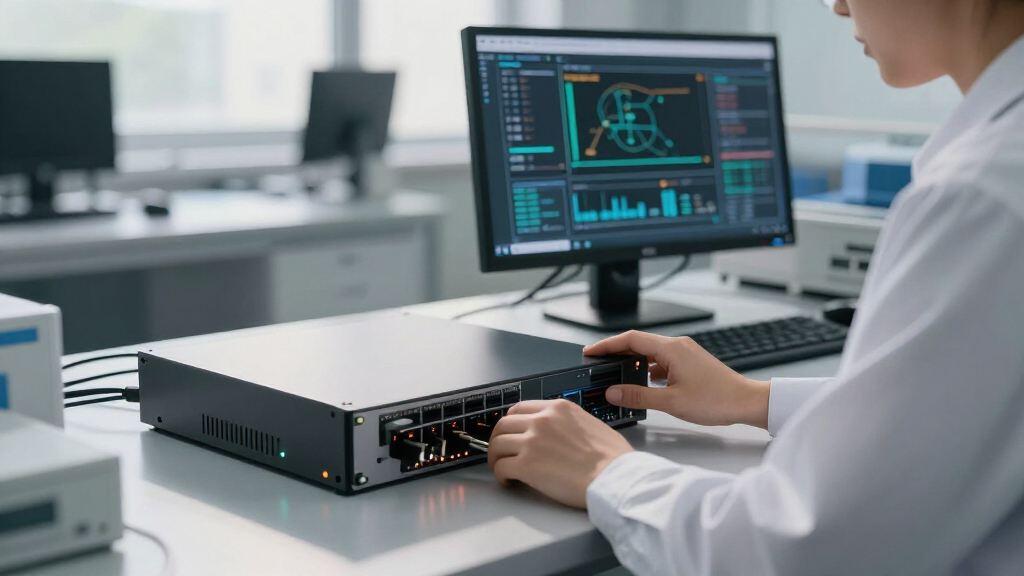

📊 Full opportunity report: The Underlying AI Restrictions That Shape China’s Optical-Transceiver Future on ThorstenMeyerAI.com — validation score, market gap, and execution plan.

Get business pricing on monitors, keyboards and dev gear
- Business-only prices and quantity discounts
- Tax-exempt purchasing
- Multiple users, one account, clear invoices
TL;DR
The US is drafting a measure to restrict Chinese optical transceiver imports, aiming to protect AI infrastructure. This move highlights the strategic importance of interconnect hardware and its geopolitical implications.
The US Federal Communications Commission is drafting a measure to restrict importation of new Chinese optical transceivers, devices critical for data transfer within datacenters. This proposed regulation aims to enhance security by preventing potential data theft, malware, and service disruptions. Although the draft has not been finalized or enacted, it signals a significant shift in US policy toward Chinese hardware used in AI infrastructure.
On August 4, 2023, Reuters reported that the FCC is working on a draft regulation that would prohibit the import of new Chinese optical transceivers. These devices facilitate high-speed data transfer in datacenters, with Chinese suppliers, notably Zhongji Innolight, holding a substantial market share—approximately 70% of global shipments. The measure is intended to safeguard US AI infrastructure from potential security threats, but it remains in the draft stage, subject to modification or rejection.
Market reactions reflected expectations rather than confirmed policy changes. US-based optical component firms saw stock increases, while Chinese suppliers faced declines. Crucially, the measure targets import restrictions rather than export controls on chips, focusing on the network hardware that connects compute resources. The measure does not affect the large installed base of Chinese transceivers already deployed in US datacenters, which constitute a significant portion of current infrastructure. This indicates that the immediate security concern about existing hardware remains unaddressed, and the policy’s primary impact would be on future hardware procurement and supply chain shifts.
A drafted FCC measure would bar imports of new Chinese optical transceivers — the small parts that turn signals into light inside a datacenter. The headline says “US bans Chinese datacenter tech.” It’s wrong in three specific ways.
▲ A draft, not a rule · could be modified or shelved“US bans Chinese datacenter tech” is wrong in three ways that change what the story actually means.
The transceiver is the interconnect — the layer that sets the real bottleneck of modern inference. The US isn’t moving on the compute here. It’s moving on the nervous system that wires the compute together.
- Restricts what US tech is sold to China
- Targets the compute
- The fight everyone has been watching
- Restricts what Chinese gear is imported into the US
- Targets the interconnect / network fabric
- Confirms the wire is now as contested as the chip
Read one way it has a hole you can see through. Read the other way it’s coherent.
Production is the product, and capacity doesn’t teleport. Four frictions stand between the draft and reality.
as strategically contested as the compute. But it’s a draft, and the base is already installed.
Implications for US-China Tech Rivalry and Supply Chains
This development underscores the strategic importance of interconnect hardware in AI infrastructure, highlighting how control over data transfer components can influence global tech dominance. The proposed restrictions signal a shift toward viewing network infrastructure as a critical element of national security, expanding the scope beyond traditional chip export controls. For industry, this could mean a reorientation of supply chains, with increased emphasis on domestic manufacturing and alternative suppliers. For China, the move represents a setback in maintaining its market share in high-speed optical components, potentially accelerating efforts to develop independent supply chains.
high-speed optical transceivers for data centers
As an affiliate, we earn on qualifying purchases.
As an affiliate, we earn on qualifying purchases.
US-China Tensions Over AI Hardware and Data Security
The US has intensified its efforts to restrict Chinese technology exports and imports amid broader tensions over AI dominance and cybersecurity. Previously, export controls targeted advanced chips used in AI compute, but recent actions focus on hardware that underpins data transfer within networks. Chinese suppliers, especially Zhongji Innolight, have grown rapidly, capturing a significant share of the global transceiver market, which is vital for high-speed data communication. The US's proposed import restrictions reflect concerns over hardware security and aim to shift procurement toward domestic or allied suppliers, although their immediate impact on existing infrastructure is limited.
"The FCC is drafting a measure to ban imports of new Chinese optical transceivers, aiming to protect US AI infrastructure from potential security threats."
— Reuters (report)
Chinese optical transceiver modules
As an affiliate, we earn on qualifying purchases.
As an affiliate, we earn on qualifying purchases.
Uncertainty Over Finalization and Impact of the Draft Measure
It is not yet clear whether the FCC will finalize and implement the proposed regulation. The draft remains subject to review, modification, or rejection, and no official timeline has been announced. Additionally, the measure targets new imports and does not affect the large existing installed base of Chinese transceivers, leaving current hardware unaffected. The actual impact on supply chains, security, and industry dynamics remains uncertain until the regulation's final form is confirmed.
fiber optic transceivers for enterprise networks
As an affiliate, we earn on qualifying purchases.
As an affiliate, we earn on qualifying purchases.
Next Steps in US Regulatory and Industry Response
The FCC is expected to review public comments and stakeholder feedback before finalizing the regulation. Industry observers anticipate possible delays or modifications, especially given the significant installed base of Chinese transceivers already in operation. Meanwhile, Chinese suppliers and US industry players are likely to accelerate efforts toward supply chain diversification and domestic manufacturing. Monitoring official announcements will be key to understanding the policy's definitive scope and impact in the coming months.
secure data center optical hardware
As an affiliate, we earn on qualifying purchases.
As an affiliate, we earn on qualifying purchases.
Key Questions
What exactly is being restricted in the proposed US regulation?
The draft regulation aims to ban the import of new Chinese optical transceivers used inside datacenters, focusing on hardware that enables high-speed data transfer over fiber optic networks.
Does this ban affect existing Chinese transceivers already installed in US data centers?
No. The measure targets new imports. The large installed base of Chinese transceivers currently in use will remain unaffected, meaning existing infrastructure will continue operating as before.
Why is control over optical transceivers significant in the context of AI?
Optical transceivers form the nervous system of data centers, enabling fast communication between chips and servers. Controlling this hardware can influence the security, reliability, and future development of AI infrastructure.
How might Chinese suppliers respond to these potential restrictions?
Chinese companies may accelerate efforts to develop independent supply chains, increase domestic manufacturing, or seek alternative markets to mitigate the impact of US restrictions.
When will the FCC decide whether to implement this regulation?
The timeline remains unclear. The FCC is expected to review feedback and possibly finalize the regulation within the next few months, but no specific date has been set.
Source: ThorstenMeyerAI.com
Fall Picks
fall essentials
As an affiliate, we earn on qualifying purchases.