When choosing a telescope, bigger numbers don’t always mean better quality. Many beginners think larger magnification or aperture equals superior views, but that’s not true. Aperture—the size of the main lens or mirror—is what truly matters because it controls how much light your telescope gathers, affecting brightness and detail. Magnification can be misleading if the optics can’t support it. To see clearer, brighter images, understanding these specs is key—keep going to learn more.
Key Takeaways
- Aperture size determines how much light the telescope collects, directly impacting image brightness and detail.
- Magnification alone doesn’t guarantee better views; optics and aperture limit usable magnification for clear images.
- Larger apertures reveal fainter objects and finer details, making them more important than higher magnification specs.
- Excessive magnification can blur images if the telescope’s optics can’t support it, reducing viewing quality.
- Understanding aperture is essential for selecting a telescope that provides brighter, sharper, and more detailed astronomical views.
Why Do Beginners Think Bigger Numbers Are Better in Telescopes?

Many beginners assume that a telescope with larger numbers, such as higher magnification or bigger aperture sizes, automatically means it’s a better instrument. This belief is often fueled by optical illusions created by marketing hype, which emphasizes impressive specs to attract buyers. Manufacturers highlight big numbers to make their telescopes seem more powerful, but these figures can be misleading. Higher magnification doesn’t always mean clearer images, especially if the telescope’s optics aren’t capable of supporting it. Similarly, bigger aperture sizes improve light-gathering power but don’t guarantee better detail or ease of use. Understanding optical performance and proper setup is far more important than simply chasing larger numbers. optical limitations can restrict what you actually see through your telescope, regardless of its specs. Additionally, proper calibration ensures you get the most accurate and enjoyable viewing experience. It’s also helpful to learn about how aperture size directly impacts the brightness and clarity of the objects you observe. Instead, these numbers can distract from understanding what truly matters for viewing quality. Falling for marketing hype leads beginners astray, causing them to overlook essential features that truly enhance their stargazing experience.
Why Aperture Is More Important Than Magnification for Viewing Quality
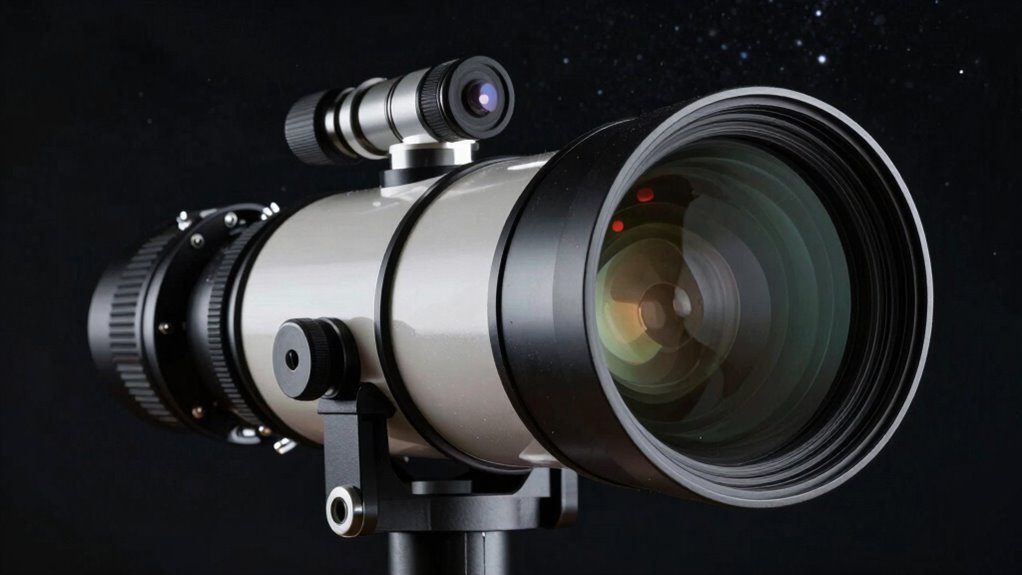
Aperture is the most critical factor in determining a telescope’s viewing quality because it directly affects how much light the instrument can collect. The more light your telescope gathers, the better its optical clarity, allowing you to see finer details and fainter objects. Magnification alone doesn’t improve image quality; it can actually make views appear blurry or dim if your aperture isn’t sufficient. A larger aperture enhances light gathering, which translates to brighter, sharper images, even at lower magnifications. This means you’ll enjoy clearer views of planets, stars, and deep-sky objects. Ultimately, aperture impacts your viewing experience more than magnification ever could, making it the most important feature to consider when choosing a telescope. Understanding how aperture impacts image quality is essential for making an informed choice.
How Aperture Size Affects Brightness and Detail in Your Views

When you increase the aperture size of your telescope, it allows more light to enter the optical system, which directly enhances the brightness of your views. This increased light gathering ability makes faint objects, like distant galaxies and nebulae, appear clearer and more detailed. Additionally, a larger aperture improves image resolution, meaning you can see finer details in planets, moons, and deep-sky objects. The sharper the image, the more you notice subtle features that smaller apertures might miss. Fundamentally, a bigger aperture boosts both the brightness and the clarity of your observations, giving you a richer, more detailed viewing experience. That’s why aperture size is a key factor in determining the quality of your astronomical views. aperture size directly impacts the overall quality of your observations, making it a crucial consideration for any stargazer. Increasing the aperture also allows you to observe more faint celestial objects, expanding your view of the universe. A larger aperture enhances the light-gathering capacity, which is essential for deep-sky observation.
What Do Telescope Specs Really Mean? Deciphering Aperture and Other Numbers

Understanding what your telescope’s specifications mean can seem confusing at first, but breaking down the numbers helps you make informed choices. The aperture size tells you how much light your telescope can gather, directly impacting image brightness and detail. Many telescopes also specify magnification limits, but these are less important than aperture. When choosing eyepieces, consider compatibility to guarantee they fit your telescope’s focuser and provide the desired magnification. Mount types are equally vital—they determine stability and ease of use. A sturdy mount, whether altazimuth or equatorial, can improve viewing comfort and accuracy. Remember, specs like aperture and mount compatibility are key to getting the best stargazing experience, helping you select a telescope that matches your goals and setup.
How to Pick the Best Telescope Based on Aperture for Your Stargazing Goals

Choosing the right telescope depends largely on your stargazing goals, and selecting one with the appropriate aperture is a crucial first step. Larger apertures gather more light, revealing fainter objects and providing brighter, sharper images—ideal for deep-sky observing. Consider your preferred targets: planets or the moon need less aperture, but deep-sky objects demand more. Confirm your telescope offers good mount stability, preventing vibrations that blur images. Also, check eyepiece compatibility for future upgrades. Use this guide to match aperture with your goals:
| Stargazing Goal | Recommended Aperture | Mount & Eyepiece Tips |
|---|---|---|
| Planet viewing | 70-90mm | Stable mount; compatible with standard eyepieces |
| Deep-sky objects | 130mm or more | Heavy-duty mount; versatile eyepiece options |
Frequently Asked Questions
Can a Larger Aperture Telescope Be More Portable?
A larger aperture telescope isn’t necessarily more portable because bigger size often means increased weight and bulk, making it harder to carry around. When considering aperture portability, look for telescopes with a balance between size and weight. Smaller or mid-sized telescopes are easier to transport, so if you want better aperture without sacrificing portability, choose a compact design with a larger aperture. Remember, telescope size impacts how easily you can take it on your adventures.
How Does Climate Affect Telescope Viewing Performance?
Climate considerably impacts your telescope viewing. Atmospheric turbulence, caused by warm and cold air mixing, can blur images and reduce clarity. High humidity levels create moisture that fogs up lenses and mirrors, making it harder to see faint objects. You’ll get better results on clear, dry nights with stable air. To optimize your viewing, avoid nights with high humidity or turbulent air, and consider using dew shields to prevent moisture buildup.
Are Expensive Telescopes Always Better Than Cheaper Ones?
You might think expensive telescopes are always better, but that’s not always true. Sometimes, a cheaper model with good aperture and solid brand reputation offers better quality for your money. Cost versus quality matters, and a well-made telescope can outperform pricier options. Remember, a reputable brand often guarantees reliability and better optics, so don’t judge a telescope solely by its price. Choose one that fits your needs and budget wisely.
What Maintenance Is Required for Different Telescope Types?
You need to regularly clean your telescope’s lens with a gentle brush or cloth to keep images clear, and prevent touching the glass with your fingers. Additionally, calibrate your mount periodically to ensure smooth tracking and accurate positioning. For different telescope types, like refractors or reflectors, maintenance might include checking for dust, adjusting screws, or realigning mirrors, so follow the manufacturer’s guidelines for best results.
How Does Eye Relief Influence Viewing Comfort?
Eye relief is like a cozy cushion, making your viewing experience more comfortable. When you have ample eye relief, your eye can see the entire field of view without straining or getting too close to the eyepiece, reducing viewing fatigue. Good eyepiece ergonomics mean less discomfort during long observing sessions, allowing you to enjoy stargazing without feeling fatigued or cramped. Longer eye relief generally enhances overall comfort.
Conclusion
Remember, when choosing a telescope, size truly matters more than flashy numbers. Focusing on aperture is like picking the right key to open stunning views of the night sky. Don’t get caught up in magnification hype—your stargazing experience depends on it. By understanding what matters most, you’ll be well on your way to discovering the universe’s wonders. In the end, it’s all about finding the right fit for your celestial adventures.