When setting up a weather station, focus on essential sensors like temperature, humidity, wind speed, wind direction, and atmospheric pressure for reliable forecasts. Avoid unnecessary or overly sensitive instruments that can cause confusion or false alarms. Proper placement, calibration, and maintenance are critical to keep data accurate. If you want to build an effective station and get trustworthy weather insights, understanding which sensors truly matter is key—keep exploring for detailed guidance.

Get business pricing on monitors, keyboards and dev gear
- Business-only prices and quantity discounts
- Tax-exempt purchasing
- Multiple users, one account, clear invoices
Key Takeaways
- Essential sensors include those measuring temperature, humidity, wind speed, pressure, and precipitation for accurate weather data.
- Proper calibration, placement, and maintenance of sensors ensure reliability and prevent data drift or inaccuracies.
- Wind sensors like anemometers and wind vanes are crucial for understanding wind conditions and forecasting weather changes.
- Rain gauges require correct positioning and quality to provide trustworthy precipitation measurements.
- Avoid redundant or overly sensitive sensors to reduce data noise and maintain clear, actionable weather information.
digital weather station with temperature humidity wind sensors
As an affiliate, we earn on qualifying purchases.
As an affiliate, we earn on qualifying purchases.
How Do Weather Stations Collect Data and Why It Matters
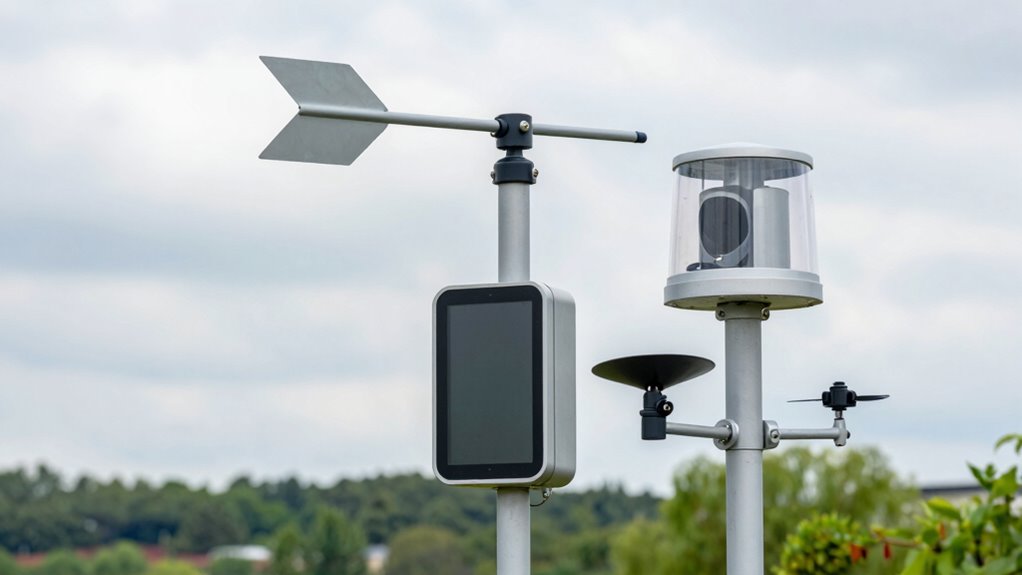
Weather stations gather data through a variety of sensors that measure temperature, humidity, wind speed, atmospheric pressure, and precipitation. These sensors collect essential information to help forecast weather accurately. To keep functioning reliably, many stations rely on solar panels, which power the sensors sustainably. Since weather data is critical, encrypting this information guarantees its security during transmission, preventing unauthorized access or tampering. You might not see it, but behind the scenes, data encryption protects the integrity and privacy of the collected data. The sensor calibration process ensures that measurements remain precise over time. Additionally, sensor maintenance is vital to ensure ongoing accuracy and reliability of the data collected. Proper calibration and maintenance of sensors help maintain measurement accuracy, which is crucial for dependable weather predictions. This combination of sensors, solar energy, and encryption allows weather stations to deliver precise, timely information, which influences everything from daily forecasts to emergency responses. Their reliable operation depends on these integrated technologies working seamlessly together, including the use of power sources that sustain their operation in remote locations. Regular system checks and updates are also essential to adapt to changing environmental conditions and maintain data integrity.
outdoor rain gauge with accurate measurement
As an affiliate, we earn on qualifying purchases.
As an affiliate, we earn on qualifying purchases.
What Are the Core Sensors Needed for Reliable Weather Forecasts
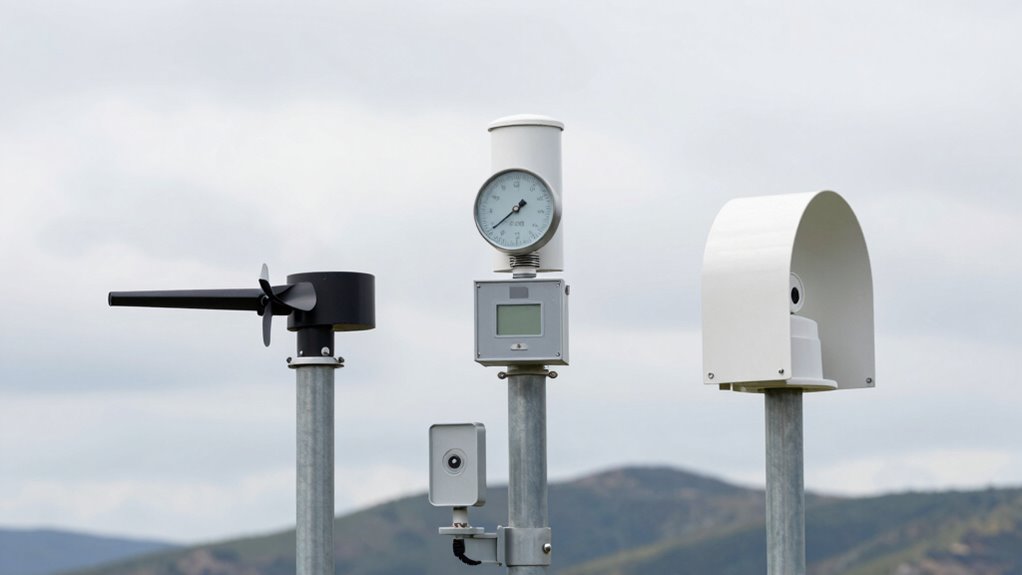
To get accurate weather forecasts, you need reliable sensors for key measurements. Temperature sensors must be precise, humidity sensors dependable, and wind sensors capable of capturing both speed and direction. Without these core sensors, your weather station can’t provide the trustworthy data you rely on. Additionally, understanding sensor calibration is essential to maintain the accuracy of your measurements over time. Regular calibration procedures help account for sensor drift and ensure consistent data quality, which is vital for accurate weather prediction. Proper sensor maintenance also extends the lifespan of your equipment and preserves measurement integrity. Keeping sensors free from dust and debris can further improve their performance stability, ensuring ongoing reliability in your data collection. Implementing proper installation techniques can also significantly enhance sensor accuracy and durability.
Temperature Measurement Accuracy
Accurate temperature measurements rely on core sensors that can detect subtle variations with high precision. These sensors must be stable, properly calibrated, and shielded from external influences like solar panels that can generate heat or interfere with readings. To guarantee reliable data, weather stations often use thermistors or platinum resistance thermometers (PRTs), which provide consistent accuracy. Visualize a sensor housed in a protective shield, insulated from direct sunlight, with data encrypted to prevent tampering. Imagine solar panels powering the station’s electronics, while robust data encryption maintains integrity during transmission. Reliable temperature sensors are essential for accurate forecasts, helping you plan effectively. Proper placement and maintenance keep measurements true, ensuring your weather station delivers dependable, high-quality data day after day. Additionally, selecting sensors with high sensitivity ensures even minute temperature changes are accurately captured. The calibration process is crucial for maintaining sensor accuracy over time, especially in varying environmental conditions. Regular calibration and sensor maintenance are vital to sustain measurement reliability and precision. Understanding sensor stability and environmental effects helps optimize data accuracy and prolong sensor lifespan. Moreover, incorporating environmental shielding can further enhance sensor performance by minimizing external disturbances.
Humidity Sensor Reliability
Reliable humidity measurements depend on core sensors that can detect subtle moisture changes with consistent accuracy. High humidity sensor reliability requires regular sensor calibration to prevent drift and maintain precise readings. Calibration ensures that the sensor’s output aligns with known humidity standards, which is essential for accurate weather forecasting. Without proper calibration, even the best sensors can become unreliable over time, leading to inaccurate data collection. Choose sensors with stable, proven performance and incorporate routine calibration checks into your maintenance schedule. This proactive approach minimizes measurement errors and ensures your weather station provides trustworthy humidity data. Additionally, understanding water interaction principles can help ensure sensor durability and performance in various environmental conditions. Recognizing how environmental factors affect sensor material stability is crucial for long-term reliability. Regular maintenance practices, including sensor calibration, are vital to sustain sensor accuracy over time.
Wind Speed and Direction
Have you ever wondered how weather stations measure wind speed and direction accurately? The core sensors for this are anemometers and wind vanes. An anemometer captures wind speed, which needs regular calibration to ensure precise readings, especially since accuracy depends on proper anemometer calibration. Calibration procedures are vital to maintain sensor performance over time. The wind vane determines wind direction, relying on wind vane precision to give reliable data. To get trustworthy results, these sensors are often mounted in open areas free from obstructions. High-quality anemometers measure wind speed precisely, and their calibration ensures consistency over time. Proper sensor placement can significantly impact measurement accuracy, making it essential to position these sensors correctly. Similarly, wind vanes must be properly aligned and maintained for accurate directional data. Sensor calibration is crucial for maintaining sensor accuracy over the long term. Together, these sensors form the backbone of reliable wind measurement, essential for accurate weather forecasting and analysis. Sensor maintenance is key to sustaining long-term accuracy and performance.
anemometer wind speed and direction sensor
As an affiliate, we earn on qualifying purchases.
As an affiliate, we earn on qualifying purchases.
How Temperature and Humidity Sensors Form the Foundation of Weather Monitoring
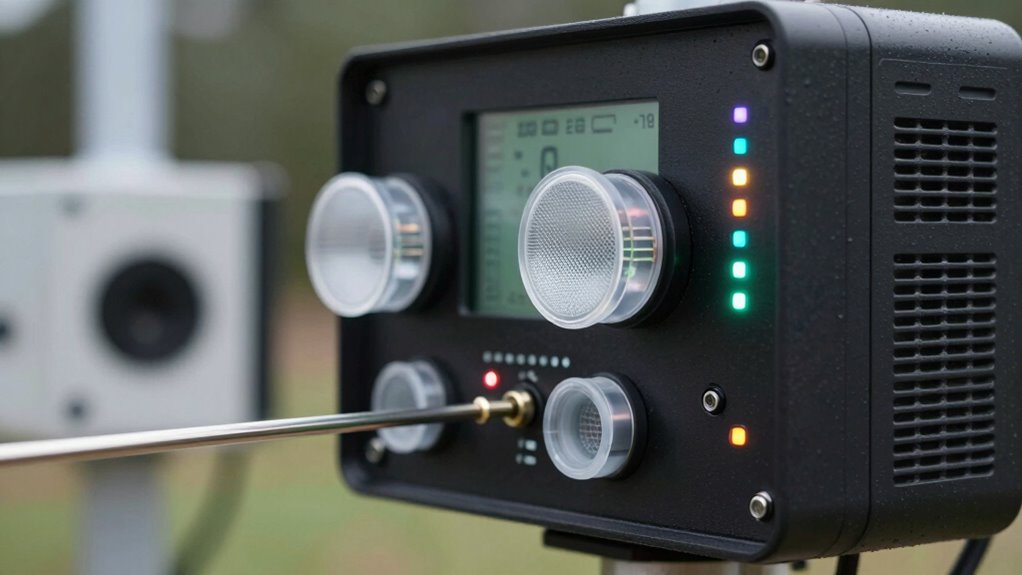
Temperature and humidity sensors serve as the fundamental tools in weather monitoring because they provide essential data about the atmospheric conditions around you. Accurate readings depend on proper sensor calibration, ensuring the data reflects real-world conditions. These sensors help track temperature fluctuations and moisture levels, which are crucial for understanding short-term changes and long-term climate patterns. By collecting reliable data, you can analyze weather patterns more effectively, predicting storms, heatwaves, or cold fronts. Reliable data collection is vital for maintaining the accuracy of your weather station’s readings. Without well-calibrated sensors, your weather station’s data may be misleading or inconsistent. This foundation allows for precise weather pattern analysis, helping you make informed decisions whether for personal safety, agriculture, or scientific research. In short, temperature and humidity sensors are indispensable for building a clear, accurate picture of the environment.
weather station calibration tools
As an affiliate, we earn on qualifying purchases.
As an affiliate, we earn on qualifying purchases.
Understanding Wind Speed and Direction Sensors: What You Should Know

Understanding wind speed and direction sensors is essential for accurate weather monitoring because these tools reveal how the atmosphere moves and changes. They help you anticipate storms, plan outdoor activities, and optimize weather data collection. Modern sensors often feature wireless connectivity, making remote monitoring easy and seamless. Some units even integrate solar power, reducing maintenance and ensuring continuous operation in the field. For example, your sensor might transmit real-time data wirelessly to your weather station app, giving you instant updates. The sensors typically include an anemometer for wind speed and a wind vane for direction, both designed for durability. With solar-powered options, you get eco-friendly, maintenance-free operation, making them reliable and efficient for long-term weather observation.
How Barometers and Atmospheric Pressure Sensors Help Predict Weather Changes
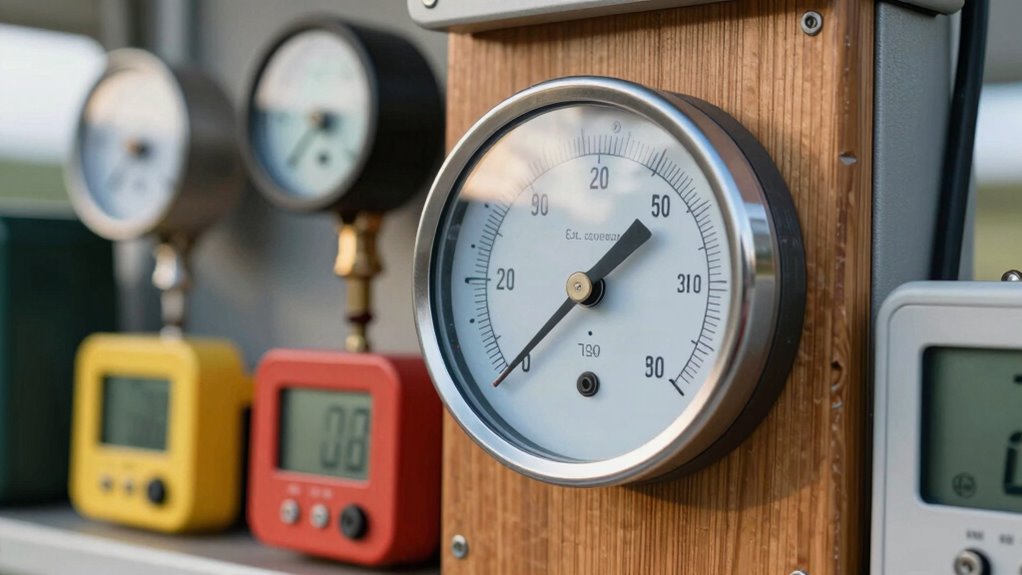
Barometers measure atmospheric pressure to help you anticipate upcoming weather changes. When pressure drops, it often signals an approaching storm, while rising pressure suggests fair weather. Using sensors to monitor these fluctuations enables you to make more accurate weather forecasts.
How Barometers Measure Pressure
Have you ever wondered how barometers detect changes in atmospheric pressure? They work by sensing the force exerted by the air around you, which varies with weather conditions. When pressure drops, it often signals an approaching storm; rising pressure indicates fair weather. Barometers measure pressure through different methods:
- Mercury barometers use a glass tube filled with mercury, where changes in pressure cause the mercury to rise or fall.
- Aneroid barometers contain a flexible metal box that expands or contracts with pressure shifts.
- Digital sensors convert pressure into electronic signals for easy reading.
These measurements also help with altitude measurement and account for solar radiation effects, ensuring accurate readings regardless of elevation or sunlight exposure. This precision helps you predict weather changes more reliably.
Atmospheric Changes Indicate Weather
Changes in atmospheric pressure often serve as reliable signs of upcoming weather. When pressure drops, you can expect rain or storms, while rising pressure usually signals clear skies. Barometers and atmospheric pressure sensors are essential tools in weather stations, helping you monitor these changes accurately. If you’re off-grid, solar panels can power your sensors and keep your weather station running smoothly. Additionally, understanding atmospheric patterns helps optimize rainwater collection by predicting heavy rainfall, so you can store water efficiently and prepare for dry spells. Recognizing these pressure shifts enables you to anticipate weather changes more precisely, making your weather station a powerful tool for planning outdoor activities, managing water resources, and maintaining a resilient, self-sufficient setup.
Using Sensors for Forecasting
Using sensors like barometers and atmospheric pressure sensors allows you to monitor weather patterns in real time, making it easier to forecast upcoming conditions. When these sensors detect falling pressure, you might anticipate rain or storms; rising pressure often signals clear skies. You can integrate this data with weather apps for precise updates on changing conditions. Many weather stations use solar panels to power sensors sustainably, ensuring continuous operation. By analyzing pressure trends, you can predict short-term weather shifts more accurately. Visualize this with:
- Monitoring pressure drops before storms
- Tracking rising pressure for fair weather
- Using solar-powered sensors for uninterrupted data collection
This combination helps you stay ahead of weather changes, making your forecasts more reliable and timely, whether for daily plans or outdoor activities.
Are All Rain Gauges Reliable? When to Trust or Skip Them

Not all rain gauges are equally reliable, and knowing when to trust the measurements they provide can make a big difference in understanding local weather patterns. To assess rain gauge accuracy and sensor reliability, consider their placement and quality. A poorly positioned gauge may collect inaccurate data, especially during heavy winds or debris. Use this table to evaluate:
| Aspect | Good Practice | Warning Signs |
|---|---|---|
| Placement | Open area, away from obstructions | Near trees, buildings, or vents |
| Maintenance | Regular cleaning and calibration | Dust, dirt, or corrosion visible |
| Data Consistency | Consistent readings over time | Sudden drops or spikes |
| Material Quality | Durable, weather-resistant parts | Cracks or rust |
| Sensor Reliability | High-quality sensors | Frequent errors or resets |
Trust gauges with high sensor reliability and proper placement for accurate rainfall data.
Which Weather Sensors Are Usually Unnecessary or Can Confuse Your Data
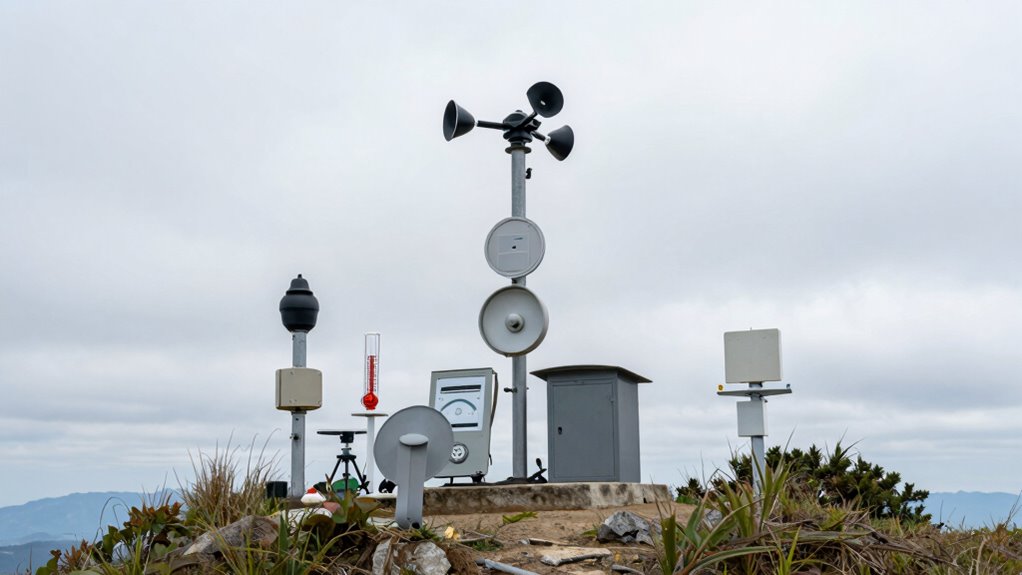
Some sensors can give you overly sensitive or confusing readings, making it hard to interpret your data accurately. Redundant or unnecessary instruments may clutter your setup without providing valuable insights. Recognizing these sensors helps you focus on the tools that truly matter for reliable weather tracking.
Overly Sensitive Instruments
While highly sensitive weather sensors can seem useful, they often introduce more confusion than clarity. Overly sensitive instruments may pick up minor fluctuations that aren’t meaningful, leading you to question your data. These sensors require frequent sensor calibration to stay accurate, which isn’t always practical. They can also create data redundancy, cluttering your dataset with unnecessary details.
Consider these issues:
- Tiny environmental changes trigger false alarms, making it hard to identify real trends.
- Excessive sensitivity amplifies noise, obscuring accurate readings.
- The added complexity can lead to misinterpretation of data, especially if you rely on automated analysis.
Choosing sensors with appropriate sensitivity levels helps guarantee your data remains clear and reliable, avoiding unnecessary complications.
Redundant or Misleading Data
Sensors that provide overlapping or unnecessary data can clutter your dataset and lead to confusion. Sensor redundancy occurs when multiple sensors measure the same parameter, offering little added value and complicating data analysis. This redundancy can produce misleading data, especially if sensors are calibrated differently or malfunction. For example, installing two temperature sensors in close proximity might seem useful, but it often results in inconsistent readings that confuse your understanding of actual conditions. Avoid including sensors that don’t provide unique insights or necessary information. Instead, focus on reliable, essential sensors that deliver accurate, actionable data. Eliminating redundant sensors ensures cleaner datasets, reduces maintenance, and prevents misleading data from skewing your weather analysis. Keep your setup simple, precise, and free from unnecessary confusion.
Choosing the Right Sensors Based on Your Weather Monitoring Goals
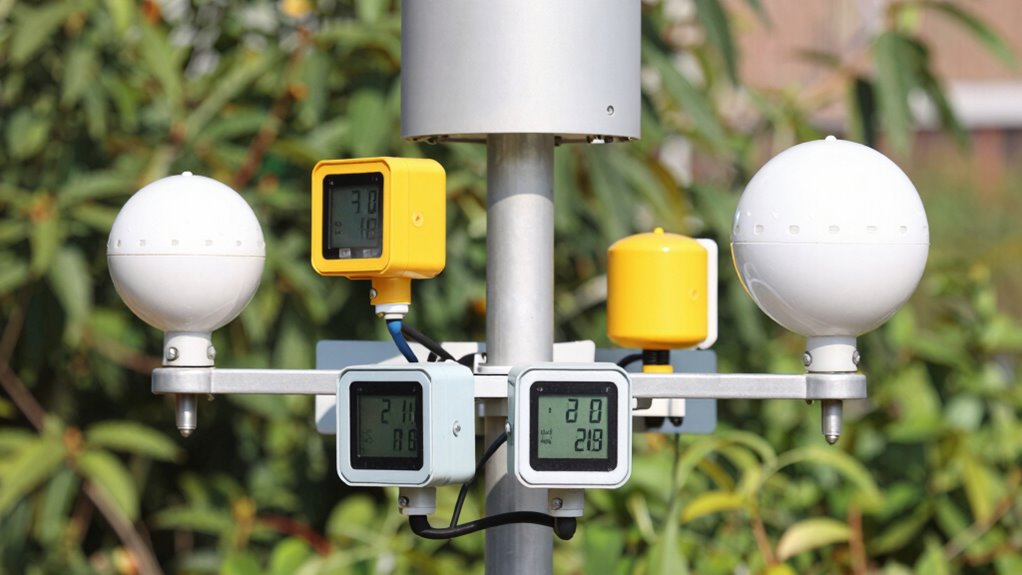
Choosing the right sensors is essential because your specific weather monitoring goals determine which measurements matter most. If you’re tracking temperature for farming, you’ll focus on accurate thermometers. For storm chasing, wind speed and barometric pressure sensors are key. To guarantee reliable data, consider sensor maintenance—regular checks keep sensors functioning correctly. Proper weather station placement also plays a role; for example, avoid placing sensors in direct sunlight or near heat sources that could skew readings. Think about your main priorities and select sensors that align with those goals. This targeted approach helps you gather meaningful data without clutter or inaccuracies, making your weather station more effective. Remember, choosing sensors based on your goals saves time, reduces errors, and enhances overall monitoring accuracy.
Common Sensor Setup Mistakes and How to Avoid Them

Setting up weather sensors correctly is essential to guarantee accurate data collection; however, many beginners make common mistakes that can compromise their readings. One key mistake is poor sensor placement—you might position sensors in direct sunlight, near heat sources, or in areas with airflow obstructions, all of which skew results. To avoid this, place sensors in shaded, open areas away from structures, and at the recommended height. Another mistake is neglecting data redundancy; relying on a single sensor increases the risk of inaccurate data if it malfunctions or is affected by local interference. To prevent this, use multiple sensors or backup systems to verify readings. Proper placement and ensuring data redundancy help you collect reliable, precise weather data.
Tips for Maintaining and Calibrating Your Weather Station Sensors

Regular maintenance and calibration are essential to guarantee your weather station provides accurate readings over time. Proper sensor placement ensures your measurements aren’t affected by local heat sources or obstructions, which can skew data. Regularly check and clean sensors to prevent dirt and debris from impacting accuracy. When calibrating, use reliable calibration techniques such as comparing readings against a known standard or reference device. Keep calibration records to track sensor performance and identify when recalibration is needed. Also, verify that sensors are mounted at the correct height and in proper exposure to weather conditions. By following these tips, you’ll maintain precise data, optimize sensor longevity, and ensure your weather station remains a trustworthy source of weather information.
Frequently Asked Questions
How Do Weather Station Sensors Perform in Extreme Weather Conditions?
You’ll find that weather station sensors generally perform well in extreme weather if they’re properly designed. Solar calibration helps maintain accuracy despite sunlight fluctuations, while sensor waterproofing protects against rain, snow, and humidity. Make sure your sensors are rated for harsh conditions, and regularly check waterproof seals. Proper installation and maintenance guarantee your sensors stay reliable, even during extreme weather, giving you accurate data no matter what Mother Nature throws your way.
Can Weather Sensors Detect Sudden Weather Changes Accurately?
You can rely on weather sensors to detect sudden weather changes with impressive accuracy, often within seconds. Studies show that well-calibrated sensors improve data accuracy by up to 95%, ensuring timely alerts. By maintaining proper sensor calibration, your weather station can effectively track rapid shifts in temperature, wind, or precipitation, giving you real-time updates. This rapid detection helps you stay prepared for unpredictable weather, making your station a vital tool for safety and planning.
What Is the Typical Lifespan of Common Weather Station Sensors?
You can expect common weather station sensors to last around 2 to 5 years, depending on usage and conditions. Regular sensor calibration and adherence to maintenance schedules are essential to guarantee accuracy. Over time, sensors may degrade or drift, so monitoring their performance and performing timely calibration helps extend their lifespan and maintain reliable data collection. Proper care minimizes replacement costs and keeps your weather station functioning at its best.
Do Weather Sensors Require Internet Connectivity to Function Properly?
No, your weather sensors don’t need internet connectivity to do their job—ironic, right? They mainly rely on wireless connectivity for data transmission, but they can still measure temperature, humidity, or wind locally without it. Just remember, if you want accurate readings over time, regular sensor calibration is key. So, while the internet isn’t essential for operation, it does make data sharing and remote monitoring way easier.
Are There Any Health or Safety Concerns With Weather Sensors?
You should be aware that weather sensors generally pose minimal health or safety risks if properly maintained. However, during sensor calibration, avoid chemical exposure by handling calibration fluids carefully and wearing protective gear. Some sensors contain chemicals or materials that could be hazardous if mishandled, so follow safety guidelines. Regularly check for proper calibration and handle with care to prevent potential health concerns, ensuring safe operation overall.
Conclusion
Did you know that over 90% of weather stations worldwide rely on just a handful of core sensors? By understanding which sensors truly matter, you can improve your weather accuracy and avoid costly mistakes. Focus on the essentials—temperature, humidity, wind, and pressure—and maintain them properly. This way, you’ll get reliable data to help you prepare for any forecast, no matter the weather.
Halloween Picks
halloween
As an affiliate, we earn on qualifying purchases.