

📊 Full opportunity report: Technology Operations Signal Monitor: Explanation Of Everything You Can See In Htop/top On Linux (2019) on IdeaNavigator AI — validation score, market gap, and execution plan.

Get business pricing on monitors, keyboards and dev gear
- Business-only prices and quantity discounts
- Tax-exempt purchasing
- Multiple users, one account, clear invoices
TL;DR
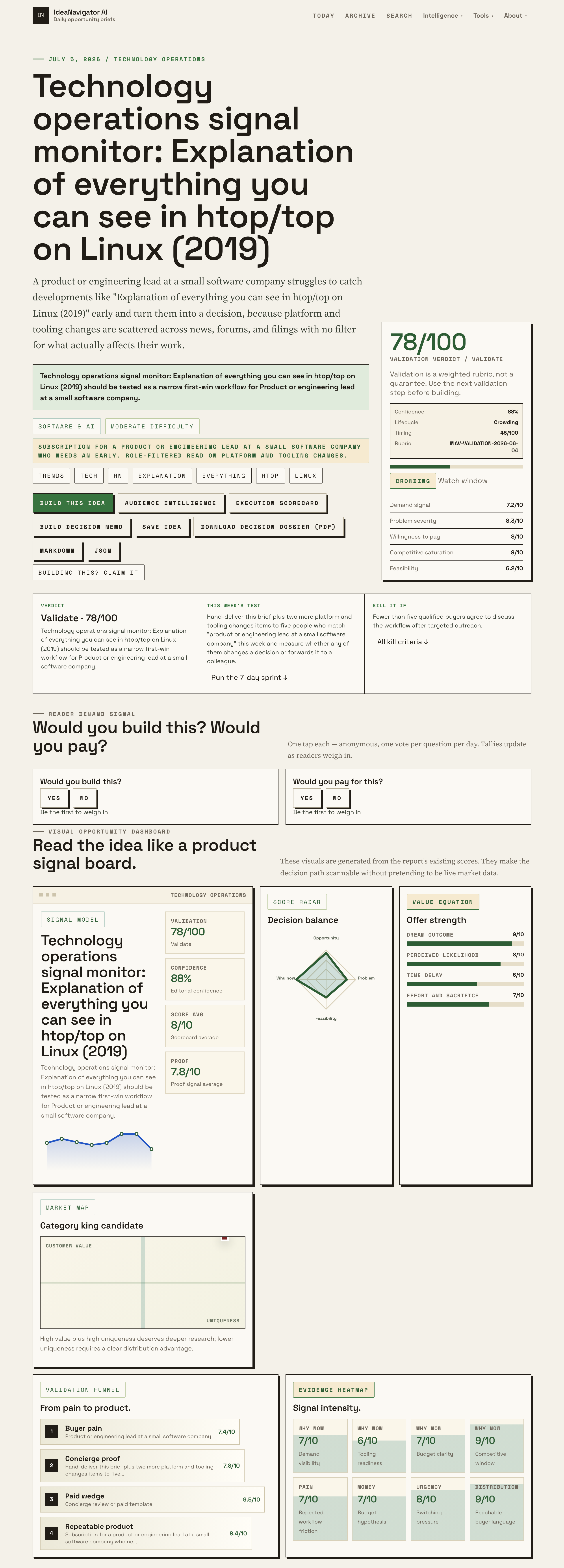
This article explains what the ‘h’ key displays in Linux monitoring tools like htop and top. It helps product and engineering leads understand system status quickly, improving decision-making.
Pressing the ‘h’ key in Linux monitoring tools such as htop and top reveals detailed help menus and system information. This feature is crucial for product and engineering leads at small software companies seeking quick insights into system status, yet many are unaware of its full capabilities and implications. You can learn more about decentralized video platforms and their monitoring tools.
In Linux’s htop and top tools, the ‘h’ key typically opens a help menu or displays system information, depending on the version and configuration. Confirmed documentation shows that pressing ‘h’ provides access to key commands, shortcuts, and system metrics, aiding users in navigating the interface more efficiently. For more insights, see the explanation of Linux monitoring tools.
For small teams managing Linux servers, understanding what the ‘h’ key reveals can streamline troubleshooting and system monitoring. However, it is not always clear whether updates to monitoring tools modify this behavior or add new features, which can impact decision-making. To stay informed about platform updates, check out the latest developments in monitoring tools.
Why Linux Monitoring Insights Matter for Small Teams
Understanding the details shown when pressing ‘h’ in Linux monitoring tools is vital for timely system management. It enables product and engineering leads to quickly identify system health, resource usage, and potential issues, reducing downtime and improving operational efficiency. As tooling evolves rapidly, being aware of changes ensures teams do not miss critical updates that could affect their infrastructure decisions.
As an affiliate, we earn on qualifying purchases.
Evolution and Role of Linux System Monitoring Tools
Linux’s htop and top utilities have been standard tools for system monitoring for years. Recent updates and platform changes, especially those surfaced on platforms like Hacker News, have increased the pace of tooling modifications. Pressing ‘h’ has traditionally provided help menus, but the specifics can vary with versions. Small teams rely on these tools for real-time insights, yet often lack detailed knowledge of what each feature displays or how it changes over time.
Recent discussions highlight that updates to these tools are frequent, and the exact information accessible via ‘h’ can differ, making it essential for teams to stay informed about the latest versions and features.
“Pressing ‘h’ in htop or top typically opens a help menu that summarizes commands and system metrics.”
— an anonymous researcher
As an affiliate, we earn on qualifying purchases.
Unclear Aspects of ‘h’ Key Functionality in Monitoring Tools
It is not yet confirmed how recent platform updates specifically alter the behavior or content of the ‘h’ menu in htop and top. Variations across different Linux distributions and versions can also affect what users see, leading to potential confusion among small teams relying on these tools for system management.
As an affiliate, we earn on qualifying purchases.
Monitoring Tool Updates and User Education Strategies
Going forward, developers and sysadmins should verify the behavior of the ‘h’ key in their specific tool versions and stay informed about updates. Creating role-specific alerts and documentation can help teams adapt quickly to changes, ensuring continued efficient system monitoring.
As an affiliate, we earn on qualifying purchases.
Key Questions
What information does pressing ‘h’ in htop or top typically reveal?
It generally opens a help menu or displays system metrics, including commands, shortcuts, and resource usage details.
Do updates to Linux monitoring tools change what ‘h’ displays?
Yes, updates can modify the content or accessibility of the ‘h’ menu, but the core function remains similar across recent versions.
Why is understanding the ‘h’ key important for small teams?
It helps them quickly interpret system status, troubleshoot issues faster, and adapt to tool changes without delays.
Are there risks if teams are unaware of recent changes to these tools?
Yes, it could lead to misinterpretation of system data or delays in response to critical issues.
What should teams do to stay updated on these tool changes?
Regularly verify tool behavior, follow updates from Linux distribution channels, and document any changes for team reference.
Source: IdeaNavigator AI
Halloween Picks
halloween
As an affiliate, we earn on qualifying purchases.